

10 Cozy Neutral Aesthetic Bedroom Ideas
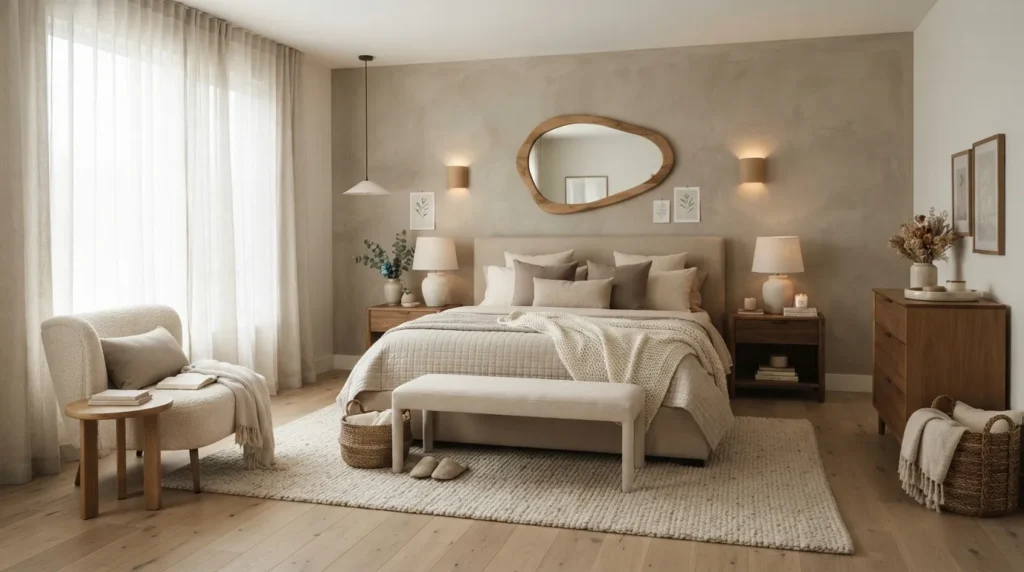
A neutral bedroom can feel warm, layered, and deeply inviting without relying on bold colors or excessive decoration. The secret is using texture, lighting, natural materials, and carefully chosen tones to create depth.
Cream walls, warm bedding, woven baskets, soft curtains, natural wood, and subtle patterns can work together to create a bedroom that feels calm without becoming plain. This approach also works across many decorating styles, from modern and minimalist to Scandinavian, organic, and relaxed contemporary.
One thing I’ve noticed in cozy bedrooms is that color is rarely the only reason they feel comfortable. Texture does much of the work. A linen duvet beside a chunky knit throw, a woven basket beside a wood nightstand, or a plush rug beneath the bed can make a restrained palette feel surprisingly rich.
The best part about a neutral scheme is flexibility. You can change seasonal bedding, add greenery, replace artwork, or introduce a different wood tone without redesigning the entire room.
These ideas focus on creating a bedroom that looks beautiful in photographs while remaining comfortable for everyday life. Whether you’re decorating a small apartment bedroom, refreshing a primary bedroom, or simply looking for a softer aesthetic, the following approaches can help you build a space that feels intentional rather than overly styled.
Start with the elements that affect the room most—bed, walls, curtains, rug, and lighting—then layer smaller details gradually. A calm bedroom doesn’t require dozens of accessories. It requires the right combination of pieces.
Table of Contents
1. Layered Cream Bedding
Create softness with several warm neutral bedding layers.
2. Natural Wood Furniture
Add warmth and character through understated wood pieces.
3. Soft Linen Curtains
Use flowing textiles to filter light and soften windows.
4. Textured Area Rug
Ground the bedroom with a comfortable neutral rug.
5. Warm Ambient Lighting
Create a gentle glow with layered bedroom lighting.
6. Woven Storage Baskets
Add practical storage without disrupting the aesthetic.
7. Neutral Gallery Wall
Bring personality to the room with understated artwork.
8. Earthy Greenery
Introduce natural color through carefully placed plants.
9. Cozy Reading Corner
Create a small retreat for quiet evenings and mornings.
10. Tonal Neutral Layers
Combine several related shades for depth and balance.
1. Layered Cream Bedding
Quick Benefits
- Creates an instantly cozy appearance
- Adds depth without bold colors
- Works with many decorating styles
- Makes the bed the room’s focal point
- Easy to update seasonally
Why It Works
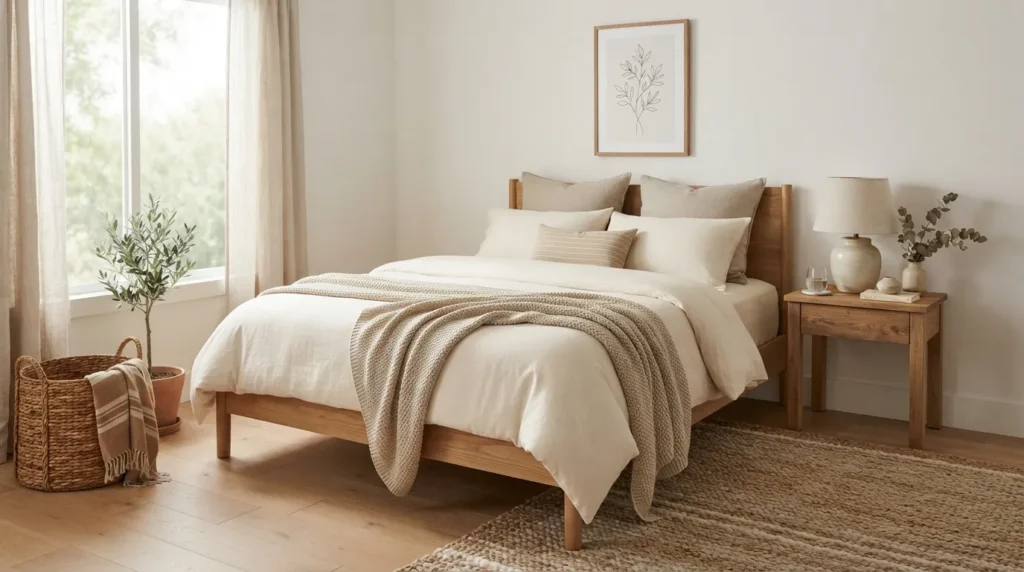
The bed usually occupies the largest visual area in a bedroom, so bedding has a major influence on the overall atmosphere. A single flat cream comforter can look clean, but layering several neutral textures makes the room feel considerably more inviting.
The key is variation. Different fabrics and slightly different shades prevent the bedding from appearing flat.
A combination of ivory, oatmeal, beige, and warm white can create a sophisticated tonal palette while maintaining the calm quality associated with neutral decor.
How To Style It
Start with crisp sheets in warm white or ivory. Add a duvet or quilt in cream, followed by a textured blanket folded across the lower third of the bed.
Layer two or three sleeping pillows with larger euro-style pillows behind them.
Finish with one or two accent pillows in a slightly darker shade such as taupe or warm beige.
Avoid making every layer exactly the same color. Small differences in tone and texture create the visual depth that makes neutral bedding feel luxurious.
2. Natural Wood Furniture
Quick Benefits
- Adds warmth to neutral rooms
- Introduces organic texture
- Balances soft textiles
- Works with modern and traditional styles
- Creates a timeless appearance
Why It Works
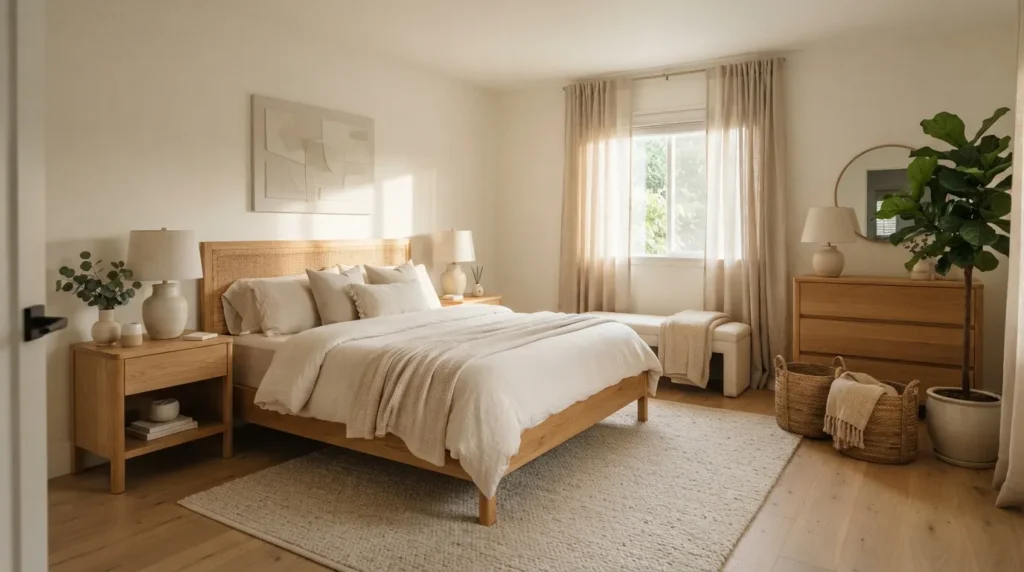
A bedroom filled entirely with cream and white can sometimes feel visually cold. Natural wood provides warmth without introducing a strong color.
Wood grain also adds organic variation. Every surface has slightly different markings, which gives the room character while remaining within a restrained palette.
A wood nightstand, bed frame, dresser, bench, or floating shelf can be enough to anchor an otherwise soft bedroom.
How To Style It
Choose one primary wood tone and repeat it in several places.
Light oak creates a bright Scandinavian-inspired look. Medium honey wood feels warmer and more traditional, while walnut can add richness to a contemporary room.
Pair wood furniture with cream bedding, woven baskets, linen curtains, and ceramic accessories.
Don’t worry about making every wood piece identical. A few complementary finishes can make the bedroom feel collected rather than like a matching furniture set.
3. Soft Linen Curtains
Quick Benefits
- Filters harsh daylight
- Adds movement and softness
- Makes windows feel larger
- Complements neutral bedding
- Creates a relaxed atmosphere
Why It Works
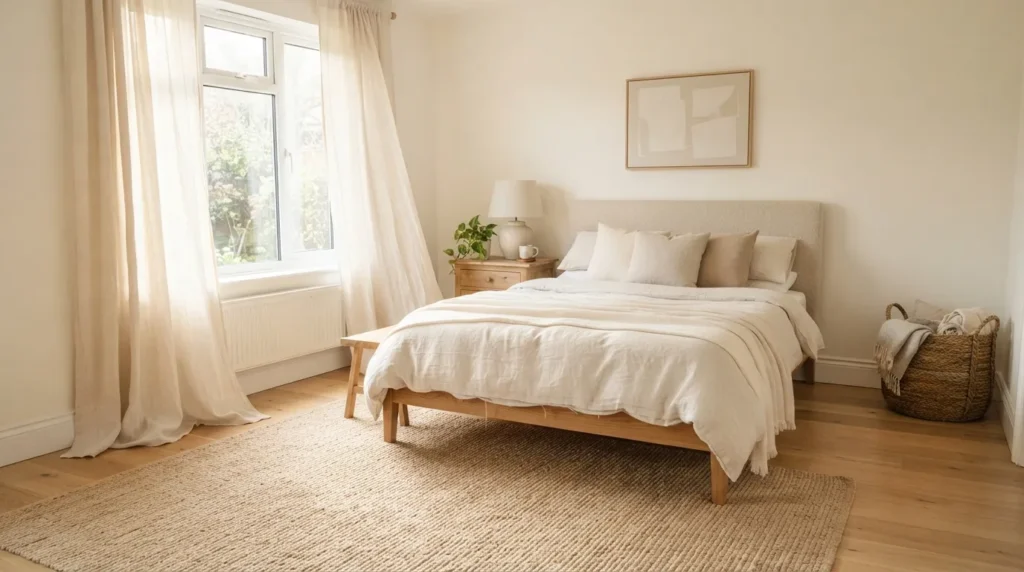
Window treatments can have a surprisingly strong effect on bedroom comfort. Heavy or overly structured curtains can make a small bedroom feel enclosed, while lightweight neutral curtains create softness without adding visual weight.
Linen-look or linen-blend fabrics are particularly useful because their natural texture adds subtle interest.
Curtains also provide one of the easiest ways to make a bedroom feel finished.
How To Style It
Choose curtains in ivory, cream, oatmeal, or soft beige.
Mount the curtain rod high and extend it beyond the window frame when the room allows. This can create a more spacious visual effect.
Allow the fabric to fall close to the floor for a relaxed appearance.
During the day, let natural light filter through the fabric. At night, combine the curtains with suitable blinds or shades when privacy and light control are necessary.
4. Textured Area Rug
Quick Benefits
- Adds softness underfoot
- Grounds the bed visually
- Introduces texture
- Makes the bedroom feel warmer
- Helps define the sleeping area
Why It Works
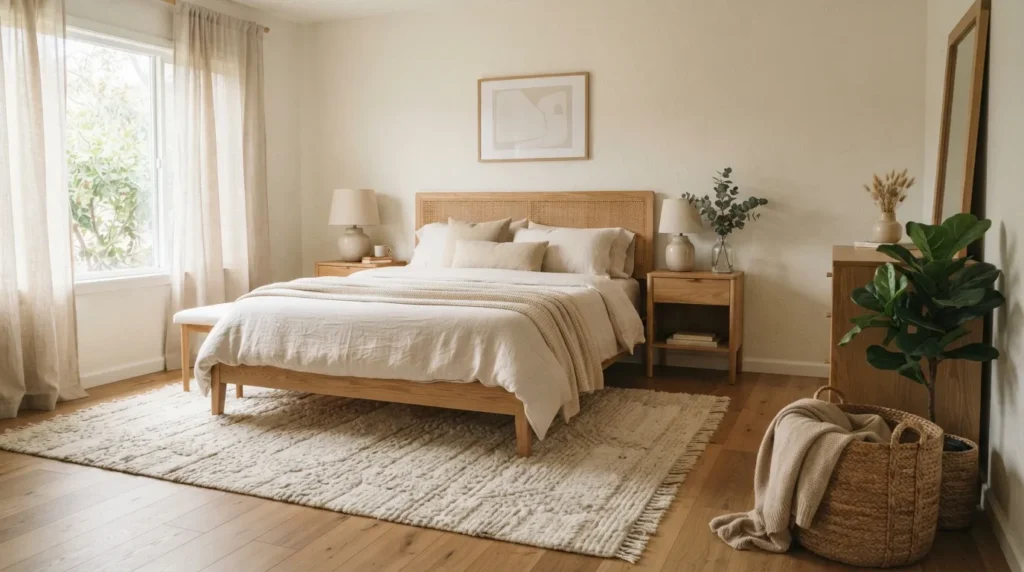
A rug can connect the furniture and bedding into one cohesive composition. It also adds a physical layer of comfort, particularly in bedrooms with hardwood, laminate, or tile flooring.
For a neutral room, texture becomes especially important. A subtly patterned, braided, woven, or plush rug can add dimension without introducing a competing color.
How To Style It
Choose a rug large enough to extend beyond the sides and foot of the bed when the room permits.
Cream, ivory, beige, taupe, and soft greige are versatile choices.
If the bedding is heavily textured, consider a simpler rug. If the bedding is relatively smooth, a more tactile rug can add interest.
Position the rug carefully so that you have comfortable landing space on the sides of the bed.
5. Warm Ambient Lighting
Quick Benefits
- Creates a relaxing evening mood
- Makes neutral colors feel warmer
- Adds visual depth
- Improves bedside functionality
- Creates layered illumination
Why It Works
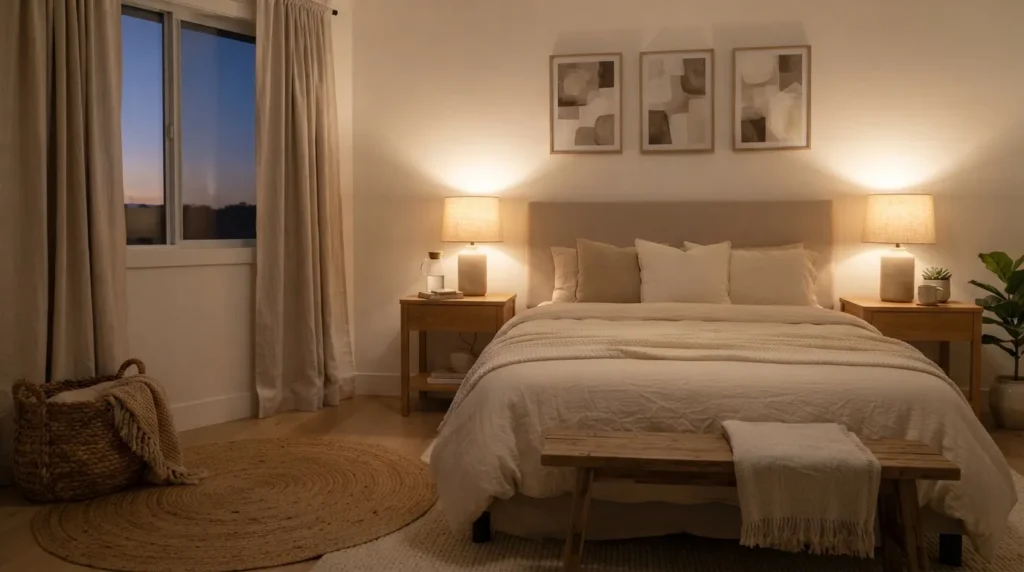
Lighting can make the difference between a neutral bedroom that feels sterile and one that feels warm.
Rather than relying entirely on an overhead fixture, combine several smaller sources. Bedside lamps, wall sconces, floor lamps, and subtle accent lighting can create different levels of illumination.
Warm-toned lighting also enhances cream, beige, wood, and natural textiles.
How To Style It
Place matching or complementary lamps on bedside tables for balanced illumination.
Choose lamps with ceramic, linen, wood, or matte finishes that complement the room.
Add a floor lamp beside a reading chair if space permits.
Keep the overhead light available for general cleaning and dressing, but use softer sources when relaxing.
A dimmer can provide additional flexibility where the electrical setup allows.
6. Woven Storage Baskets
Quick Benefits
- Hide everyday clutter
- Add natural texture
- Provide flexible storage
- Keep blankets accessible
- Complement neutral decor
Why It Works
Storage is essential in a bedroom, but plastic containers and highly visible organizers can interrupt an otherwise warm aesthetic.
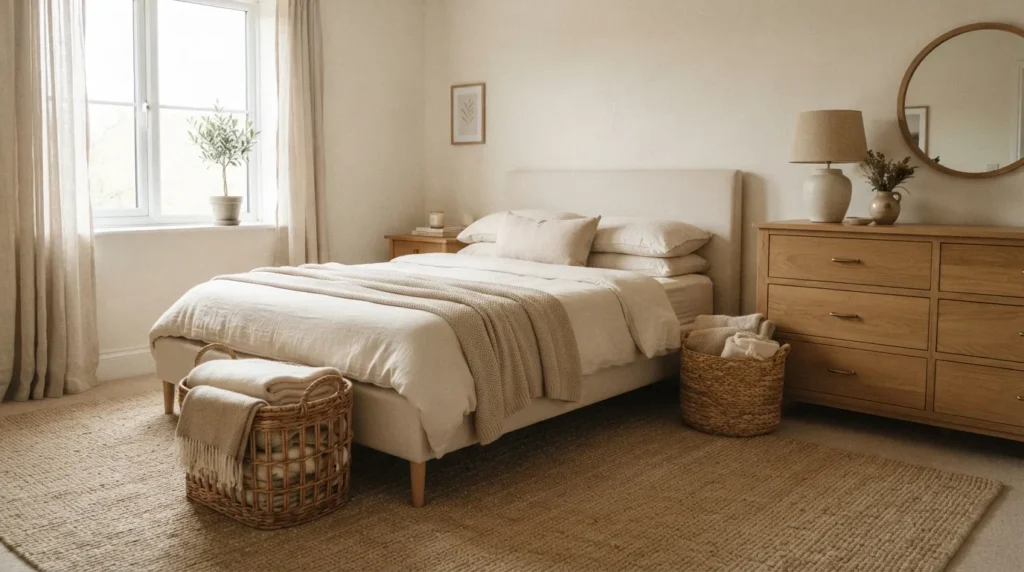
Woven baskets solve part of the problem by providing practical storage while also functioning as decorative elements.
They work particularly well because their texture contrasts with smooth walls, wood furniture, and soft bedding.
How To Style It
Use a large basket beside the bed or dresser for extra blankets.
Smaller baskets can hold accessories, books, laundry, or miscellaneous items.
Choose baskets in natural seagrass, rattan, rope, or another suitable woven material.
Keep the number limited. One large basket often looks more intentional than several unrelated containers scattered throughout the room.
7. Neutral Gallery Wall
Quick Benefits
- Adds personality
- Prevents neutral walls from looking empty
- Creates a focal point
- Allows easy style customization
- Works without strong colors
Why It Works
A neutral bedroom still needs personality. Artwork is one of the easiest ways to add it without disrupting the color palette.
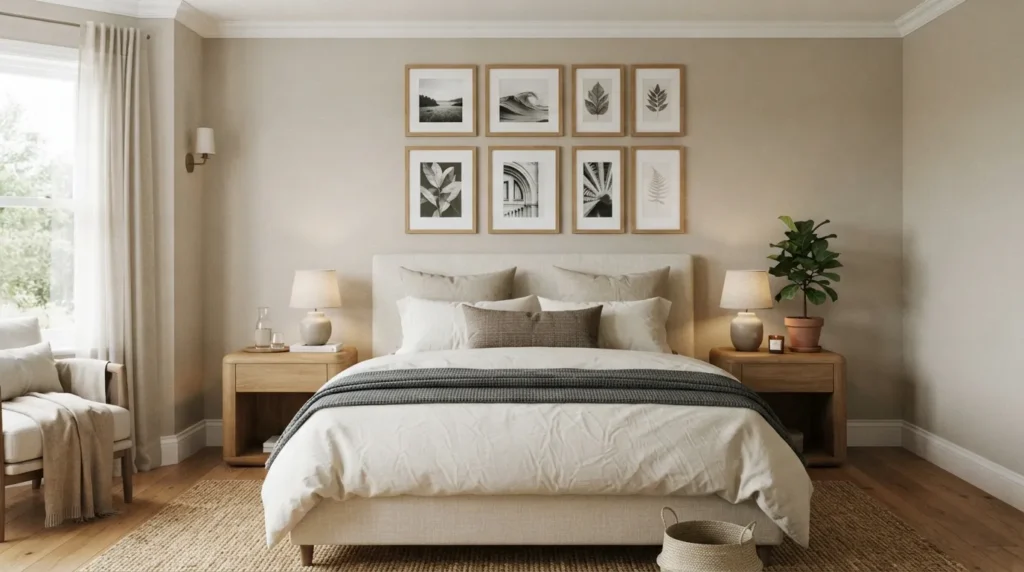
Black-and-white photography, botanical prints, abstract artwork, line drawings, and muted landscapes can all work beautifully with cream and beige interiors.
The artwork doesn’t need to match perfectly. It simply needs a visual connection through color, subject, frame, or style.
How To Style It
Create a small arrangement above the bed, dresser, or reading corner.
Choose frames in one or two finishes, such as natural wood, black, or warm brass.
Keep artwork within a restrained palette. Sepia, charcoal, muted brown, cream, and soft green can all complement a neutral bedroom.
Leave enough space between pieces to keep the arrangement visually calm.
8. Earthy Greenery
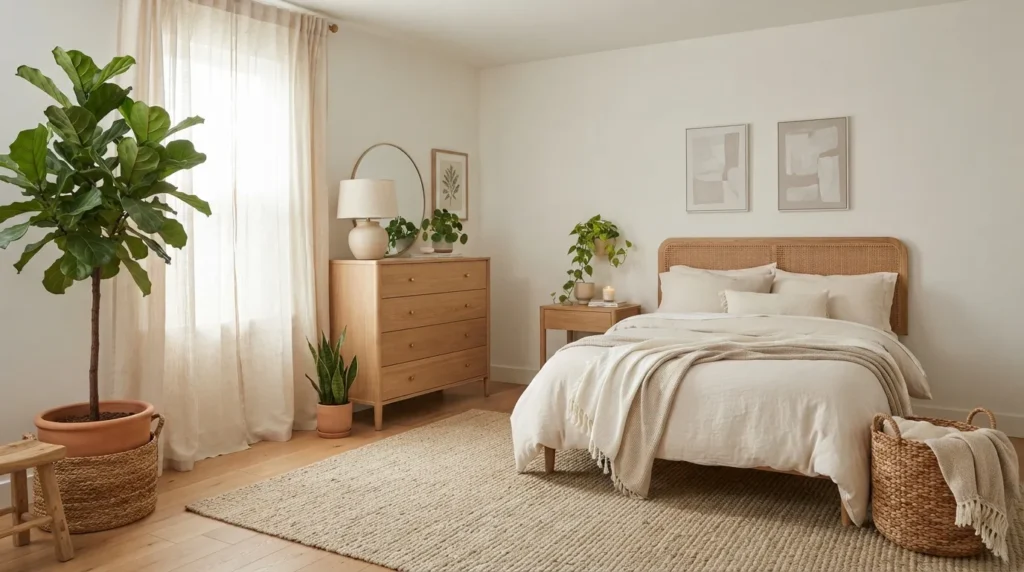
Quick Benefits
- Adds natural color
- Brings visual freshness
- Complements neutral tones
- Softens furniture edges
- Works with organic decorating styles
Why It Works
Green is a natural companion to neutral interiors. It introduces color without overwhelming the calm palette.
Plants also add organic shapes to rooms dominated by straight furniture lines and rectangular textiles.
You don’t need a bedroom filled with plants. One thoughtfully placed plant can create enough contrast.
How To Style It
Choose plants according to the bedroom’s available light and indoor conditions.
Place a medium-sized plant beside a dresser or near a window where appropriate.
Smaller plants can sit on a nightstand, shelf, or dresser.
Use simple ceramic, stone, terracotta, or woven planters that complement the room.
If caring for plants isn’t practical, a high-quality botanical arrangement can provide a similar visual effect without creating a maintenance routine.
9. Cozy Reading Corner
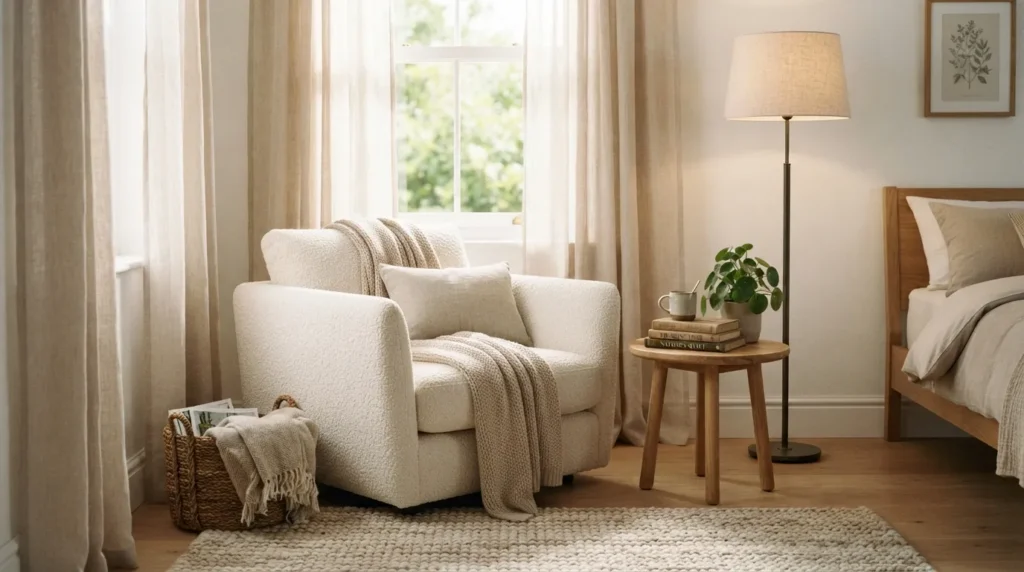
Quick Benefits
- Adds another useful function
- Creates a relaxing retreat
- Fills awkward corners
- Encourages screen-free downtime
- Adds personality to the bedroom
Why It Works
A bedroom doesn’t have to be used only for sleeping. If space allows, a small reading corner can make the room feel more complete.
A comfortable chair, floor lamp, and small side table can transform an unused corner into a purposeful area.
The key is keeping the furniture proportional. A large armchair can quickly overwhelm a small bedroom.
How To Style It
Choose a compact upholstered chair in cream, beige, or warm gray.
Add a small wood or stone side table for books and a cup of tea.
Position a floor lamp beside the chair for focused light.
Finish with a soft throw and perhaps a small basket nearby.
Keep the surrounding area relatively open so the corner feels like a retreat rather than another crowded storage zone.
10. Tonal Neutral Layers
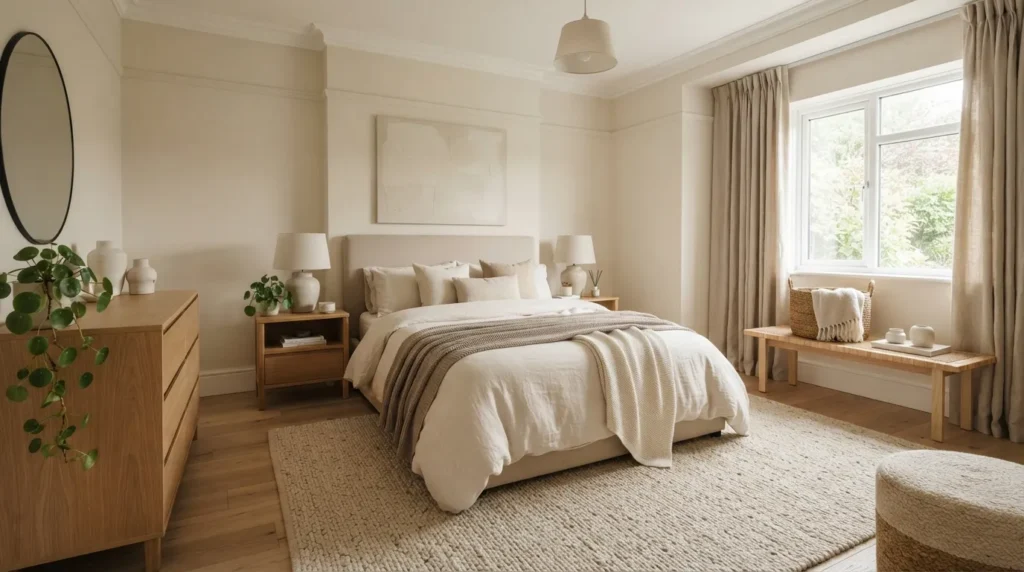
Quick Benefits
- Creates sophisticated depth
- Keeps the room visually calm
- Makes decorating easier
- Works across multiple styles
- Allows textures to become the focus
Why It Works
Using one neutral color everywhere can make a bedroom feel flat. A tonal palette solves this by combining several closely related shades.
Think ivory walls, cream bedding, beige curtains, taupe cushions, light wood, and warm brown accessories.
Because the colors are related, they work together naturally. Texture, shape, and material become more noticeable.
This is one of the easiest ways to create a designer-inspired appearance without relying on bold patterns.
How To Style It
Choose three to five related neutral shades.
Use the lightest shade on the largest surfaces, such as walls and bedding.
Introduce medium tones through curtains, rugs, upholstery, and wood.
Use darker neutrals sparingly for contrast through frames, hardware, baskets, or small decorative objects.
Repeat each major tone at least twice so the palette feels intentional.
How Do You Make a Neutral Bedroom Feel Cozy?
Use several warm neutral shades instead of a single color, then add texture through bedding, rugs, curtains, wood, woven baskets, and upholstery. Warm ambient lighting and a few natural elements such as greenery can make the room feel inviting while preserving the calm neutral aesthetic.
How To Choose The Right Neutral Palette
A successful neutral bedroom usually contains more than one neutral. Start by choosing a dominant shade and then build around it.
Warm white: Best for a bright, airy foundation.
Cream: Adds softness and warmth.
Beige: Creates an earthy, comfortable appearance.
Taupe: Adds depth without becoming visually heavy.
Greige: Works well in contemporary bedrooms.
Natural brown: Useful for wood, baskets, frames, and small accents.
A helpful rule is to keep the largest surfaces relatively light and use darker tones in smaller amounts. This maintains an open appearance while giving the bedroom enough contrast to avoid looking washed out.
Related Articles
- 10 Modern Bedroom Ideas with Elegant Wood Accents
- 10 Bedroom Wall Decor Ideas That Feel Warm and Stylish
- How to Decorate a Bedroom with Elegant Decor
- How to Make a Small Bedroom Feel Bigger with Light Colors
- How to Organize a Small Bedroom Without Extra Cabinets
Frequently Asked Questions
What colors work best for a cozy neutral bedroom?
Cream, ivory, beige, taupe, warm white, greige, and soft brown are versatile choices. Muted green can also complement a neutral palette through plants or small accents. Combining several related shades creates more depth than using one neutral throughout the room.
How can I make a neutral bedroom less boring?
Focus on texture and variation. Layer linen, cotton, wool, woven materials, wood, ceramic, and plush fabrics. Artwork, greenery, and subtle patterns can also add personality while keeping the color palette restrained.
What wood tones work with neutral bedrooms?
Light oak, natural ash, warm honey wood, walnut, and medium brown finishes can all work. Choose a dominant wood tone and repeat it in several areas. Mixing complementary finishes can create a collected look as long as the undertones work together.
How do I make a small neutral bedroom feel cozy?
Keep large furniture pieces proportional to the room and use soft bedding, a properly sized rug, lightweight curtains, and warm lighting. Avoid filling every surface with accessories. Leaving some visual space can make a small bedroom feel more comfortable.
Are neutral bedrooms going out of style?
Neutral interiors remain adaptable because they provide a flexible foundation for different decorating styles. The specific shades and furniture trends may change, but natural materials, layered textures, and restrained color palettes can be updated easily without replacing the entire room.
How many colors should a neutral bedroom have?
There is no fixed number, but three to five closely related shades can create a balanced tonal scheme. Include enough variation to create depth while keeping the overall palette cohesive. Wood and greenery can function as natural supporting elements.
What lighting is best for a cozy bedroom?
Layered lighting works particularly well. Combine general ceiling lighting with bedside lamps, sconces, or a floor lamp. Warm-toned illumination can complement cream, beige, wood, and other earthy materials and create a softer atmosphere in the evening.
Conclusion
A cozy neutral bedroom doesn’t depend on having an expensive furniture collection or perfectly matched decor. The atmosphere comes from thoughtful layers: soft bedding, warm wood, natural textures, comfortable lighting, and a palette that feels connected from one part of the room to another.
Start with the bed because it usually has the greatest visual impact. Build a foundation with cream, ivory, beige, or another warm neutral, then introduce texture through blankets, pillows, rugs, and curtains.
From there, add natural materials. Wood furniture, woven baskets, ceramic accessories, and greenery can keep the room from feeling flat while maintaining the relaxed character of the palette.
Lighting deserves just as much attention. A bedroom that looks beautiful during daylight can feel completely different at night. Several warm, adjustable sources create a more flexible environment for reading, relaxing, and winding down.
Most importantly, don’t feel pressure to fill every empty corner. Neutral design works beautifully when there is enough breathing room between elements.
Choose pieces that feel comfortable, useful, and genuinely suited to your lifestyle. The result can be a bedroom that feels peaceful in the morning, cozy at night, and timeless enough to evolve with you.