
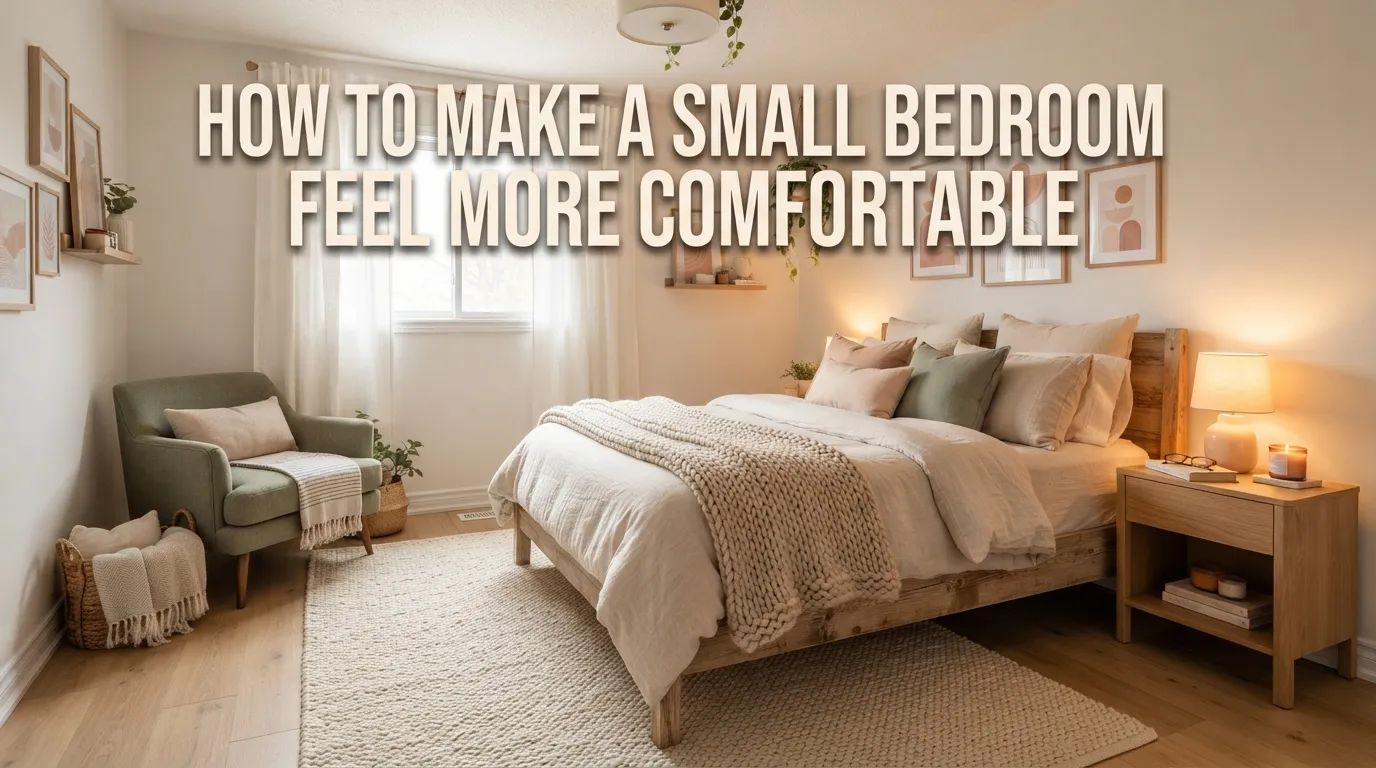
How to Make a Small Bedroom Feel More Comfortable
A small bedroom can be one of the coziest rooms in the house. The challenge is making it feel comfortable without making it feel crowded.
When space is limited, every choice matters. A bulky nightstand can make the walking path feel narrow. Too many decorative pieces can make surfaces look messy. Heavy curtains may block valuable natural light, while the wrong rug can make the entire room feel disconnected.
The good news is that comfort does not depend on having a large bedroom. It comes from how the room feels, functions, and supports your everyday routines.
Start by thinking about the things that make you genuinely comfortable at home: soft bedding, pleasant lighting, a clear place to put your belongings, enough room to move around, and textures that make you want to relax. Those elements can work just as well in a compact room.
One thing that works especially well is to focus on visual softness and physical comfort at the same time. A soft duvet is useful, but so is a warm lamp. A beautiful rug can add warmth, but so can a clutter-free bedside table.
You also do not need to completely redecorate. Sometimes moving the bed, replacing harsh lighting, adding curtains, or reducing unnecessary furniture makes a bigger difference than buying new decor.
The ideas below focus on practical changes that work for bedrooms of different styles, from modern apartments to traditional homes and cozy rental spaces. You’ll find ways to improve bedding, lighting, storage, color, furniture placement, textures, and everyday functionality without overwhelming the room.
Table of Contents
1. Soften the Bedding
Create a comfortable sleeping area with breathable layers and inviting textures.
2. Improve the Lighting
Use multiple light sources to create a warmer and more relaxing atmosphere.
3. Choose Gentle Colors
Build a calming palette that makes the room feel visually lighter.
4. Simplify the Furniture
Keep only the pieces that genuinely support comfort and daily routines.
5. Add a Soft Rug
Use texture underfoot to make the room feel warmer and more finished.
6. Frame the Windows
Use curtains to soften hard lines and control natural light.
7. Create Better Storage
Keep everyday belongings organized without sacrificing valuable floor space.
8. Build a Cozy Corner
Turn a small unused area into a useful retreat.
9. Add Natural Texture
Use wood, woven materials, linen, and plants to create warmth.
10. Personalize the Space
Use meaningful details to make the bedroom feel genuinely yours.
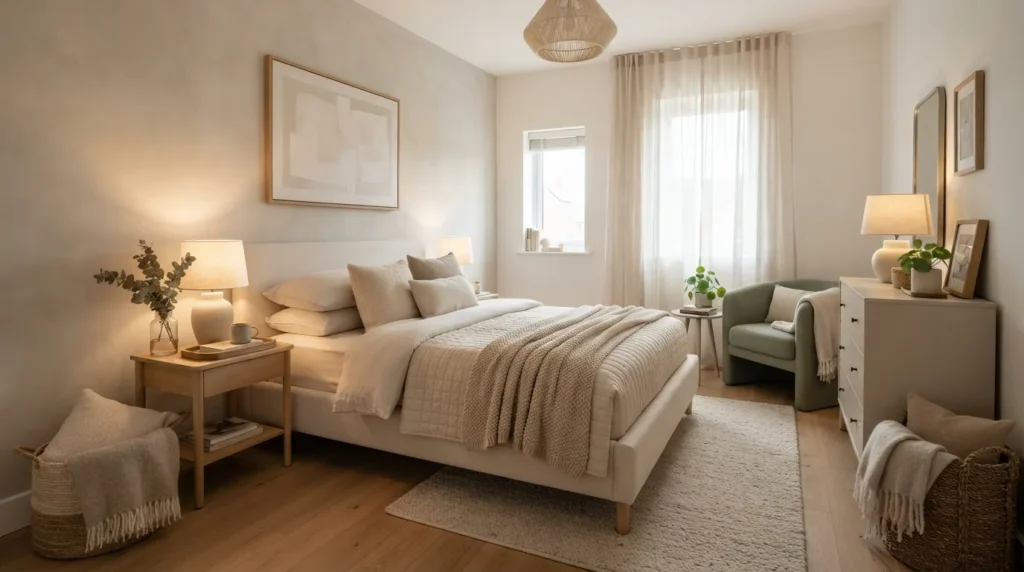
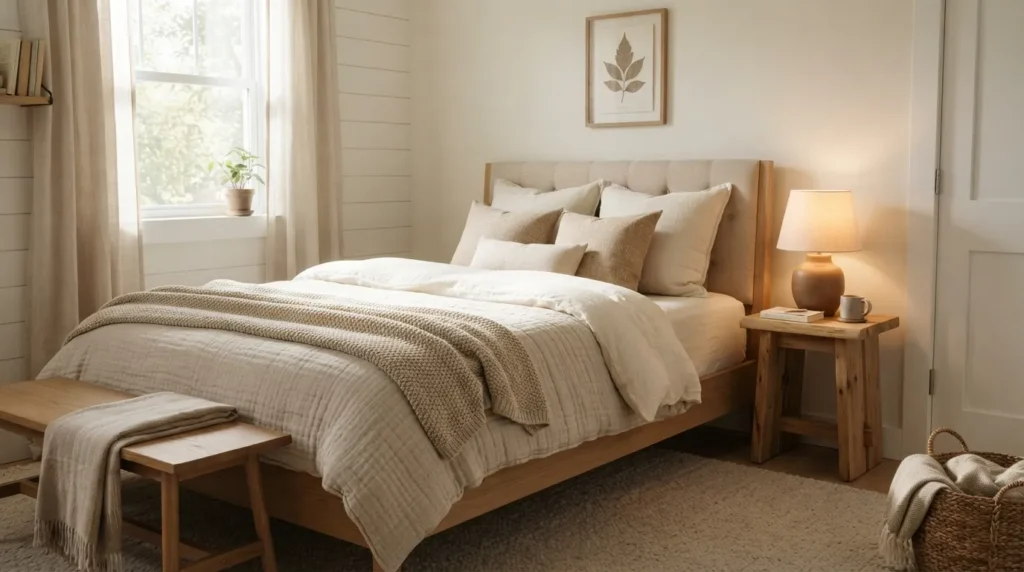
1. Soften the Bedding
Quick Benefits
- Makes the bed more inviting
- Adds visual softness
- Improves everyday comfort
- Creates layers without using floor space
- Gives the room a cozy focal point
Why It Works
In a small bedroom, the bed is usually the largest piece of furniture and naturally becomes the visual center of the room. That makes bedding one of the easiest places to improve comfort.
A bed can look beautiful but still feel uninviting if it has a thin blanket, stiff pillows, or too few layers. Adding a duvet, quilt, throw, and a few supportive pillows creates softness while giving the room more visual depth.
Breathable fabrics are particularly useful because comfort is not only about appearance. Cotton, linen, and other lightweight materials can feel pleasant throughout the year.
You also don’t need an enormous collection of bedding. A few well-chosen layers are usually more effective than piling everything onto the bed.
How To Style It
Begin with a comfortable mattress and supportive pillows.
Add a duvet or comforter in a soft neutral shade such as ivory, warm white, oatmeal, or light beige. Place a quilt or lightweight blanket across the lower portion of the bed for another layer.
Add two or three decorative pillows in complementary textures rather than filling the entire headboard.
A knitted throw casually folded at the foot of the bed can add warmth during cooler months.
For a small room, keep the bedding relatively light in color. This can help the bed feel substantial without making it visually heavy.
Choose washable fabrics that suit your lifestyle. A comfortable bedroom should also be practical to maintain.
2. Improve the Lighting
Quick Benefits
- Creates a relaxing mood
- Reduces harsh shadows
- Makes the room feel warmer
- Adds function without taking floor space
- Makes evening routines more pleasant
Why It Works
Lighting can completely change the way a small bedroom feels.
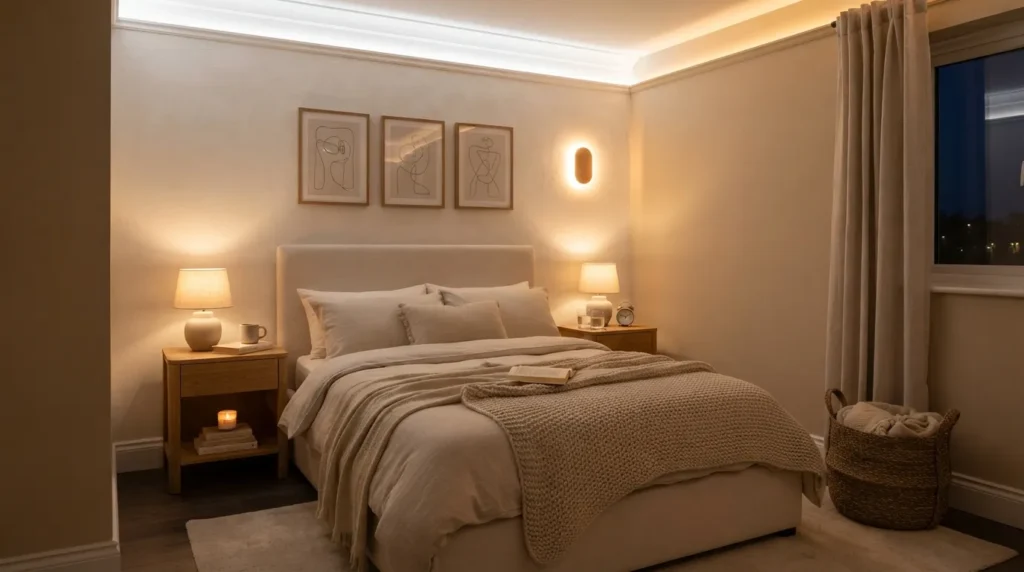
A single bright ceiling fixture often creates a flat, harsh atmosphere. Multiple smaller sources create softer areas of illumination and allow you to control how bright the room feels.
A bedside lamp can provide warm reading light. A wall-mounted fixture can free up nightstand space. A small floor lamp can illuminate an otherwise dark corner.
The idea is to create layers of light rather than relying on one source.
I’ve noticed that bedrooms often feel much more comfortable after lighting is addressed, even when almost nothing else has changed.
How To Style It
Use at least two or three different light sources when possible.
Try:
- Bedside table lamps
- Wall sconces
- A small floor lamp
- Ceiling lighting
- Soft accent lighting
Choose warm-toned bulbs suitable for residential spaces.
If your nightstand is tiny, wall-mounted sconces can provide useful bedside lighting without consuming surface area.
Place a floor lamp in a reading corner or beside a dresser if there is enough room.
For renters, plug-in sconces and slim lamps can provide similar effects without permanent electrical work.
Use dimmable lighting where possible so the room can transition from bright morning light to a softer evening atmosphere.
3. Choose Gentle Colors
Quick Benefits
- Creates a calmer appearance
- Makes the room feel cohesive
- Reflects natural light
- Reduces visual heaviness
- Makes decorating easier
Why It Works
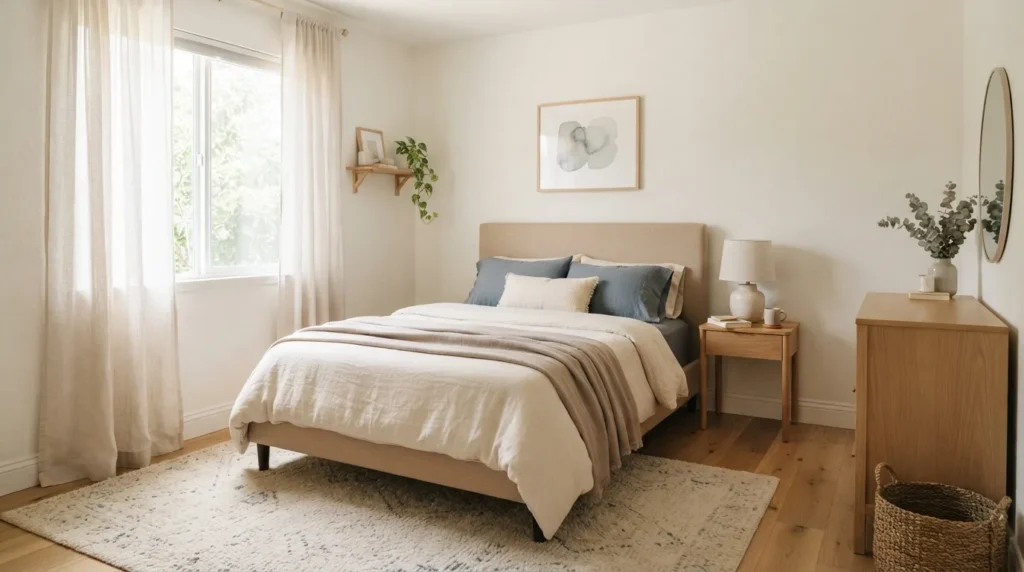
Color has a strong influence on how spacious and comfortable a small room feels.
Lighter shades tend to reflect more available light, which can help a compact bedroom feel brighter. But that does not mean everything has to be pure white.
Warm white, cream, pale beige, soft gray, muted blue, dusty green, and light taupe can all create a relaxed atmosphere.
The most important thing is consistency.
Too many unrelated colors can make a small room feel visually busy because there is less space for the eye to rest.
A restrained palette allows textures and personal details to become more noticeable.
How To Style It
Choose one main wall color and two or three supporting tones.
For a warm bedroom, try:
- Cream
- Oatmeal
- Light beige
- Natural wood
For a cooler palette:
- Soft white
- Pale gray
- Dusty blue
- Light natural wood
For an earthy bedroom:
- Warm white
- Taupe
- Muted olive
- Terracotta accents
Repeat your selected colors in the bedding, rug, curtains, artwork, and accessories.
If you love darker colors, use them strategically on a headboard, accent wall, artwork, or textiles rather than covering every surface.
4. Simplify the Furniture
Quick Benefits
- Improves walking space
- Reduces visual clutter
- Makes cleaning easier
- Creates a more relaxed layout
- Gives important furniture more room
Why It Works
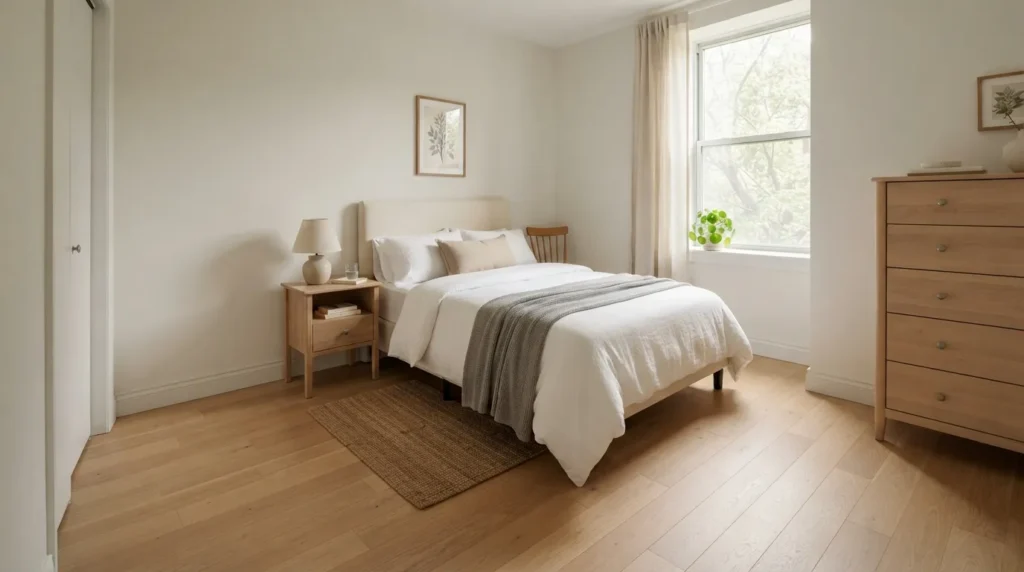
A small bedroom often becomes uncomfortable because it contains too much furniture rather than too little.
A large dresser, oversized nightstands, bench, accent chair, vanity, and several decorative tables may look attractive individually but can overwhelm a compact room collectively.
Before buying anything new, look at what you already have.
Ask whether every piece is useful.
Does the chair get used? Is the bench necessary? Could a smaller nightstand provide enough storage? Could a wall shelf replace a bulky bookcase?
Removing one unnecessary piece can sometimes improve a room more than adding five decorative items.
How To Style It
Prioritize the essential furniture first:
- Bed
- Clothing storage
- Bedside surface
- Lighting
Then add additional pieces only if there is enough space.
Choose furniture with a smaller footprint when possible.
A narrow nightstand can provide useful storage without consuming much floor area.
A tall dresser can sometimes provide the same storage capacity as a wide one while preserving walking space.
Furniture with visible legs can also make more of the floor visible, helping the room feel less crowded.
Maintain comfortable pathways around the bed and between major furniture pieces.
5. Add a Soft Rug
Quick Benefits
- Adds warmth underfoot
- Defines the sleeping area
- Introduces texture
- Softens hard flooring
- Makes mornings more comfortable
Why It Works
Stepping onto a cold, hard floor first thing in the morning is rarely the definition of comfort.
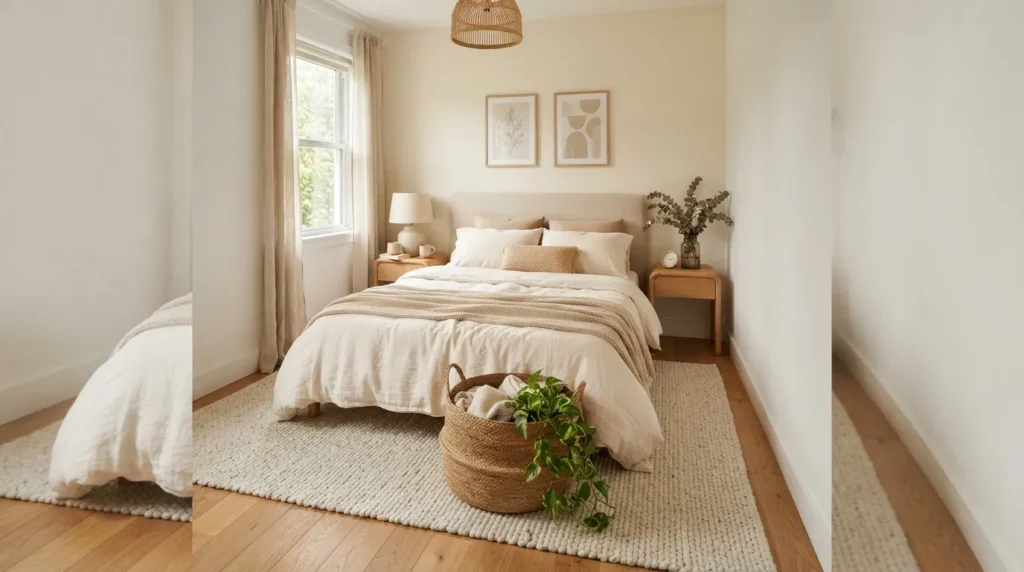
A rug adds softness exactly where you need it while also helping visually anchor the bed.
In a small bedroom, you do not necessarily need a huge rug covering most of the floor. The right placement can create warmth without overwhelming the room.
Texture also contributes to the overall atmosphere. A wool, cotton, or woven rug can introduce another tactile layer.
How To Style It
If the room is large enough, position a rug underneath the bed so it extends beyond both sides.
For a smaller bedroom, consider placing a runner along one or both sides of the bed.
A small rug at the foot of the bed can also provide a comfortable landing area.
Choose a color that connects with your bedding or curtains.
Neutral rugs are especially versatile because they can remain in the room while you change seasonal accessories.
If the bedroom receives heavy traffic, choose a durable material that is easy to clean.
6. Frame the Windows
Quick Benefits
- Softens the room
- Controls sunlight
- Improves privacy
- Adds height
- Creates another textile layer
Why It Works
Windows are often overlooked when decorating a small bedroom.
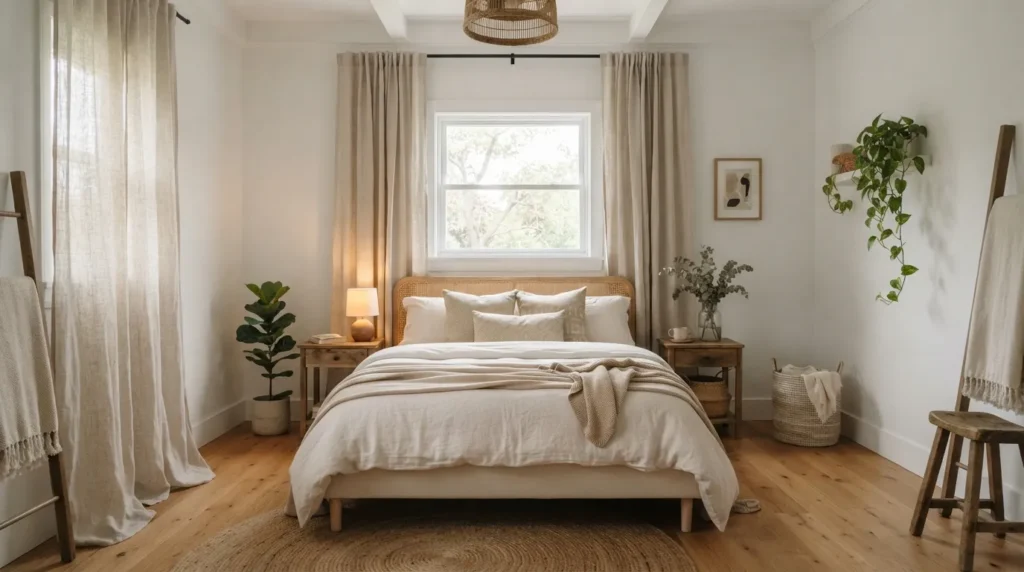
Bare windows can make a room feel unfinished, while curtains add softness and help frame the natural light.
The right window treatment can also make a compact bedroom feel more polished without consuming floor space.
Light-filtering curtains are particularly useful when you want natural daylight without intense glare.
How To Style It
Choose curtains that complement the bedroom’s primary color palette.
Soft white, cream, oatmeal, beige, and pale gray are easy choices.
If possible, mount the curtain rod slightly higher than the window frame to create a sense of height.
Allow the panels to extend toward the floor rather than stopping several inches above it.
For bedrooms that receive strong morning or afternoon sunlight, consider combining decorative curtains with shades or blinds.
Keep the fabric relatively lightweight in a small room so the window remains visually bright.
7. Create Better Storage
Quick Benefits
- Keeps surfaces clear
- Reduces visual clutter
- Makes daily routines easier
- Uses hidden space
- Helps the bedroom feel calmer
Why It Works
Comfort is difficult to maintain when clothes, shoes, bags, and personal items are constantly visible.
Good storage is therefore part of bedroom comfort, not simply organization.
The trick is to use storage that matches your available space.
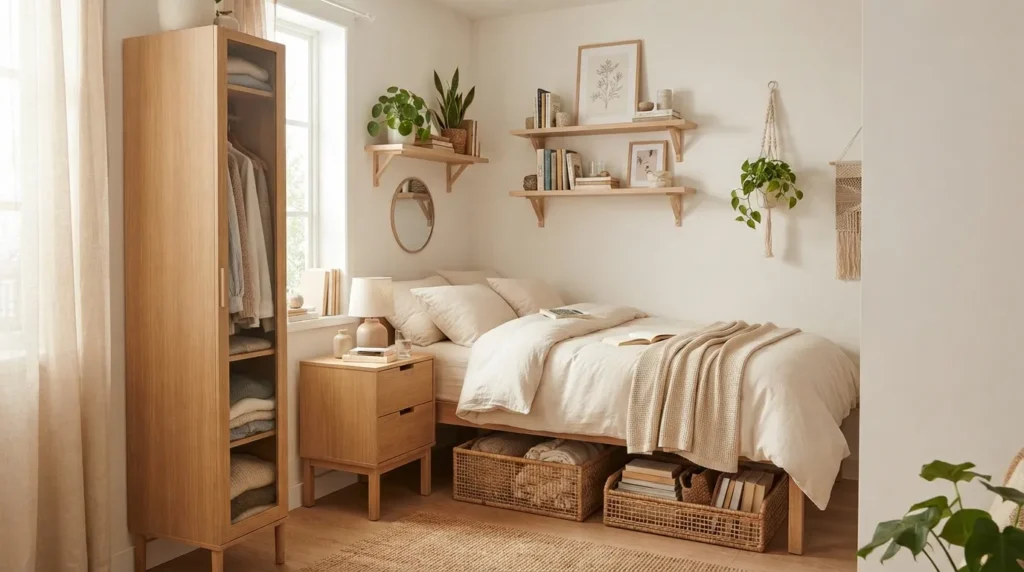
Under-bed containers, tall wardrobes, wall shelves, bedside drawers, and storage baskets can all help keep belongings contained.
The goal is not to hide everything. Frequently used items should remain accessible. But the room should have a defined place for things when they are not being used.
How To Style It
Use under-bed storage for seasonal clothing, spare bedding, luggage, or occasional shoes.
Choose tall storage when floor space is limited.
Use baskets for soft items such as blankets or extra pillows.
Install floating shelves for books and small decorative pieces.
Keep the top of dressers relatively clear.
If you use storage bins, choose a consistent style and label them where helpful.
Avoid turning every storage area into a packed container. Leave enough room that you can retrieve things without taking everything else out.
8. Build a Cozy Corner
Quick Benefits
- Gives unused space a purpose
- Adds personality
- Creates another place to relax
- Makes the room feel more complete
- Works with small furniture
Why It Works
Even a compact bedroom may have a corner that is not being used effectively.
Rather than filling it with random furniture, consider creating a small functional retreat.
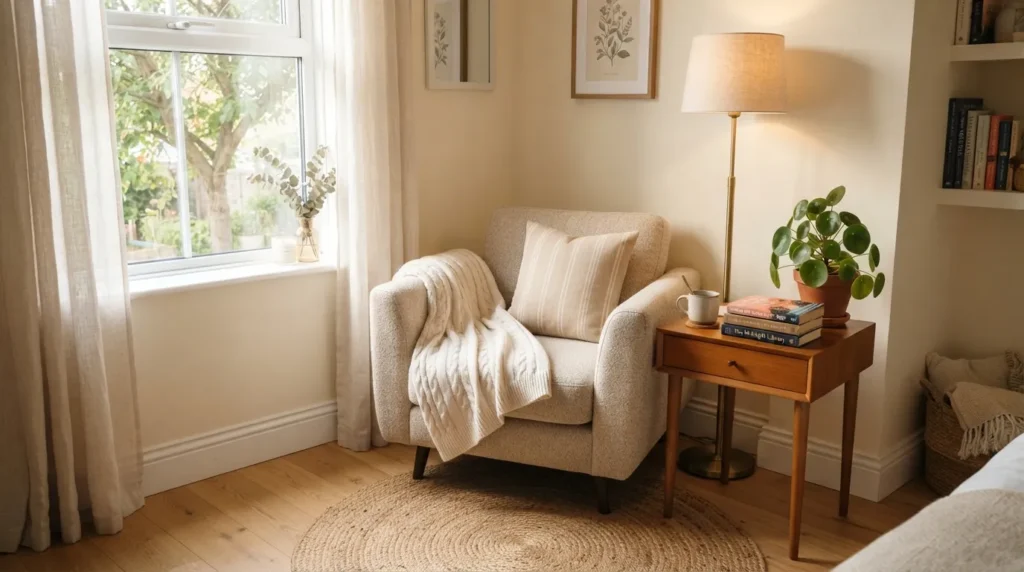
A compact chair beside a window can become a reading spot. A slim bench at the foot of the bed can provide seating. A small stool and lamp can create a simple place to sit while getting ready.
The important thing is scale.
A large lounge chair can consume too much floor area, while a small accent chair can provide the same basic function with a much smaller footprint.
How To Style It
Start with one useful piece.
For a reading corner, choose:
- Compact chair
- Slim side table
- Floor or wall lamp
- Small cushion
- Lightweight throw
For a dressing corner, try a narrow stool near a mirror.
For a quiet decorative corner, use a tall plant or floor lamp instead of adding another piece of furniture.
Keep the area open enough that it does not interfere with walking paths.
9. Add Natural Texture
Quick Benefits
- Creates warmth
- Adds visual depth
- Softens modern furniture
- Makes neutrals more interesting
- Brings organic character into the room
Why It Works
A small bedroom can easily feel flat if everything has the same smooth finish.
Natural materials introduce subtle variation.
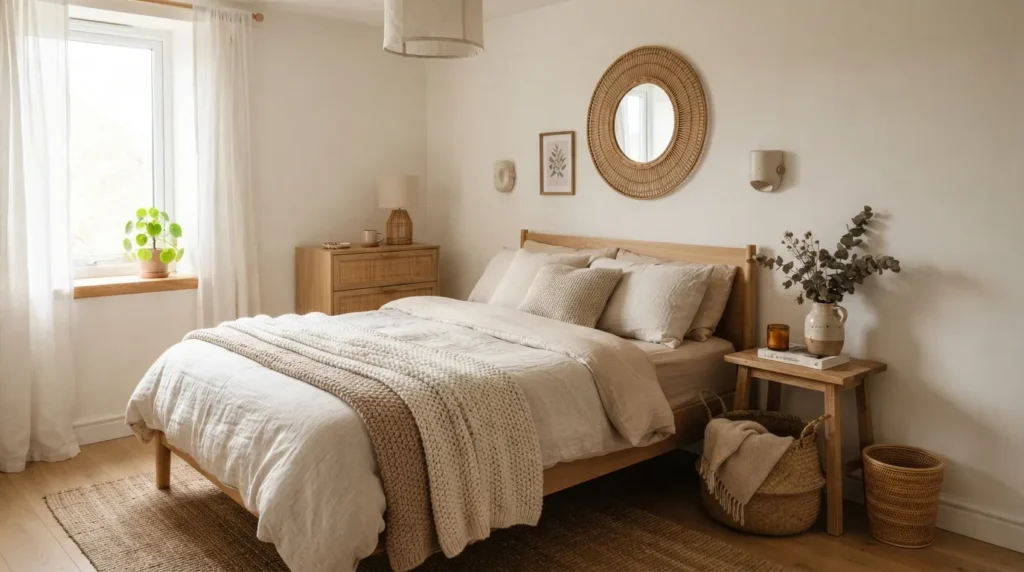
Wood has visible grain. Linen has a relaxed weave. Rattan adds pattern. Woven baskets provide texture. Plants bring organic shapes.
These details make the room feel more collected without requiring lots of decorative objects.
Natural materials also pair easily with neutral colors, making them useful for renters and homeowners who prefer flexible decor.
How To Style It
Introduce wood through a nightstand, bed frame, picture frame, or small stool.
Add a woven basket for blankets or laundry.
Use linen bedding or curtains where practical.
Place a small plant near a window with suitable light.
Choose ceramic accessories for a handmade appearance.
You do not need to use every material. Two or three natural textures are enough to create contrast.
Keep the palette coordinated so the room remains visually calm.
10. Personalize the Space
Quick Benefits
- Makes the room feel like home
- Adds emotional comfort
- Creates visual personality
- Prevents a generic appearance
- Makes the decor more meaningful
Why It Works
A comfortable bedroom should feel personal.
The room may have beautiful bedding and excellent organization, but if every object looks like it came from the same showroom, it may not feel like your space.
Personal belongings provide character.
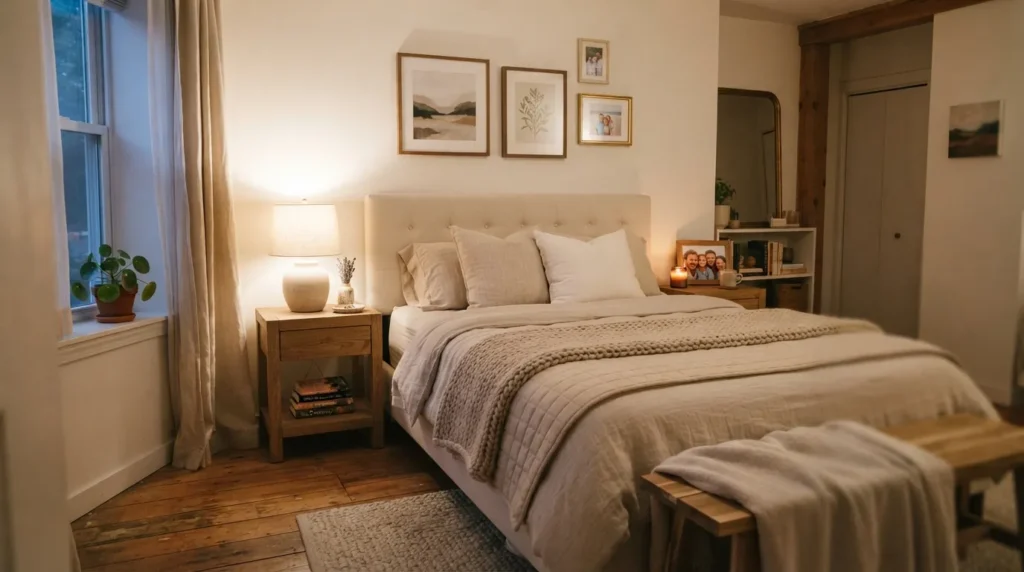
Family photographs, favorite books, travel souvenirs, artwork, handmade pieces, or a meaningful object can make the room feel more connected to your life.
The key is editing. You do not need to display every sentimental item.
How To Style It
Choose a few objects that genuinely mean something to you.
Place favorite photographs in simple frames on a nightstand or wall shelf.
Display a small collection of books you actually enjoy reading.
Use artwork that connects with the colors and mood of the bedroom.
Keep sentimental objects together rather than spreading dozens of small pieces across every surface.
If you change your decor frequently, store seasonal or less-used pieces safely and rotate them occasionally.
A comfortable bedroom should reflect the person who sleeps there.
How to Make a Small Bedroom Feel Bigger and More Comfortable
Comfort and spaciousness often work together.
You can make a compact bedroom feel more open by keeping the floor visible, using appropriately scaled furniture, and allowing natural light to move through the space.
Choose furniture that fits the room rather than furniture based only on how attractive it looks in a showroom.
Avoid blocking windows with tall pieces unless necessary.
Keep pathways clear.
Use mirrors strategically where they can reflect natural or artificial light.
Light-colored bedding and walls can also help visually open the space, particularly when the room has limited natural light.
But don’t remove every cozy element in the name of making the bedroom look larger. A completely empty room may feel spacious but not comfortable.
The best result combines open visual space with soft physical layers.
Small Bedroom Comfort Ideas on a Budget
You don’t need a major renovation to make your bedroom more comfortable.
Start with changes that affect the things you interact with every day.
Wash and refresh your bedding.
Rearrange the furniture.
Declutter your nightstand.
Move unnecessary furniture out of the room.
Add a soft throw.
Replace a harsh bulb with a warmer option.
Hang simple curtains.
Bring in a plant.
Use books or framed artwork you already own.
Add a small washable rug if the floor feels cold.
Thrift stores and secondhand shops can also be useful for lamps, mirrors, baskets, frames, and small furniture pieces.
The most effective improvements are often simple changes to the room’s comfort and functionality rather than expensive decorative purchases.
Small Bedroom Comfort Mistakes to Avoid
Overcrowding the room: Too much furniture reduces both physical and visual comfort.
Using only overhead lighting: A single bright fixture can make the room feel harsh.
Choosing oversized decor: Large accessories can overwhelm limited surfaces.
Blocking natural light: Tall furniture or heavy treatments can make a small bedroom feel darker.
Ignoring storage: Visible clutter quickly affects the atmosphere.
Using too many colors: A restrained palette usually creates a calmer appearance.
Making the bed overly decorative: Too many pillows and blankets can reduce everyday practicality.
Forgetting personal details: A room can look polished but still feel impersonal.
FAQ
How can I make a small bedroom feel cozy without making it look cluttered?
Focus on a few high-impact comfort layers instead of adding many small decorations. Soft bedding, warm lighting, curtains, a rug, and natural textures can create coziness without taking much floor space. Keep surfaces relatively clear and choose furniture that provides useful storage whenever possible.
What colors make a small bedroom feel more comfortable?
Soft neutrals such as warm white, cream, beige, oatmeal, and light taupe can create a calm and visually open atmosphere. Muted blue and soft green can also work well. Rather than using many colors, choose a small palette and repeat those tones throughout the bedding, curtains, rug, artwork, and accessories.
How do I make a small bedroom feel less cramped?
Remove unnecessary furniture, keep walking paths clear, use appropriately scaled pieces, and take advantage of vertical or hidden storage. Light-colored walls and bedding can help reflect available light. Mirrors can also help visually expand the room when positioned thoughtfully.
What type of bedding is best for a cozy small bedroom?
Choose bedding that feels comfortable to you and suits the room’s climate. Cotton, linen, and breathable layered bedding can provide year-round flexibility. A duvet or comforter paired with a lightweight quilt and textured throw can create a cozy appearance without making the bed look excessively bulky.
How can I add storage without making my bedroom feel smaller?
Use hidden and vertical storage first. Under-bed containers, tall shelving, wall-mounted hooks, floating shelves, and furniture with built-in drawers can add capacity without consuming much floor area. Keep everyday belongings accessible while storing seasonal and rarely used items in less convenient locations.
How do I make my bedroom feel relaxing at night?
Use warm, adjustable lighting, keep the nightstand uncluttered, and create a comfortable bed with breathable layers. Soft curtains can help control light and privacy. Reducing visible clutter and using a restrained color palette can also make the room feel calmer at the end of the day.
Should I put a chair in a small bedroom?
A chair can be useful if there is enough space to maintain comfortable walking paths. Choose a compact chair rather than an oversized lounge chair. If the room is already crowded, a small stool or bench may provide seating without taking as much visual and physical space.
Conclusion
Making a small bedroom feel more comfortable does not require adding more furniture or completely changing the room.
Start with the elements that affect you every day: the bed, lighting, walking space, storage, and overall atmosphere. Soft bedding can make the bed more inviting, while warm layered lighting can transform the room after sunset.
Keep the furniture proportional to the room and remove pieces that do not serve a useful purpose. Use rugs, curtains, natural materials, and greenery to add softness without consuming much floor space.
Storage matters just as much as decor. A bedroom filled with visible clothing and miscellaneous belongings will rarely feel restful, no matter how beautiful the furniture is. Give everyday items convenient homes and use hidden or vertical storage for everything else.
Then add personality. A favorite photograph, well-loved book, handmade object, or meaningful piece of artwork can make a compact room feel much more personal.
You don’t have to complete everything in one weekend. Start with the change that bothers you most and work from there.
A small bedroom can still feel peaceful, warm, functional, and distinctly yours. The secret is choosing fewer things, using them thoughtfully, and creating comfort where it matters most.
Related Articles
- 10 Small Bedroom Ideas That Make the Space Feel Bigger
- 10 Cozy Bedroom Ideas for a Warm and Relaxing Retreat
- 10 Bedroom Storage Ideas for Small Spaces
- 10 Minimal Aesthetic Bedroom Ideas for Adults
- 10 Bedroom Wall Decor Ideas That Make Your Room Stand Out