10 DIY Fire Pit Ideas Using Natural Stone
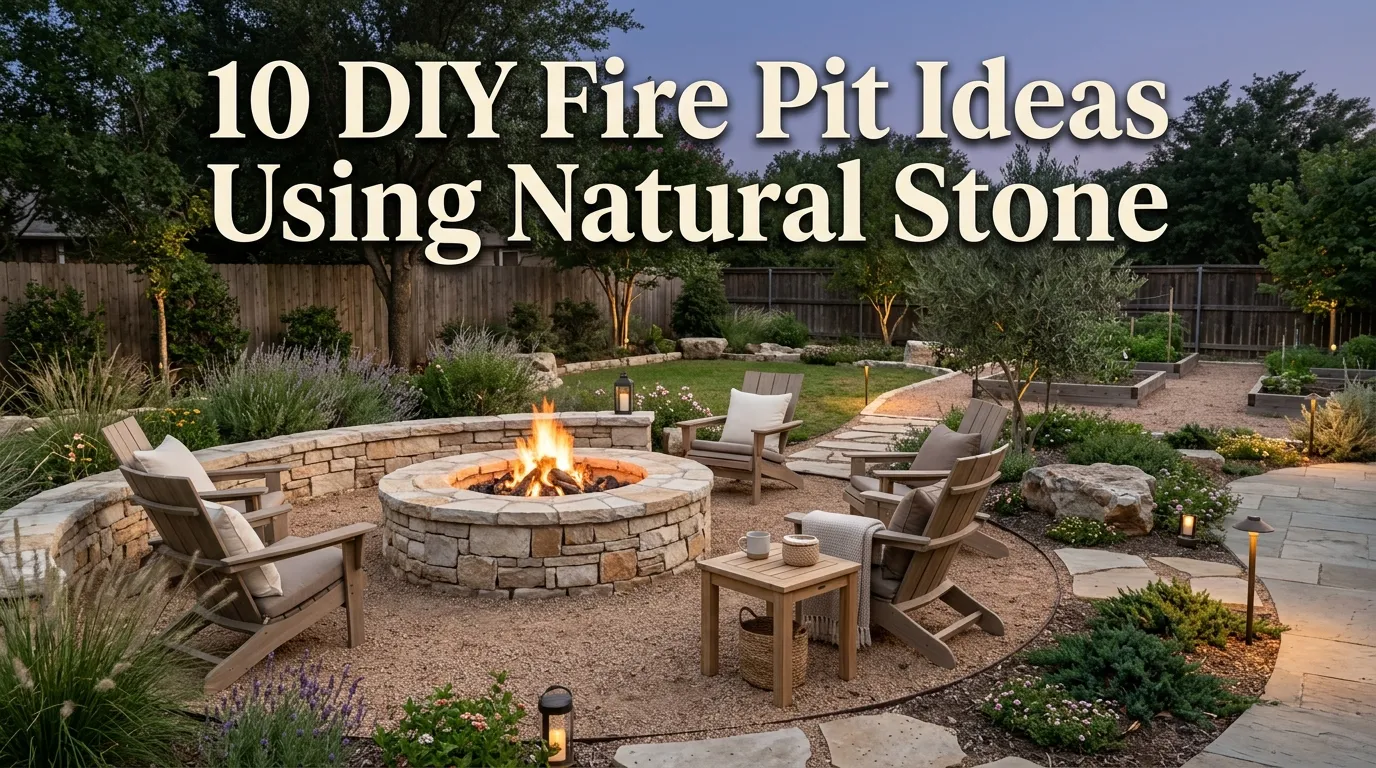
A natural stone fire pit can turn an ordinary backyard into a warm gathering space without requiring a complete landscape makeover. There is something especially appealing about sitting around a fire surrounded by stone that looks as though it belongs in the landscape. The irregular shapes, earthy colors, and natural textures create a relaxed outdoor setting that works beautifully with gardens, patios, gravel areas, and open lawns.
The good news is that a simple fire pit does not have to involve complicated construction. Many homeowners can create a basic above-ground design using suitable natural stone, a properly prepared base, and careful attention to fire safety. The finished look can range from rustic and informal to clean and contemporary depending on the stone, shape, surrounding materials, and seating.
Before starting, however, it is important to check local fire regulations, HOA rules, and any restrictions that apply to outdoor burning in your area. Natural stone is not automatically fire-safe. Some stones can crack, flake, or potentially pop when exposed to intense heat or trapped moisture. The fire pit should therefore be designed with appropriate fire-rated materials and a safe interior construction rather than treating ordinary decorative stone as a direct flame barrier.
In my experience, the best DIY fire pits are simple enough to maintain but thoughtfully integrated into the rest of the yard. A circle of stone can become much more inviting when surrounded by gravel, comfortable chairs, low planting, and subtle lighting. You can also choose a design that leaves room for future improvements, such as a larger patio, built-in seating, or a more developed garden.
Below are ten natural stone fire pit ideas that balance visual appeal with practical backyard use. Whether you prefer a rustic fieldstone look, a neat stacked-stone circle, or a more polished patio setting, these ideas can help you plan a fire feature that feels like a natural part of your outdoor space.
Table of Contents
1. Rustic Fieldstone Circle
Create an informal fire pit using irregular natural stones for an organic backyard focal point.
2. Stacked Stone Ring
Build a clean circular structure with carefully selected stones for a classic DIY fire pit shape.
3. Gravel Fire Pit Patio
Combine a natural stone fire pit with a gravel surface to create an affordable outdoor gathering area.
4. Sunken Stone Gathering
Use a slightly recessed design to create an intimate conversation area surrounded by natural materials.
5. Flagstone Fire Pit
Pair a stone fire pit with flat flagstone paving for a cohesive and durable outdoor entertaining zone.
6. Square Stone Fire Pit
Give natural stone a more contemporary appearance by creating a simple square or rectangular fire feature.
7. Garden Edge Fire Pit
Integrate a fire pit into a landscaped area with low plants, ornamental grasses, and natural stone borders.
8. Built-In Seating Ring
Surround a natural stone fire pit with permanent seating to create a dedicated backyard gathering space.
9. Woodland Stone Pit
Use rugged stone, gravel, logs, and native-inspired planting to create a relaxed woodland atmosphere.
10. Modern Stone Retreat
Combine natural stone with clean landscaping, contemporary seating, and subtle lighting for a polished backyard design.
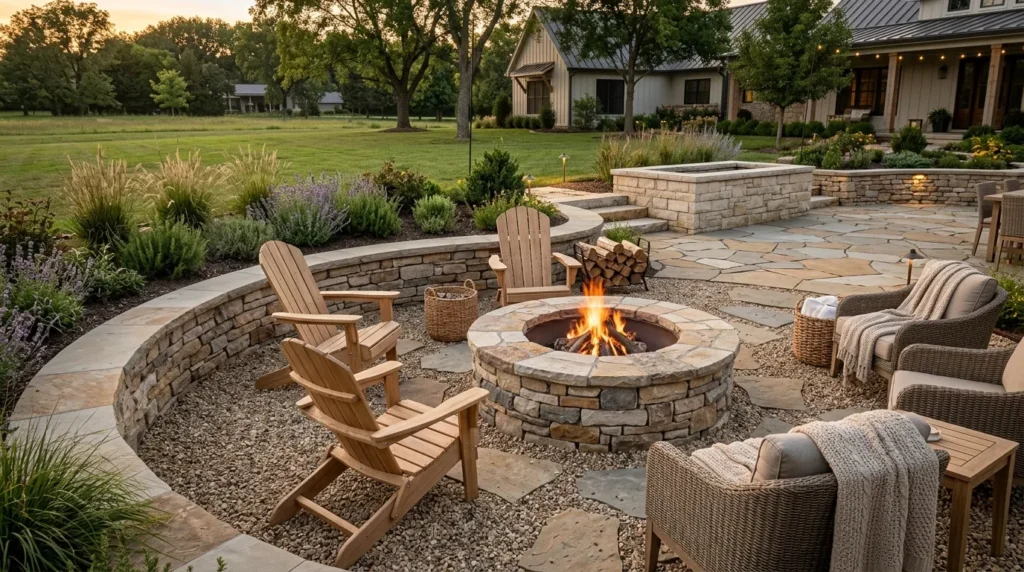
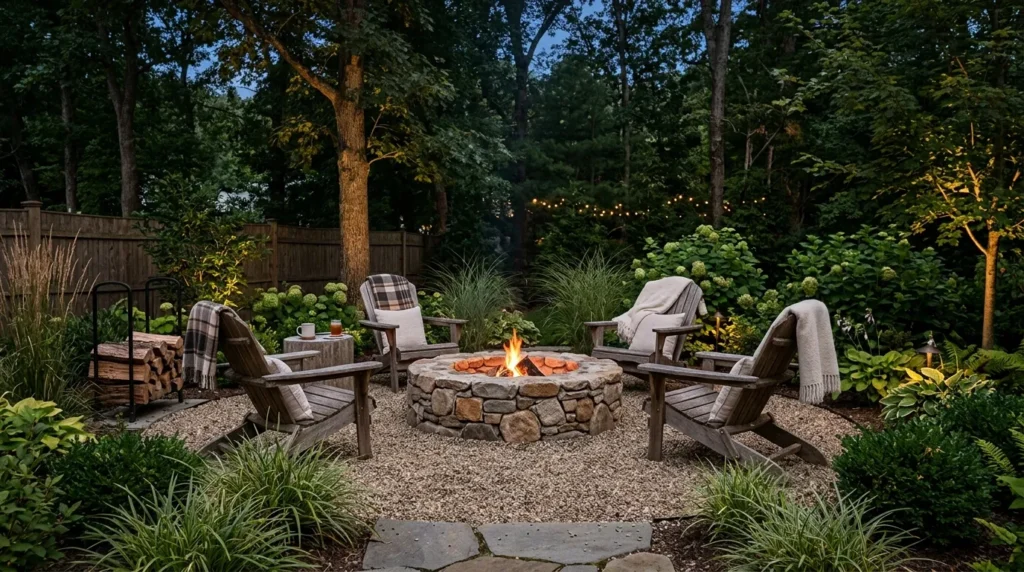
1. Rustic Fieldstone Circle
Quick Benefits
- Creates an organic backyard focal point
- Works well with informal landscaping
- Uses naturally varied stone shapes
- Blends easily with gardens and lawns
- Can be adapted to different backyard sizes
Why It Works
A fieldstone fire pit has the relaxed appearance of something that naturally belongs outdoors. Instead of perfectly uniform blocks, fieldstone typically has irregular edges, varied colors, and different surface textures. That variation makes the fire pit feel less manufactured and particularly well suited to gardens, cottage-style yards, and rustic landscapes.
The circular shape also makes sense for entertaining. Guests can sit around the fire rather than facing one direction, creating a more social arrangement. The irregular stone adds visual interest without requiring elaborate decorative elements.
The important distinction is between appearance and construction. The visible outer stone can provide the rustic look, but the interior should be constructed with materials appropriate for high temperatures. Not every fieldstone is suitable for direct fire exposure.
Moisture is another consideration. Porous stone that contains trapped water can crack or break when rapidly heated. This is one reason proper material selection and a suitable fire-rated liner or interior are important.
How To Style It
Choose fieldstones that share a general color family even if their shapes differ. Warm gray, tan, brown, and muted cream can create a natural palette that works with surrounding planting.
Prepare a stable, level, noncombustible area rather than placing the fire pit directly on dry grass. A compacted gravel base can work well for the surrounding area, provided the complete construction follows local requirements.
Arrange the stone in a circular wall around the appropriate fire-rated interior. Keep the construction stable and avoid loose stones that could shift.
Surround the finished pit with simple Adirondack-style chairs, metal outdoor chairs, or weather-resistant lounge seating. Leave sufficient clearance around the fire feature and follow the manufacturer’s safety recommendations for the fire pit or liner.
For a relaxed look, add a few large landscape stones nearby and use low-maintenance plants around the outer edge without placing flammable vegetation too close to the fire.
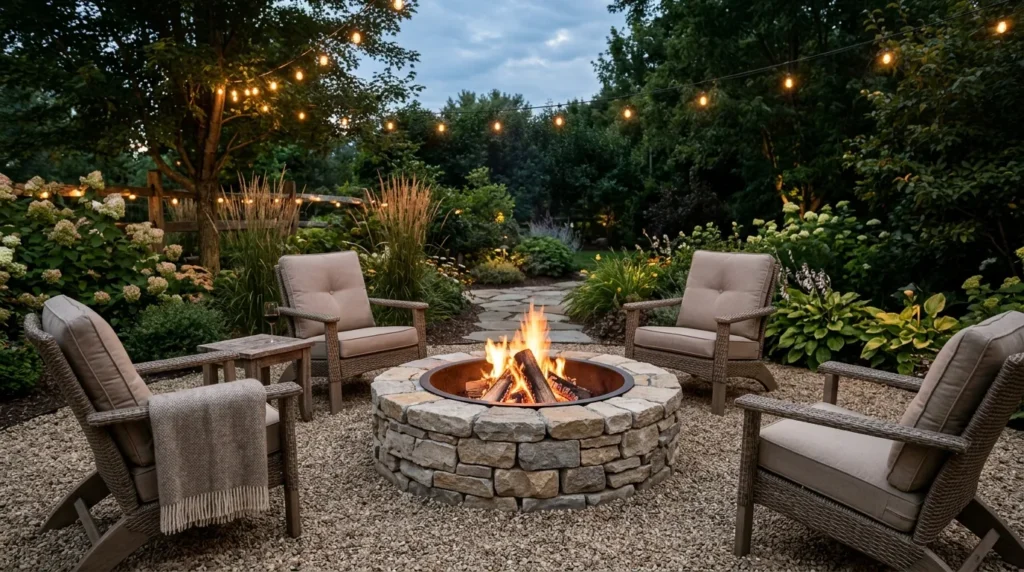
2. Stacked Stone Ring
Quick Benefits
- Provides a traditional fire pit appearance
- Looks neat without feeling overly formal
- Easy to coordinate with landscaping
- Creates a strong circular focal point
- Works well with gravel or stone patios
Why It Works
A stacked stone ring offers a more structured interpretation of the natural stone fire pit. Instead of using highly irregular fieldstone, the stones are selected and positioned to create a relatively consistent circular wall.
This style works especially well when you want rustic character without a completely rugged appearance. The repeated stone layers create visual rhythm, while the natural surface keeps the structure from looking too manufactured.
The ring can also be scaled according to the available space. A compact design may be enough for a small backyard, while a larger circle can become the centerpiece of an outdoor entertaining area.
As with any wood-burning fire pit, the interior construction deserves more attention than the decorative exterior. A liner or other suitable fire-rated system can help separate intense heat from the visible stonework.
How To Style It
Begin by deciding how many people you want the fire pit to accommodate. Avoid making the fire bowl excessively large simply because the backyard has plenty of space. The surrounding seating and safe clearance are just as important.
Use stones of similar thickness where possible so the layers remain stable. If the stones vary considerably, select them intentionally and avoid creating unstable overhangs.
A compacted noncombustible base helps establish a level foundation. Depending on the design and local requirements, the surrounding surface can be gravel, pavers, stone, or another appropriate material.
For a polished rustic appearance, use a single stone color with subtle variations. For a more organic result, combine complementary shades of gray, brown, tan, and cream.
Add comfortable seating around the ring, but keep enough room for people to move safely between chairs.
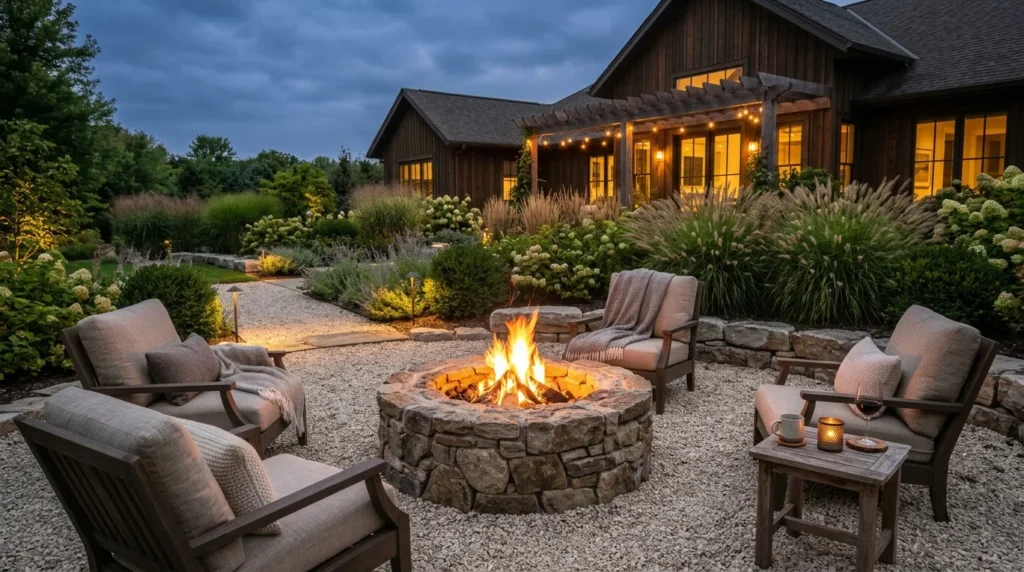
3. Gravel Fire Pit Patio
Quick Benefits
- Creates a defined entertaining area
- Gravel can complement natural stone beautifully
- Provides space for movable seating
- Works in casual backyard designs
- Can be easier to install than a large paved patio
Why It Works
A fire pit becomes much more useful when it has a dedicated surface around it. A gravel patio provides a relatively simple way to establish that zone without covering the entire backyard in concrete or stone.
The contrast between loose gravel and solid natural stone creates a pleasing textural combination. The stone fire pit becomes the visual anchor while the gravel creates a broad, flexible surface for chairs.
Gravel can also make an existing lawn feel more intentionally landscaped. Rather than simply placing a fire pit in the grass, you can create a defined circular or rectangular area that visually separates the gathering zone from the rest of the yard.
Choose gravel appropriate for walking and outdoor furniture. Sharp or oversized aggregate can be uncomfortable underfoot and may make furniture unstable.
How To Style It
Mark out the desired patio area before purchasing materials. Consider the diameter of the fire pit plus the space required for seating and movement.
Remove unsuitable vegetation and prepare the ground according to the gravel installation method you choose. A suitable edging material can help keep gravel contained.
Place the natural stone fire pit in the center or slightly off-center depending on how you want the seating arranged.
Use outdoor chairs with relatively broad feet so they sit securely on the gravel. A small outdoor side table can provide a convenient place for drinks.
Keep the surrounding landscape simple. Ornamental grasses, low shrubs, and a few larger stones can frame the gravel area without making it feel crowded.
For evening use, add low-level landscape lighting along the edge of the gathering space rather than creating excessive illumination around the fire itself.
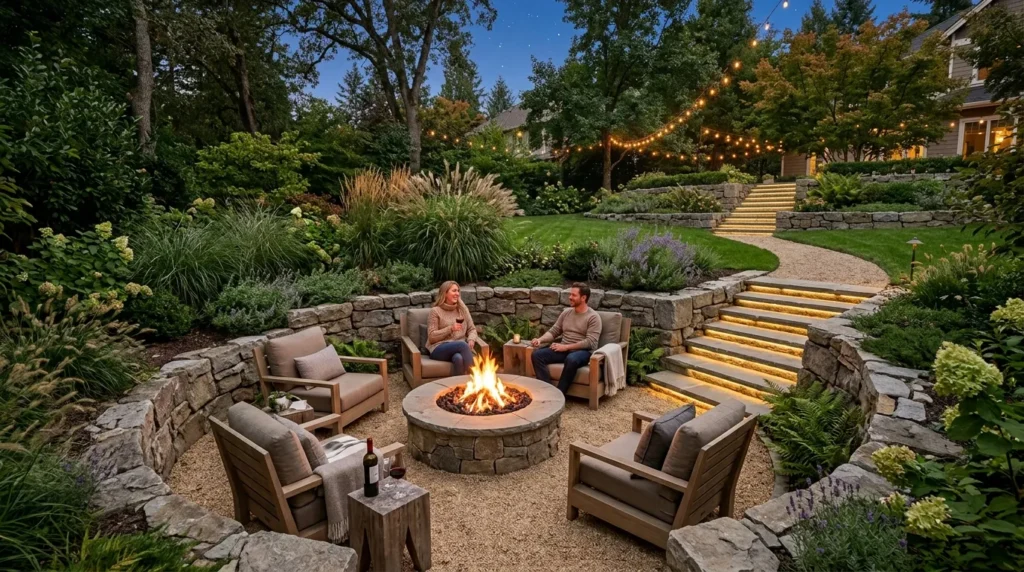
4. Sunken Stone Gathering
Quick Benefits
- Creates an intimate atmosphere
- Defines the fire pit as a destination
- Works well with larger yards
- Adds visual depth to the landscape
- Can separate the fire zone from other activities
Why It Works
A slightly recessed gathering area can give a backyard fire pit a stronger sense of place. Rather than sitting on the same level as the lawn, the fire pit becomes the centerpiece of a distinct outdoor room.
The change in elevation does not need to be dramatic. Even a modest step down can visually separate the fire pit area from a nearby lawn or patio.
This design is especially attractive in landscapes with natural slopes, where the terrain can help establish the gathering space without forcing the homeowner to create a completely artificial structure.
However, any design involving excavation or changes in grade requires more planning. Drainage, retaining structures, soil stability, accessibility, and local construction requirements should be considered before digging.
How To Style It
Keep the fire pit at the center of the recessed area and create a broad circulation zone around it.
Natural stone retaining edges can reinforce the rustic appearance, but structural retaining walls should be designed appropriately for the soil pressure and site conditions.
Use wide, stable steps to connect the sunken area to the rest of the yard. Add appropriate lighting to steps and changes in elevation for nighttime safety.
For seating, choose low-profile outdoor chairs or built-in benches that complement the intimate scale.
Surround the upper edges with grasses, shrubs, or other suitable plants. Keep vegetation and combustible materials at a safe distance from the fire pit itself.
A simple palette of stone, gravel, wood, and greenery can make the area feel like a natural extension of the landscape.
5. Flagstone Fire Pit
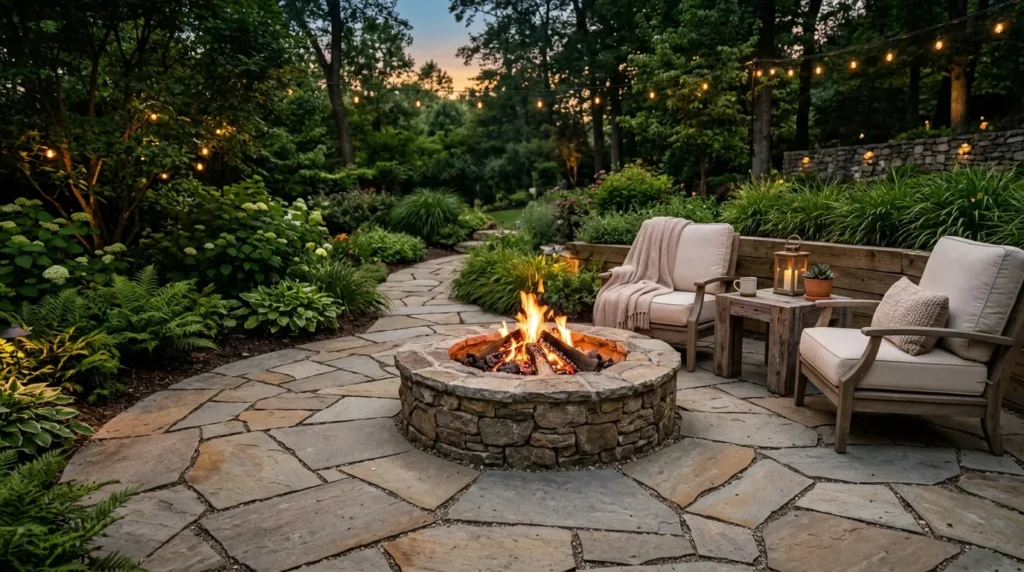
Quick Benefits
- Creates a cohesive stone landscape
- Provides a durable entertaining surface
- Works with rustic and transitional homes
- Adds visual texture
- Creates a finished patio appearance
Why It Works
Flagstone offers a natural way to connect the fire pit with the surrounding landscape. The large, relatively flat pieces can be arranged as a patio surface, walkway, or seating area, allowing the fire pit to feel like part of a larger outdoor room.
The irregular edges of flagstone create a softer appearance than perfectly geometric pavers. When combined with a round stone fire pit, the contrast between the circular fire feature and irregular paving can be particularly attractive.
Natural stone also develops character over time. Weather, sunlight, and normal outdoor use can change the appearance of the surface, often making it feel more integrated with the garden.
The exact installation method depends on the stone, site, climate, drainage, and intended use. A stable foundation is essential for preventing movement and uneven surfaces.
How To Style It
Use the flagstone patio to establish a dedicated seating area around the fire pit.
Choose stones with complementary tones rather than trying to match every piece exactly. Gray flagstone can pair beautifully with cool-toned fieldstone, while warm tan flagstone works naturally with brown or cream stone.
Keep the fire pit itself visually simple. The flagstone already provides considerable texture, so excessive decorative elements may make the area feel busy.
Add weather-resistant lounge chairs or a built-in bench around the outer edge. A low outdoor table can provide a convenient surface for drinks.
Planting beds around the flagstone can soften its edges. Use plants that tolerate the local conditions and keep them safely away from areas exposed to sparks or intense heat.
6. Square Stone Fire Pit
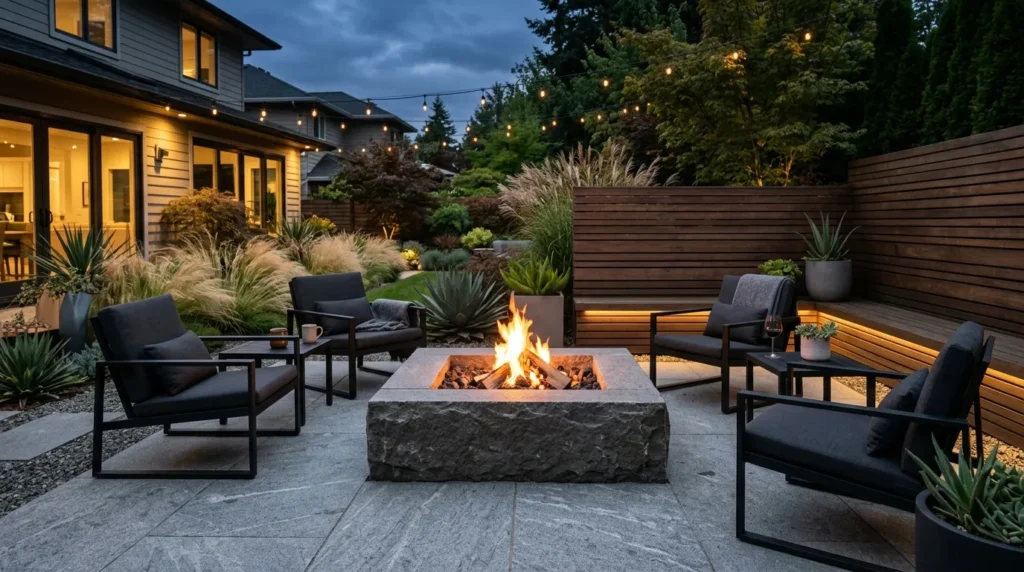
Quick Benefits
- Gives natural stone a modern appearance
- Works well with contemporary landscapes
- Creates a strong architectural focal point
- Pairs easily with rectangular patios
- Makes seating arrangements straightforward
Why It Works
Natural stone does not have to mean a round, rustic fire pit. A square or rectangular design can give the material a more contemporary character.
The clean geometry creates a contrast with the irregular surface of natural stone. That tension between precise shape and organic texture is one of the reasons modern rustic landscaping can feel so interesting.
A square fire pit can also coordinate naturally with a rectangular patio, outdoor kitchen, or modern home architecture.
The structure still needs appropriate fire-rated construction, even when the exterior is primarily decorative stone. The geometry may look simple, but the interior should be planned for heat management, drainage, and safe operation.
How To Style It
Choose stones with relatively straight faces or a masonry system designed to create clean edges. Avoid forcing irregular stones into a geometric shape if doing so compromises stability.
Pair the fire pit with square or rectangular lounge chairs for a coordinated contemporary appearance.
A large-format stone patio or concrete paver surface can reinforce the modern character. Keep planting relatively restrained, using grasses, sculptural shrubs, or repeated plant groupings.
For color, try charcoal and gray stone with warm wood furniture, or cream and tan stone with black metal accents.
Keep decorative accessories to a minimum. The shape and material of the fire pit should remain the primary focal point.
7. Garden Edge Fire Pit
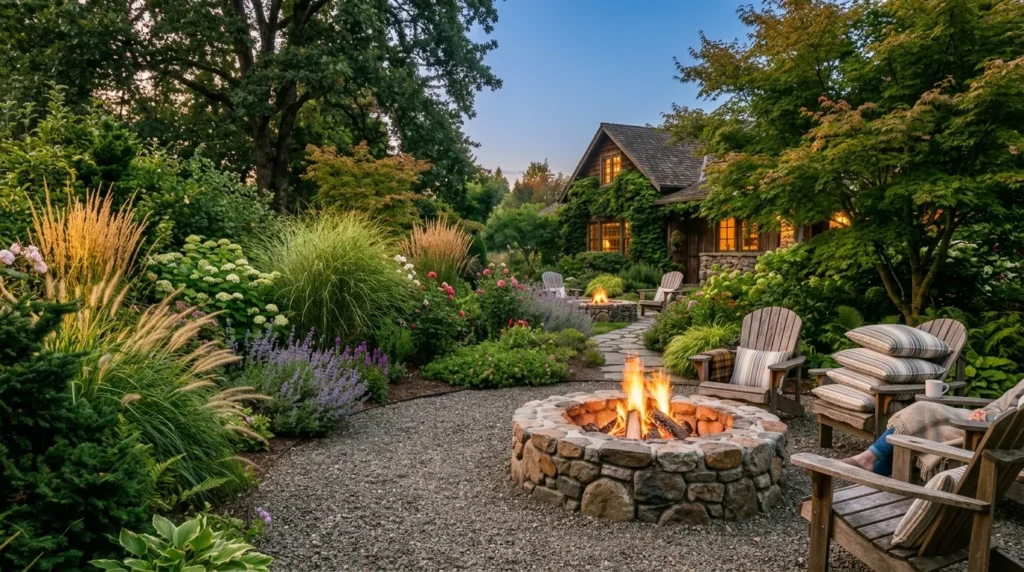
Quick Benefits
- Integrates the fire pit with landscaping
- Creates a cozy garden destination
- Adds natural texture
- Works well in informal yards
- Provides visual separation from the lawn
Why It Works
Placing a fire pit near the edge of a garden can create a more immersive outdoor experience. Instead of treating the fire feature as an isolated object, surrounding landscape becomes part of the view.
The garden can provide a beautiful backdrop during the day and create a sense of enclosure in the evening. Ornamental grasses, shrubs, trees, and flowering plants can frame the gathering space while maintaining an informal character.
The placement needs to be carefully considered, though. Plants, mulch, dry leaves, branches, and other combustible materials should not be positioned too close to an open fire.
The best design creates visual enclosure without compromising safe clearances.
How To Style It
Position the fire pit beside—not inside—a planting bed. Use the garden as the background rather than allowing vegetation to surround the fire itself.
Place larger shrubs and trees farther from the fire zone and use lower, noncombustible landscape materials closer to the pit.
A gravel or stone apron around the fire feature provides a practical transition between the fire and the garden.
Choose plants with different heights and textures to create depth. Evergreen shrubs can provide structure, while grasses and flowering plants can add seasonal movement.
For seating, use natural wood or weather-resistant woven chairs that complement the surrounding planting.
The overall effect should feel as though the fire pit belongs to the garden rather than being placed on top of it.
8. Built-In Seating Ring
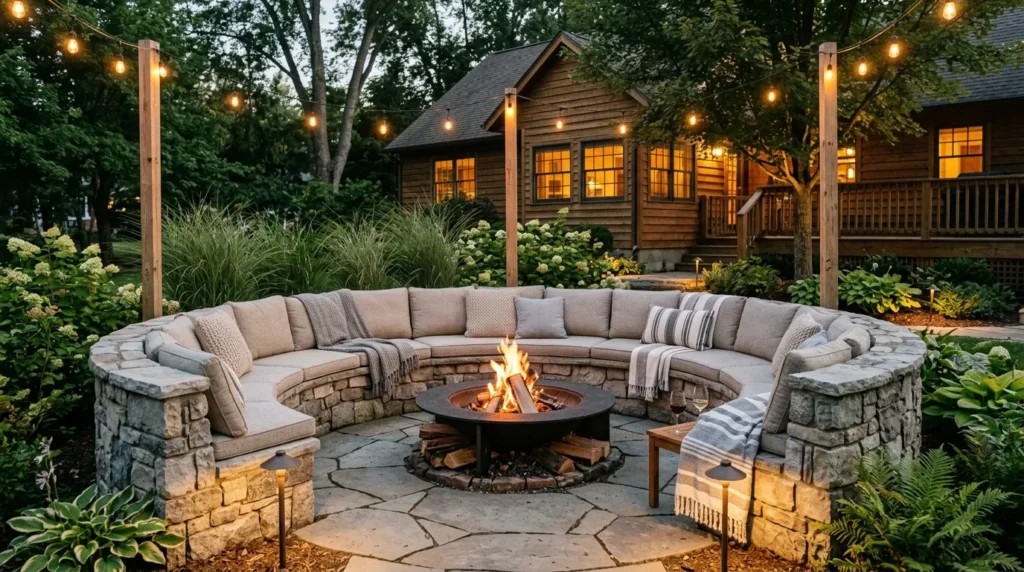
Quick Benefits
- Provides permanent seating
- Creates a defined gathering area
- Makes entertaining easier
- Reduces the need for movable chairs
- Adds architectural structure
Why It Works
A fire pit surrounded by built-in seating can become one of the most useful areas in a backyard. Guests have a clear place to sit, and the seating visually completes the fire pit zone.
Natural stone can be used for the base or exterior of benches, while cushions or suitable outdoor materials can add comfort.
This approach is particularly useful when the fire pit is intended to remain in the same location for many years. Unlike lightweight patio furniture, built-in seating establishes a permanent part of the landscape.
However, permanent structures require more planning than a simple freestanding fire pit. Foundations, drainage, local requirements, accessibility, and structural stability all matter.
How To Style It
Create a comfortable distance between the seating and fire feature. The exact dimensions should be based on the fire pit design, local requirements, and manufacturer guidance.
Use natural stone that coordinates with the fire pit rather than creating an unrelated material combination.
Add removable outdoor cushions in neutral colors if desired. These can introduce comfort without permanently exposing fabric to weather.
A curved bench works particularly well around a circular fire pit, while straight benches can complement a square or rectangular design.
Keep the surrounding area open enough for guests to walk behind the seating. This prevents people from having to cross directly through the main conversation area.
Add a few low-maintenance plants around the outer edge, but keep combustible materials safely away from the fire.
9. Woodland Stone Pit
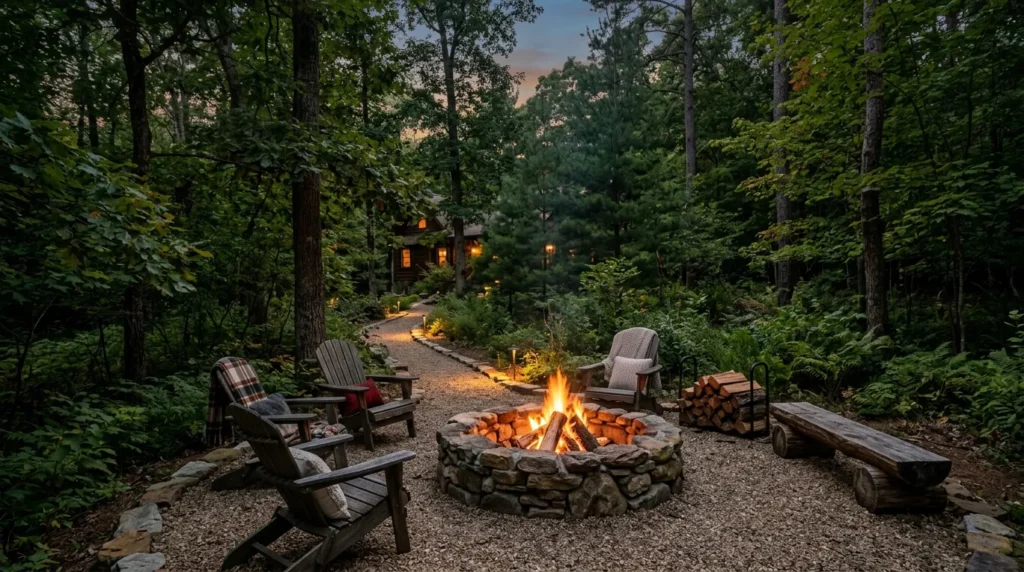
Quick Benefits
- Creates a natural retreat
- Works beautifully with wooded properties
- Uses earthy materials
- Feels relaxed and informal
- Can blend naturally with existing trees
Why It Works
If your property already has mature trees or a natural landscape, a woodland-inspired fire pit can feel like the most natural choice.
Rugged stone, gravel, fallen-log-inspired seating, and native-style planting can create a relaxed atmosphere without making the area look overly designed.
The key is to preserve the existing landscape rather than removing everything and rebuilding from scratch. A simple clearing with an appropriate noncombustible surface may provide enough space for a comfortable gathering area.
Safety becomes especially important in wooded settings. Dry leaves, branches, pine needles, and tree debris can accumulate around a fire pit, so maintaining a clear, clean area is essential.
How To Style It
Use rugged natural stone with varied gray, tan, and brown tones. Surround the fire pit with compacted gravel or another appropriate noncombustible surface.
Choose seating that complements the woodland atmosphere. Adirondack-style chairs, simple wooden benches, or weather-resistant chairs can work well.
Keep decorative elements minimal. The mature trees and natural surroundings should provide most of the visual character.
Use native or well-adapted plants where appropriate, but maintain a safe perimeter around the fire.
After windy weather or before using the fire pit, check the surrounding area for dry leaves, branches, and other debris. Good maintenance is particularly important when vegetation is abundant.
10. Modern Stone Retreat
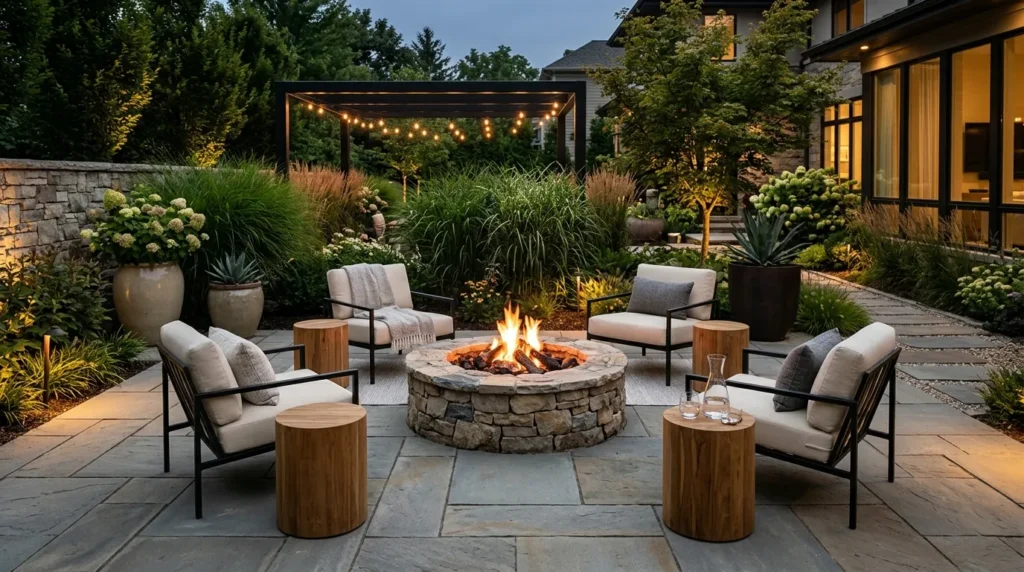
Quick Benefits
- Combines natural and contemporary materials
- Creates a polished backyard focal point
- Works with modern homes
- Supports sophisticated entertaining
- Allows natural stone to remain the star
Why It Works
Natural stone can look surprisingly contemporary when combined with clean landscaping and simple furniture. Instead of emphasizing rustic irregularity, this approach uses stone as a natural material within an organized outdoor design.
A circular or geometric fire pit can sit on a large-format patio surrounded by modern lounge chairs, sculptural planters, ornamental grasses, and subtle lighting.
The result is less rustic cabin and more refined outdoor living room.
This design works especially well when the backyard architecture already has contemporary lines. The natural stone adds warmth and texture without competing with the home’s structure.
How To Style It
Choose one primary stone color and repeat it throughout the outdoor space. Gray stone can work with black metal and cool neutrals, while warm limestone-inspired tones can complement natural wood.
Use simple furniture with clean profiles. Neutral cushions allow the stone and landscape to remain the visual focus.
Add one or two large planters rather than many small containers. Architectural grasses or structured shrubs can reinforce the contemporary look.
Use subtle landscape lighting along pathways and around planting beds. Avoid brightly illuminating the entire fire pit area; the fire should remain an important source of atmosphere.
Finish the space with a small outdoor side table, weather-resistant rug where appropriate, and enough open space for comfortable movement.
Choosing Natural Stone for a DIY Fire Pit
Not every stone is appropriate for a fire pit. This is one of the most important considerations before beginning a project.
Some natural stones can contain moisture or have characteristics that make them unsuitable for repeated high-heat exposure. Rapid heating can cause certain materials to crack, fracture, or potentially eject hot fragments.
For this reason, do not assume that attractive landscaping stone is automatically suitable for the interior of a fire pit.
A safer approach is to use a purpose-designed fire pit insert, fire-rated liner, or other construction system appropriate for the intended fuel and installation. The decorative natural stone can then create the exterior appearance while the interior provides the heat-resistant barrier.
Ask the stone supplier specifically whether the material is suitable for the application you have in mind. Follow the manufacturer’s installation instructions for any liner, burner, or fire pit kit.
If you are uncertain about the materials, consult a qualified local professional rather than experimenting with unknown stone.
Preparing a Safe Fire Pit Location
Location can be just as important as appearance.
Choose an area away from structures, overhanging branches, fences, utility equipment, and other combustible features. Exact clearance requirements vary depending on the fire pit design, fuel type, local regulations, and manufacturer instructions.
A stable, noncombustible surface is generally preferable to placing the fire pit directly on grass, wood decking, or other combustible materials.
Consider drainage as well. Water should not collect inside or around the fire pit because trapped moisture can create problems for some materials.
Think about wind direction, too. Smoke that consistently blows toward the house, seating area, or neighbors can quickly make an otherwise beautiful fire pit unpleasant to use.
Before digging, check for underground utilities and follow local requirements for excavation and outdoor fire installations.
How to Create a Comfortable Fire Pit Seating Area
The fire pit is only one part of the experience. Seating determines whether people can comfortably spend time around it.
Arrange chairs so guests can see one another rather than creating a rigid line facing the fire. Leave enough space between seating and the fire feature for safe movement.
Choose furniture based on the weather conditions in your area. Outdoor-rated materials generally require less maintenance, but all furniture benefits from appropriate care and storage.
A small side table near seating can be surprisingly useful. Guests need somewhere to put drinks, snacks, books, or phones.
If the fire pit is the center of a larger patio, consider creating secondary seating nearby. This allows guests to move between the fire and other activities without overcrowding the main circle.
Keep cushions and textiles away from direct sparks and heat. Store them appropriately when the fire pit is not in use.
Fire Pit Safety and Maintenance
A beautiful DIY fire pit still needs regular care.
Always follow local regulations and the manufacturer’s instructions for your fire pit, liner, burner, or fuel system. Requirements can vary significantly by location.
For wood-burning fire pits, use only appropriate, seasoned firewood and never burn household waste, treated lumber, plastics, or other unsuitable materials.
Keep a suitable means of extinguishing the fire readily available. Never leave an active fire unattended, and make sure it is completely extinguished before leaving the area.
Inspect the stonework periodically for movement, cracks, or damage. If stones become unstable or show signs of significant heat-related deterioration, stop using the fire pit until the problem is addressed.
Keep the surrounding area free of dry leaves, grass clippings, branches, and other combustible debris.
Seasonal weather matters as well. Freeze-thaw cycles, heavy rain, and repeated heating can affect masonry and stone over time. Regular inspection can help identify problems before they become serious.
Common DIY Fire Pit Mistakes to Avoid
One of the biggest mistakes is choosing stone based entirely on appearance. A beautiful stone is not necessarily appropriate for high-heat exposure.
Another common problem is building directly on an unstable surface. If the base shifts, the stone wall can become uneven or unsafe.
Poor drainage can also create long-term issues. Water trapped around or inside the structure may contribute to cracking and deterioration.
Do not make the fire pit excessively large simply because you have enough backyard space. A larger fire can require more fuel, create more heat, and increase the amount of surrounding clearance needed.
Avoid placing the fire pit underneath trees or too close to fences, structures, or other combustible surfaces.
Finally, do not skip local requirements. Outdoor burning rules can vary by city, county, state, fire district, season, and weather conditions. Check the rules that apply to your property before construction and before each use.
FAQ
What is the best natural stone for a DIY fire pit?
The best choice depends on the specific stone and how it will be used. Not all natural stone is suitable for direct high-heat exposure. Ask your supplier whether the material is rated or recommended for fire pit applications, and consider using a purpose-built fire pit insert or fire-rated liner to protect the decorative stone.
Can you use regular landscaping rocks in a fire pit?
Not necessarily. Some landscaping rocks can contain moisture or have properties that make them unsuitable for intense heat. Certain stones may crack or fracture when heated rapidly. Use materials specifically recommended for fire pit construction and follow the manufacturer’s guidance rather than assuming ordinary landscape rock is safe.
Do you need a liner for a natural stone fire pit?
A suitable fire-rated liner or insert can provide an important barrier between the fire and decorative masonry. Whether one is required depends on the fire pit design, fuel type, materials, and local requirements. Follow the instructions for the specific fire pit system and consult a professional if the construction details are uncertain.
What should I put under a stone fire pit?
A stable, properly prepared, noncombustible base is generally appropriate. The exact foundation depends on the site, soil, climate, fire pit design, and surrounding surface. Gravel, pavers, concrete, or masonry systems may be suitable in different situations, but the installation should provide stability and appropriate drainage.
Can I build a natural stone fire pit on grass?
It is generally better to create a dedicated noncombustible area rather than placing an active fire pit directly on grass. Grass and surrounding vegetation can dry out and become combustible, while an uneven surface can affect stability. Create an appropriate fire-safe zone according to local requirements and the manufacturer’s instructions.
How far should a fire pit be from the house?
The required clearance varies by location, fire pit type, fuel, and local regulations. Manufacturer instructions and local fire codes should take priority over a generic distance. Also consider fences, sheds, trees, utility equipment, outdoor structures, and other combustible materials when choosing the location.
How do you maintain a natural stone fire pit?
Inspect the structure regularly for loose or damaged stones, keep the surrounding area free of combustible debris, and clean out ash according to the fire pit manufacturer’s recommendations. Avoid using unsuitable fuels and protect the structure from excessive moisture where appropriate. Stop using the fire pit if you notice significant cracking, instability, or other damage.
Conclusion
A natural stone fire pit can become one of the most inviting features in a backyard, but the best designs combine appearance with careful planning. The stone creates character, while the surrounding surface, seating, landscaping, lighting, and layout determine how comfortable the space will be to use.
You do not need to build an elaborate outdoor room to create a memorable gathering spot. A simple fieldstone circle on a gravel patio can feel just as welcoming as a sophisticated built-in design. The key is choosing a style that fits the scale of your property and supports the way you actually spend time outdoors.
Start with the location and safety requirements before choosing decorative details. Confirm local regulations, select appropriate fire-rated materials, prepare a stable base, and make sure the surrounding area provides adequate clearance. Once those fundamentals are handled, you can focus on the fun part: selecting stone, seating, plants, lighting, and textures that complement your home.
If you are planning a DIY project, begin with a straightforward design rather than trying to build every feature at once. A well-made stone fire pit can become the foundation for a larger outdoor entertaining area later.
With thoughtful material choices and regular maintenance, your fire pit can provide a comfortable focal point for backyard evenings, casual gatherings, and quiet nights at home.
Related Articles
- Backyard Landscaping Ideas for Outdoor Entertaining
- DIY Backyard Projects That Add Style and Function
- Backyard Patio Ideas for Comfortable Outdoor Living
- Backyard Privacy Ideas for a More Relaxing Space
- Outdoor Living Room Ideas for Cozy Backyard Gatherings