10 Garden Decor Ideas That Increase Curb Appeal
The front garden is one of the first things people notice about a home. Even a small planting bed can influence how the entire property looks from the street. The right garden decor adds structure, color, texture, and personality while helping the landscape feel connected to the architecture.
The challenge is choosing outdoor accents that enhance the garden rather than compete with it. Too many decorations can make a front yard look crowded, while a completely undecorated landscape may lack the finishing details that give it character. A few well-placed elements often create a stronger impression than a collection of unrelated accessories.
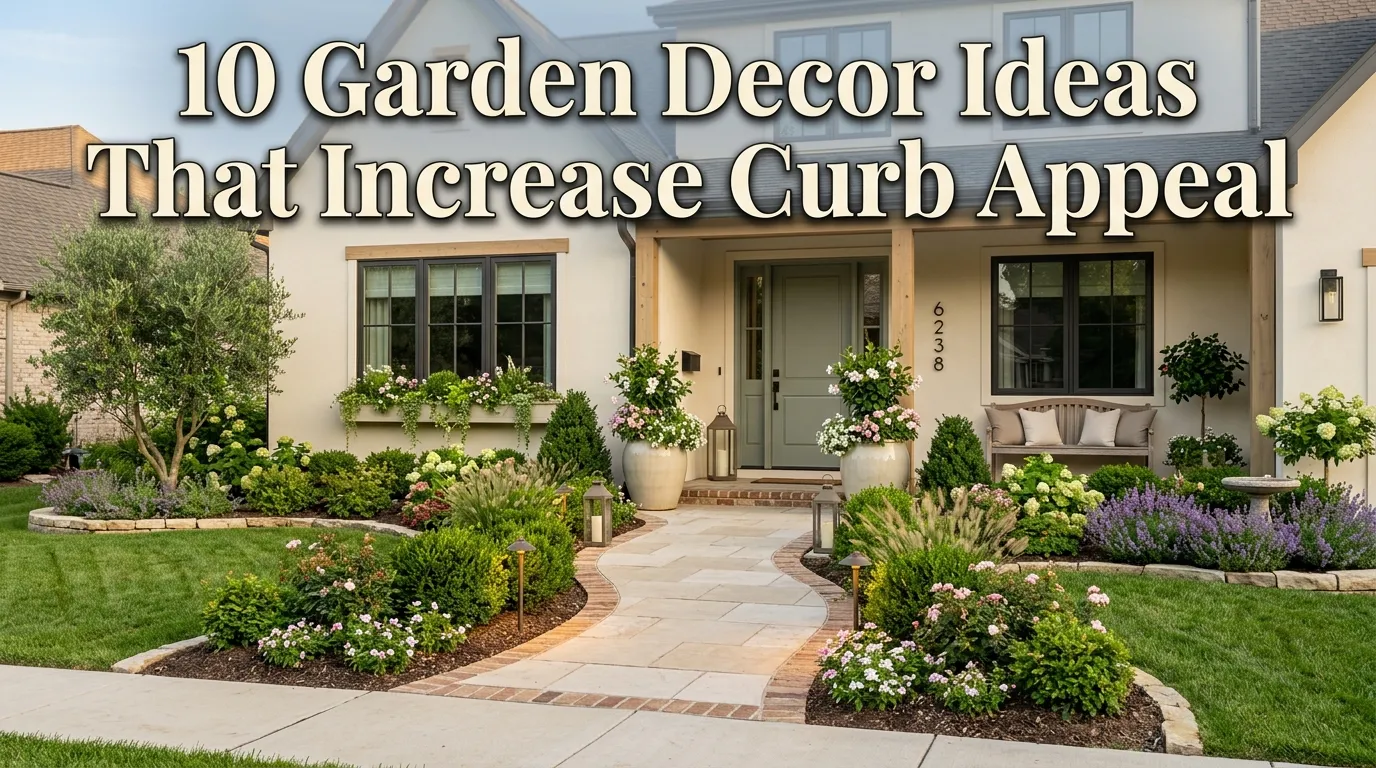
In my experience, the most successful curb-appeal gardens combine permanent landscape features with a handful of decorative details. A pair of planters can frame an entryway. A garden path can guide the eye toward the front door. A simple bench can create a welcoming destination. Even house numbers can become part of the overall garden design when their material and scale complement the home.
These ideas focus on practical ways to make a front garden look more polished, welcoming, and intentional. Some work especially well for traditional homes, while others suit modern exteriors, cottage gardens, townhouses, and smaller front yards. You’ll also find suggestions for materials, placement, color, lighting, maintenance, and proportion.
The goal isn’t to create a landscape that looks overly staged. It is to build a garden that feels cared for and naturally connected to the home. With a thoughtful combination of plants and decor, ordinary outdoor spaces can become attractive features that make coming home feel a little more special.
Table of Contents
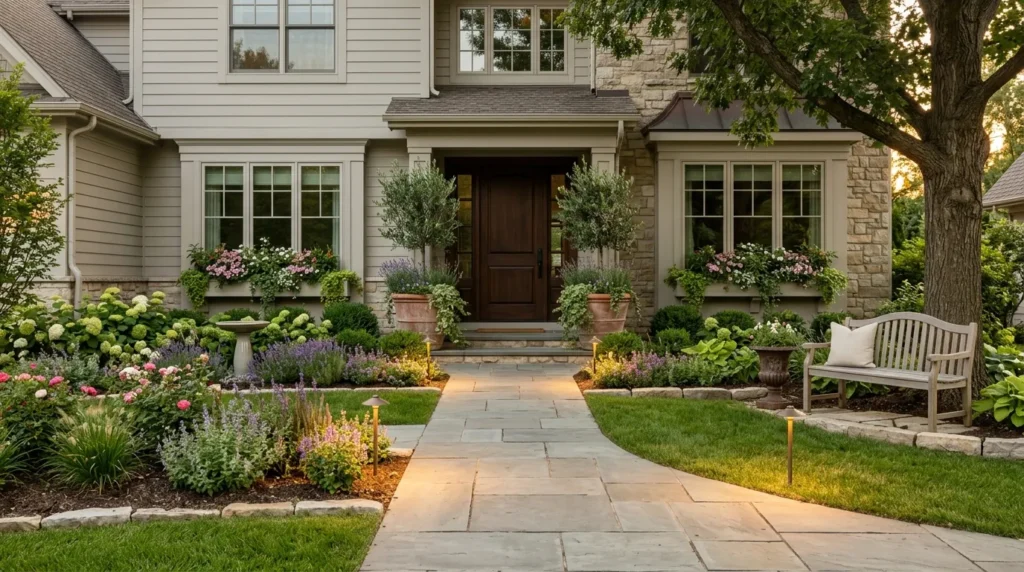
1. Statement Planters
Frame the entryway with substantial containers filled with attractive seasonal plants.
2. Welcoming Garden Paths
Use pathways to create structure and guide visitors naturally toward the entrance.
3. Decorative Garden Edging
Give planting beds a crisp finished appearance with attractive borders.
4. Charming Garden Benches
Add functional seating that creates a welcoming focal point.
5. Stylish House Numbers
Turn an everyday necessity into a small but noticeable design feature.
6. Layered Garden Lighting
Use outdoor illumination to highlight paths, plants, and architectural details.
7. Vertical Garden Features
Add height and personality through trellises, obelisks, and climbing plants.
8. Natural Stone Accents
Introduce texture and permanence with stone containers, borders, and features.
9. Seasonal Flower Displays
Use containers and planting beds to add changing color throughout the year.
10. Coordinated Entry Decor
Connect the garden and front door with a cohesive collection of outdoor accents.
1. Statement Planters
Quick Benefits
- Creates an immediate focal point near the entrance
- Adds height and structure to the landscape
- Works well in small front gardens
- Makes seasonal decorating easier
- Can complement the home’s architectural style
Why It Works
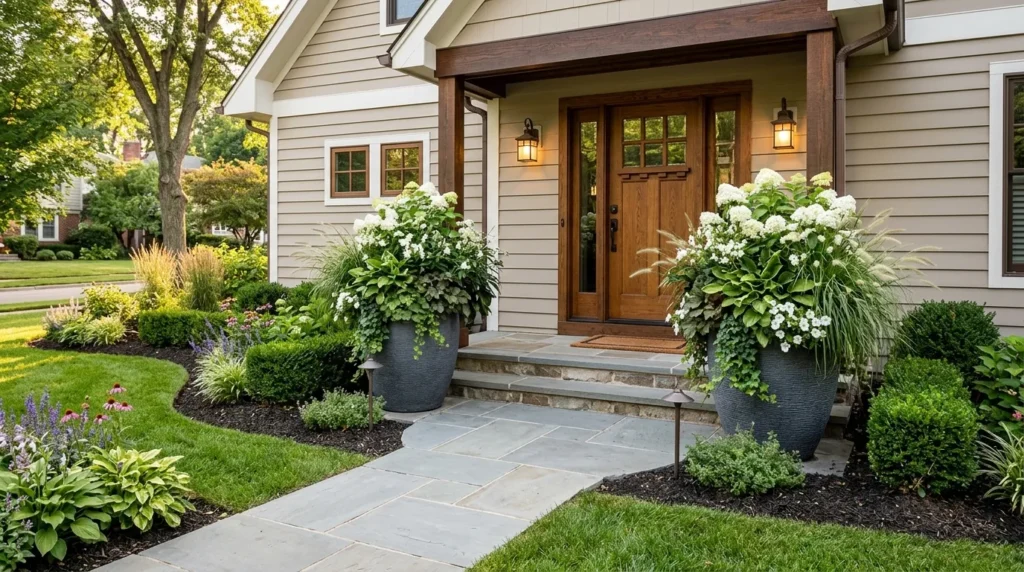
Large planters have a simple visual advantage: they add height, color, and structure without requiring a major landscape renovation. Positioned near the front door, garage, steps, or walkway, they help define important areas of the property.
A pair of matching planters can create symmetry around an entrance, while one oversized container can provide a stronger contemporary statement. The choice depends on the architecture. Traditional homes often suit classic urns or stone-style containers, while modern houses can look striking with simple geometric planters.
The plants inside matter just as much as the containers. A mixture of upright foliage, trailing plants, and seasonal flowers creates more dimension than a single flat layer.
How To Style It
Choose planters large enough to remain visually substantial next to the front door. Tiny containers can disappear against a large facade, while oversized pieces can overwhelm a narrow entry.
For a classic look, use matching containers on either side of the entrance. Fill them with evergreen foliage, flowering annuals, ornamental grasses, or a combination of textures.
For a modern home, choose two simple containers in black, charcoal, concrete, or another finish that relates to the exterior. Keep the planting palette restrained.
If the front garden receives strong afternoon sun, choose plants suited to those conditions rather than selecting them based solely on appearance. The healthiest container planting always looks more attractive than stressed plants.
2. Welcoming Garden Paths
Quick Benefits
- Creates a clear route to the front door
- Adds structure to the landscape
- Connects the garden with the house
- Provides texture and visual movement
- Makes the entrance feel more intentional
Why It Works
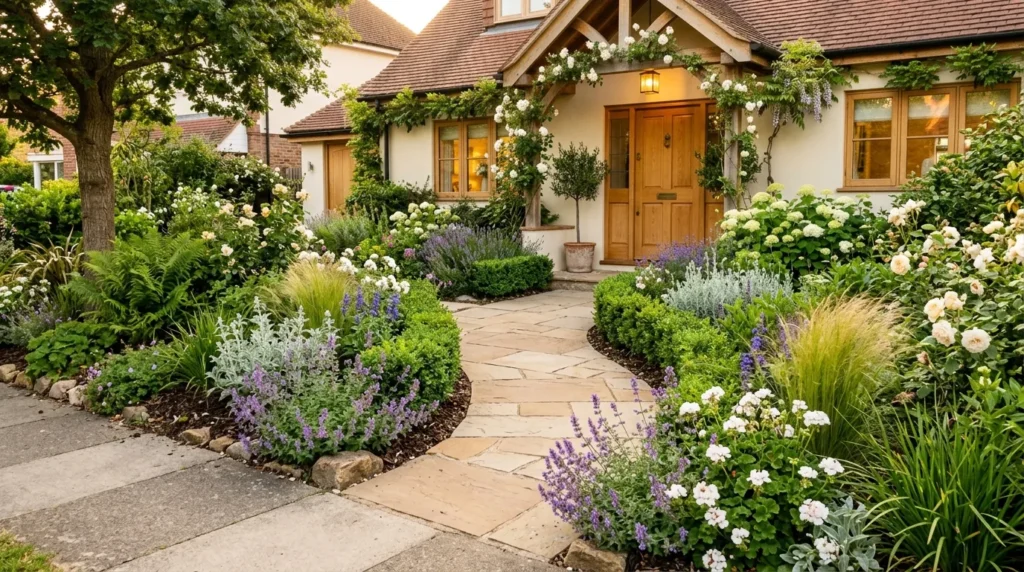
A path does more than provide a walking surface. It creates a visual line leading from the street or driveway toward the front entrance. That natural direction can make the entire front garden feel more organized.
Materials influence the character of the space. Brick can create a traditional appearance, natural stone can feel established and organic, while concrete pavers often suit contemporary homes.
A path also provides an opportunity to frame the garden. Plants and low borders placed along the edges create a layered view as visitors approach the house.
How To Style It
Choose a path material that complements the home’s exterior rather than treating it as a separate design element. Brick tones can echo red or brown architectural details, while pale stone can complement cream, white, or gray exteriors.
For a relaxed garden, allow low-growing plants to soften portions of the path edges. Avoid letting vegetation grow so far into the walkway that it becomes difficult to use.
Add simple solar or low-voltage path lights where appropriate. These can make the route easier to see after dark while also emphasizing the path’s shape.
If the existing walkway is plain concrete, consider adding surrounding planting, containers, or decorative edging instead of replacing the entire surface. Sometimes framing an ordinary path makes a larger difference than rebuilding it.
3. Decorative Garden Edging
Quick Benefits
- Defines planting beds
- Creates a cleaner landscape appearance
- Separates lawn from garden areas
- Adds visual structure
- Works with both traditional and modern landscapes
Why It Works
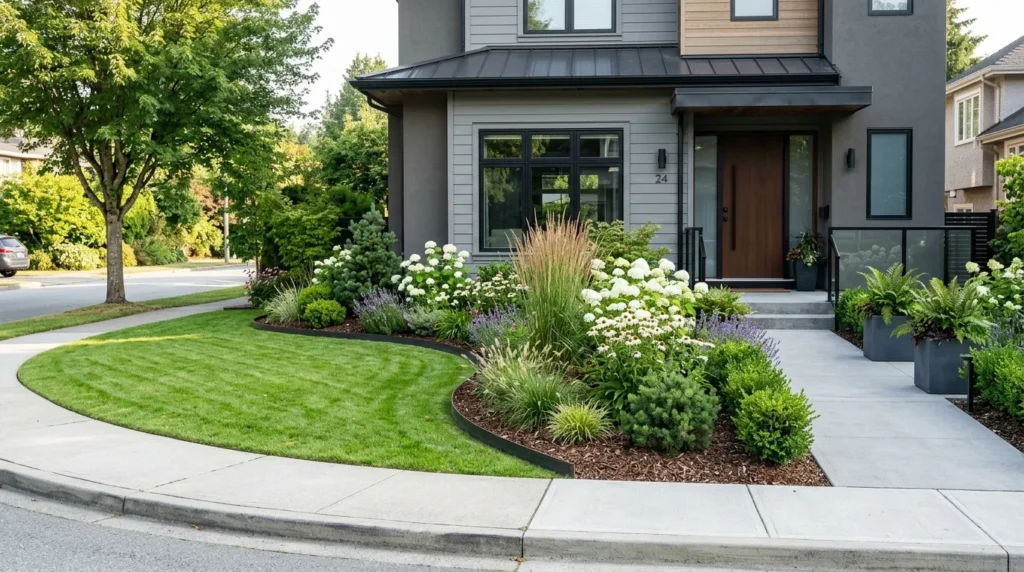
Garden edging creates a clear boundary between different landscape areas. Without an edge, lawns, mulch, gravel, and planting beds can visually blend together. A defined border gives the garden a more finished appearance.
The material can also contribute to the overall style. Brick edging feels traditional, natural stone creates an organic look, and metal edging can provide a crisp contemporary line.
Edging doesn’t have to be elaborate. A simple, consistent border often looks more sophisticated than decorative pieces placed at irregular intervals.
How To Style It
Start by considering the shape of the planting bed. Gentle curves can suit cottage and traditional landscapes, while straight lines and geometric beds often complement modern architecture.
Choose an edging material that repeats another element around the home. For example, dark metal can relate to black window frames, while stone edging can connect with a stone walkway or foundation.
Keep the border low enough that it doesn’t become a visual wall. Its purpose is to define the garden rather than hide the plants.
Refresh the edge periodically by trimming grass, removing weeds, and maintaining the mulch or gravel inside the border. A clean boundary helps even simple plantings look more deliberate.
4. Charming Garden Benches
Quick Benefits
- Adds useful outdoor seating
- Creates a destination within the garden
- Introduces furniture-scale decor
- Works beautifully near mature plants
- Makes larger gardens feel more inviting
Why It Works
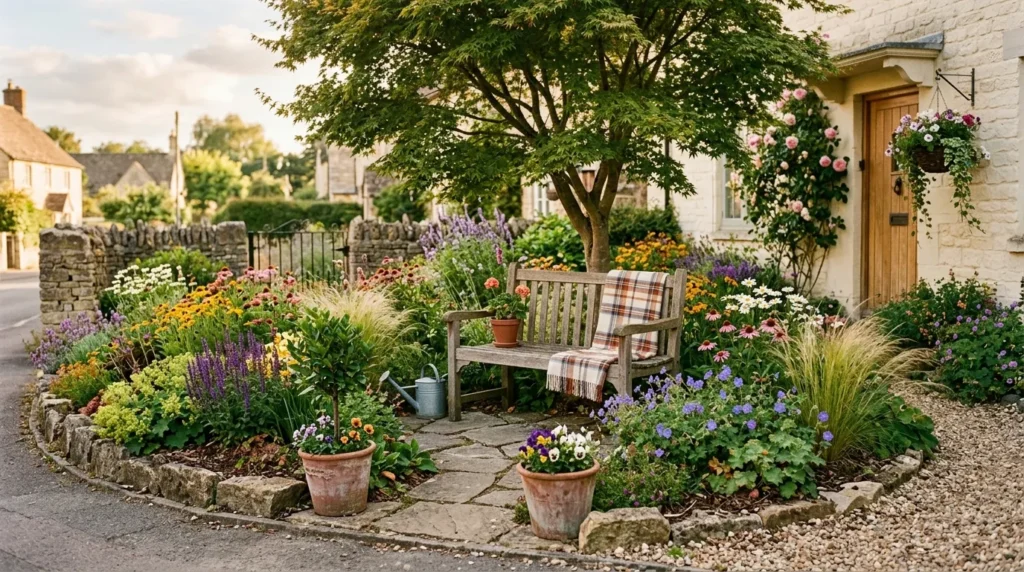
A bench can transform a garden from something people simply look at into a space they can enjoy. It also adds a sense of scale. When placed among shrubs, trees, or flower beds, a bench becomes an inviting focal point.
The style of the bench can reinforce the home’s character. A painted wooden bench feels relaxed and traditional, while a simple metal or teak design can work beautifully with contemporary landscaping.
The placement matters more than decoration. A bench tucked into a corner of the garden can feel intentional, while one placed randomly in the middle of a lawn may look disconnected.
How To Style It
Position the bench where it makes sense to stop and enjoy the landscape. A location beneath a small tree, beside a flowering bed, or near a garden path can create a natural destination.
Choose outdoor materials appropriate for your climate and exposure. Wood, metal, composite, and weather-resistant materials each have different maintenance requirements.
Keep accessories minimal. One outdoor cushion can add comfort and color, while a nearby planter can help connect the bench with the surrounding landscape.
For a small front yard, consider a narrow bench against a wall or beneath a window. The piece can provide character without consuming too much space.
5. Stylish House Numbers
Quick Benefits
- Adds personality to the entrance
- Improves address visibility
- Creates a small architectural detail
- Works with many exterior styles
- Easy to update without landscaping changes
Why It Works
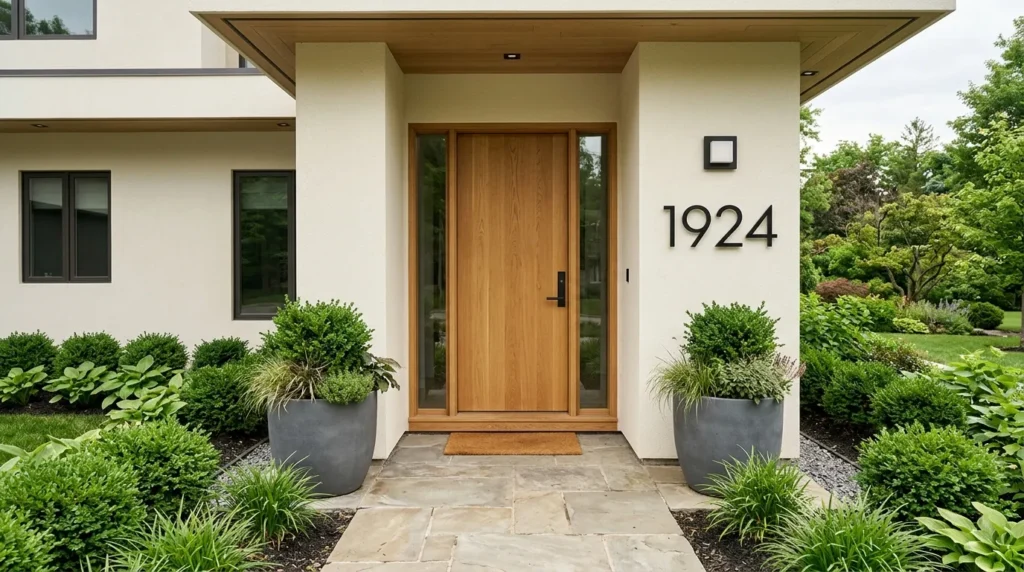
House numbers are practical, but they also occupy a highly visible position near the entrance. Choosing a style that complements the architecture can make this small detail feel intentional.
Modern homes often look good with clean metal numbers mounted directly to a wall. Traditional properties may suit dimensional numbers on a plaque or painted sign. Wood, metal, ceramic, stone, and acrylic all offer different visual effects.
Because house numbers are relatively small, they are also an easy way to introduce a material or finish that appears elsewhere around the property.
How To Style It
First prioritize visibility. Decorative numbers only help if visitors and deliveries can read them easily from the street.
Choose a size and font that suit the home’s scale. Tiny numbers can disappear against textured siding, while very large numbers may dominate a small entrance.
Coordinate the finish with existing hardware. Black numbers can echo a black door handle or light fixture. Brass or bronze can connect with warm-toned entry hardware.
Mount the numbers on a clean surface where they have enough visual breathing room. Avoid placing them directly over complicated patterns or dense greenery.
6. Layered Garden Lighting
Quick Benefits
- Extends the garden’s visual appeal into the evening
- Highlights pathways and planting
- Improves visibility around the entrance
- Creates depth after sunset
- Adds architectural emphasis
Why It Works
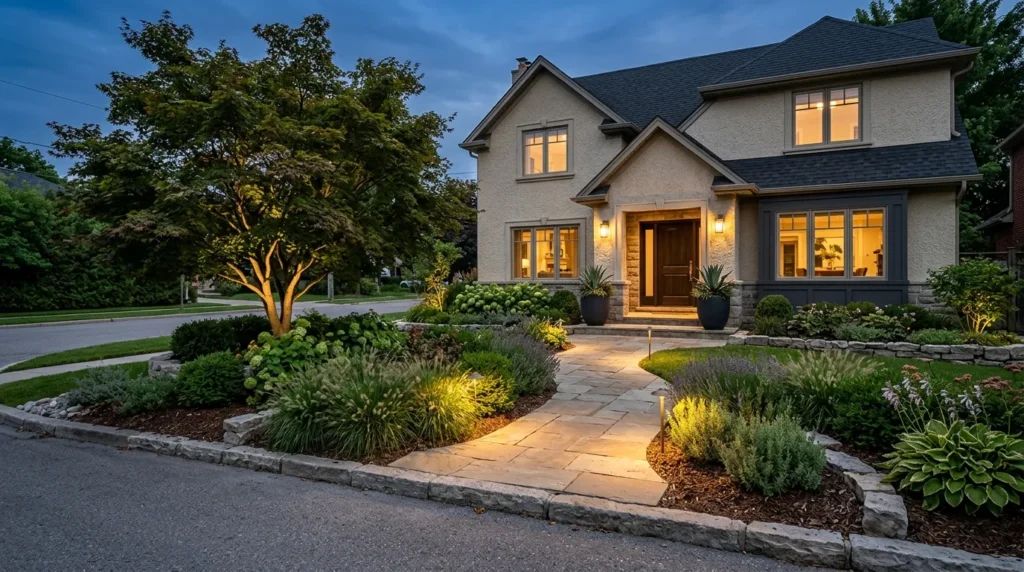
A front garden can look completely different after dark. Without lighting, carefully planted areas and decorative features disappear. With a few strategically positioned lights, the landscape gains another layer of depth.
The best outdoor lighting rarely comes from one extremely bright fixture. Multiple smaller sources can create a softer and more natural effect.
Path lights can define walkways. Uplights can emphasize a tree or architectural feature. Wall fixtures can illuminate the entrance. Together, these sources create a layered view.
How To Style It
Begin with safety and function. Make sure the front steps, pathway, and entrance are adequately visible.
Then add accent lighting to one or two features that deserve attention. A mature tree, textured wall, planter, or sculptural garden element can become an evening focal point.
Avoid lining every edge with identical lights. Staggering fixtures and varying their placement generally creates a more natural appearance.
Choose lighting temperatures and fixture finishes that complement the house. Keep wires concealed where possible and use outdoor-rated equipment appropriate for the installation.
7. Vertical Garden Features
Quick Benefits
- Adds height to flat planting beds
- Makes small gardens more visually interesting
- Creates support for climbing plants
- Adds architectural structure
- Can emphasize entryways
Why It Works
Many front gardens contain plenty of horizontal planting but little vertical structure. A trellis, obelisk, arbor, or decorative plant support can change that balance.
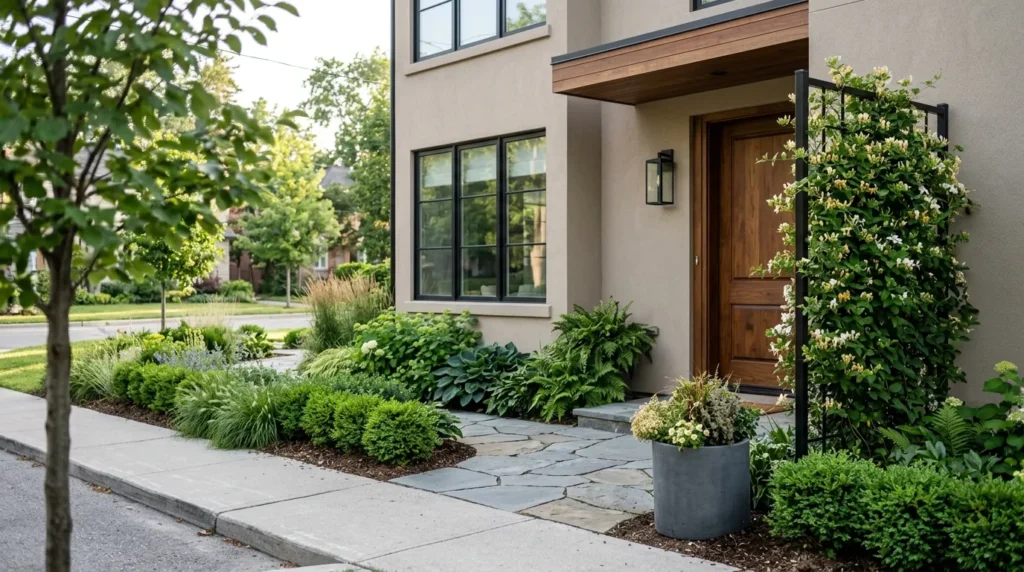
Vertical elements draw the eye upward and can make a garden feel more layered. They also provide support for climbing plants such as certain roses, vines, and other suitable climbers.
A trellis can serve as a decorative feature even before the plants grow across it. This makes it useful for establishing structure in a newly planted garden.
How To Style It
Choose a vertical feature that complements the home’s architecture. Black metal can create a crisp contrast against greenery, while natural wood feels softer and more organic.
Place the feature where it has enough space to be appreciated. A narrow trellis near a front door can frame the entrance, while a larger arbor can create a stronger transition between garden areas.
Select climbing plants based on your local growing conditions and the amount of sun available. Give them appropriate support and pruning so the structure remains visible.
Avoid overcrowding the base with too many unrelated plants. A limited palette creates a cleaner and more sophisticated composition.
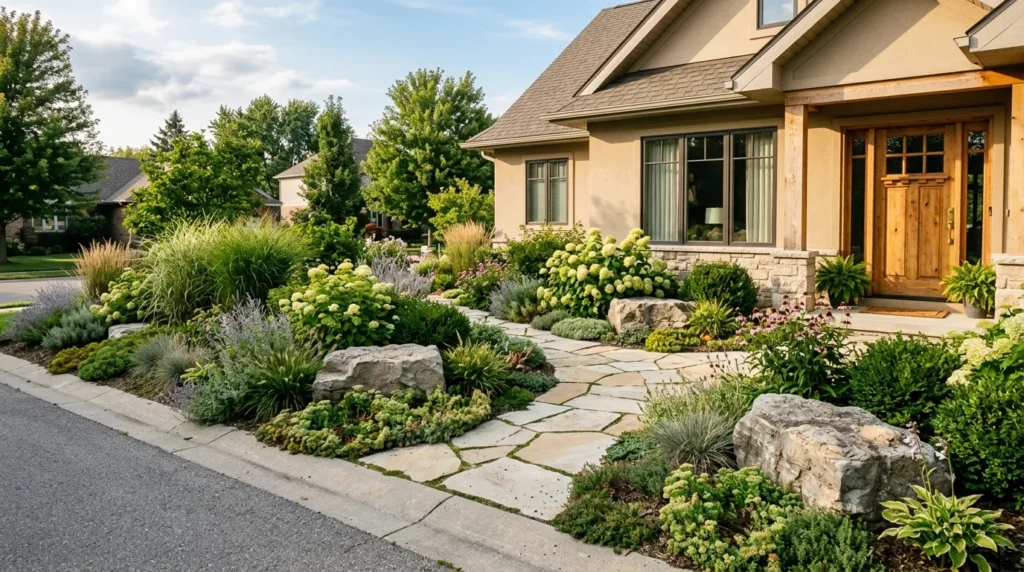
8. Natural Stone Accents
Quick Benefits
- Adds organic texture
- Creates a sense of permanence
- Works across many garden styles
- Connects hardscape with planting
- Complements natural greenery
Why It Works
Stone has a visual quality that blends naturally with outdoor environments. Its variations in color, texture, and shape can make a garden feel more established.
Stone can appear in many forms: low retaining borders, stepping stones, gravel, decorative boulders, planters, or a small feature wall. It does not have to dominate the landscape to make an impact.
Natural stone is especially effective when paired with plants that have varied leaf shapes and soft movement. The contrast between hard stone and living greenery creates a balanced composition.
How To Style It
Choose one primary stone finish and repeat it in several areas when possible. A stone path can relate to a small garden border or decorative boulder nearby.
For a modern garden, use larger pieces with simple geometry and plenty of space around them. For a cottage-style garden, irregular stones can feel more natural.
Keep the stone clean and appropriately placed. Randomly scattering rocks throughout a planting bed can look accidental unless the landscape is intentionally designed around a naturalistic style.
Combine stone with mulch, gravel, ornamental grasses, shrubs, and flowering plants for layered texture.
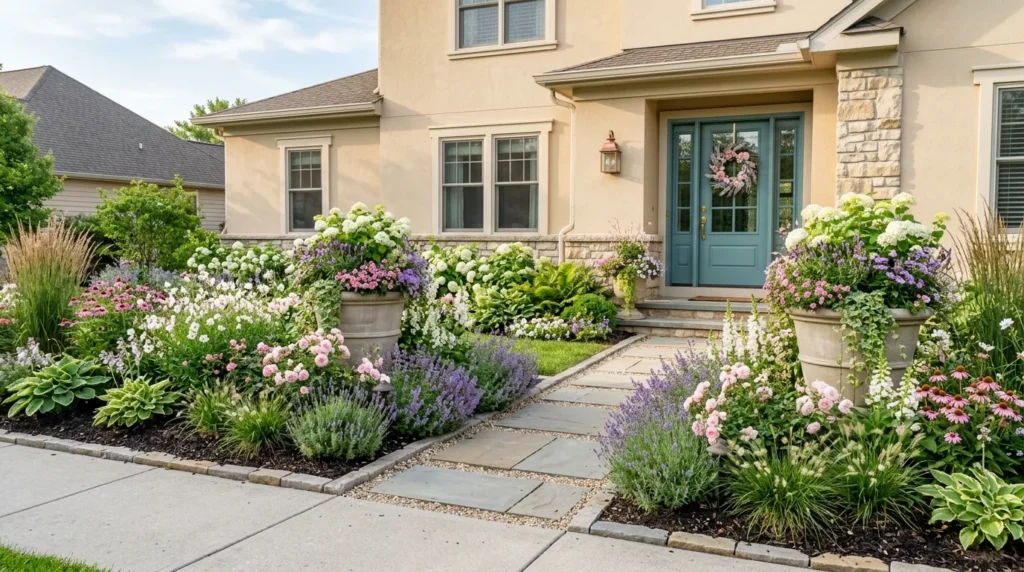
9. Seasonal Flower Displays
Quick Benefits
- Adds immediate color
- Creates changing visual interest
- Makes containers easy to refresh
- Supports seasonal decorating
- Can complement the home’s exterior palette
Why It Works
Flowers provide one of the easiest ways to change the appearance of a front garden. Seasonal planting can introduce color and movement while allowing homeowners to refresh containers and beds throughout the year.
The strongest displays usually have a simple color story. Instead of combining every available flower color, choose two or three related shades that work with the house.
Flowers also become more effective when mixed with foliage. Leaves provide structure between flowering periods and help the planting remain attractive as individual blooms fade.
How To Style It
Choose plants according to your region, light conditions, soil, and maintenance preferences. The most beautiful display is one that remains healthy throughout its growing period.
For containers, combine plants with different growth habits. An upright plant can provide height, a rounded plant can fill the center, and a trailing variety can soften the edges.
Repeat the same color in multiple locations around the front garden. For example, flowers near the walkway can echo blooms in containers beside the front door.
Keep mature plant size in mind when designing beds. Plants that look small at the garden center can become much larger over time.
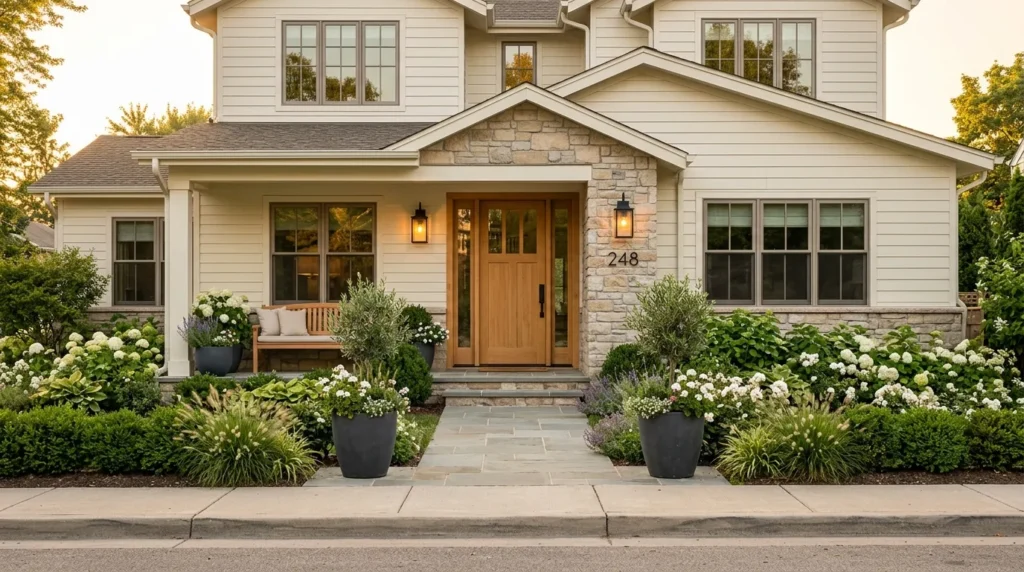
10. Coordinated Entry Decor
Quick Benefits
- Creates a cohesive first impression
- Connects garden and architecture
- Makes the entrance feel finished
- Allows multiple small details to work together
- Can suit traditional and contemporary homes
Why It Works
The garden and front entrance are visually connected, so treating them as separate decorating zones can make the property feel disjointed. A coordinated collection of planters, lighting, door hardware, house numbers, and greenery creates a stronger overall impression.
This doesn’t mean every finish has to match. Repeating one or two materials and colors is usually enough.
For example, black planters can relate to black exterior lights and house numbers. Natural wood can connect a garden bench with a front door accent. Warm metal can appear in both lighting and hardware.
The result feels intentional because the eye recognizes repeated elements.
How To Style It
Begin with the front door as the central point. Identify two or three materials already present around the entrance, then repeat them in the garden.
Add planters on either side of the door, a clean house-number display, appropriate lighting, and a defined path. If there is room, a bench or small decorative feature can complete the composition.
Keep the planting palette controlled. Green foliage can act as the consistent background while flowers and seasonal accents provide changing color.
Step back from the street occasionally while decorating. Curb appeal is experienced from a distance, so the arrangement needs to look balanced from the sidewalk or driveway as well as up close.
How Do You Increase Curb Appeal With Garden Decor?
The simplest approach is to create a clear, coordinated entrance using attractive planters, a defined path, clean garden edging, appropriate lighting, visible house numbers, and healthy plants. Choose materials and colors that complement the home’s architecture instead of treating the garden as a separate design.
What Garden Decor Looks Best in a Small Front Yard?
Large planters, vertical trellises, compact benches, narrow pathways, wall-mounted house numbers, and layered lighting can work well in small yards. Prioritize pieces that add both function and visual structure while leaving enough open space for comfortable movement.
Related Articles
- 10 Front Yard Landscaping Ideas with Beautiful Curb Appeal
- 10 Front Porch Planter Ideas for a Welcoming Entrance
- 10 Small Garden Ideas for Beautiful Outdoor Spaces
- 10 Backyard Landscape Design Ideas with Beautiful Greenery
- 10 Outdoor Garden Seating Ideas for Relaxing Spaces
Frequently Asked Questions
What garden features add the most curb appeal?
Well-maintained planting, defined pathways, attractive containers, clean edging, appropriate outdoor lighting, and a welcoming entrance can all contribute to curb appeal. The most noticeable improvement usually comes from combining healthy landscaping with a few coordinated decorative details rather than adding many unrelated accessories.
How do I decorate my front garden without making it look cluttered?
Start with one focal point and build around it. Use larger planters or one architectural feature instead of many small decorations. Repeat colors and materials, leave open space between elements, and remove accessories that do not contribute to the overall composition.
What color planters look best in a front garden?
Neutral finishes such as charcoal, black, cream, terracotta, stone, and natural wood are versatile choices. The best color depends on the exterior. A planter can echo a door, window frame, roof detail, or existing hardscape to create visual connection.
How can I make a small front garden look more attractive?
Use vertical elements, appropriately sized planters, a clearly defined path, layered planting, and simple lighting. Keep the design uncluttered and use a limited color palette. Drawing the eye upward with trellises or taller plants can also add dimension without consuming much ground space.
Is outdoor lighting useful for curb appeal?
Yes. Outdoor lighting can highlight pathways, planting, trees, architectural details, and the entrance after sunset. A layered approach with several appropriately positioned fixtures generally creates more depth than a single bright light.
Should garden decor match the house?
Garden decor does not need to match the house exactly, but repeating materials, colors, or shapes can create a cohesive appearance. For example, black garden accents can echo black window frames, while natural stone can connect with an existing walkway or facade.
How often should front garden decor change?
Permanent elements such as edging, paths, benches, and lighting can remain for years. Seasonal elements such as flowers, container plants, cushions, and small accessories can change throughout the year. A flexible combination makes it possible to refresh the garden without redesigning the entire landscape.
Conclusion
Garden decor can make a front yard feel more finished, welcoming, and connected to the home. The most effective changes don’t always require a major landscaping project. A pair of substantial planters, a defined pathway, attractive house numbers, or a few carefully positioned lights can change the way an entrance is experienced.
Start with the structure of the garden before adding accessories. Clean planting-bed edges, healthy plants, clear pathways, and appropriate proportions create the foundation. Once those elements are working, decorative details become much more effective.
Think about the materials already used on your home. Repeating black metal, natural wood, stone, or warm-toned finishes around the entrance can create continuity without making everything look perfectly matched.
For smaller gardens, prioritize vertical features and multifunctional pieces. A trellis can add height while supporting plants. A bench can provide seating and become a focal point. Containers can introduce seasonal color without requiring permanent planting beds.
Most importantly, leave enough breathing room. Curb appeal comes from balance rather than quantity. A garden with healthy plants, a clear entry path, and a few thoughtfully selected accents often feels more polished than one filled with decorations.
Choose one area that feels unfinished and start there. A refreshed entrance, better lighting, or a pair of beautiful planters can provide the first layer of a garden that feels welcoming from the street and enjoyable every time you arrive home.