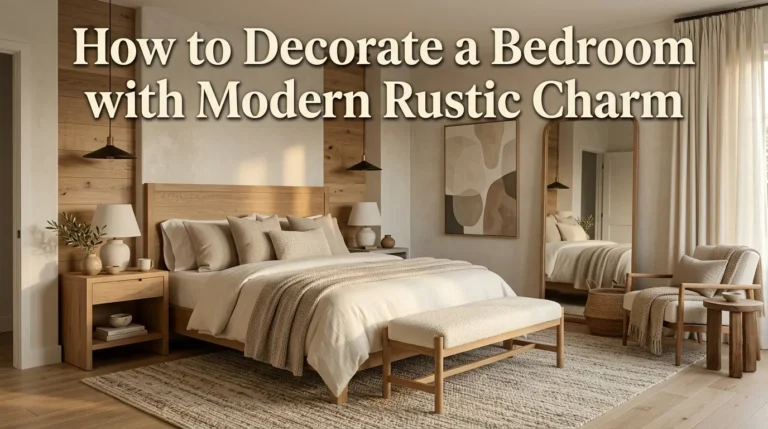

10 Modern Living Room Ideas with Cozy Designer Style
A modern living room can look polished without feeling cold, and that balance is often what makes a space feel genuinely inviting. Clean lines, restrained colors, and uncluttered surfaces create the modern foundation, while layered textiles, warm wood, soft lighting, and comfortable seating bring in the coziness.
The challenge is knowing how to combine those elements without making the room feel either overly minimal or visually busy. A sofa that looks beautiful on its own may feel stark when surrounded by too many hard surfaces. On the other hand, adding every cozy accessory at once can take away from the clean character that makes modern decorating so appealing.
In my experience, the most successful living rooms usually have a simple visual foundation and several carefully chosen layers. A warm rug can soften a streamlined sofa. Natural wood can make a neutral palette feel richer. Curtains can add height and softness without competing with the architecture. Even a small living room can feel sophisticated when furniture placement leaves enough breathing room.
These ideas focus on practical ways to create that designer-inspired balance. You’ll find approachable options for different room sizes, color preferences, furniture arrangements, textures, and budgets. Whether you’re refreshing a rental or completely redesigning a family room, the goal is the same: create a living space that looks refined while still feeling comfortable enough for everyday life.
Table of Contents
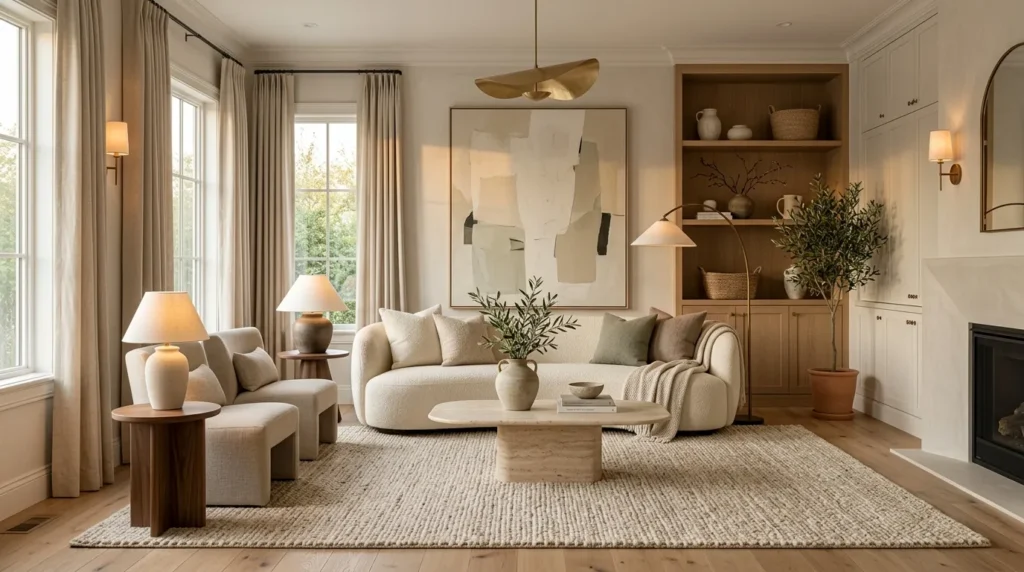
1. Warm Neutral Layers
Build a sophisticated foundation with creamy neutrals, natural materials, and soft textures.
2. Streamlined Sofa Styling
Use a simple sofa as the anchor and add carefully selected layers for comfort.
3. Natural Wood Accents
Introduce warmth and character with wood furniture, shelving, and decorative details.
4. Soft Textured Rugs
Ground modern furniture with a tactile rug that makes the room feel warmer.
5. Sculptural Lighting
Use statement lighting to add personality while maintaining a clean modern aesthetic.
6. Earthy Color Accents
Bring subtle depth to a neutral room through muted greens, terracotta, brown, and clay tones.
7. Layered Window Treatments
Combine privacy, softness, and visual height with simple, well-proportioned window treatments.
8. Balanced Furniture Layout
Arrange seating around conversation and movement instead of pushing every piece against the walls.
9. Curated Decor Moments
Create a designer feel by grouping a few meaningful objects rather than filling every surface.
10. Cozy Modern Contrast
Combine sleek contemporary pieces with soft, organic, and slightly imperfect elements.
1. Warm Neutral Layers
Quick Benefits
- Creates a calm and sophisticated foundation
- Makes modern furniture feel less stark
- Works well with natural wood and woven materials
- Allows seasonal accessories to change easily
- Helps small rooms feel visually cohesive
Why It Works
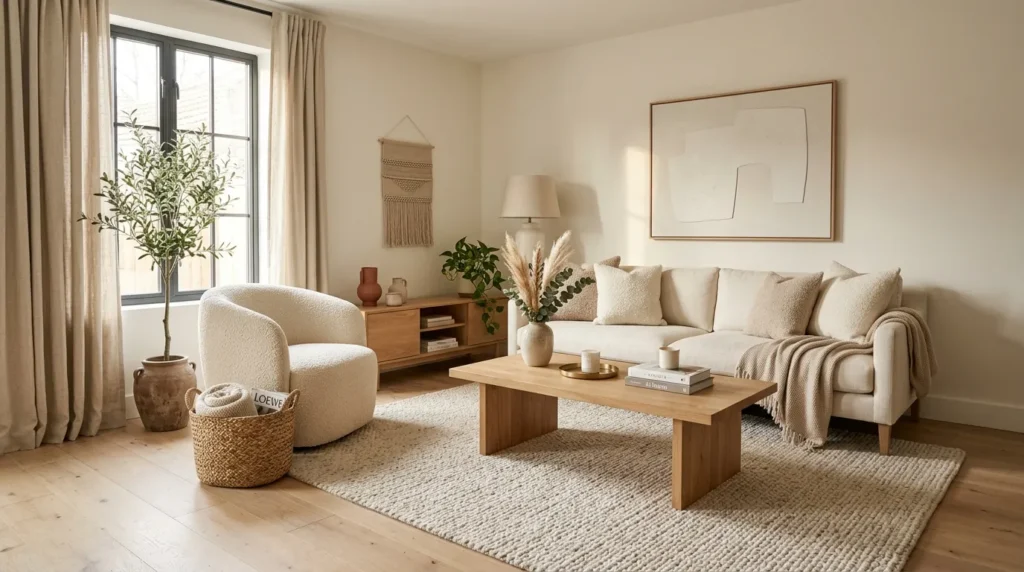
Warm neutrals are one of the easiest ways to make contemporary design feel comfortable. Instead of relying on bright white, build the room around shades such as ivory, oatmeal, warm beige, mushroom, taupe, and soft greige. These colors have enough variation to create depth while maintaining the clean appearance associated with modern interiors.
The key is layering similar tones rather than matching everything exactly. A cream sofa can sit against a warm white wall while a beige rug and taupe accent chair create subtle contrast. Linen curtains, a textured throw, and a natural wood coffee table add additional variation without introducing visual clutter.
This approach also makes decorating more flexible. Because the foundation remains neutral, you can introduce darker accents, seasonal colors, artwork, or greenery without having to redesign the entire room.
How To Style It
Start with the largest surfaces: walls, sofa, rug, and curtains. Choose warm shades that sit close together on the color spectrum. Then add texture through boucle, linen, cotton, wool, jute, or woven baskets.
For a modern arrangement, look for furniture with simple silhouettes rather than ornate detailing. A low-profile sofa paired with a rounded coffee table can keep the room contemporary while textured cushions prevent it from feeling too formal.
If the room contains cool gray flooring or cabinetry, add warmth through wood, brass-toned details, cream textiles, and tan leather. Keep decorative objects limited to a few larger pieces so the neutral palette remains intentional.
2. Streamlined Sofa Styling
Quick Benefits
- Gives the room a strong focal point
- Creates a polished designer-inspired appearance
- Keeps the layout visually organized
- Makes everyday seating more comfortable
- Works with both large and small living rooms
Why It Works
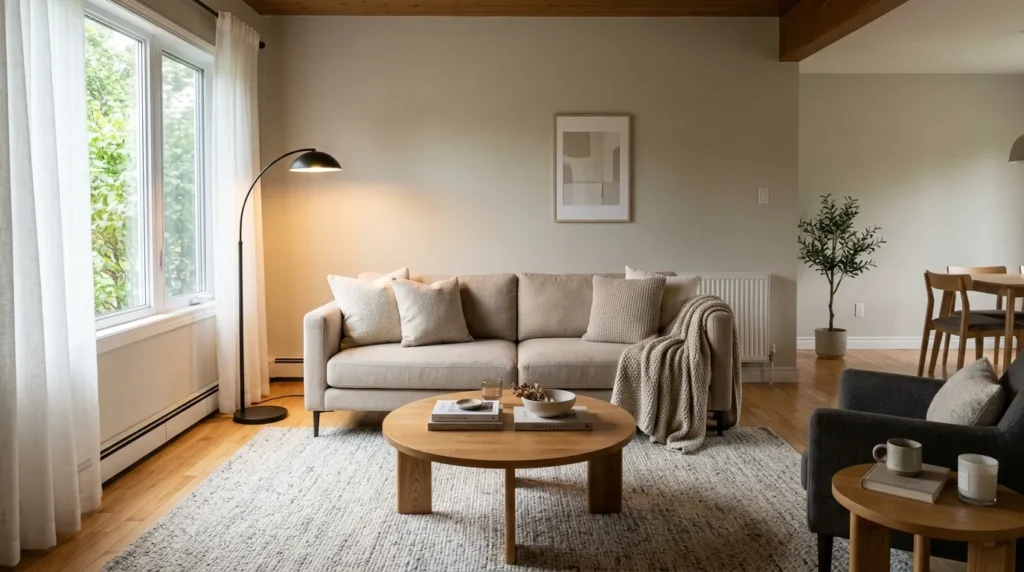
The sofa often occupies more visual space than any other piece of living room furniture, so its shape has a major influence on the overall design. A streamlined sofa with clean arms, a simple base, and generous cushions can instantly establish a modern foundation.
However, a minimalist sofa does not have to look severe. Comfort comes from what surrounds it. Soft cushions, a casually folded throw, a substantial rug, and a warm side table can turn a crisp silhouette into a welcoming seating area.
One mistake many homeowners make is adding too many pillows simply because the sofa looks empty. A better approach is to choose a few pillows with noticeable differences in texture or scale. The result feels styled without appearing staged.
How To Style It
Choose a sofa proportionate to the room. In a compact space, a two- or three-seat sofa with visible legs can create a lighter appearance. In a larger family room, a deep sectional can provide comfortable seating while still looking modern when paired with simple accessories.
Try two larger pillows at the corners, one lumbar pillow in the center, and a soft throw placed loosely over one arm. For a designer-inspired look, mix textures rather than relying on several patterns.
Place the sofa on or partly on the area rug whenever possible. Add a streamlined coffee table with enough clearance for walking around it. A small side table and floor lamp can complete the arrangement without overwhelming the seating area.
3. Natural Wood Accents
Quick Benefits
- Adds warmth to modern interiors
- Introduces organic texture
- Softens black, white, and gray finishes
- Creates visual contrast
- Works across many decorating styles
Why It Works
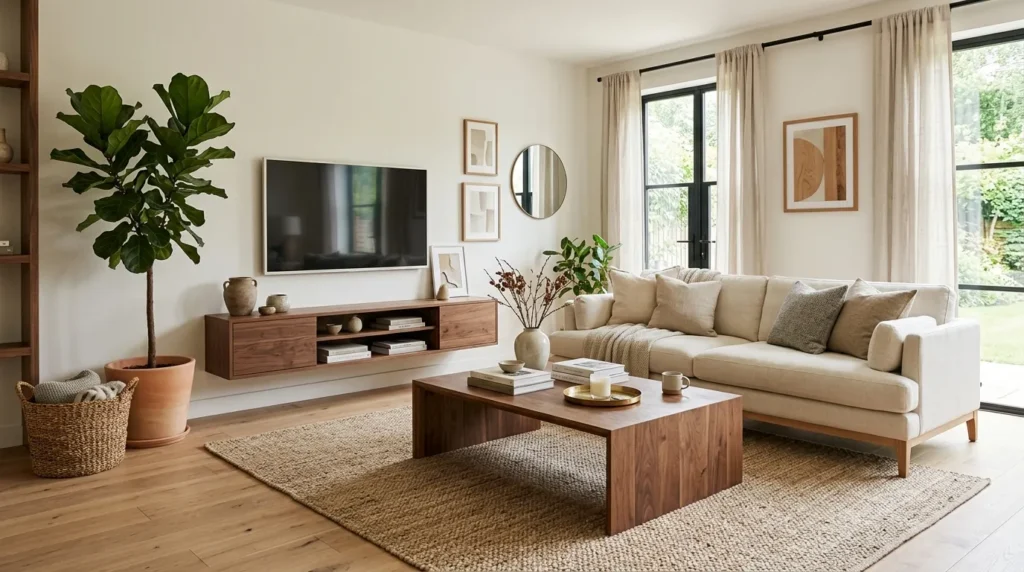
Modern rooms can sometimes contain too many smooth surfaces. Glass, metal, painted walls, polished flooring, and streamlined furniture all have a place, but using them together without an organic material can make the space feel flat.
Natural wood solves that problem beautifully. Its grain introduces movement and variation that manufactured surfaces often lack. Even one substantial wood element can make a noticeable difference.
A walnut coffee table can warm a cream sofa. Light oak shelving can soften a charcoal accent wall. A reclaimed wood stool can add character beside a sleek chair. The goal is not to turn the room rustic; it is to create contrast between modern shapes and natural materials.
How To Style It
Begin with one or two meaningful wood pieces rather than filling the room with matching furniture. A coffee table, media console, sideboard, or floating shelf can provide enough warmth.
Mix wood tones carefully. Similar undertones usually create the most cohesive appearance, but a deliberate contrast can also work when the rest of the room remains restrained.
Pair warm wood with cream upholstery, black metal, stone, linen, or woven accessories. For a particularly polished look, repeat the wood tone in a smaller detail somewhere else in the room, such as a frame, bowl, lamp base, or decorative stool.
Avoid covering every surface with wood accessories. Let the natural grain remain a visual accent rather than turning it into the dominant theme.
4. Soft Textured Rugs
Quick Benefits
- Defines the seating area
- Makes hard flooring feel warmer
- Adds depth without excessive color
- Improves visual cohesion
- Creates a more comfortable atmosphere
Why It Works
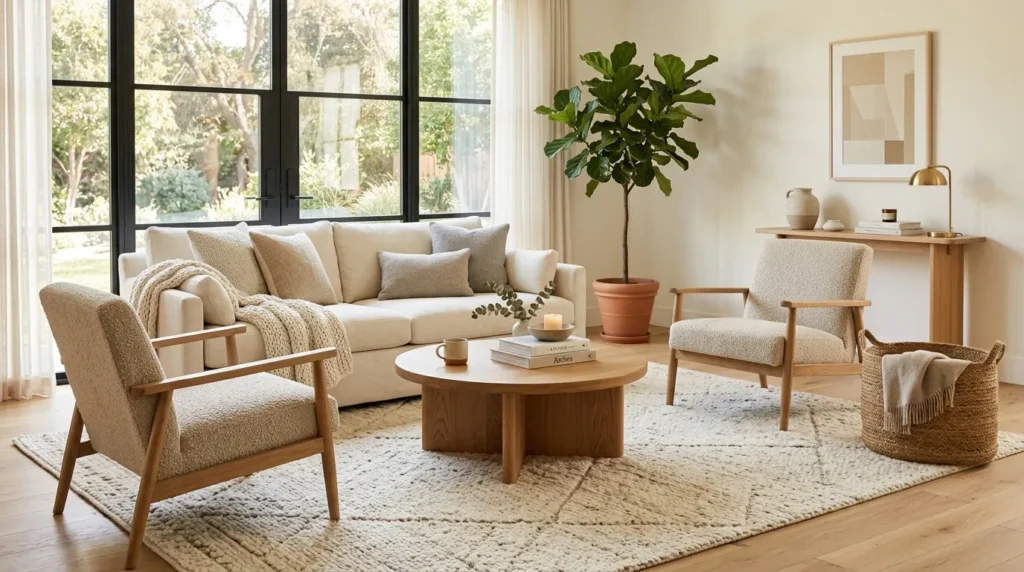
A rug can completely change how a modern living room feels. Hard flooring and streamlined furniture create a crisp foundation, but a soft rug introduces an immediate sense of comfort.
For a sophisticated room, texture is often more effective than a complicated pattern. A wool-style rug, subtle geometric design, vintage-inspired neutral pattern, or low-contrast woven texture can add interest while keeping the room calm.
Scale matters as much as color. A rug that is too small can make carefully selected furniture appear disconnected. A larger rug helps establish one unified seating zone, particularly in open-concept homes where the living room shares space with dining or kitchen areas.
How To Style It
For a standard seating arrangement, choose a rug large enough for at least the front legs of the sofa and chairs to sit on it. In a larger room, placing all major seating pieces completely on the rug can create an even stronger sense of unity.
Warm ivory, beige, taupe, muted gray, and soft brown work particularly well with modern furnishings. If the room already has solid-colored upholstery, a subtle pattern can add dimension.
Think about maintenance before choosing a pile or color. In a busy household, a durable, easy-care rug can be more practical than a delicate option. Place a textured throw, woven basket, or fabric ottoman nearby to repeat the rug’s softness elsewhere in the room.
5. Sculptural Lighting
Quick Benefits
- Creates a strong visual focal point
- Adds personality to simple interiors
- Provides layered illumination
- Makes the room feel finished
- Works as both function and decoration
Why It Works
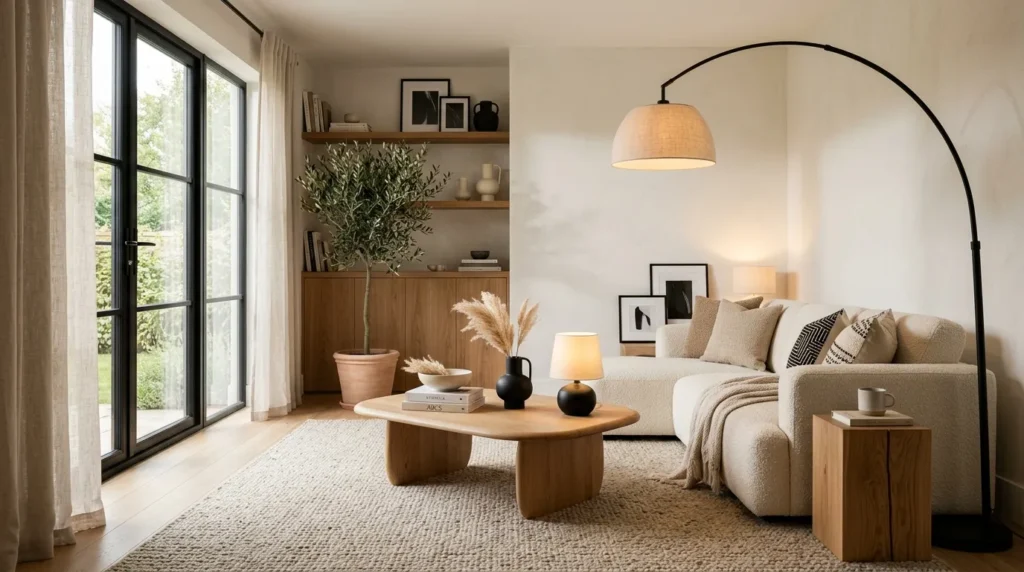
Lighting is one of the easiest ways to make a living room look more intentional. A beautifully shaped pendant, arched floor lamp, sculptural table lamp, or oversized fixture can act almost like artwork.
Modern interiors benefit from lighting with a distinct silhouette because the surrounding furniture is often visually restrained. A curved lamp beside a straight sofa introduces contrast. A globe fixture can soften angular architecture. A black metal lamp can create a crisp accent against warm neutral walls.
Layering is important, too. One ceiling fixture rarely creates the warm atmosphere people expect from a cozy living room. Combining overhead lighting with floor and table lamps gives you more control over the mood.
How To Style It
Think about lighting in three layers: ambient, task, and accent. Use the main ceiling fixture for overall illumination, a floor lamp near a reading chair, and a table lamp on a console or side table.
Choose fixtures that echo another shape in the room. For example, a rounded lamp can complement a circular coffee table, while a linear pendant can work beautifully with a rectangular sofa.
Warm-toned bulbs generally create a more relaxing evening environment than very cool light. Keep cords organized and position lamps where they serve a real purpose. A beautiful fixture becomes even more effective when it also improves how the room functions.
6. Earthy Color Accents
Quick Benefits
- Adds personality without overwhelming the room
- Makes neutrals feel richer
- Creates seasonal flexibility
- Works with natural materials
- Gives the room a relaxed designer feel
Why It Works
A neutral living room does not have to remain completely colorless. Earth-inspired shades offer a middle ground between an all-neutral palette and a highly colorful interior.
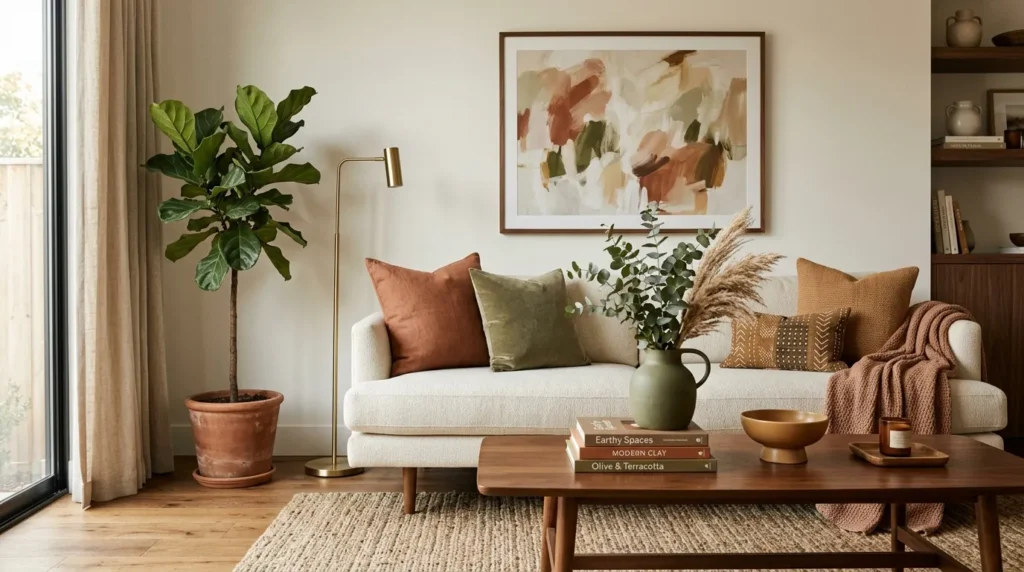
Muted olive, clay, terracotta, caramel, dusty blue, warm brown, and subdued rust can add depth while maintaining the calm character of a modern room. These shades work particularly well because they connect visually with natural materials such as wood, stone, linen, leather, and greenery.
The most successful color accents often appear in small groups. Instead of introducing six unrelated colors, choose one dominant accent and one supporting shade. Repeating them in different materials creates cohesion.
How To Style It
Start with your existing room. If you already have warm wood, consider olive, clay, or caramel. If the room contains charcoal or black accents, muted blue or warm brown can create a sophisticated contrast.
Introduce color through pillows, artwork, ceramics, a small upholstered chair, a throw, or flowers. These pieces can be replaced more easily than a sofa or large rug.
For a polished appearance, repeat the chosen accent at least two or three times. An olive pillow can connect visually with a leafy plant and a small ceramic vase. A terracotta throw can echo a framed artwork.
Keep the largest pieces relatively neutral when you want flexibility. Smaller accents provide enough color to make the room memorable without dominating it.
7. Layered Window Treatments
Quick Benefits
- Adds softness to modern architecture
- Creates visual height
- Provides privacy
- Helps frame windows beautifully
- Makes the room feel more finished
Why It Works
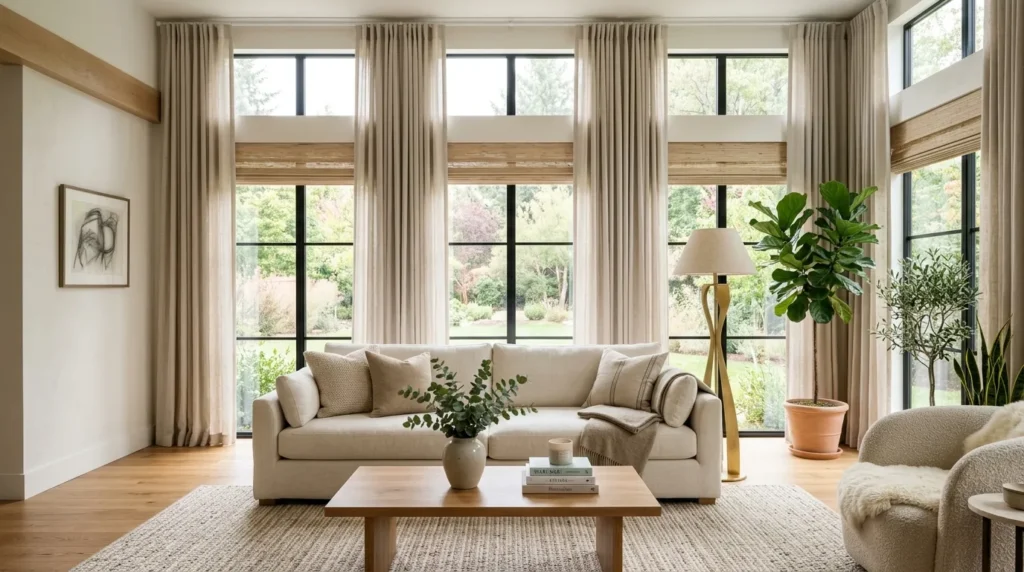
Windows are sometimes overlooked when decorating a living room, yet they occupy a significant amount of wall space. Bare windows can make a room feel unfinished, particularly when the rest of the space has been carefully styled.
Simple curtains can soften straight architectural lines and add height. When hung correctly, they also make windows appear larger and ceilings feel more substantial.
For a modern room, the best treatments are usually simple rather than heavily decorative. Linen-look panels, cotton curtains, woven shades, or understated roller shades can provide function while maintaining a clean aesthetic.
How To Style It
When the window configuration allows, mount curtain hardware higher and wider than the window frame. This helps create a more generous visual frame and allows the curtains to stack beside the glass instead of blocking natural light.
Choose curtains in a shade close to the wall for a seamless appearance. Warm ivory, soft beige, oatmeal, and light taupe are versatile choices.
For additional privacy, combine woven shades or simple blinds with fabric panels. Keep the curtain fabric relatively relaxed and let it reach the floor. Avoid excessive pooling if you want a crisp modern appearance.
If natural light is limited, choose lighter window treatments that allow daylight to remain an important part of the room.
8. Balanced Furniture Layout
Quick Benefits
- Improves movement through the room
- Makes conversation easier
- Prevents furniture from feeling crowded
- Creates a stronger visual structure
- Helps large rooms feel intentional
Why It Works
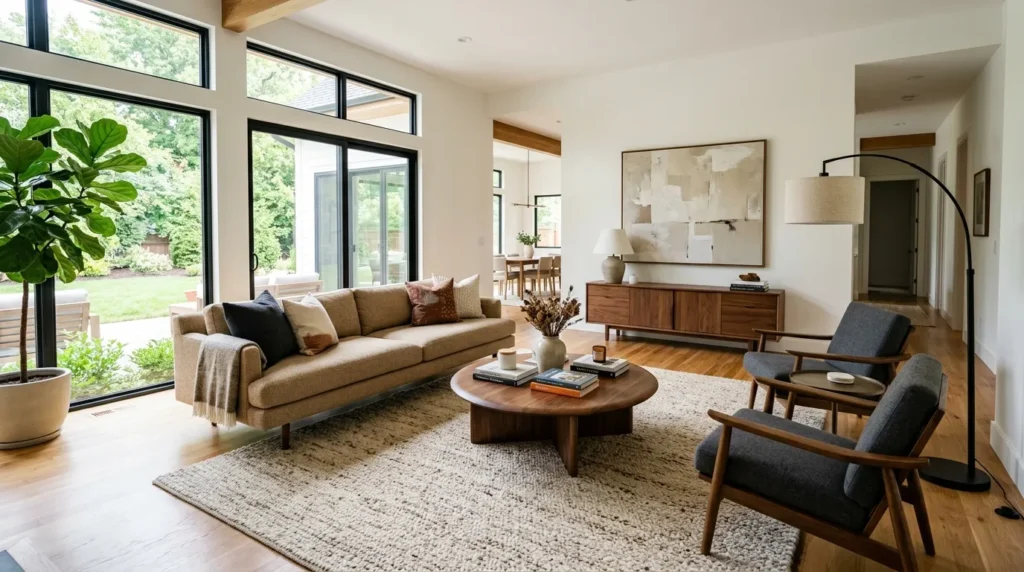
Beautiful furniture cannot compensate for an awkward layout. A modern living room feels more sophisticated when people can move through it easily and seating naturally supports conversation.
A common decorating habit is placing every piece against a wall. This can leave a large empty area in the middle and make the room feel disconnected. In many spaces, floating the sofa slightly away from the wall creates a more purposeful seating zone.
The layout also needs to consider everyday life. If the living room is used for television viewing, the screen matters. If it is primarily for conversation, chairs and sofas need to face each other comfortably. If children use the room, circulation and durable materials become especially important.
How To Style It
Start by identifying the room’s main focal point. It might be a fireplace, television, large window, architectural feature, or artwork. Position the primary seating around that focal point.
Leave practical walking paths between major pieces. A coffee table should be accessible from the sofa without forcing people to squeeze through a narrow gap.
In an open floor plan, use the rug to visually define the living area. A sofa can also act as a subtle divider between the living room and dining or kitchen zone.
Try creating symmetry without making the room overly formal. Matching lamps can look polished, but two different chairs can also work when their scale and visual weight are balanced.
9. Curated Decor Moments
Quick Benefits
- Prevents visual clutter
- Makes accessories feel intentional
- Highlights meaningful objects
- Creates attractive Pinterest-style vignettes
- Keeps modern spaces visually calm
Why It Works
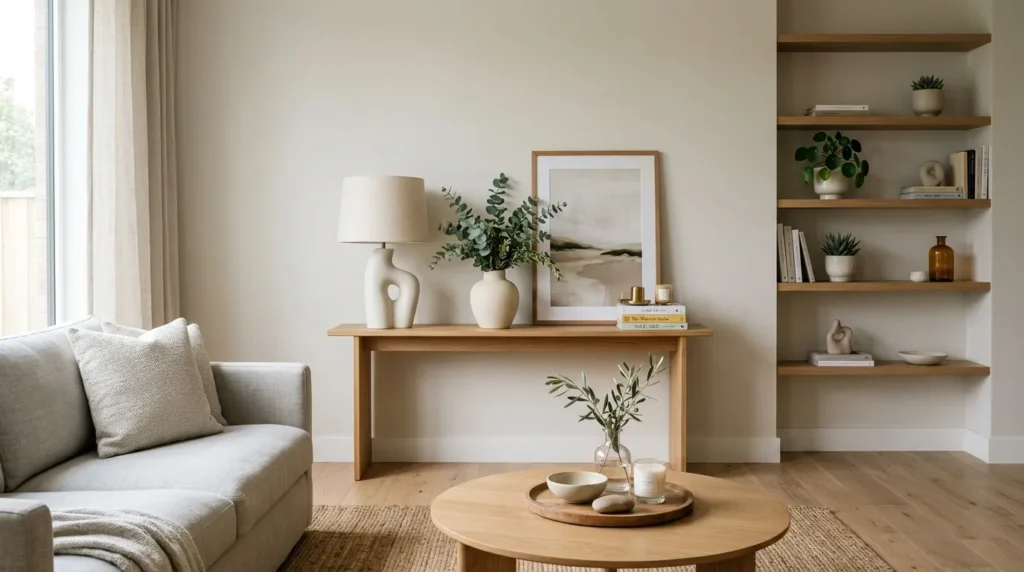
Modern design often looks best when there is enough empty space around decorative objects. Instead of placing something on every shelf, table, and corner, create a few intentional moments that attract the eye.
A curated coffee table might contain a shallow tray, a small stack of books, and one sculptural object. A console could hold a lamp, a framed print, and a ceramic vessel. A bookshelf can alternate books with baskets, art, and a few collected pieces.
This approach makes decoration feel more personal. The room does not look like everything came from one showroom because there is room for objects with history, texture, or sentimental value.
How To Style It
Choose decorative items according to scale first. One large vase often has more impact than five tiny objects scattered across the same surface.
Use the rule of variation: combine different heights, shapes, and textures. A tall branch arrangement can sit behind a low ceramic bowl, while a small framed artwork adds a vertical element nearby.
Leave intentional negative space around each group. If a shelf looks crowded, remove a few pieces rather than adding another decorative item to fill an empty corner.
For coffee tables, keep practical space available for drinks and everyday use. Beautiful styling works best when the room remains easy to live in.
10. Cozy Modern Contrast
Quick Benefits
- Combines sophistication with comfort
- Prevents modern design from feeling sterile
- Creates visual interest
- Works with many existing furniture styles
- Makes the room feel collected rather than overly matched
Why It Works
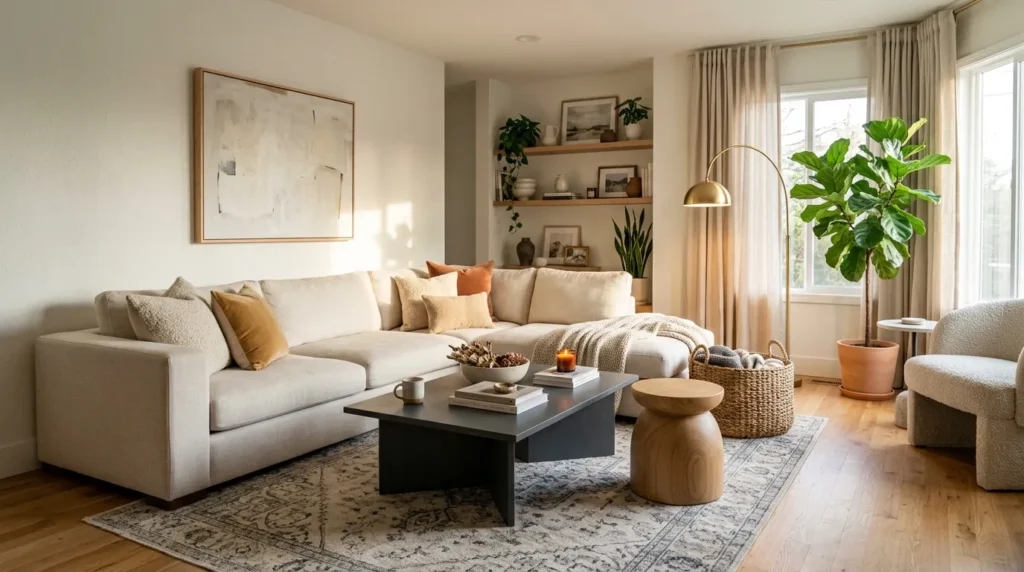
The most inviting modern rooms rarely rely on one finish, shape, or texture. Instead, they use contrast thoughtfully. Smooth surfaces sit beside woven materials. Straight furniture lines meet rounded accessories. Crisp upholstery is softened by relaxed textiles.
This contrast gives the room character.
A sleek black coffee table can look surprisingly warm when surrounded by a soft rug, linen sofa, wood accents, and greenery. A contemporary sectional can feel more approachable when paired with a vintage-style rug and a sculptural wood stool.
The important distinction is controlled contrast. Every element does not have to be different. Repeating a few materials and colors creates cohesion, while contrasting textures and shapes keep the room from becoming flat.
How To Style It
Begin with two contrasting characteristics. For example, combine clean-lined furniture with organic materials or neutral upholstery with darker accents.
Add one rounded piece to an angular arrangement. This could be a circular coffee table, curved chair, round mirror, or globe lamp. Then introduce softness through curtains, cushions, a wool-style rug, or a knitted throw.
Avoid mixing too many competing finishes. Three or four dominant materials are often enough for a comfortable modern room.
Finally, add something that feels personal. A favorite photograph, inherited piece, travel find, or handmade object can prevent the room from looking overly staged. That personal layer is often what turns a polished living room into a home.
How to Make a Modern Living Room Feel Cozy
The simplest approach is to combine clean-lined furniture with warm materials, soft textiles, layered lighting, natural wood, and a restrained color palette. A textured rug, comfortable cushions, floor lamp, curtains, and greenery can make a contemporary room feel inviting without adding clutter.
How to Make Modern Decor Feel Less Cold
Warm neutral colors, natural wood, woven materials, soft upholstery, and warm lighting can soften a modern interior. Instead of adding many decorations, focus on tactile elements that create visual and physical comfort.
Related Articles
- 10 Small Living Room Ideas for a More Open and Comfortable Space
- 10 Neutral Living Room Ideas with Warm and Timeless Style
- 10 Modern Farmhouse Living Room Ideas for Everyday Comfort
- 10 Cozy Bedroom Ideas with Designer-Inspired Details
- 10 DIY Accent Wall Ideas for a Stylish Living Room
Frequently Asked Questions
What colors make a modern living room feel cozy?
Warm neutrals such as cream, beige, taupe, oatmeal, and greige create an inviting foundation. Earthy accents such as olive, terracotta, caramel, and warm brown can add depth. The combination works especially well with natural wood and soft textiles.
How do you make a modern living room look expensive?
Focus on proportion, lighting, texture, and restraint rather than filling the room with expensive-looking accessories. A properly sized rug, well-proportioned curtains, layered lighting, quality-looking textiles, and a few substantial decorative pieces can create a more refined appearance.
What furniture works best in a modern living room?
Streamlined sofas, simple lounge chairs, clean-lined coffee tables, natural wood consoles, and functional storage pieces work well. Choose furniture based on the room’s scale and leave enough open space for comfortable movement.
How many pillows look best on a modern sofa?
There is no fixed number, but a restrained arrangement usually complements modern furniture. Two larger pillows at the corners, one or two smaller cushions, and a relaxed throw can provide comfort without making the sofa look overcrowded.
How do you decorate a modern living room without clutter?
Start with fewer, larger decorative pieces and leave intentional empty space between them. Use baskets for functional storage, group small objects on trays, and select accessories that serve a visual or practical purpose.
Can modern living room decor work in a small space?
Yes. Smaller rooms often benefit from modern furniture because clean silhouettes can reduce visual heaviness. Choose appropriately scaled seating, use a larger rug to unify the area, take advantage of vertical storage, and avoid unnecessary furniture.
What makes a living room look professionally designed?
A cohesive color palette, appropriate furniture scale, balanced lighting, layered textures, thoughtful spacing, and repeated materials all contribute to a polished appearance. Personal objects then add character so the room feels like a home rather than a showroom.
Conclusion
A modern living room becomes much more inviting when clean design is balanced with warmth. The goal is not to remove every decorative detail or create a perfectly minimal space. It is to choose each element with purpose.
Start with a comfortable foundation such as a streamlined sofa, appropriately sized rug, and warm neutral palette. From there, introduce natural wood, tactile fabrics, layered lighting, and a few earthy accents. Pay close attention to furniture placement because even beautiful pieces can feel awkward when the circulation is poor.
The finishing touches matter, too. Curtains can soften a large window, sculptural lighting can create a focal point, and a few carefully selected objects can make the room feel personal. You do not need dozens of accessories to achieve a designer-inspired result.
If your current living room feels too stark, begin with texture and warmth. If it feels cluttered, edit the accessories and simplify the furniture arrangement. If it lacks personality, introduce one or two colors or meaningful pieces that reflect your taste.
The best modern living rooms are polished enough to feel considered and comfortable enough for real life. Start with one or two changes, build the layers gradually, and create a space that looks beautiful while still welcoming everyday conversations, quiet evenings, guests, and family time.