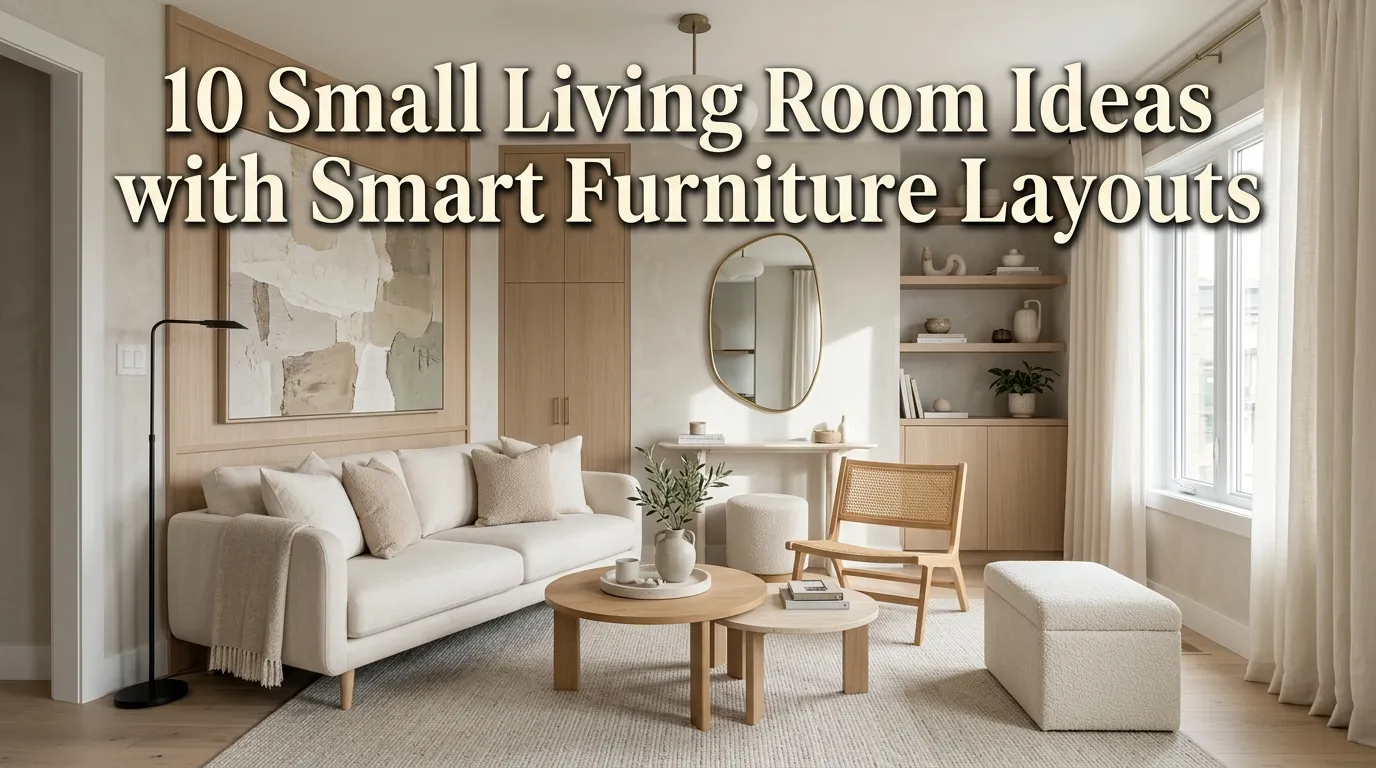
10 Small Living Room Ideas with Smart Furniture Layouts
A small living room can be one of the most rewarding spaces to decorate, but it often requires more thought than a large open room. When every square foot matters, a sofa that is slightly too deep, a coffee table that blocks the walkway, or a television placed awkwardly across from the seating can make the entire room feel cramped.
The good news is that you do not need a bigger home to create a living room that feels comfortable, stylish, and functional. The right furniture arrangement can make a surprisingly small difference in how open a room feels. In many homes, simply changing the direction of the sofa or choosing a piece with hidden storage can improve both appearance and everyday usability.
I’ve noticed that the most successful small living rooms are rarely filled with lots of tiny furniture. Instead, they rely on a few well-chosen pieces, clear walking paths, useful storage, and visual balance. A compact room can still have a comfortable sofa, practical coffee table, television area, accent chair, and attractive accessories when each piece has a purpose.
The ideas below focus on realistic layouts that work particularly well for apartments, townhomes, smaller houses, and multipurpose family spaces. You’ll find ways to use corners, windows, vertical space, storage furniture, and flexible seating without making the room feel overloaded.
Whether you’re starting from scratch or simply frustrated with your current arrangement, these ideas can help you rethink the space before buying anything new. Sometimes the best improvement costs nothing at all—it comes from moving the furniture you already own.
Table of Contents
1. Float the Sofa
Learn how pulling a sofa slightly away from the wall can create a more intentional and functional seating arrangement.
2. Use a Compact Sectional
See how the right sectional can provide generous seating without overwhelming a smaller footprint.
3. Choose Round Tables
Discover why rounded coffee and side tables can improve circulation and soften a compact room.
4. Build Around the Window
Use natural light as a major part of the furniture plan while keeping the room open and comfortable.
5. Create a Corner Nook
Turn an overlooked corner into useful seating, reading space, or storage without crowding the main area.
6. Add Storage Seating
Combine everyday seating with hidden storage to reduce clutter and make better use of limited floor space.
7. Mount the Television
Free valuable floor area by using wall-mounted entertainment solutions and streamlined media furniture.
8. Layer Flexible Seating
Use movable ottomans, stools, and lightweight chairs to create seating that adapts to different occasions.
9. Use Vertical Space
Make the walls work harder with shelving, tall cabinets, and decorative storage that draws the eye upward.
10. Define Clear Zones
Give each part of the room a purpose so a compact living area feels organized rather than crowded.
1. Float the Sofa
Quick Benefits
- Creates a more intentional furniture arrangement
- Can improve walking paths around the room
- Helps separate the living area from another zone
- Makes the sofa a stronger visual anchor
- Works well in open-plan apartments
Why It Works
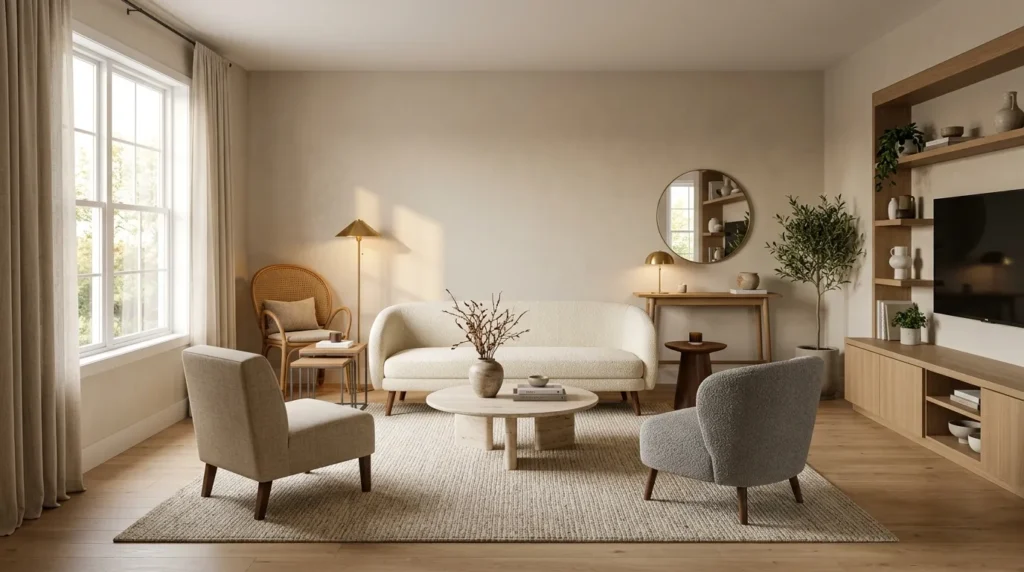
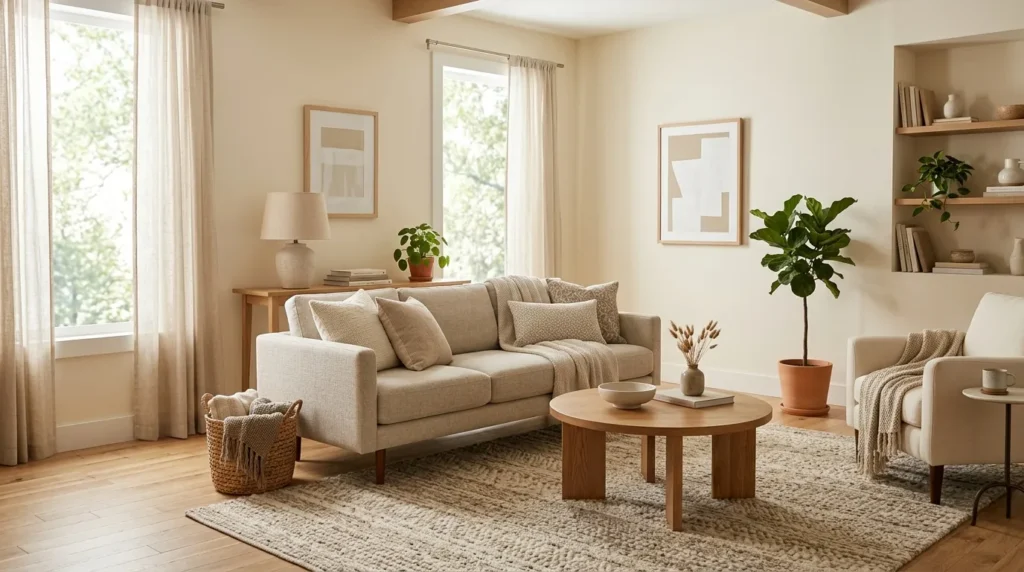
Pushing every piece of furniture against the walls is one of the most common approaches in a small room, but it is not always the most effective. A sofa positioned a few inches away from the wall can sometimes create a better sense of proportion and give the seating area a defined boundary.
Floating the sofa works particularly well when the living room shares space with a dining area, entryway, or kitchen. Instead of allowing furniture to drift around the entire room, the sofa can act as a subtle divider. A narrow console behind it can add another useful surface without requiring a large cabinet.
The arrangement also encourages conversation because chairs and tables can be positioned toward the sofa instead of simply facing a television. If the room has a natural focal point such as a fireplace or large window, orient the seating around that feature whenever possible.
The key is leaving enough room for comfortable circulation. A floating sofa should create structure, not become an obstacle.
How To Style It
Start by measuring the sofa and the available walking space before moving anything. Pull the sofa slightly forward and test the arrangement for a day before committing to it. If the back is visible, a slim console table can provide space for a lamp, books, or a few decorative objects.
Choose a console that is narrower than the sofa so the arrangement remains visually light. A small round ottoman or compact coffee table can sit in front of the sofa while maintaining a comfortable passage around the seating group.
For a particularly narrow room, avoid placing too many pieces behind the sofa. One streamlined table is usually more effective than a bulky storage cabinet. Keep the styling simple with a table lamp, a small tray, and one or two decorative objects.
If the sofa separates the living room from another part of the home, use a rug underneath the seating area to make the boundary feel intentional.
2. Use a Compact Sectional
Quick Benefits
- Provides generous seating in one footprint
- Makes corner space more useful
- Can replace a sofa and separate chair
- Creates a natural seating zone
- Works especially well in family rooms
Why It Works
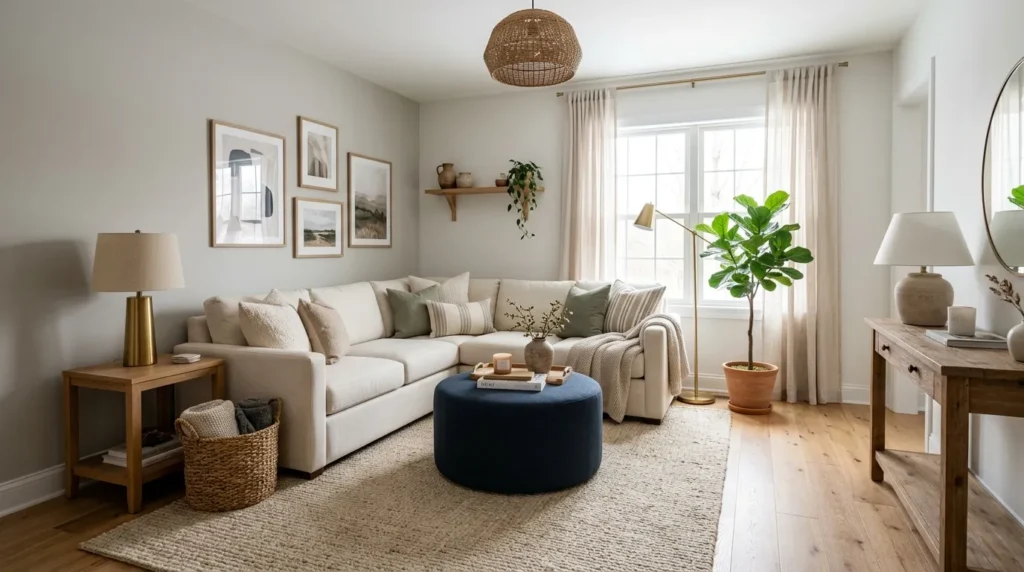
A sectional can sound like the wrong choice for a small living room, but a properly sized design can actually use space more efficiently than several separate seating pieces. The advantage is that the corner of the room becomes part of the seating instead of becoming dead space.
The important distinction is scale. A compact apartment-style sectional can provide seating for several people without extending too far into the room. Look for a design with moderate depth, relatively narrow arms, and proportions suited to your room.
A sectional also gives you an obvious layout starting point. Once it is positioned, the coffee table, rug, lighting, and accent pieces can be arranged around it. This can be much easier than trying to balance a sofa, loveseat, and multiple chairs independently.
For households that regularly entertain, a sectional can offer more practical seating than a traditional sofa. It is also comfortable for everyday lounging, movie nights, and reading.
How To Style It
Measure the entire sectional footprint, including the chaise if it has one. Pay close attention to door openings, windows, heating vents, and pathways before purchasing.
For a rectangular room, placing the sectional along two adjoining walls can maximize the center floor area. In an open-plan space, the back of the sectional can help visually establish the living room without requiring a physical divider.
Pair it with a coffee table that leaves enough room to walk around. A rectangular table works well with an L-shaped sectional, while a round ottoman can create a softer arrangement.
Keep the rest of the furniture restrained. Instead of adding several accent chairs, consider one lightweight chair or a small stool that can be moved when needed. A large area rug should extend underneath at least the front portion of the sectional to visually connect the arrangement.
3. Choose Round Tables
Quick Benefits
- Makes walking paths easier to navigate
- Softens rooms filled with straight lines
- Reduces sharp corners in busy pathways
- Creates flexible seating arrangements
- Works well beside compact sofas
Why It Works
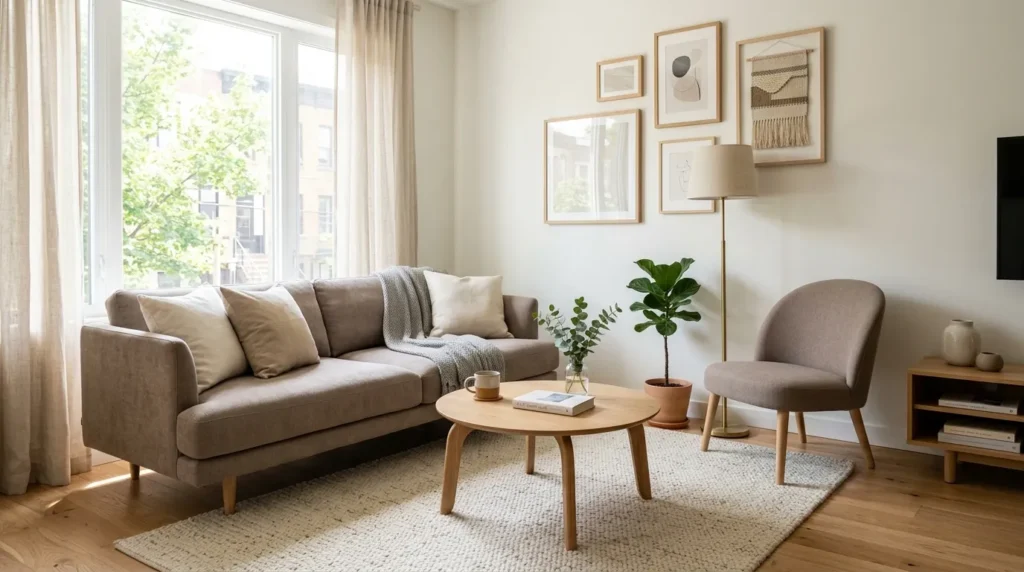
Furniture with sharp corners can make a compact room feel visually and physically crowded. Round and oval tables offer a simple alternative because they eliminate corners that can interrupt walking paths.
This is especially helpful when the coffee table sits close to the sofa or when people frequently walk between the seating area and another room. A circular table allows movement around it to feel more natural.
Round tables can also create visual balance. If your sofa, media console, shelving, and rug are mostly rectangular, introducing a curved table prevents the room from looking too rigid. The result can feel softer without requiring a major decorating change.
A round coffee table is particularly useful when multiple seating positions face toward the center. Everyone can reach the table without having to navigate around a long rectangular surface.
How To Style It
Choose the table according to the size of the seating arrangement rather than the size of the room alone. The table should be large enough to serve the sofa but small enough to preserve a comfortable passage.
Wood creates warmth, glass keeps the visual footprint light, and upholstered ottomans can provide both a soft surface and extra seating. For a family room, a round ottoman with a firm tray can function as a coffee table while remaining comfortable for children.
Keep the tabletop relatively uncluttered. A low tray, coffee-table books, and one small decorative object are enough for everyday styling.
If you have a narrow living room, consider an oval table instead. It provides some of the benefits of a round design while giving you additional surface length.
4. Build Around the Window
Quick Benefits
- Maximizes natural light
- Creates a bright focal point
- Makes the room feel more inviting
- Can improve furniture orientation
- Takes advantage of an existing architectural feature
Why It Works
Natural light is one of the most valuable assets in a small room. Instead of treating the window as an obstacle, build the furniture arrangement around it.
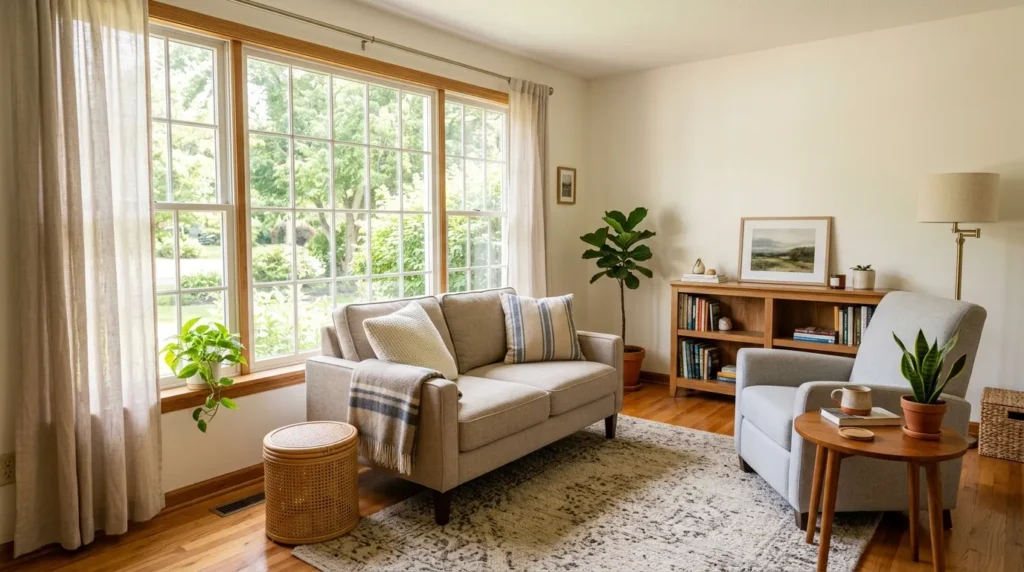
A bright window can become the visual centerpiece of the living area, particularly when the room lacks a fireplace or architectural focal point. Positioning a chair, small sofa, or reading nook near the window can also create a purposeful destination within the room.
The goal is not necessarily to place furniture directly in front of the glass. Blocking too much natural light can make the room feel darker. Instead, arrange seating perpendicular to the window or use the surrounding wall space.
Light also changes how colors and materials appear. Soft neutrals, warm wood, textured fabrics, and reflective accents can all benefit from daylight.
How To Style It
Keep bulky furniture away from the main window whenever possible. A low-profile bench or compact chair can work beneath a window if it does not interfere with curtains, heating systems, or access.
Use curtains mounted close to the ceiling and extending beyond the window frame to create a taller, more spacious appearance. Choose a fabric that allows daylight through if privacy allows.
Position the main sofa so people can enjoy the light without sitting directly in front of the window. A small side table and reading lamp can turn the nearby area into a functional reading corner.
Avoid filling the windowsill with numerous decorative objects. Leaving the area relatively open helps preserve the feeling of brightness.
For rooms with limited daylight, use mirrors strategically across from or adjacent to windows to reflect available light and visually extend the space.
5. Create a Corner Nook
Quick Benefits
- Makes overlooked corners useful
- Adds seating without filling the center
- Creates a dedicated reading area
- Works well in apartments
- Can combine seating and storage
Why It Works
Corners are often ignored because they seem too small for conventional furniture. Yet a well-planned corner can become one of the most useful parts of a compact living room.
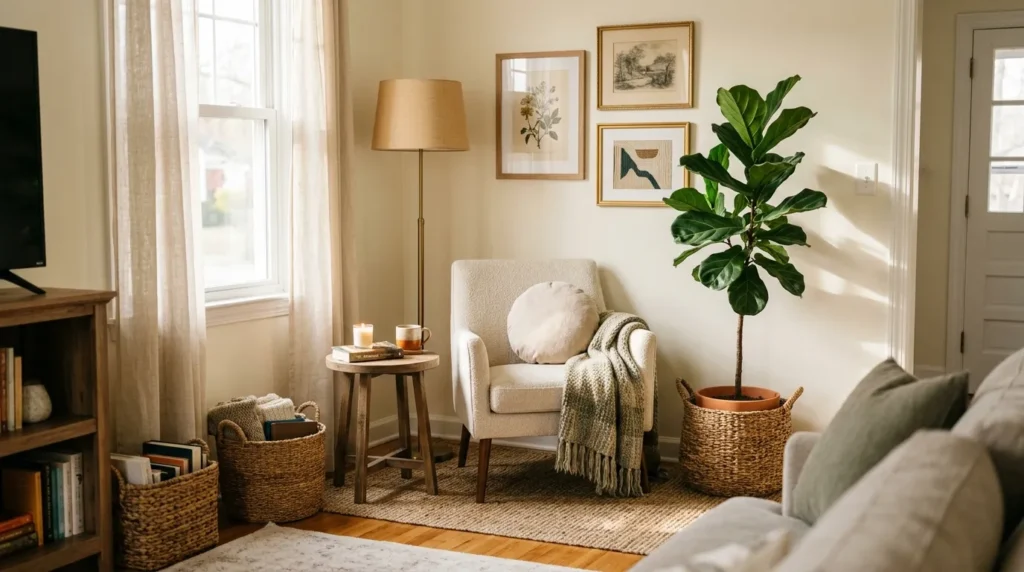
A single accent chair with a small side table can create a comfortable reading spot. A narrow bench can provide additional seating without taking up much floor area. Even a small cabinet or bookshelf can turn an empty corner into useful storage.
The trick is choosing furniture that respects the scale of the corner. A large lounge chair with wide arms can quickly make the area feel cramped, while a slimmer chair can provide the same basic function with a much smaller footprint.
A corner nook also gives the room another purpose. Instead of every piece of furniture pointing toward the television, the room can support reading, relaxing, conversation, or working.
How To Style It
Start with the corner’s measurements. Look for chairs with narrow profiles, open legs, or relatively compact frames. These details allow more floor to remain visible.
Add a small round side table rather than a large rectangular one. A floor lamp can provide task lighting without consuming table space. If you enjoy reading, include a small basket for books or blankets.
For a more decorative arrangement, place a tall plant behind the chair if natural light conditions suit the plant. A framed print or small gallery arrangement can give the nook a finished appearance.
In rental homes, this is also a useful way to add personality without making permanent changes. A comfortable chair, washable throw, and removable artwork can completely change an unused corner.
6. Add Storage Seating
Quick Benefits
- Combines two functions in one piece
- Reduces visible clutter
- Adds flexible seating
- Keeps blankets and accessories accessible
- Helps maximize limited floor space
Why It Works
When floor space is limited, furniture that performs more than one job becomes especially valuable. Storage seating is a practical example because it provides somewhere to sit while hiding items that might otherwise require another cabinet or shelving unit.
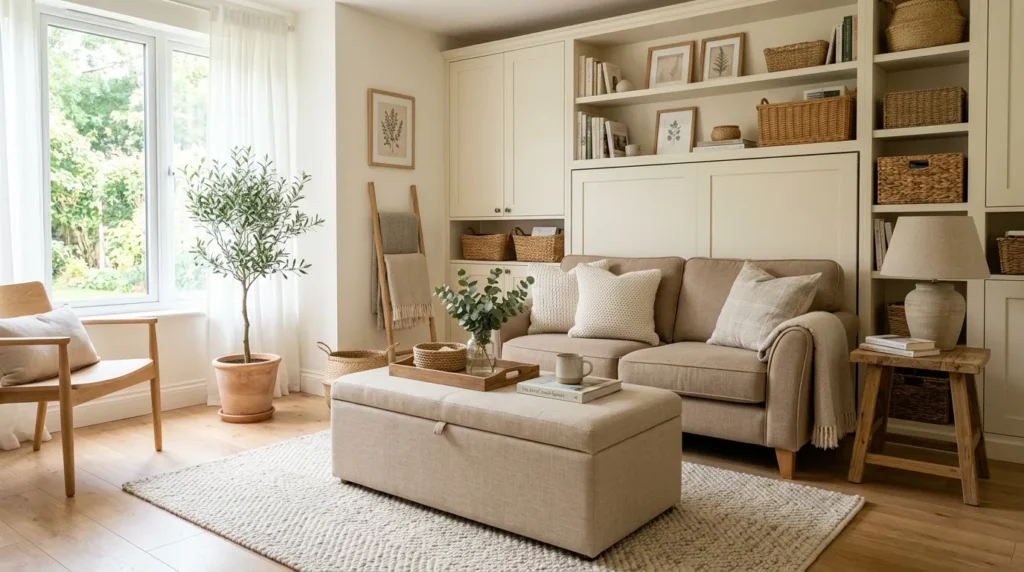
An upholstered storage ottoman can hold blankets, children’s toys, books, or seasonal accessories. A storage bench can work below a window or along a wall. Even a coffee table with drawers or a lift-top surface can provide hidden storage without requiring another large piece.
The benefit extends beyond organization. A less cluttered floor makes a room feel calmer and easier to navigate.
One mistake many homeowners make is buying attractive furniture without considering what the room actually needs to store. In a small space, storage should be part of the furniture plan from the beginning rather than an afterthought.
How To Style It
Choose storage furniture based on the items you want to hide. A lift-top ottoman is useful for frequently accessed objects, while a closed storage bench can hold less frequently used blankets or seasonal accessories.
For a family living room, select durable upholstery and easy-clean materials. Neutral performance fabrics can provide a polished appearance while handling everyday use.
If you use an ottoman as a coffee table, place a sturdy tray on top. This creates a stable surface for drinks and decorative objects while allowing the entire top to be lifted when you need access to the storage compartment.
Avoid filling every storage area to capacity. Leave some room so you can put things away quickly rather than turning storage furniture into another clutter zone.
7. Mount the Television
Quick Benefits
- Frees valuable floor space
- Creates a cleaner focal wall
- Reduces bulky furniture requirements
- Makes small rooms feel more streamlined
- Provides flexibility for media storage
Why It Works
Televisions often influence the entire living room layout. A large entertainment cabinet can consume a surprising amount of floor space, especially when the room is already compact.
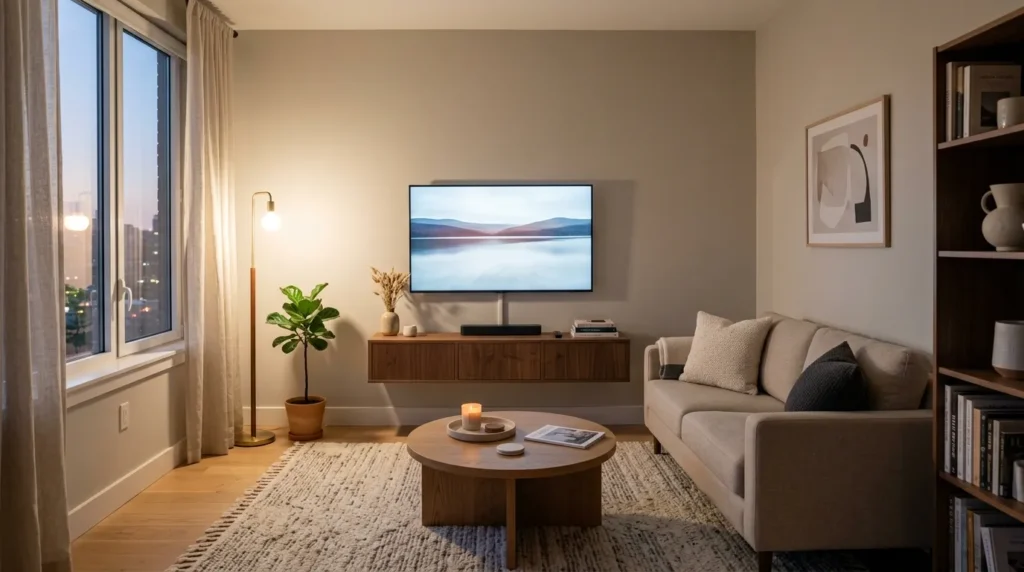
Mounting the television on the wall can reduce the amount of furniture required beneath it. This does not mean eliminating storage entirely. A narrow console or floating cabinet can still hold electronics, games, remotes, and other accessories while maintaining a lighter visual footprint.
The wall-mounted approach also creates a cleaner sightline. With fewer bulky pieces touching the floor, more of the room remains visually open.
However, comfort and safety should come before appearance. The television should be positioned at a comfortable viewing height, and cables should be managed properly.
How To Style It
Begin by choosing the television wall based on viewing distance, glare, and seating position. Avoid selecting a wall simply because it looks empty.
A slim media console beneath the television can provide essential storage while grounding the wall. Floating cabinetry is another option when the wall construction and installation requirements allow it.
Keep decorative accessories around the television limited. Too many objects can make the wall look busy and reduce the streamlined effect.
For renters who cannot mount a television, choose a narrow media stand with open or elevated legs. The visible floor underneath helps preserve a sense of openness.
Use cable management solutions to keep wires organized. A clean media area can make a small living room appear considerably more finished.
8. Layer Flexible Seating
Quick Benefits
- Adds seating without permanent bulk
- Makes entertaining easier
- Allows furniture to move between zones
- Supports different activities
- Works well for renters and apartments
Why It Works
A small living room does not need a permanent seat for every possible guest. Flexible seating allows you to adapt the room when the household’s needs change.
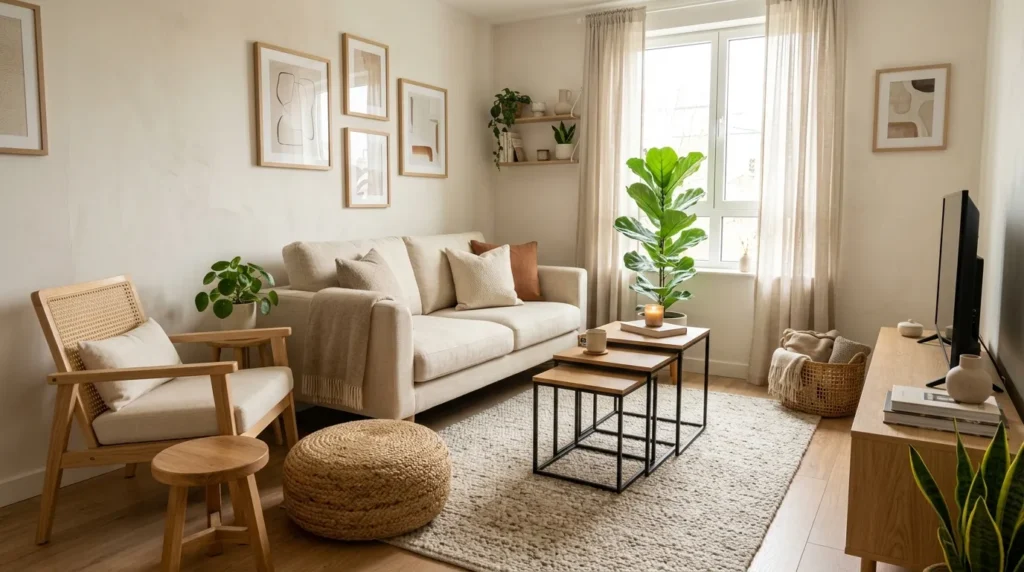
Lightweight accent chairs, stools, poufs, and ottomans can serve different purposes throughout the day. A stool might sit beside a sofa as a side table and then become an extra seat when guests arrive. An ottoman can function as a footrest, coffee table, or temporary seating.
This approach prevents the room from being dominated by large furniture that is only occasionally needed.
Flexible seating is particularly valuable in multipurpose rooms. If your living room doubles as a workspace, playroom, or dining overflow area, movable pieces allow you to reclaim floor space quickly.
How To Style It
Look for lightweight pieces with handles, slim frames, or easily movable construction. Upholstered poufs can introduce texture without the visual weight of a large chair.
Place one compact accent chair opposite or adjacent to the sofa to create a conversation-friendly arrangement. Keep additional stools tucked under a console or beside a cabinet until needed.
Choose materials that complement the primary sofa rather than matching every piece exactly. For example, a neutral sofa can be paired with a textured woven ottoman or a wood-framed chair.
Avoid collecting too many small pieces simply because they are easy to move. Two useful flexible pieces are generally better than six objects that make the room feel scattered.
9. Use Vertical Space
Quick Benefits
- Adds storage without consuming much floor area
- Draws attention upward
- Displays books and decorative objects
- Makes unused wall space functional
- Helps reduce surface clutter
Why It Works
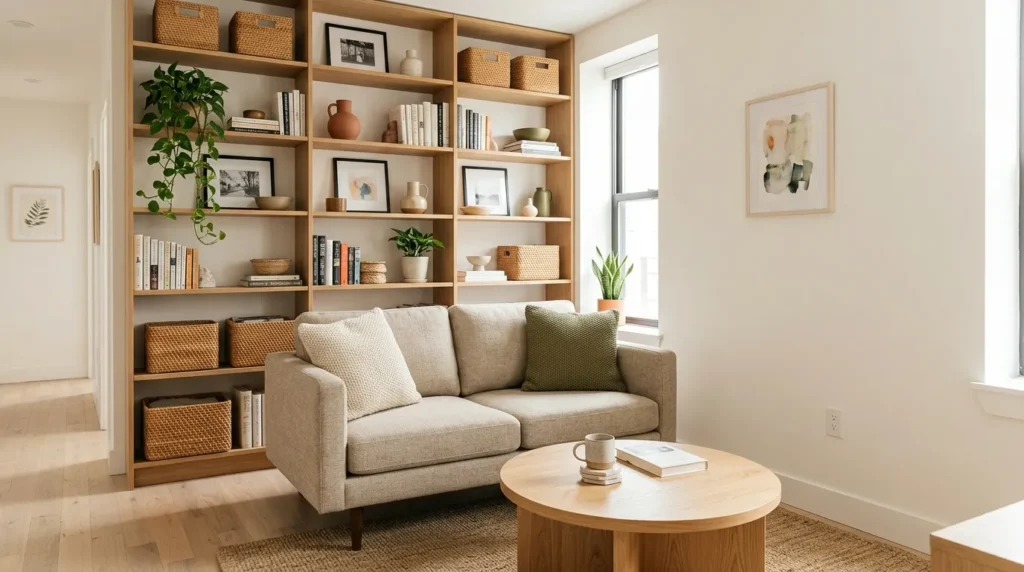
When floor space is limited, the walls become an important part of the storage strategy. Tall shelving and vertical cabinets can provide substantial storage while taking up a relatively small amount of floor area.
Using vertical space also changes how the room is perceived. Tall furniture naturally draws the eye upward, which can emphasize ceiling height and make the room feel more developed.
Open shelving works well for books, framed art, baskets, and a few decorative objects. Closed cabinets are better for items that create visual clutter.
The balance between open and closed storage is important. A wall covered entirely in open shelves can quickly look busy, especially in a small room.
How To Style It
Choose one tall storage piece instead of several short cabinets when possible. This creates a stronger vertical line and can reduce the amount of furniture scattered around the room.
Arrange books horizontally and vertically, leaving breathing room between groups. Add woven baskets to conceal smaller items and introduce natural texture.
Keep the color palette controlled. Repeating wood tones, neutral baskets, and a few favorite decorative objects will look more cohesive than displaying everything you own.
If you prefer open shelving, consider placing the largest objects lower and lighter pieces higher. This creates visual stability.
For renters, freestanding bookcases can provide similar benefits without permanent installation. Always follow appropriate safety guidance and secure tall furniture when necessary.
10. Define Clear Zones
Quick Benefits
- Gives every part of the room a purpose
- Improves furniture organization
- Makes open layouts easier to manage
- Prevents random furniture placement
- Supports multiple everyday activities
Why It Works
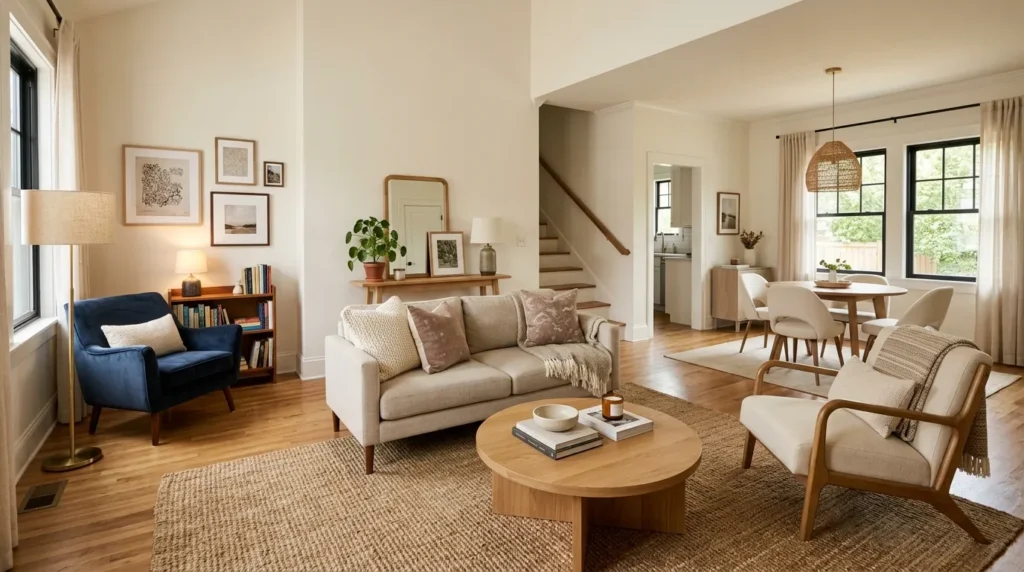
A small living room can feel chaotic when furniture has no clear relationship to the activities happening there. Creating zones gives the room structure without adding walls.
One area can be dedicated to conversation, another to television viewing, and a small corner can become a reading or work area. The zones do not need physical barriers. Rugs, furniture orientation, lighting, and changes in texture can establish boundaries visually.
This approach is especially useful in apartments and open-plan homes where the living room shares space with a kitchen or dining area.
A clear zone also makes decorating decisions easier. Once you know what each area is meant to accomplish, you can choose furniture according to function rather than filling empty spaces simply because they exist.
How To Style It
Start by listing the activities that actually happen in the room. If the room is mainly used for television and relaxing, prioritize comfortable seating and a clear viewing angle. If you frequently entertain, create a conversation-oriented arrangement with easy access around the seating.
Use a rug to define the primary living area. A floor lamp can establish a reading corner, while a slim console can subtly separate the living space from a dining or entry area.
Avoid creating too many zones. In a genuinely small room, two or three purposeful areas are usually enough.
Keep the transitions between zones open. Furniture should guide movement rather than block it. Once the arrangement is established, remove anything that does not support a real activity or contribute meaningful visual value.
How To Make a Small Living Room Feel Bigger
Furniture layout is only one part of making a compact room comfortable. Color, lighting, scale, and visual clutter can either reinforce a good layout or work against it.
Keep the Floor Visible
Furniture with raised legs can make more flooring visible, which often gives the room a lighter appearance. This does not mean every piece must have exposed legs, but combining a few elevated pieces can prevent the room from feeling visually heavy.
Use a Consistent Color Palette
A restrained palette helps different furniture pieces feel connected. Warm whites, beige, soft gray, muted green, natural wood, and other understated tones can create a cohesive backdrop.
That does not mean the room needs to be completely neutral. A patterned pillow, artwork, or colorful accent chair can add personality without overwhelming the space.
Choose Furniture by Scale
Small does not automatically mean better. Several tiny pieces can actually make a room look busier than one appropriately sized sofa.
Measure furniture before buying it. Pay attention to depth as well as width because a deep sofa can consume much more usable space than its measurements initially suggest.
Protect the Walking Paths
A beautiful room becomes frustrating when you have to squeeze between furniture. Leave comfortable circulation around major pathways, doorways, and frequently used areas.
Tape furniture dimensions onto the floor before purchasing whenever possible. This simple trick gives you a much better idea of how a piece will affect movement.
Use Mirrors Strategically
A well-positioned mirror can reflect light and create the impression of additional visual depth. Place it where it reflects something attractive, such as a window, artwork, or architectural feature.
Avoid using mirrors simply to fill every empty wall. One thoughtfully positioned mirror can be more effective than several unrelated reflective surfaces.
Reduce Visual Clutter
The fewer objects competing for attention, the more spacious the room can feel. Use baskets, drawers, cabinets, and storage ottomans to keep everyday items organized.
A small room does not have to be minimalist. It simply benefits from intentional decoration.
Furniture Measurements That Matter
Before rearranging your living room, take a few basic measurements. You do not need an interior design degree or complicated floor-planning software. A tape measure and some painter’s tape can reveal a lot.
Sofa Depth
Sofa depth matters enormously in a compact room. A sofa with generous depth can be extremely comfortable but may consume valuable walking space.
If the room is narrow, compare shallower models before committing to an oversized sofa.
Coffee Table Clearance
Leave enough space between the sofa and coffee table for comfortable movement and legroom. The exact ideal distance depends on the furniture and household, but avoid arrangements where the table feels pressed directly against the sofa.
Door Clearance
Measure the full swing of doors, cabinet doors, and nearby drawers. Furniture can technically fit in a room while still making another piece impossible to use.
Window Access
Avoid blocking windows, heating vents, or frequently used doors. If furniture must sit near a window, ensure curtains can open properly and maintenance access remains possible.
Rug Size
A rug that is too small can make furniture look disconnected. Whenever possible, allow at least the front legs of major seating pieces to sit on the rug so the arrangement feels unified.
Television Viewing
Think about the relationship between the television and seating rather than simply placing the screen on the largest available wall. Viewing angle, glare, distance, and comfortable head position all matter.
Common Small Living Room Layout Mistakes
Even attractive furniture can create problems when the layout is not planned around the room’s actual dimensions.
Buying Before Measuring
This is one of the easiest mistakes to avoid. Always measure the room, doorways, stairs, elevators, and hallways involved in getting furniture into the space.
Choosing Oversized Furniture
A huge sectional may look beautiful online but overwhelm a compact room. Pay attention to depth, arm width, chaise length, and overall footprint.
Using Too Many Accent Pieces
A chair, ottoman, stool, side table, console, cabinet, and several baskets may each look useful individually. Together, they can consume the room.
Choose the pieces that support your actual routine.
Blocking Natural Light
Tall furniture placed directly in front of a window can make the room feel darker and more enclosed. Use the brightest part of the room intentionally.
Ignoring Storage
A room without adequate storage often becomes cluttered regardless of how attractive the furniture is. Think about where remotes, blankets, toys, books, chargers, and other everyday objects will live.
Creating a Furniture Obstacle Course
If people have to walk around the sofa, squeeze past the coffee table, or step between chairs to reach another room, the layout needs another look.
The best arrangement is not necessarily the one that fills the room most completely. It is the one that makes everyday movement feel effortless.
How to Rearrange Your Living Room Without Buying Anything
You can often discover a better arrangement using the furniture you already have.
Start by removing small accessories from the room. Lamps, baskets, plants, pillows, and decorative objects can make it harder to see the actual furniture relationships.
Next, measure the major pieces and sketch the room on paper. You can also use painter’s tape on the floor to mark potential furniture footprints.
Try moving the largest piece first. In most living rooms, that means the sofa or sectional. Once it is in a new position, evaluate the walking paths before adding anything else.
Then position the main chair or secondary seating. Think about whether the arrangement encourages conversation and whether everyone has a comfortable view of the primary focal point.
Add the coffee table last. This prevents the table from dictating the entire layout.
Finally, bring the accessories back gradually. If something does not have a useful purpose or improve the room visually, leave it out.
One simple trick I always suggest is living with a new arrangement for at least a few days before deciding whether it works. A layout can look unusual at first but become much more practical once you use it during normal routines.
Small Living Room Ideas for Renters
Renting does not mean settling for an awkward furniture arrangement. Many of the most effective improvements are completely temporary.
Use freestanding shelving rather than built-in cabinets. Choose narrow media consoles instead of permanent installations. Large rugs can visually define a living area without changing the structure of the room.
For wall decoration, removable hooks and renter-friendly hanging systems can provide flexibility. Mirrors can brighten the space, while floor lamps add lighting without requiring electrical changes.
Furniture with multiple purposes is particularly valuable in rental homes. A storage ottoman can act as seating, a footrest, and a coffee table. A slim console can function as a desk, entry table, or room divider.
If you cannot mount your television, choose an elevated media stand that leaves some floor visible underneath. This maintains a lighter appearance while keeping the setup practical.
The goal is to make the room work for your lifestyle without making permanent changes you may have to undo later.
Small Living Room Ideas for Families
A family living room needs to survive everyday life, not simply look attractive in photographs.
Start with durable upholstery and furniture that can handle regular use. Washable throws, closed storage, baskets, and easy-clean rugs can make maintenance much simpler.
A sectional can work particularly well for families because it provides generous seating in one footprint. Storage ottomans are another useful choice because they can hide toys and blankets while providing a soft surface.
Keep fragile decorative objects out of high-traffic areas. Instead, use wall art, durable baskets, sturdy lamps, and textiles to add personality.
Think about circulation from the beginning. Children, pets, and adults all need clear paths through the room. Avoid placing lightweight tables where they become obstacles.
A family-friendly living room does not need to look plain. The strongest approach is usually to combine practical materials with a carefully controlled color palette and a few decorative pieces that can withstand everyday life.
Creating a Cozy Look Without Overcrowding
Cozy does not have to mean crowded.
Texture is often a better way to add warmth than adding more furniture. A woven throw, soft rug, linen curtains, textured pillows, and natural wood can make a room feel inviting without taking up additional floor space.
Lighting also plays an important role. Instead of relying entirely on one ceiling fixture, layer a floor lamp, table lamp, or wall light where practical. Warm, comfortable lighting can change the atmosphere significantly in the evening.
Keep the seating arrangement intimate enough for conversation. A sofa and one chair can feel cozier than a sofa surrounded by multiple pieces that leave little breathing room.
Plants can also introduce softness and life. Choose one appropriately scaled plant rather than filling every corner with greenery.
Finally, leave some empty space. Visual breathing room is part of a cozy room because it allows the furniture and decorative details to stand out.
Conclusion
A compact living room can be comfortable, stylish, and highly functional when the furniture arrangement is planned around real life rather than simply filling every available space.
The most effective approach is to begin with the largest pieces and the room’s natural focal points. From there, consider circulation, storage, lighting, and the activities the room needs to support. A compact sectional may replace multiple seating pieces, a round coffee table can improve movement, and a storage ottoman can perform several jobs at once.
You do not necessarily need new furniture to make a meaningful change. Moving a sofa, clearing a pathway, repositioning a chair, or removing one oversized piece can completely alter the way the room feels.
If you’re unsure where to begin, choose one problem that bothers you most. Maybe the room feels crowded, lacks storage, or has an awkward television position. Solve that issue first, then build the rest of the arrangement around the improvement.
The best small living room is not the one with the most furniture or the most decoration. It is the one where everything has a purpose and everyday movement feels natural.
Start with one or two ideas, test the arrangement, and gradually create a space that reflects your style while making the most of every square foot.
Related Articles
- 10 Cozy Living Room Ideas for a Warm and Inviting Home
- 10 Modern Living Room Ideas with Luxury Style
- 10 Small Apartment Living Room Ideas That Maximize Space
- 10 Neutral Living Room Ideas That Feel Calm and Timeless
- 10 Living Room Storage Ideas for a Clutter-Free Home
FAQ
What is the best furniture layout for a small living room?
The best layout depends on the room’s shape, entrances, windows, and primary use. Generally, start with the sofa or sectional, create clear walking paths, and arrange smaller pieces around the main seating. Avoid automatically pushing everything against the walls. A purposeful arrangement with fewer, appropriately scaled pieces often works better than filling every available area.
Should a sofa be against the wall in a small living room?
Not always. Pulling a sofa slightly away from the wall can create a more intentional seating zone and work especially well in open-plan rooms. However, in an extremely narrow room, keeping the sofa against the wall may preserve valuable floor space. Test both arrangements before deciding which provides better circulation and comfort.
What type of coffee table works best in a small living room?
Round and oval coffee tables are particularly useful because they eliminate sharp corners and can make circulation easier. A storage ottoman is another practical option because it can function as a coffee table, footrest, and extra seating. Choose a size that provides useful surface area without blocking movement around the seating.
How can I make a small living room look less cluttered?
Use furniture with built-in or hidden storage, reduce unnecessary accessories, and keep walking paths open. Closed cabinets, storage ottomans, baskets, and drawers can hide everyday items. A consistent color palette and fewer but larger decorative elements can also create a calmer appearance than many small accessories.
Is a sectional a good choice for a small living room?
Yes, provided the sectional is correctly scaled. A compact L-shaped sectional can use a corner efficiently and provide substantial seating in one footprint. Measure its total width and depth before purchasing, and check that the chaise does not interfere with doors, windows, or important walking paths.
How do I arrange furniture in a narrow living room?
Place the primary seating along the longest usable wall or orient it toward the room’s main focal point. Use narrow tables, compact chairs, and furniture with visible legs where appropriate. Keep a clear pathway through the room and avoid placing bulky pieces opposite one another if they create a narrow corridor.
How do I add storage without making a small living room feel crowded?
Choose furniture that combines functions. Storage ottomans, lift-top coffee tables, slim cabinets, tall bookcases, and storage benches can provide useful capacity without requiring many separate pieces. Using vertical space is particularly effective because it adds storage while preserving more floor area.