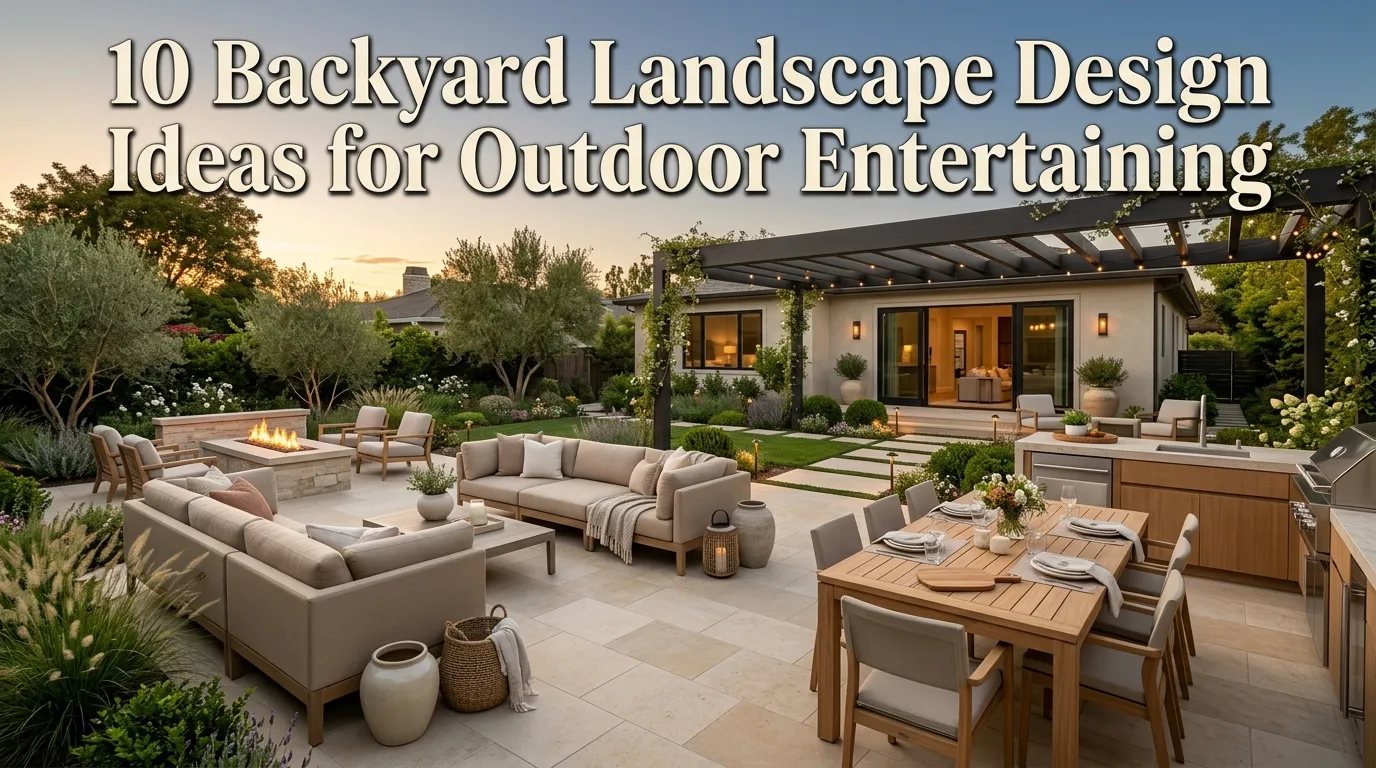
10 Backyard Landscape Design Ideas for Outdoor Entertaining
A backyard can be much more than a patch of grass behind the house. With thoughtful landscaping, it can become an extension of your living space where friends gather for dinner, family members relax on warm evenings, and everyday weekends feel a little more enjoyable. The challenge is creating an outdoor space that looks beautiful while still being comfortable and practical for entertaining.
Good backyard design starts with how you plan to use the space. A large patio may be impressive, but if guests have to walk across the lawn to reach it, drinks and food can become difficult to carry. Likewise, beautiful landscaping can lose its appeal when there is nowhere comfortable to sit, inadequate lighting, or no shade during the hottest part of the day.
The most successful entertaining backyards usually combine several functions without making the landscape feel divided. A dining area can sit beside a planting bed, a fire pit can anchor a conversation area, and a walkway can connect everything naturally. Plants provide privacy and softness, while hardscaping creates durable spaces for furniture and foot traffic.
In my experience, the best outdoor entertaining spaces do not need to be enormous. Even a modest backyard can feel inviting when the layout is intentional and every area has a purpose. The right combination of seating, lighting, greenery, pathways, and gathering zones can make a noticeable difference.
These backyard landscape ideas focus on creating spaces that are attractive enough for Pinterest inspiration but practical enough for real life. Whether you are planning a complete landscape update or looking for a few changes before your next gathering, these ideas can help you build a backyard that encourages people to stay a little longer.
Table of Contents
1. Defined Dining Patio
Create a dedicated outdoor dining area with durable surfaces and comfortable seating for meals and gatherings.
2. Cozy Fire Pit Zone
Build a welcoming conversation area around a fire feature with comfortable seating and thoughtful landscaping.
3. Layered Garden Borders
Use planting beds around entertaining areas to soften hardscape and create a more finished landscape.
4. Outdoor Kitchen Hub
Design a convenient cooking area that keeps food preparation close to guests and the main seating zone.
5. Shaded Lounge Area
Add shade through a pergola, trees, or another structure to make outdoor entertaining more comfortable.
6. Connected Walkways
Use pathways to create an easy flow between the house, patio, lawn, garden, and entertaining areas.
7. Privacy Planting
Combine trees, shrubs, grasses, and layered planting to create a more private and comfortable backyard.
8. Ambient Landscape Lighting
Use strategically placed lighting to make patios, pathways, trees, and gathering areas welcoming after sunset.
9. Flexible Lawn Space
Keep part of the backyard open so it can accommodate games, children, extra seating, and larger gatherings.
10. Multi-Level Gathering Areas
Use changes in elevation to create distinct entertaining zones while maintaining a connected overall landscape.
1. Defined Dining Patio
Quick Benefits
- Creates a dedicated entertaining area
- Makes outdoor meals more comfortable
- Provides a stable surface for furniture
- Helps organize the backyard layout
- Works for casual and formal gatherings
Why It Works
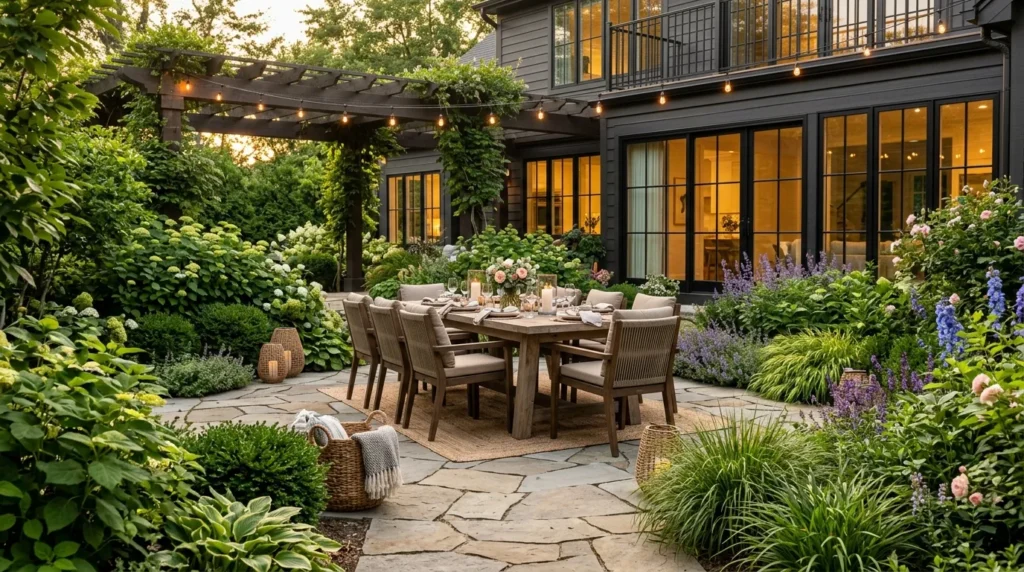
A defined dining patio gives outdoor entertaining a clear destination. Instead of placing a table randomly on the lawn, a dedicated surface visually establishes where meals happen and provides a level, durable area for chairs and serving pieces.
The patio does not have to be enormous. Its size should reflect how many people you normally entertain and the furniture you actually plan to use. A compact rectangular patio can accommodate a dining table and chairs, while a larger space can include a serving station or nearby lounge seating.
Material choice also affects the overall character of the landscape. Concrete pavers can create a clean contemporary look, natural stone can feel more organic, and brick can complement traditional homes.
The surrounding landscape matters just as much. Planting beds, low shrubs, ornamental grasses, and trees can soften the edges and make the patio feel integrated with the yard.
How To Style It
Begin by measuring your dining furniture and allowing comfortable walking space around it. Guests should be able to pull out chairs without constantly bumping into walls, planters, or other furniture.
Choose a patio material that complements your home’s exterior rather than treating the backyard as a completely separate design.
Add a large outdoor rug if appropriate for your climate and surface. It can visually anchor the table and introduce color or texture.
For a relaxed entertaining area, combine a sturdy dining table with comfortable chairs, lantern-style lighting, and nearby potted plants. A built-in bench along one edge can provide additional seating without taking up as much room as individual chairs.
Keep frequently used serving items close to the dining area so guests and hosts do not have to repeatedly travel across the yard.
2. Cozy Fire Pit Zone
Quick Benefits
- Creates a natural gathering point
- Extends outdoor use into cooler evenings
- Adds visual interest
- Encourages conversation
- Works in different backyard sizes
Why It Works
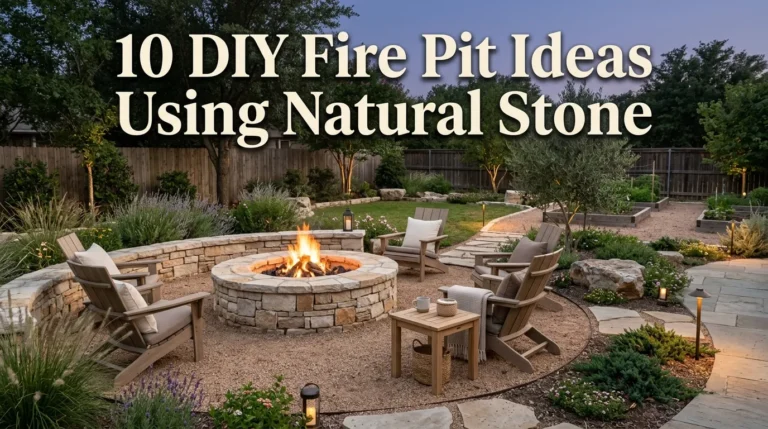
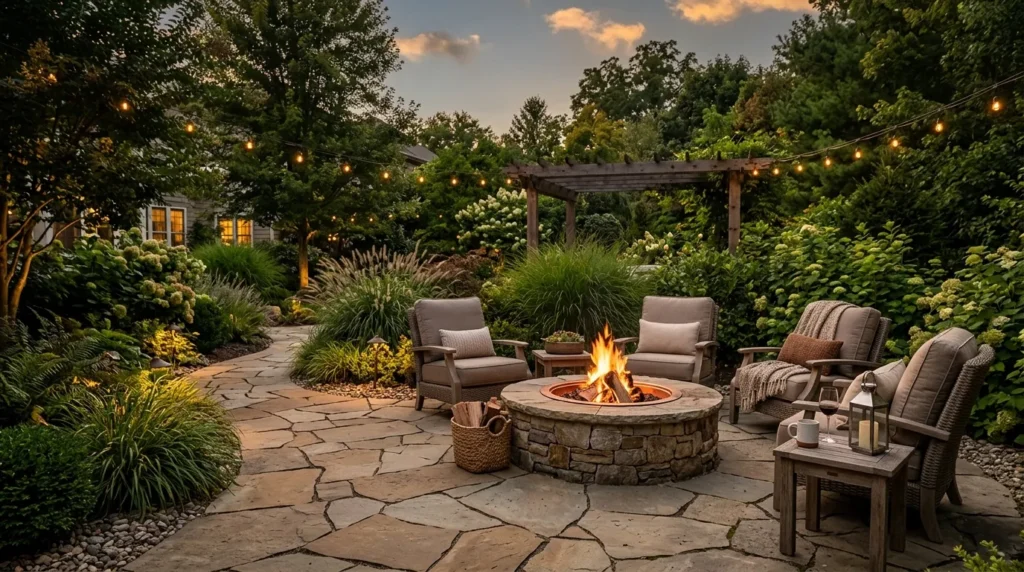
A fire pit naturally draws people together. Unlike a dining table, which encourages guests to face one another across a surface, a circular or central fire feature creates a shared focal point.
The surrounding seating arrangement is important. Chairs should be positioned so guests can comfortably see one another as well as the fire. Leave adequate space around the feature and follow local fire regulations and manufacturer safety requirements.
The landscape around the fire pit can make the zone feel intentional. Gravel, pavers, stone, or another suitable surface can distinguish the area from the lawn.
For smaller yards, a compact fire feature with movable chairs may be enough. Larger properties can support a built-in stone or masonry design with permanent seating.
How To Style It
Choose a fire pit that fits the scale of the backyard. An oversized structure can dominate a small yard, while a tiny portable feature may look lost in a large landscape.
Create a comfortable seating circle using outdoor lounge chairs, built-in benches, or a combination of both. Add weather-resistant cushions in neutral tones for a relaxed appearance.
Use surrounding plants to soften the hardscape, but maintain appropriate clearances from the fire feature. Avoid placing dry plant material too close to open flames.
For evening gatherings, combine the fire’s natural glow with subtle landscape lighting nearby. You want enough illumination for safe movement without competing with the fire as the main focal point.
3. Layered Garden Borders
Quick Benefits
- Softens patios and hardscape
- Adds color and texture
- Creates visual depth
- Supports pollinators and wildlife
- Helps entertaining areas feel integrated
Why It Works
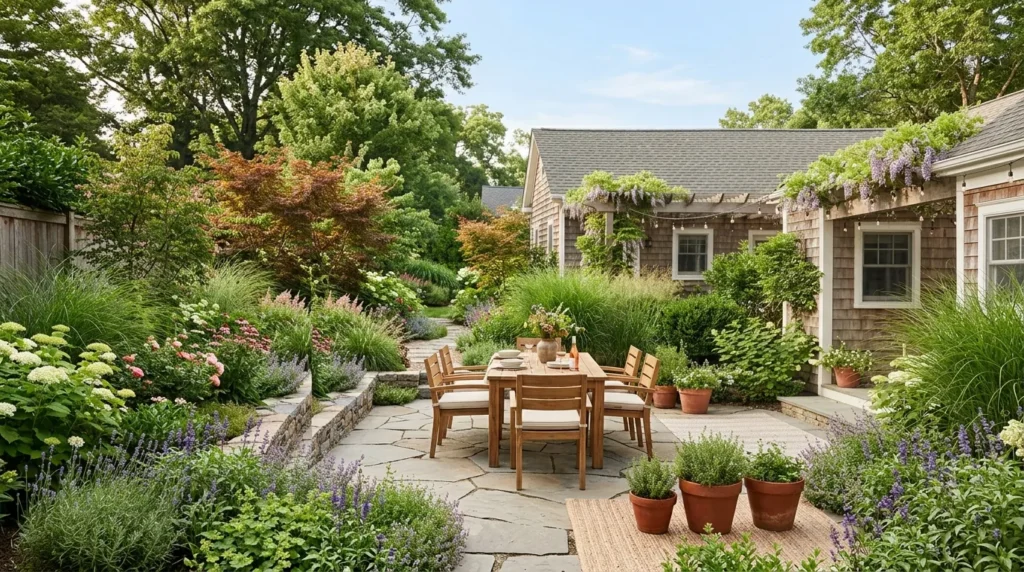
Garden borders can transform a functional patio into a more inviting landscape. Hard surfaces are useful for furniture and foot traffic, but plants introduce the softness, movement, and seasonal changes that make a backyard feel alive.
Instead of planting everything at the same height, use layers. Low groundcovers can sit near the patio edge, medium perennials can provide color and texture behind them, and taller shrubs or ornamental grasses can create a backdrop.
This layered approach also makes a relatively small planting bed look fuller without requiring dozens of unrelated plants.
When selecting plants, consider your local climate, sun exposure, mature size, and water requirements. Choosing plants suited to the conditions is more sustainable and usually easier to maintain.
How To Style It
Start with the tallest plants at the back of the bed and work forward with progressively shorter selections. This creates depth while keeping the patio visually connected to the garden.
Use repeated plants rather than filling the border with one of everything. Repetition creates a more cohesive landscape and makes the design easier to maintain.
For a contemporary backyard, combine ornamental grasses, shrubs, and restrained flowering plants. For a cottage-inspired space, use more varied textures and seasonal blooms.
Leave enough room for plants to reach their mature size. A common landscaping mistake is planting too closely because the garden looks sparse when new.
Mulch or another appropriate groundcover can help define the beds and reduce exposed soil.
4. Outdoor Kitchen Hub
Quick Benefits
- Keeps food preparation outdoors
- Makes hosting more convenient
- Creates another social gathering point
- Reduces trips between house and yard
- Can increase functionality of a patio
Why It Works
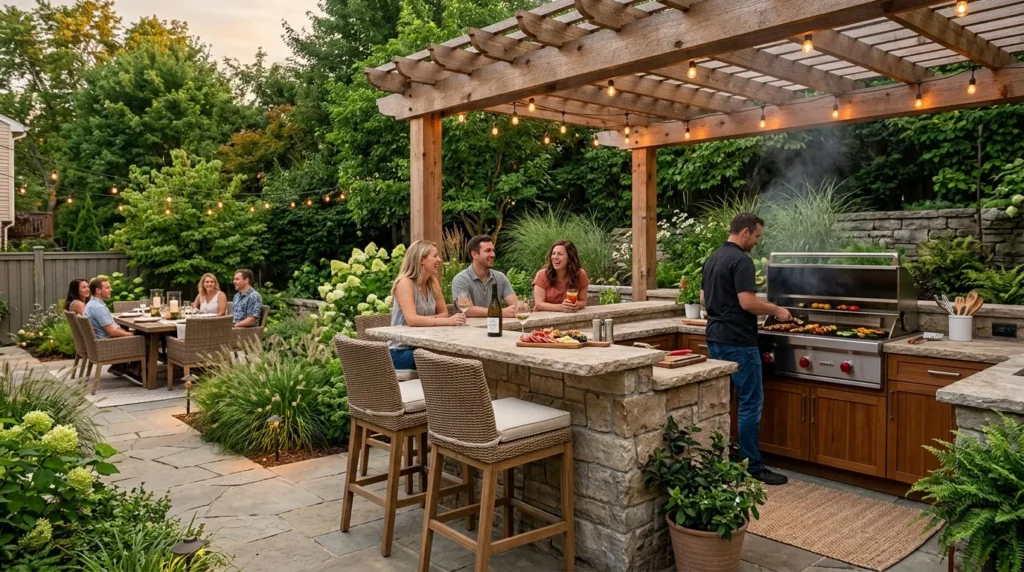
An outdoor kitchen can make entertaining significantly easier because cooking becomes part of the social experience rather than something that happens separately indoors.
The design does not need to be elaborate. A simple counter with a grill and storage may be enough for a household that occasionally hosts weekend gatherings. Larger spaces can include refrigeration, sinks, additional preparation surfaces, and built-in seating.
Placement matters more than the number of appliances. The kitchen should be convenient to the house and close enough to the main entertaining area that the person preparing food remains connected to guests.
Think about traffic flow as well. You do not want guests walking through the cooking area every time they move between the patio and lawn.
How To Style It
Begin with the cooking equipment you actually use. Avoid designing around appliances simply because they look impressive.
Provide a durable preparation surface beside the grill and storage for frequently used outdoor dining supplies.
A nearby counter or bar can create casual seating while also giving guests somewhere to place drinks.
Use materials that are appropriate for outdoor exposure and your local climate. Stone, masonry, stainless steel, and outdoor-rated cabinetry are common choices, but maintenance requirements vary.
Add landscaping around the kitchen without blocking ventilation or creating difficult-to-clean areas. Low-maintenance plants in nearby beds can make the structure feel integrated with the rest of the backyard.
5. Shaded Lounge Area
Quick Benefits
- Makes summer entertaining more comfortable
- Provides relief from direct sun
- Creates another backyard destination
- Adds architectural interest
- Extends daytime outdoor use
Why It Works
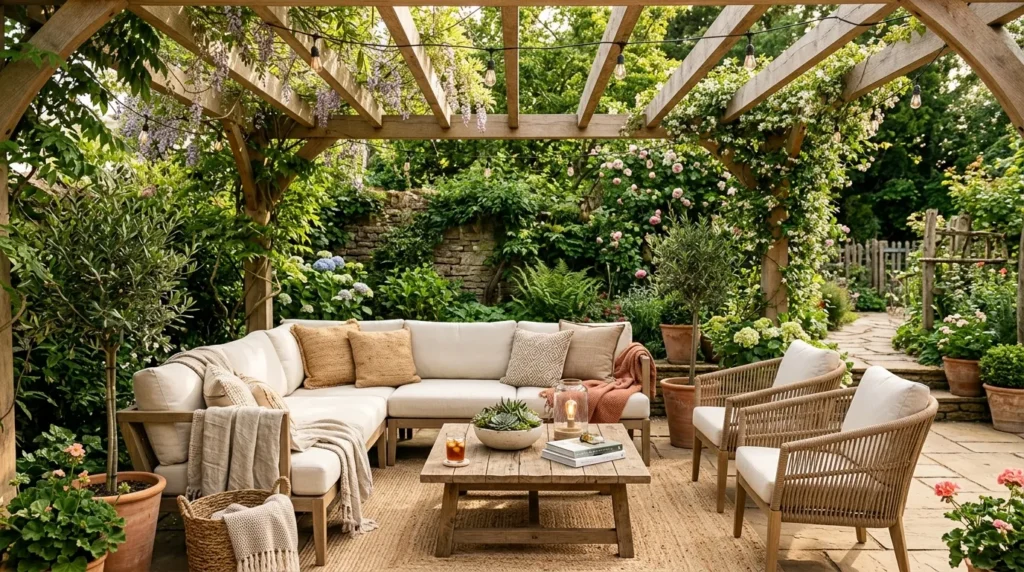
Shade is one of the most important elements in a comfortable entertaining space. A beautiful patio can become practically unusable during the hottest part of the day if there is nowhere to escape direct sunlight.
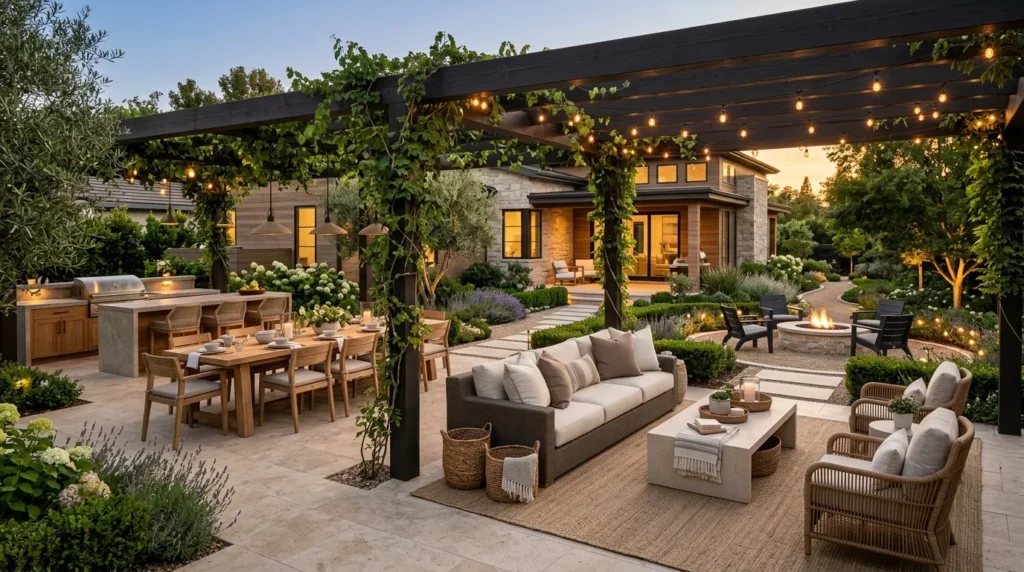
A pergola can define a lounge area while allowing filtered light through. Mature trees provide natural shade and can become long-term landscape features. Umbrellas and shade sails offer more flexibility when permanent structures are not practical.
The right solution depends on the yard, climate, budget, and how much permanence you want.
Shade also creates visual hierarchy. A covered seating area can become a destination within the landscape rather than simply another collection of furniture.
How To Style It
Place comfortable lounge seating under the shade structure and orient it toward the best view or another backyard focal point.
Use weather-resistant upholstery in neutral tones if you want a timeless look. Add outdoor pillows or throws for color and texture.
If using a pergola, consider climbing plants only when they are appropriate for your structure and climate. Keep mature growth and maintenance requirements in mind.
A large umbrella can be positioned beside a dining table or lounge area and moved when necessary.
For evening entertaining, integrate suitable lighting into or around the structure. Soft overhead illumination can make the space feel like an outdoor room.
6. Connected Walkways
Quick Benefits
- Improves movement through the yard
- Connects separate entertaining zones
- Protects lawn areas from heavy traffic
- Adds landscape structure
- Makes the backyard feel intentional
Why It Works
A backyard can contain beautiful individual areas but still feel awkward if there is no logical way to move between them. Walkways solve that problem by creating visual and physical connections.
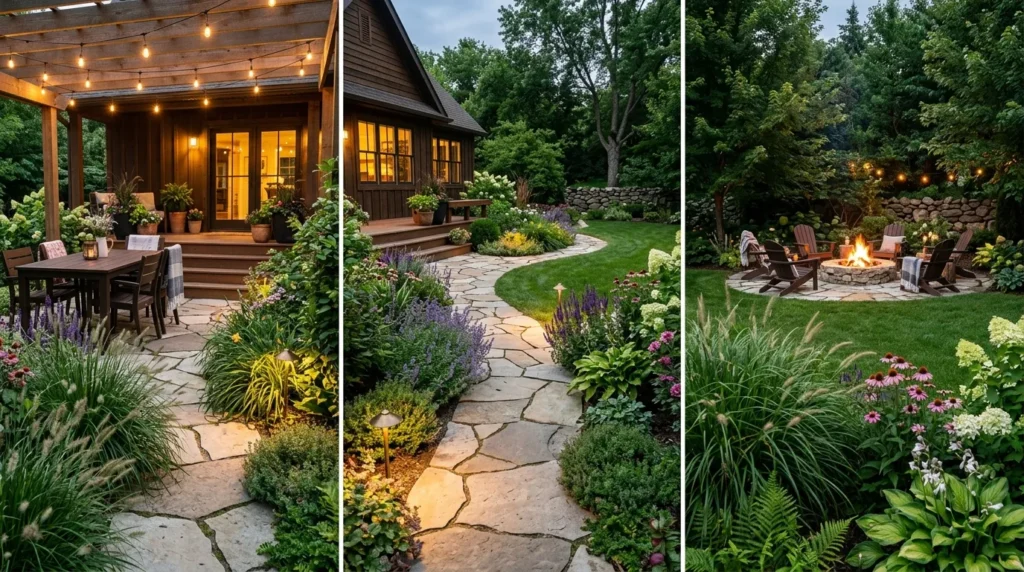
A good path guides guests naturally from the house toward the patio, fire pit, garden, outdoor kitchen, or seating area.
Path materials can reinforce the home’s style. Stone creates an organic appearance, brick can feel traditional, and large-format concrete pavers can create a contemporary look.
The route should also make sense practically. Guests carrying food or drinks need a comfortable, relatively direct connection between indoor and outdoor spaces.
How To Style It
Keep the main route wide enough for comfortable two-way movement, particularly near entertaining areas.
Use repeated materials so the pathways feel connected rather than like separate installations.
Plant along the edges with low-growing selections that will not quickly spill into the walking area. Taller plants can be positioned farther back to frame the path without narrowing it.
For nighttime use, add low-level path lighting where needed. The goal is to illuminate the walking route without making the yard look overly bright.
Curved paths can create a relaxed garden atmosphere, while straight paths often work well with contemporary architecture.
7. Privacy Planting
Quick Benefits
- Creates a more intimate atmosphere
- Screens unwanted views
- Adds greenery
- Reduces the feeling of exposure
- Creates natural background layers
Why It Works
Outdoor entertaining feels more comfortable when the space has some degree of privacy. That does not necessarily mean building a tall fence around the entire backyard.
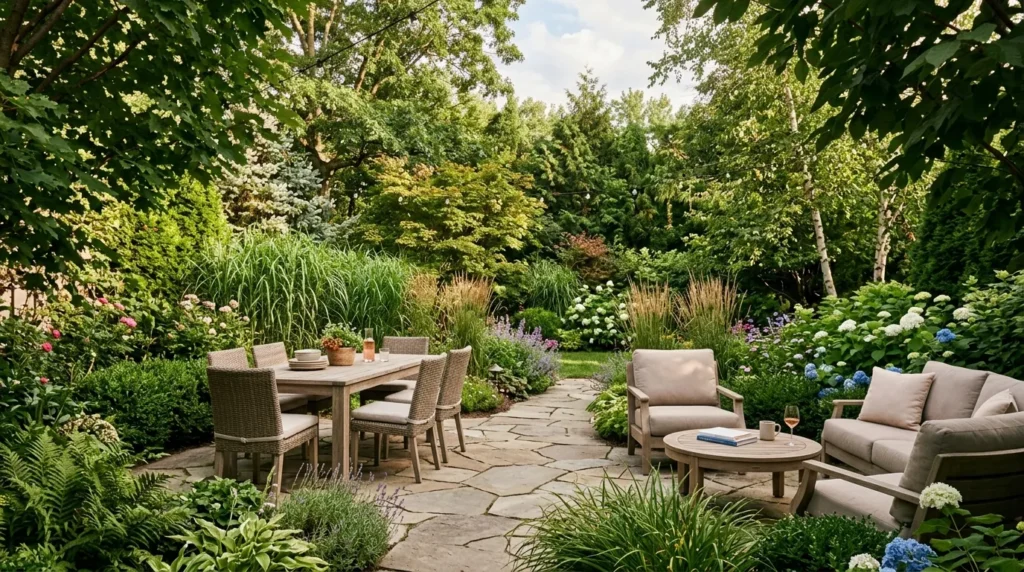
Layered planting can provide screening while making the landscape feel softer and more natural. Trees can create overhead structure, shrubs can form middle layers, and ornamental grasses can fill lower areas.
The right plants depend heavily on your region. A plant that grows quickly and stays healthy in one climate may struggle in another, so local growing conditions should guide the selection.
Privacy planting also changes over time. Newly planted trees and shrubs may look small at first but can become substantial landscape features as they mature.
How To Style It
Identify the specific sightlines you want to screen rather than planting a continuous wall of vegetation everywhere.
Use a mixture of heights and textures. A row of identical plants can provide screening, but layered planting often looks more natural.
Position taller plants behind seating areas and shorter shrubs closer to patios. This maintains views while still creating a sense of enclosure.
Consider evergreen plants for year-round screening where appropriate, then layer in deciduous trees, grasses, or flowering shrubs for seasonal interest.
Leave sufficient space between plants based on their mature dimensions. This reduces future pruning and overcrowding.
8. Ambient Landscape Lighting
Quick Benefits
- Extends entertaining after dark
- Improves visibility
- Highlights landscape features
- Creates atmosphere
- Adds definition to outdoor zones
Why It Works
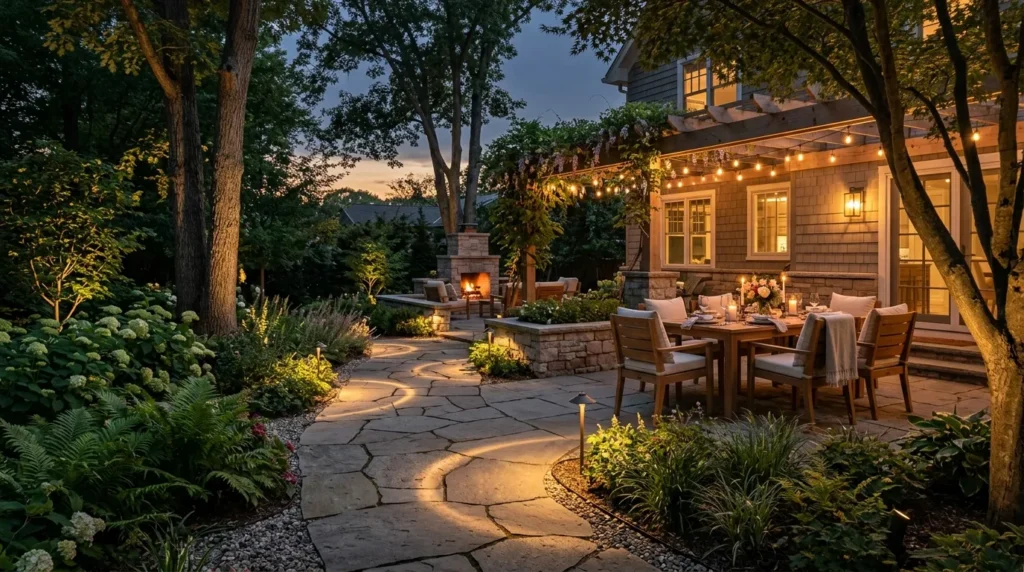
A backyard can look completely different after sunset. Thoughtful lighting reveals the structure of the landscape while making patios, pathways, and seating areas easier to use.
The goal is not to flood the yard with bright light. Too much illumination can flatten the landscape and make an outdoor gathering feel less relaxing.
Instead, use several subtle sources. Path lights can guide movement, uplights can highlight trees or architectural features, and low-level lighting can define seating areas.
Warm-toned outdoor lighting is often effective for creating a welcoming atmosphere, although fixture choice should also account for function, safety, and the surrounding environment.
How To Style It
Start with areas that need functional illumination, such as steps, pathways, outdoor kitchens, and seating zones.
Then add accent lighting to important landscape features. A mature tree, textured wall, planting bed, or water feature can become a beautiful evening focal point.
Avoid placing identical lights at perfectly regular intervals everywhere unless that is specifically part of the design. A more varied arrangement can feel natural.
Use outdoor-rated fixtures and have electrical work completed according to local requirements. Timers or smart controls can also make the lighting easier to manage.
Keep the brightest lighting near areas where people need to see clearly, while using softer illumination elsewhere.
9. Flexible Lawn Space
Quick Benefits
- Supports larger gatherings
- Provides space for games
- Keeps the yard versatile
- Works for families
- Prevents overbuilding the landscape
Why It Works
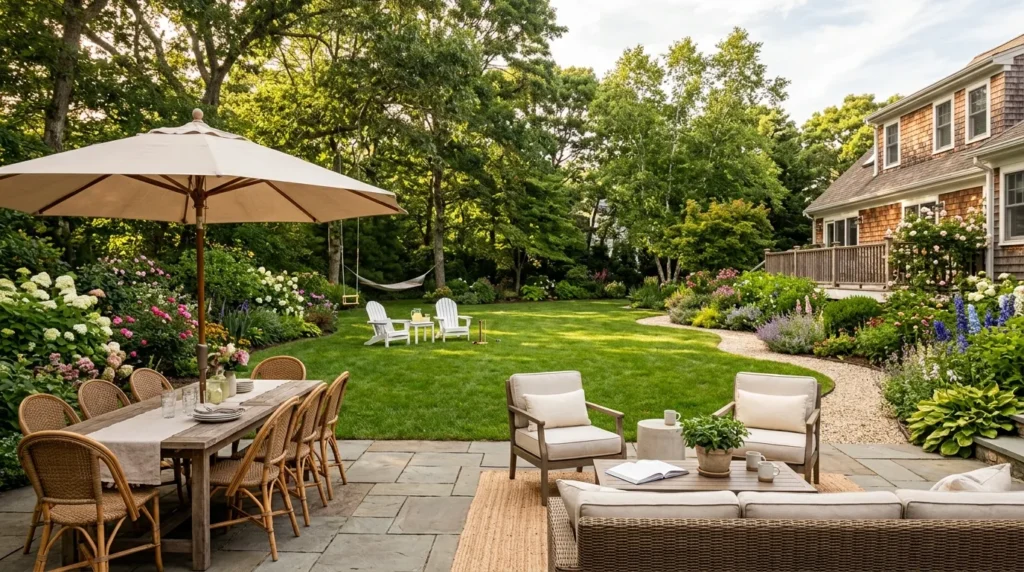
Not every square foot of backyard needs to become a patio or planting bed. Open lawn can be extremely valuable for entertaining because it gives the landscape flexibility.
Children can play, guests can mingle, temporary seating can be added, and outdoor games can happen without interfering with permanent structures.
A lawn also provides visual breathing room between more densely designed areas. The contrast between open grass and planted borders can make both elements more noticeable.
For homeowners who entertain frequently, this flexibility can be more useful than installing several permanent structures.
How To Style It
Keep the lawn accessible from the main patio and entertaining zones. A clear connection makes it easier for guests to move naturally between spaces.
Frame the lawn with planting beds, trees, or pathways rather than placing isolated decorations in the middle.
If you regularly host large gatherings, consider where temporary tables, chairs, or umbrellas could be positioned.
Choose grass or alternative groundcover based on your climate, maintenance preferences, and expected use. In some regions, a lower-maintenance lawn alternative may be more practical.
The goal is to preserve enough open space for changing needs rather than designing the entire backyard around one fixed activity.
10. Multi-Level Gathering Areas
Quick Benefits
- Creates distinct zones
- Works with sloped properties
- Adds visual interest
- Separates activities naturally
- Makes larger yards feel organized
Why It Works
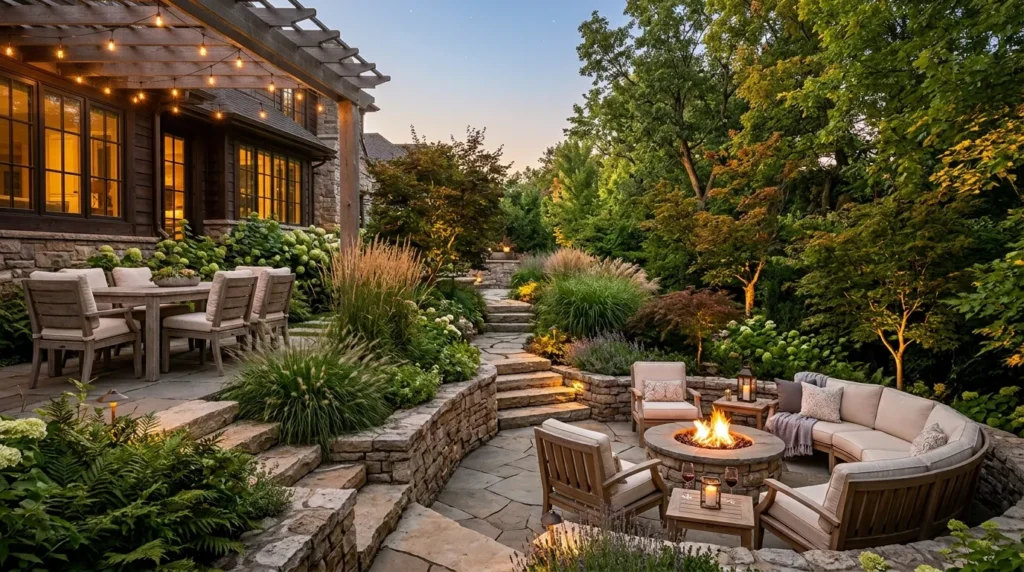
A backyard with different elevations can become a design advantage rather than a problem. Terraced patios, raised decks, retaining walls, and steps can create separate destinations while preserving a sense of connection.
For example, a dining terrace can sit closest to the house, while a lower fire pit area becomes a more relaxed evening destination. A lawn or garden can occupy another level.
Even on relatively flat properties, slight changes in elevation can create visual separation between activities.
However, changes in grade require careful planning. Drainage, retaining structures, accessibility, and local building requirements all need to be considered before construction.
How To Style It
Use each level for a clear purpose. One area might be dedicated to dining, another to lounging, and another to gardening or lawn activities.
Repeat materials between levels to maintain visual continuity. If the upper patio uses natural stone, consider incorporating the same or a complementary material on steps or retaining walls.
Use planting to soften transitions between elevations. Grasses, shrubs, and groundcovers can make retaining structures feel more integrated.
Add lighting to steps and changes in elevation for safe nighttime movement.
Keep furniture proportional to each zone. A large dining table may belong on the main terrace, while a few lounge chairs can make a smaller lower level feel intimate.
Designing a Backyard That Works for Real Gatherings
Beautiful landscaping matters, but entertaining spaces also need to work when several people are using them at once.
Think about the journey guests take from the house to the backyard. Is the route obvious? Is there enough room near the door for people to enter and exit? Can someone carry a tray from the kitchen to the dining table without navigating around furniture?
Consider where guests will naturally stand. People often gather around food and drinks rather than immediately sitting down. Provide a few places where guests can lean, sit, or set down a glass.
Traffic flow becomes particularly important around outdoor kitchens and grills. Keep cooking areas separate enough from major walkways to avoid collisions.
Also think about storage. Cushions, serving pieces, outdoor games, and seasonal accessories need somewhere to go. Built-in storage or a nearby weather-resistant cabinet can make the entire backyard easier to manage.
The best landscape plans account for these ordinary moments before construction begins.
How to Choose Plants for an Entertaining Backyard
Plants should support the way you use the space rather than simply filling empty areas.
Near dining areas, avoid plants that shed heavily onto tables or attract unwanted insects in large numbers. Near pathways, choose plants that will not rapidly spread into walking space.
Around seating areas, consider fragrance carefully. Some fragrant plants can be delightful, while others may become overwhelming when positioned too close to guests.
Choose plants according to sunlight, soil, drainage, mature size, and local climate. Native and well-adapted plants can often be excellent choices because they are suited to local growing conditions.
Create seasonal interest by combining plants that peak at different times. Evergreen structure can provide consistency, while flowering plants, grasses, and trees add seasonal changes.
A well-planned planting scheme can make the backyard feel established and layered without requiring constant replacement.
Outdoor Entertaining Mistakes to Avoid
One common mistake is creating too many separate zones. A backyard does not need a dining patio, lounge deck, fire pit, outdoor kitchen, pool area, bar, garden room, and lawn if there is not enough room to move comfortably between them.
Another problem is choosing furniture before planning circulation. Measure everything and leave adequate space for movement.
Ignoring shade is also easy to regret. Consider how the sun moves across the property during the hours you normally entertain.
Drainage should never be treated as an afterthought. Patios, retaining walls, planting beds, and changes in elevation can affect where water moves.
Finally, avoid designing exclusively for photographs. A backyard may look beautiful with minimal furniture, but real gatherings require places to sit, put down drinks, serve food, store belongings, and move around.
Design for the photographs, but prioritize the people who will actually use the space.
FAQ
What is the best backyard layout for entertaining?
The best layout depends on the size and shape of the property, but a practical plan usually includes a dining area near the house, a separate lounge or conversation zone, clear walkways, and some flexible open space. Keeping frequently used areas connected makes food service and guest movement much easier.
How do I make my backyard better for entertaining?
Start by creating comfortable seating and a defined gathering area. Then improve the experience with shade, outdoor lighting, convenient pathways, and nearby food-preparation space. Landscaping around these areas can add privacy and softness while keeping the main entertaining zones functional.
What plants are best around a backyard patio?
The best plants depend on your climate, soil, sunlight, and maintenance preferences. Generally, choose plants that remain manageable at maturity and do not quickly spread into seating or walking areas. A mixture of shrubs, ornamental grasses, perennials, and small trees can create attractive layers.
How much patio space do I need for outdoor dining?
The amount depends on your table, chairs, and the number of guests. Measure the furniture first and leave additional room for chairs to move and people to walk around them. It is better to create a slightly smaller but comfortable dining area than to fill the entire backyard with hardscape.
How can I add privacy to my backyard without a tall fence?
Layered planting is one effective option. Trees, shrubs, ornamental grasses, and climbing plants can screen specific views while keeping the landscape natural. You can also combine planting with a pergola, lattice, or strategically placed outdoor structure to create privacy where it is most needed.
What is the best outdoor lighting for entertaining?
A combination of functional and ambient lighting usually works best. Use pathway and step lighting for safety, targeted lighting for cooking and dining areas, and softer accent lighting around trees or planting beds. Avoid excessive brightness so the backyard retains a comfortable evening atmosphere.
Can a small backyard be designed for entertaining?
Absolutely. Small yards often benefit from multifunctional spaces. A compact patio can accommodate dining and lounging, while vertical planting and built-in seating save space. Movable furniture can also allow the layout to change depending on whether you are hosting dinner, relaxing, or accommodating a larger group.
Conclusion
A well-designed entertaining backyard is not defined by its size or the number of expensive features it contains. What matters most is how naturally the space supports the way you live and host.
Start by identifying the activities that matter most. If outdoor dinners are your priority, create a comfortable dining patio. If evening conversations are more important, a fire pit or lounge area may deserve more attention. If you regularly host larger groups, preserve some flexible lawn space instead of filling the yard with permanent structures.
From there, connect the spaces with practical pathways, soften hardscape with layered planting, and add shade and lighting where they will make the biggest difference. These details turn individual backyard features into one cohesive outdoor environment.
You also do not have to complete everything at once. A patio, a few comfortable chairs, strategic planting, and good lighting can create a strong foundation. Additional features can be added as your needs and budget allow.
The goal is a backyard that looks beautiful when no one is there but becomes even better when friends and family arrive. When the layout makes movement easy, seating comfortable, and the atmosphere inviting, the landscape becomes more than decoration—it becomes a place people genuinely want to use.
Related Articles
- Backyard Patio Ideas for Comfortable Outdoor Living
- Small Backyard Ideas That Make Every Inch Count
- Backyard Privacy Ideas for a More Relaxing Outdoor Space
- Backyard Landscaping Ideas for a Beautiful Low-Maintenance Yard
- Outdoor Living Room Ideas for Stylish Entertaining