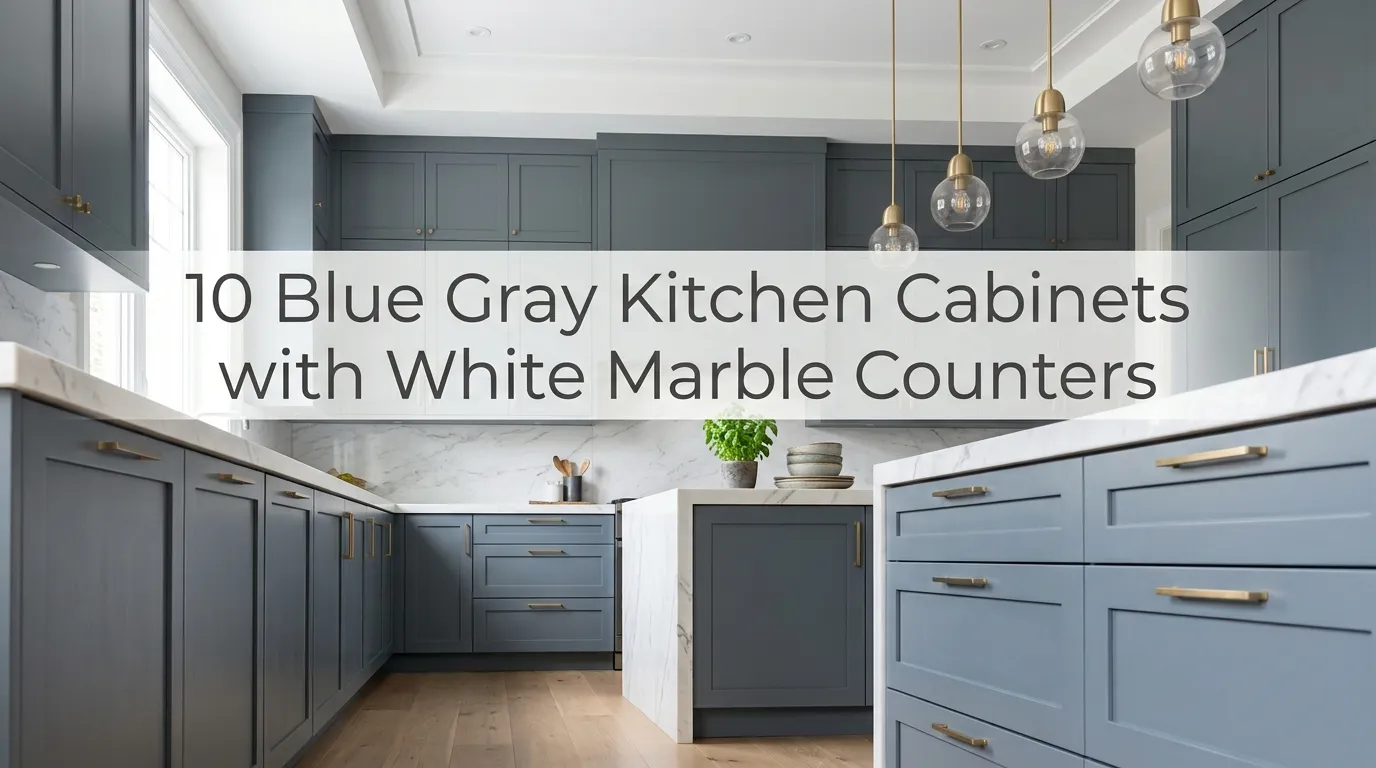
10 Blue Gray Kitchen Cabinets with White Marble Counters
Blue gray kitchen cabinets paired with white marble counters have a way of making a kitchen feel both calm and polished. The combination brings together two elements that balance each other beautifully: the cool, muted depth of blue gray cabinetry and the bright, naturally varied surface of marble.
It is also a versatile color pairing. A kitchen with dusty blue gray cabinets can feel relaxed and traditional, while deeper blue gray cabinetry can create a more dramatic, sophisticated room. White marble keeps either direction feeling fresh by reflecting light and adding subtle movement through its veining.
For homeowners planning a kitchen update, this combination offers plenty of room for personalization. You can introduce warm wood floors, brass hardware, aged bronze fixtures, woven stools, or simple white walls without fighting the main color palette. The result can lean farmhouse, coastal, transitional, European-inspired, or contemporary depending on the details.
One thing that works especially well with this palette is contrast. Instead of making every element cool and gray, bring in a few warmer finishes to prevent the kitchen from feeling flat. Natural wood, warm metals, soft beige textiles, and creamy accessories can make the blue gray cabinetry feel more welcoming.
The marble itself also deserves attention. White marble is never completely plain. Veining can range from delicate gray lines to bold charcoal patterns, so choosing a slab that complements the cabinet color can make the entire kitchen feel more intentional.
Below are ten inspiring ways to use this timeless pairing, along with practical styling ideas for choosing hardware, backsplashes, lighting, flooring, and accessories.
Table of Contents
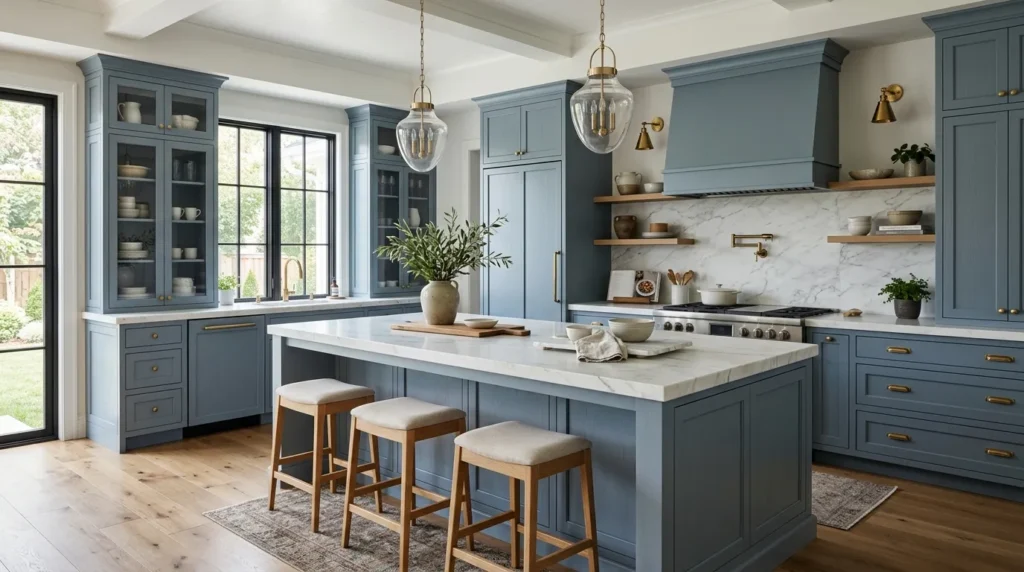
1. Classic Blue Gray
A timeless cabinet-and-marble combination that works beautifully in traditional and transitional kitchens.
2. Warm Brass Details
Pair cool blue gray cabinetry with brass hardware and lighting for a warmer, more inviting finish.
3. Soft Coastal Style
Use pale blue gray cabinets, white marble, and natural textures to create a relaxed coastal-inspired kitchen.
4. Dark Blue Gray
Choose deeper cabinetry for a dramatic look balanced by bright white marble counters and thoughtful lighting.
5. Natural Wood Accents
Introduce wood flooring, stools, or shelving to warm the cool cabinet and marble palette.
6. Marble Backsplash
Carry the marble from the countertop onto the backsplash for a seamless, sophisticated kitchen design.
7. Two-Tone Cabinets
Combine blue gray lower cabinets with lighter upper cabinetry for a balanced and airy appearance.
8. Farmhouse Contrast
Mix blue gray cabinets and marble counters with farmhouse-inspired materials for comfortable character.
9. Modern Minimalism
Keep the palette restrained with clean cabinetry, simple hardware, and dramatic marble veining.
10. European-Inspired Charm
Add vintage-style details, natural materials, and elegant marble to create a collected European kitchen feel.
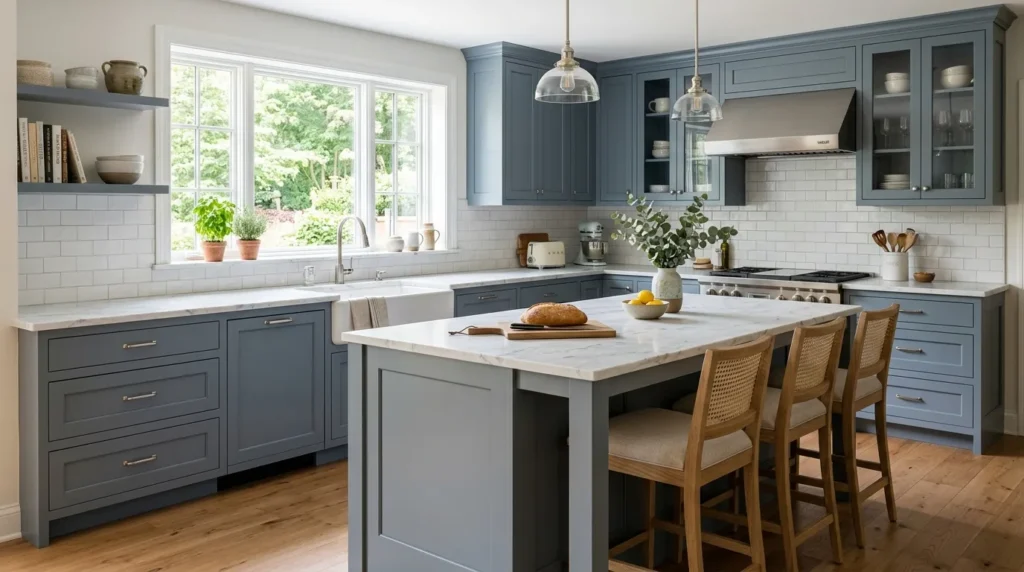
1. Classic Blue Gray
Quick Benefits
- Creates a timeless color palette
- Works with traditional and modern homes
- Keeps white marble visually prominent
- Offers a softer alternative to navy
- Easy to accessorize
Why It Works
A medium blue gray cabinet color provides enough contrast against white marble to make the countertop stand out without creating an overly dramatic kitchen. The gray undertone keeps the blue sophisticated, while the blue itself prevents the room from feeling as stark as a strictly white-and-gray palette.
This combination works particularly well in kitchens with plenty of natural light. Sunlight can bring out the subtle blue tones during the day, while warm artificial lighting can make the cabinets feel softer in the evening.
White marble adds another layer of interest. Rather than competing with the cabinetry, its natural veining introduces movement across the countertop and creates a visual connection between the cool blue and neutral gray tones.
How To Style It
Choose a blue gray with a noticeable but muted undertone rather than an extremely saturated blue. Sample the paint or cabinet finish in both morning and evening light before committing.
For hardware, brushed brass, polished nickel, or aged bronze can all work depending on the overall style. Simple cup pulls can make the kitchen feel traditional, while streamlined bar pulls create a cleaner appearance.
Keep the backsplash relatively quiet if the marble has prominent veining. A simple white tile can allow the counters to remain the focal point.
Add natural wood through stools, cutting boards, or flooring to bring warmth into the space.
2. Warm Brass Details
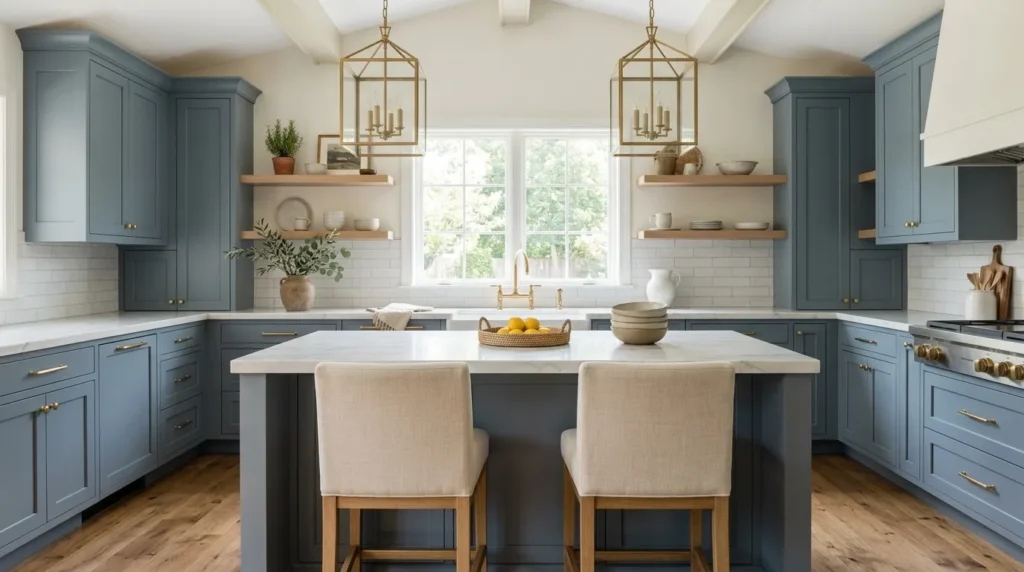
Quick Benefits
- Adds warmth to cool cabinetry
- Creates an elegant contrast
- Works well in transitional kitchens
- Makes hardware visually noticeable
- Complements many marble veining patterns
Why It Works
Blue gray cabinetry naturally has a cooler visual temperature, while brass introduces warmth. That contrast can make the entire kitchen feel more layered and intentional.
Brass does not have to dominate the room. A few carefully repeated details can be enough to establish the connection. Cabinet pulls, pendant lights, faucets, and small decorative accents can create a consistent thread throughout the space.
The finish matters. Highly polished brass creates a more formal effect, while brushed or aged brass often feels softer and more approachable.
White marble provides a neutral bridge between the two finishes. Its gray veining can echo the cabinet color while its bright background keeps the overall room light.
How To Style It
Use brass in two or three major areas rather than adding it to every available surface. Cabinet hardware and a faucet can establish the look, while pendant lighting can reinforce it.
Choose a marble with gray or slightly warm veining if you want the brass to feel especially cohesive.
For flooring, natural oak or medium-toned wood can add another warm layer without overwhelming the palette.
Keep decorative accessories simple. A wooden bowl, ceramic vase, and a few neutral linens can provide enough texture without distracting from the cabinetry and counters.
3. Soft Coastal Style
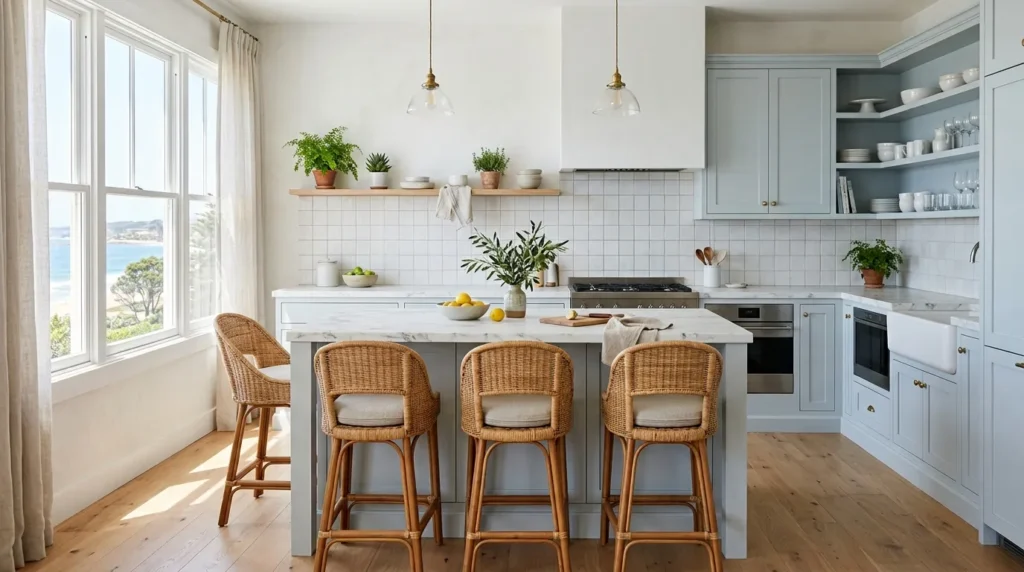
Quick Benefits
- Creates a relaxed atmosphere
- Works especially well in bright kitchens
- Uses light, calming colors
- Pairs naturally with woven textures
- Keeps the marble feeling fresh
Why It Works
Pale blue gray cabinetry can create a subtle coastal feeling without relying on obvious nautical decorations. The color resembles the softened tones often found in beach landscapes while remaining sophisticated enough for everyday interiors.
White marble reinforces the lightness. Together, the cabinets and counters create a clean foundation that can be warmed with natural materials.
The coastal look works best when it is restrained. Instead of adding seashells, anchors, or overly themed accessories, focus on texture and natural finishes.
Light wood, woven baskets, linen textiles, rattan stools, and simple ceramics can communicate the aesthetic more effectively.
How To Style It
Choose a lighter blue gray for the cabinets, especially if the kitchen is small or receives limited natural light.
Pair the cabinetry with simple white marble and a light backsplash. A handmade-look white tile can add subtle texture without making the room visually busy.
Use woven counter stools or light oak seating at the island.
Brushed nickel or soft brass hardware can work well here. Keep window treatments minimal so natural light remains a major feature.
Add a few simple green plants for color and texture. The goal is a bright, relaxed kitchen rather than a heavily themed coastal room.
4. Dark Blue Gray
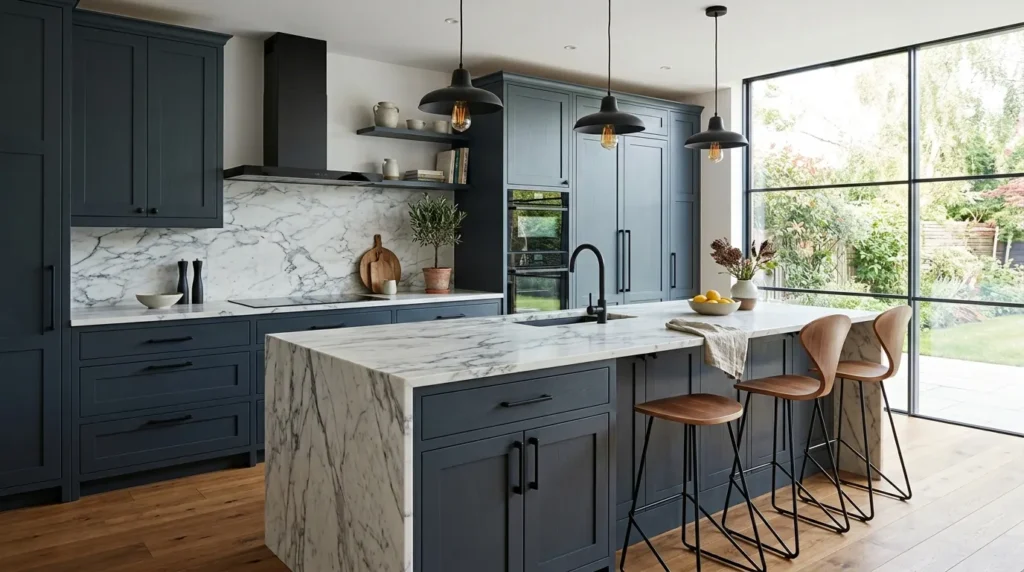
Quick Benefits
- Creates a dramatic focal point
- Makes white marble stand out
- Adds depth to large kitchens
- Works well with modern hardware
- Creates a sophisticated atmosphere
Why It Works
Deep blue gray cabinets can give a kitchen a richer, more architectural appearance. The darker color absorbs more visual weight, so the white marble becomes an especially important source of brightness.
This combination can be particularly effective on a large island. Rather than painting every cabinet dark, using the deeper color strategically can create a focal point without making the entire room feel heavy.
Lighting becomes important with deeper cabinetry. Natural light, under-cabinet illumination, pendants, and appropriately placed ceiling fixtures help maintain balance.
The marble can either be subtle or dramatic. A slab with strong gray veining creates a bold look, while quieter marble allows the cabinetry to remain the primary statement.
How To Style It
Use dark blue gray on an island or full cabinet wall when you want stronger contrast.
Pair it with white marble counters and a backsplash that does not introduce too many additional colors.
Black hardware can create a modern monochromatic effect, while brass adds warmth and traditional character.
Choose lighter flooring if the room already contains significant dark cabinetry. Pale oak, natural stone, or light porcelain can help balance the visual weight.
Install warm under-cabinet lighting to highlight the marble surface and make the darker cabinets feel more inviting at night.
5. Natural Wood Accents
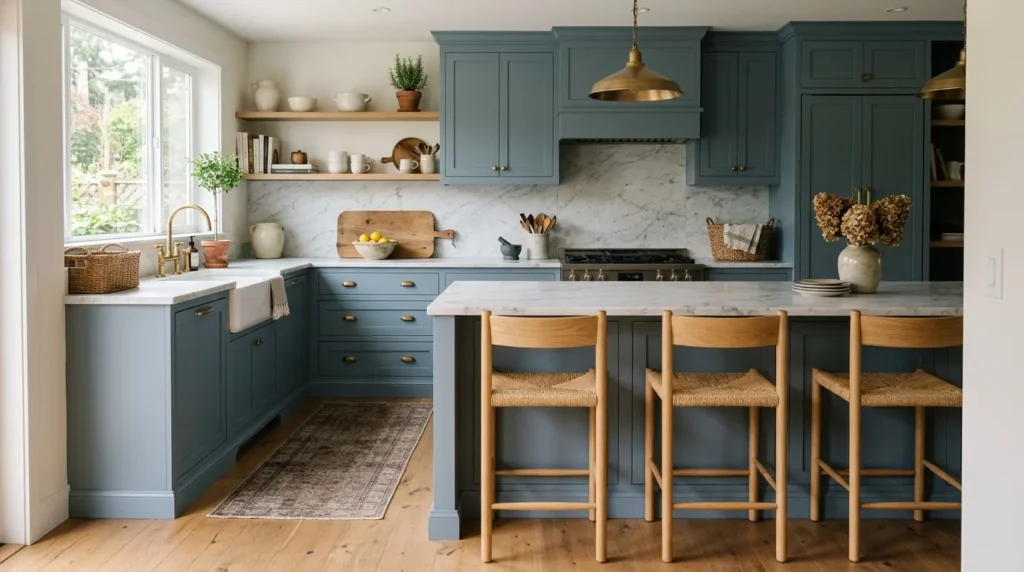
Quick Benefits
- Adds warmth
- Prevents a cool color palette from feeling flat
- Creates organic texture
- Works with several design styles
- Complements white marble naturally
Why It Works
Blue gray and white marble are both relatively cool materials, so introducing natural wood can make the kitchen feel more comfortable and lived-in.
Wood also provides a useful visual transition between the painted cabinetry and stone surfaces. Even small amounts can make a noticeable difference.
The key is choosing the right wood tone. Light oak can create a fresh Scandinavian or coastal feeling, while medium walnut can make the room richer and more traditional.
Wood does not have to appear on the cabinets themselves. Flooring, stools, open shelves, cutting boards, beams, and furniture can all introduce warmth.
How To Style It
Start with one or two meaningful wood elements rather than adding wood everywhere.
A natural oak island stool can soften blue gray cabinets beautifully. Wood flooring can create an even stronger foundation.
If using open shelving, select shelves that coordinate with the existing wood tones.
Keep the marble relatively clean and allow its natural veining to remain visible.
For accessories, use wooden serving boards, woven baskets, and neutral ceramics. These small details can make the kitchen feel collected rather than overly coordinated.
6. Marble Backsplash
Quick Benefits
- Creates a cohesive stone surface
- Highlights marble veining
- Makes the kitchen feel luxurious
- Reduces visual breaks
- Works well in transitional spaces
Why It Works
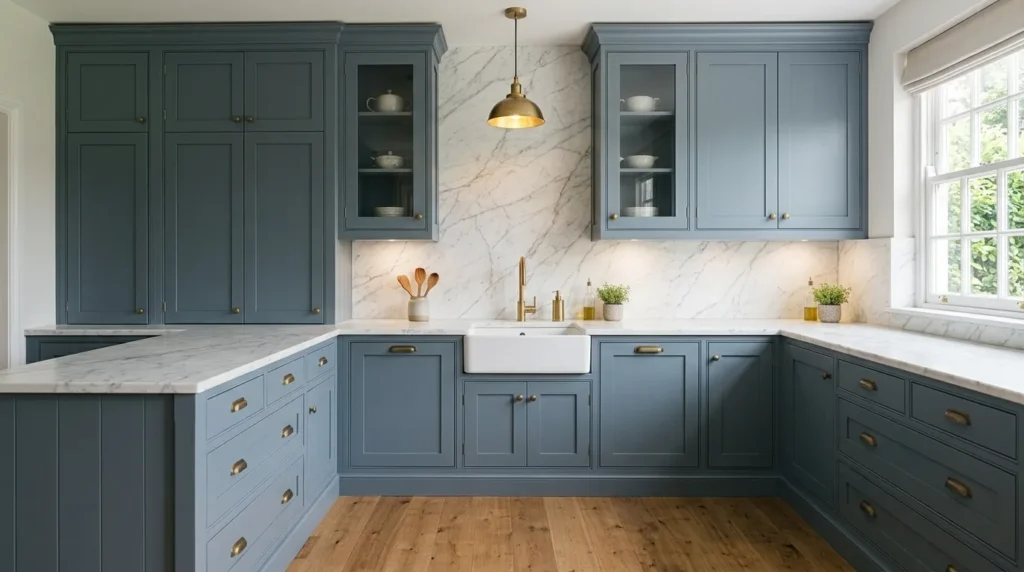
Using the same or complementary marble on the backsplash and countertops can create a continuous visual flow. Instead of stopping the stone at the countertop, the material moves vertically up the wall, making the kitchen feel more substantial.
This approach is especially effective when the marble has attractive veining. The backsplash allows the natural pattern to become part of the architecture rather than remaining limited to a horizontal surface.
Blue gray cabinets provide an excellent background because they are visually strong enough to frame the marble without overpowering it.
How To Style It
If using a marble slab backsplash, choose the slab carefully and consider how the veining will move across the wall.
A dramatic marble can become the main decorative feature, so keep cabinet hardware and accessories relatively simple.
For a softer look, use a white marble with delicate gray veining. For a more dramatic kitchen, select stone with larger veins and stronger contrast.
A simple brass or nickel faucet can sit comfortably against the marble.
Avoid adding a second heavily patterned backsplash material unless there is a strong reason to do so. Let the stone provide the visual movement.
7. Two-Tone Cabinets
Quick Benefits
- Creates visual balance
- Keeps upper areas light
- Makes the island more distinctive
- Works in small and large kitchens
- Adds dimension without excessive decoration
Why It Works
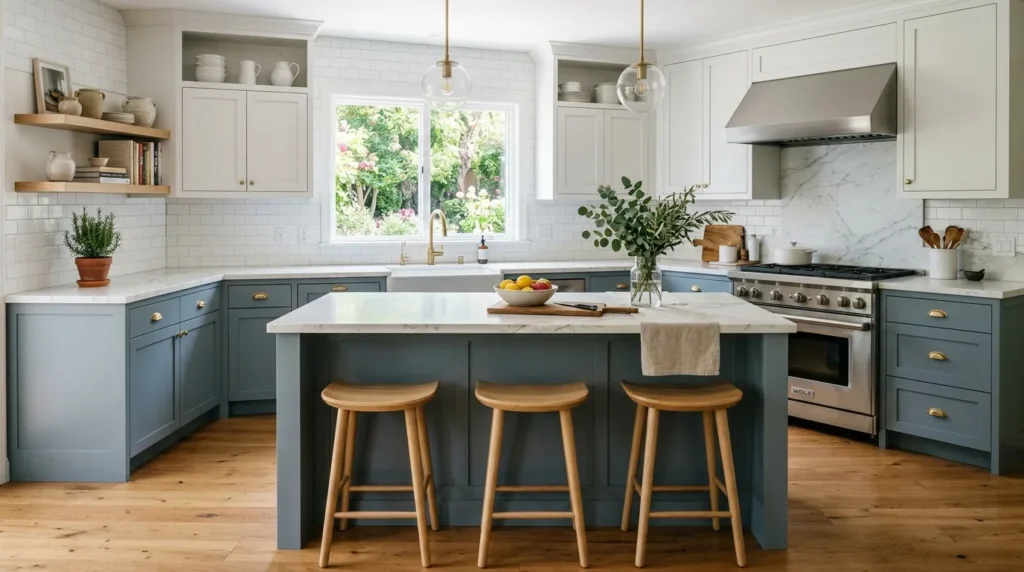
Two-tone cabinetry can make a kitchen feel more customized while keeping the blue gray color from dominating the entire room.
One popular approach is to use blue gray on the lower cabinets and a soft white or cream on the upper cabinets. Another option is to use blue gray on the island while keeping the perimeter cabinetry light.
White marble naturally connects both colors. Its bright surface works with the lighter cabinetry while its gray veining echoes the blue gray sections.
This approach is particularly useful in kitchens where you want personality without sacrificing visual openness.
How To Style It
For a smaller kitchen, consider using blue gray on the base cabinets and light cabinetry above.
If the kitchen already has plenty of upper storage, painting the island blue gray can create a focal point while leaving the surrounding cabinetry lighter.
Keep the hardware consistent across both cabinet colors so the design feels intentional.
Choose a backsplash that bridges the cabinet tones. White subway tile, handmade-look tile, or marble can all work depending on the desired style.
Use wood stools or woven accessories to soften the transition between the two cabinet colors.
8. Farmhouse Contrast
Quick Benefits
- Creates a welcoming kitchen
- Works with traditional architecture
- Adds character through texture
- Pairs naturally with natural wood
- Makes marble feel less formal
Why It Works
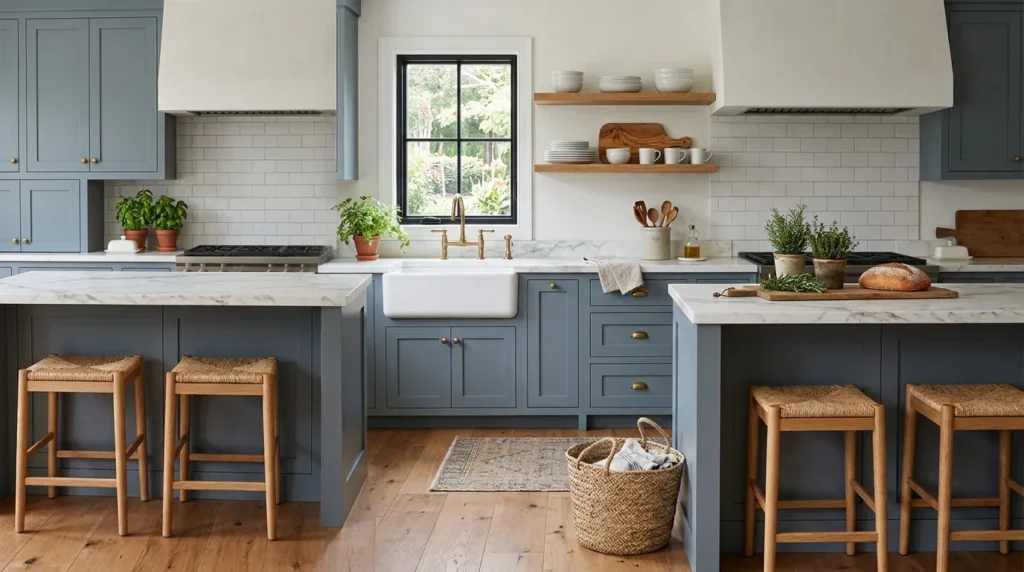
Blue gray cabinets can give a farmhouse kitchen a more refined color palette than traditional all-white cabinetry. The muted color adds personality while still maintaining the comfortable, practical feeling associated with farmhouse interiors.
White marble might initially seem too elegant for a casual farmhouse space, but surrounding it with warm wood, aged finishes, and simple hardware can make the stone feel much more relaxed.
The contrast between polished marble and rustic materials is part of the appeal.
Instead of trying to make every finish match perfectly, allow a little variation. Farmhouse-inspired spaces often feel better when they have a collected quality.
How To Style It
Use blue gray cabinets with simple shaker-style doors for a classic farmhouse foundation.
Add aged brass, antique bronze, or dark metal hardware depending on the home’s existing finishes.
Choose a substantial farmhouse-style sink if the architecture supports it.
Warm wood stools, open shelves, woven baskets, and simple ceramic accessories can reinforce the casual character.
If using marble as a backsplash, consider pairing it with wood shelving or a painted wall elsewhere to keep the kitchen from feeling overly formal.
9. Modern Minimalism
Quick Benefits
- Creates a clean appearance
- Highlights material quality
- Keeps visual clutter low
- Works well in contemporary homes
- Makes marble the main texture
Why It Works
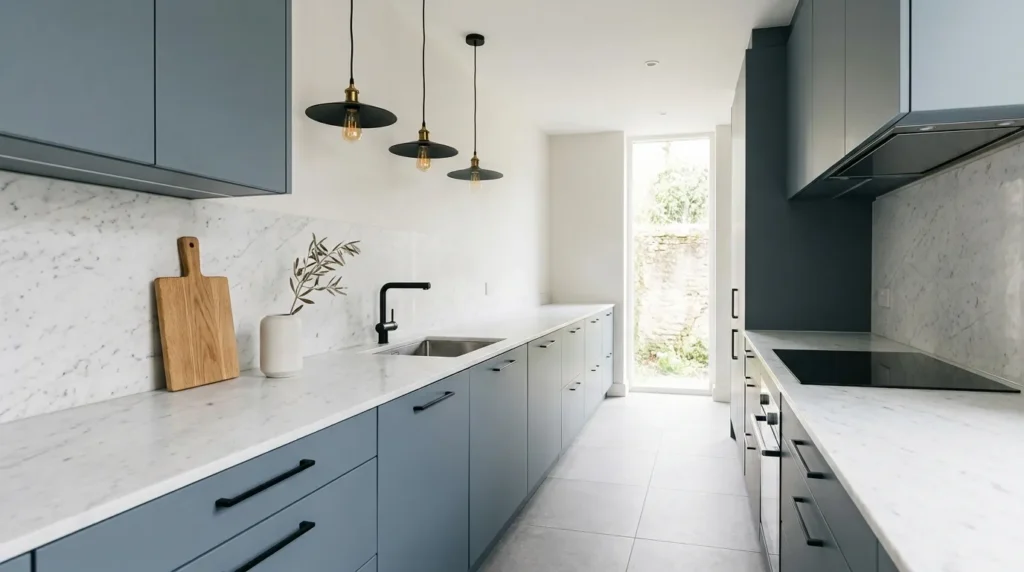
Minimalist kitchens rely on restraint. Rather than adding numerous decorative elements, the design allows color, proportion, materials, and light to create visual interest.
Blue gray cabinets are ideal for this approach because the color provides more character than plain white while remaining relatively quiet.
White marble becomes an important textural element. The natural veining provides movement without requiring additional patterns.
Hardware can be minimized or integrated, allowing the cabinetry and stone to dominate.
How To Style It
Choose flat-panel or very simple shaker cabinetry in a muted blue gray.
Use streamlined hardware in black, brushed nickel, or a subtle brass finish.
Select a marble slab with veining that complements rather than competes with the cabinet color.
Keep countertops relatively uncluttered. A single cutting board, ceramic vessel, or bowl can be enough.
Choose simple pendant lights with clean silhouettes over the island.
For flooring, use wide-plank wood or large-format neutral tile. Avoid adding multiple competing patterns.
10. European-Inspired Charm
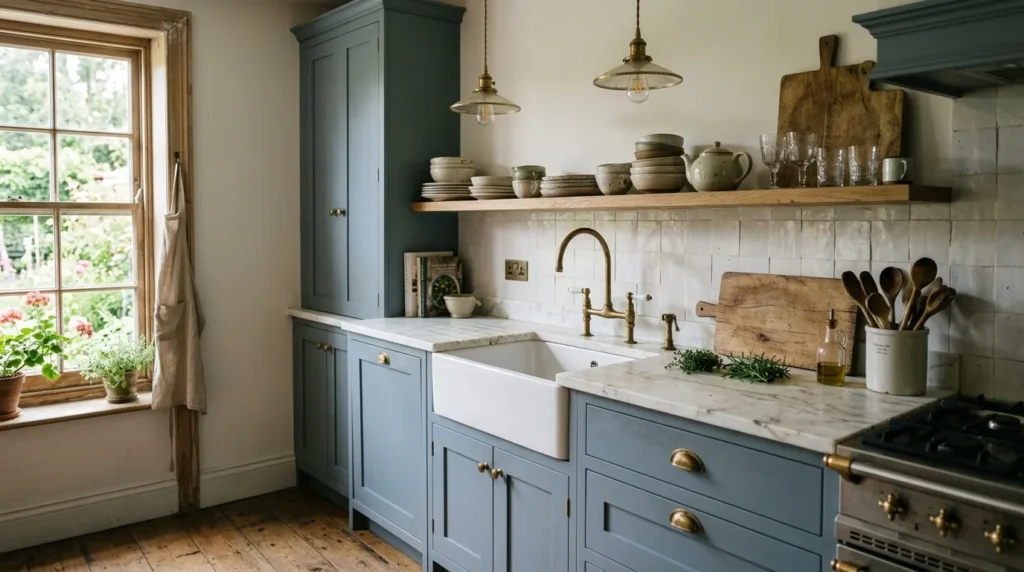
Quick Benefits
- Creates a collected appearance
- Works beautifully with marble
- Allows vintage details
- Feels sophisticated without being formal
- Adds personality through mixed materials
Why It Works
European-inspired kitchens often combine old and new elements rather than relying on one perfectly matched design style. Blue gray cabinets provide a soft painted foundation, while white marble adds natural stone character.
The result can feel timeless because the room does not depend on one trend. Vintage-inspired lighting, aged hardware, natural wood, ceramics, and stone can all coexist.
This approach is particularly effective when you want your kitchen to feel lived-in rather than newly installed.
How To Style It
Choose blue gray cabinetry with a slightly muted finish rather than an overly glossy surface.
Pair it with marble counters featuring natural variation. Veining does not need to be perfectly symmetrical.
Use aged brass or antique-inspired hardware and consider a traditional bridge-style faucet if it suits the kitchen.
Open shelving can display everyday ceramics, wooden boards, glassware, and cookbooks.
Introduce a vintage-style runner, aged wood stool, or antique-inspired pendant to give the room personality.
The goal is not to make every piece look old. A mixture of newer cabinetry and classic-looking accents creates the collected effect.
Choosing the Right Blue Gray Cabinet Color
Blue gray can look surprisingly different depending on lighting and surrounding finishes.
Before selecting a cabinet color, bring large samples into the kitchen and observe them throughout the day. Morning light, afternoon sunlight, and evening artificial lighting can each change the way the color appears.
Pay attention to undertones. Some blue grays lean noticeably blue, while others are much closer to gray. Some may even contain subtle green or violet undertones.
Your marble matters, too. If the countertop has cool gray veining, a cooler blue gray cabinet may create a cohesive palette. If the marble contains warmer veins, a slightly warmer blue gray can help connect the finishes.
Painted cabinets should also be viewed alongside flooring and backsplash samples. A color that looks beautiful by itself may appear different once surrounded by other materials.
Taking samples home before making a final decision is one of the easiest ways to avoid an expensive color mistake.
How to Choose White Marble Counters
White marble is not one single look. Different slabs have different backgrounds, veining patterns, and levels of contrast.
Some varieties have soft, delicate gray lines that create a quiet appearance. Others feature bold veins that become the dominant feature of the kitchen.
If your cabinets are a lighter blue gray, a marble with subtle veining can create an airy, calm look. Darker blue gray cabinets can handle stronger marble patterns.
Think about maintenance, too. Natural marble is a porous stone and can be susceptible to staining, etching, and scratching. Proper sealing and care can help protect the surface, but homeowners should understand that marble develops character with use.
If you want the appearance of white marble but prefer different maintenance characteristics, there are engineered and other stone alternatives worth considering.
The most important step is choosing a surface that fits both your visual preferences and your willingness to maintain it.
Best Hardware for Blue Gray Cabinets
Hardware can shift the entire mood of the kitchen.
Brass: Adds warmth and creates an elegant contrast with blue gray.
Brushed nickel: Provides a softer, classic look and works well with cool marble.
Polished nickel: Creates a brighter, more traditional appearance.
Matte black: Gives the palette a stronger contemporary edge.
Aged bronze: Works beautifully in farmhouse, traditional, and European-inspired spaces.
You do not necessarily need to match every metal in the room perfectly. However, repeating a finish in at least two or three locations generally helps the design feel intentional.
For example, brass cabinet pulls can be paired with a brass pendant and faucet, while the rest of the room remains neutral.
Best Backsplash Ideas
The backsplash should complement both the blue gray cabinets and white marble rather than creating unnecessary competition.
A marble backsplash can create a luxurious continuous surface.
Simple white subway tile can provide a classic contrast.
Handmade-look white tile adds subtle texture and variation.
Soft gray tile can connect directly with the cabinet color.
A full-height marble backsplash can create a dramatic focal point behind the range.
If your marble countertop already has strong veining, a simpler backsplash is often the safest choice. If the countertop is quiet, the backsplash can provide a little more texture.
FAQ
Are blue gray kitchen cabinets still in style?
Blue gray cabinetry has remained popular because it combines the personality of blue with the versatility of gray. It can work across traditional, transitional, coastal, farmhouse, and contemporary kitchens. Choosing a muted shade and pairing it with timeless materials such as natural stone and wood can help the design remain appealing over time.
What color goes best with blue gray kitchen cabinets?
White, cream, natural wood, soft gray, brass, black, and muted green can all complement blue gray cabinets. White marble is particularly effective because its bright background creates contrast while gray veining can visually connect with the cabinetry.
Does blue gray make a kitchen look smaller?
A dark blue gray can make a kitchen feel visually heavier, especially in a small room with limited natural light. Lighter blue gray shades generally feel more open. If you love a deeper shade, consider using it on the island or lower cabinets while keeping upper areas lighter.
What hardware looks best with blue gray cabinets?
Brass, brushed nickel, polished nickel, aged bronze, and matte black can all work. Brass adds warmth, nickel creates a classic look, and black provides stronger contemporary contrast. The best choice depends on the flooring, lighting, faucet, appliances, and overall kitchen style.
Is white marble a good choice for kitchen countertops?
White marble offers natural beauty and unique veining, but it requires more care than many engineered surfaces. It can be susceptible to staining, scratching, and etching. Homeowners should understand the maintenance involved and choose the stone based on both appearance and everyday lifestyle.
What backsplash goes with blue gray cabinets and white marble?
A simple white tile, full-height marble, soft gray tile, or handmade-look white ceramic tile can work beautifully. If the marble has dramatic veining, a quiet backsplash can keep the kitchen balanced. If the countertop is relatively subtle, a textured tile can add another layer of interest.
What flooring works with blue gray cabinets?
Natural wood is one of the most versatile choices because it adds warmth to the cool palette. Light oak works for coastal and modern kitchens, while medium walnut can create a richer traditional appearance. Neutral stone-look tile and warm beige flooring can also complement the cabinetry.
Conclusion
Blue gray cabinets and white marble counters create a kitchen combination that feels polished without being overly formal. The blue gray adds color and personality, while the marble brings brightness, natural movement, and a timeless quality.
The most successful version of this palette usually comes from balancing cool and warm elements. Natural wood can soften the room, brass can add warmth, and simple textiles can make the kitchen feel more comfortable. At the same time, keeping the backsplash and accessories relatively restrained allows the cabinetry and marble to remain the stars.
Before committing to a cabinet color or marble slab, look at samples together in your actual kitchen. Natural and artificial lighting can change both dramatically, and the surrounding flooring and backsplash can influence how the colors are perceived.
Whether you prefer a light coastal kitchen, a farmhouse-inspired space, a dramatic dark blue gray island, or a minimalist modern design, this pairing offers plenty of flexibility.
Start with the foundation, choose finishes that work together rather than separately, and then add personality through lighting, hardware, wood, and everyday accessories. The result can be a kitchen that feels beautiful today while remaining comfortable and functional for years to come.
Related Articles
- 10 Modern Kitchen Ideas with Warm Wood Accents
- 10 White Kitchen Ideas with Natural Wood Details
- 10 Farmhouse Kitchen Ideas with Timeless Style
- 10 Small Kitchen Ideas That Maximize Storage
- 10 Kitchen Island Ideas for More Counter Space