
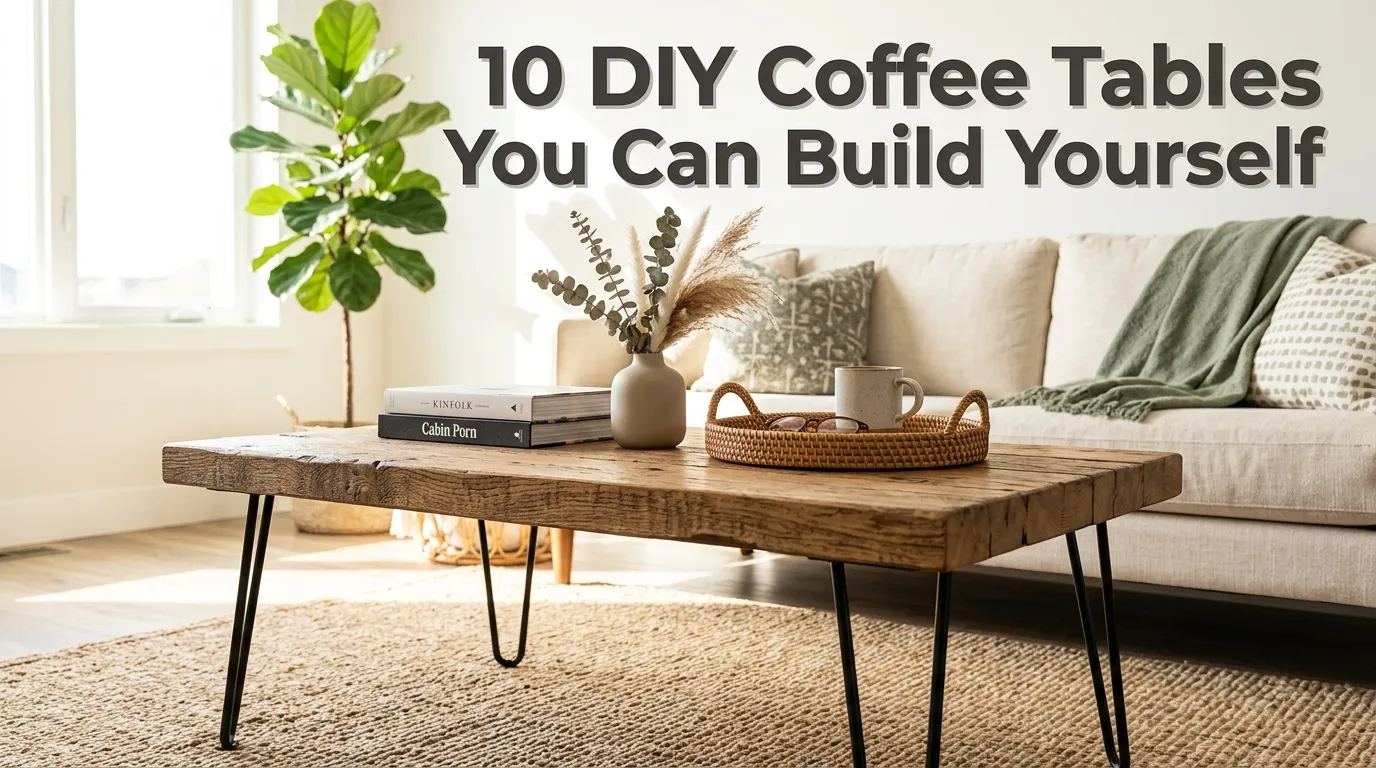
10 DIY Coffee Tables You Can Build Yourself
A coffee table can completely change the way a living room feels, but you do not always need to spend hundreds of dollars on a finished piece. With a few basic materials, some patience, and the right design, you can build a coffee table that fits your space, storage needs, and personal style.
One of the biggest advantages of making your own table is control. You can choose the exact length and width, adjust the height, select a wood finish that works with your existing furniture, and even add storage that store-bought tables often lack. A simple wooden table can become a warm focal point, while a painted or mixed-material design can give the room a more distinctive personality.
DIY furniture also allows you to make practical decisions based on how your household actually uses the living room. If books, blankets, and remote controls tend to collect around the sofa, a shelf or hidden compartment can help. If the room is small, a slim table with open space underneath may work better than a bulky design.
In my experience, the most successful DIY coffee tables are not necessarily the most complicated ones. A straightforward design with good proportions, sturdy construction, and a thoughtful finish often looks more polished than a complicated project with unnecessary details.
Before choosing a project, measure your available space and consider the height of your sofa. Most coffee tables work best when their height is reasonably close to the sofa seat height, making it comfortable to reach drinks, books, and other everyday items.
The ten ideas below range from beginner-friendly wooden designs to more distinctive industrial and farmhouse-inspired options. Each can be adapted to suit different rooms, budgets, and skill levels.
Table of Contents
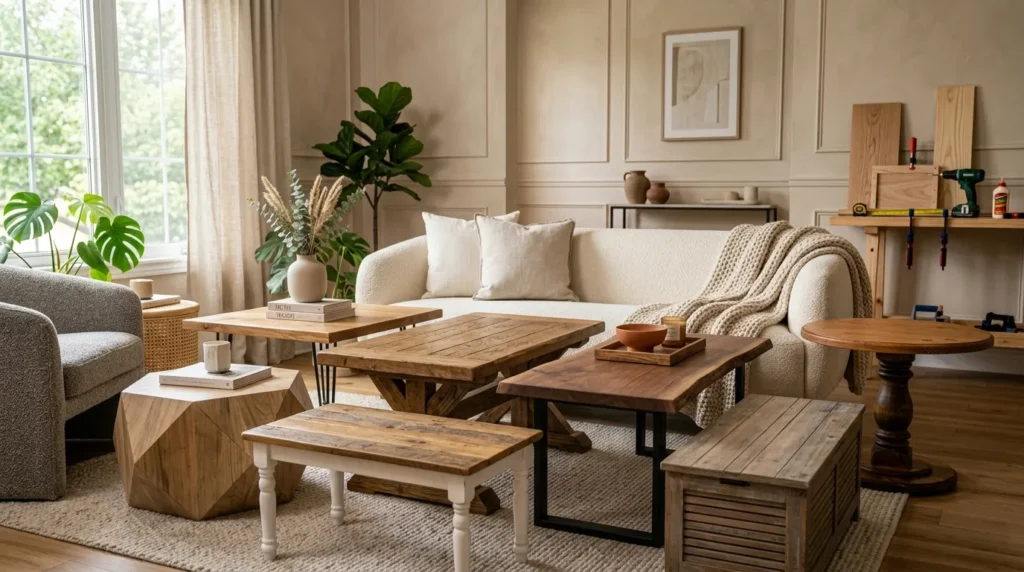
1. Simple Wood Slab
A straightforward wooden coffee table with a natural finish and clean silhouette.
2. Farmhouse Plank Table
Create a warm farmhouse centerpiece using simple wood boards and sturdy legs.
3. Crate Storage Table
Turn wooden crates into a practical coffee table with built-in open storage.
4. Hairpin Leg Table
Combine a simple wood tabletop with metal hairpin legs for an airy modern look.
5. Reclaimed Wood Table
Give salvaged lumber a second life with a rustic coffee table full of character.
6. Industrial Pipe Table
Mix wood and metal pipe components for a sturdy industrial-inspired design.
7. Lift-Top Table
Add a practical lifting tabletop that creates a convenient work or storage surface.
8. Pallet Coffee Table
Transform suitable reclaimed pallets into an affordable casual coffee table.
9. Round Pedestal Table
Build a softer, rounded coffee table that works especially well in compact spaces.
10. Nested Storage Table
Create a flexible design with smaller tables that tuck neatly underneath the main surface.
1. Simple Wood Slab
Quick Benefits
- Beginner-friendly concept
- Clean and timeless appearance
- Easy to customize
- Works with many decor styles
- Requires relatively few materials
Why It Works
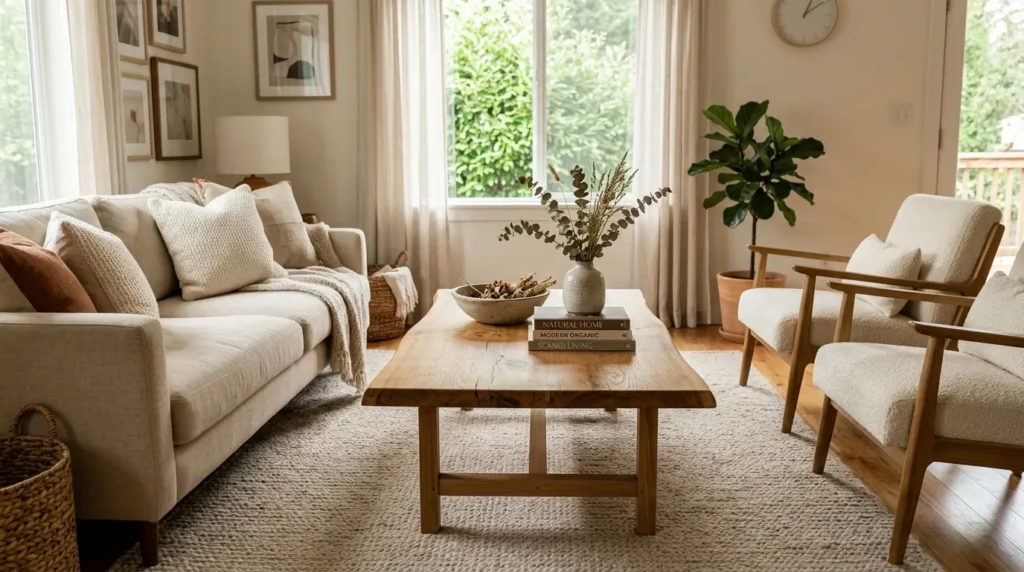
A simple wood-slab coffee table proves that good furniture design does not need complicated construction. A substantial wooden top paired with four sturdy legs creates a classic shape that can work in modern, farmhouse, Scandinavian, rustic, or transitional interiors.
The beauty of this design comes from proportion and material quality. A tabletop with visible grain can provide enough visual interest without additional decoration. Keeping the base simple also allows the wood to remain the focal point.
This is a particularly good project if you are new to furniture building. You can concentrate on making accurate measurements, creating stable joints, sanding the surface properly, and applying an even finish.
The finished table can also be customized to your room. A narrow rectangle can work in a smaller apartment, while a longer top can serve a larger sectional.
How To Style It
Start with a solid, appropriately dried tabletop or furniture-grade boards. If you are joining several boards, make sure the pieces are straight and properly aligned.
Choose legs based on the desired style. Straight wood legs create a classic appearance, while angled legs can make the table feel more contemporary.
Sand the tabletop progressively until it feels smooth to the touch. Round or soften exposed edges if desired.
For a natural look, use a clear finish that allows the wood grain to remain visible. A stain can deepen the color, while paint provides more flexibility.
Keep the finished tabletop relatively uncluttered. A shallow tray, coffee table book, ceramic bowl, or small vase can provide decoration without hiding the wood.
2. Farmhouse Plank Table
Quick Benefits
- Warm farmhouse character
- Simple rectangular construction
- Easy to personalize
- Works with neutral interiors
- Provides a substantial visual centerpiece
Why It Works
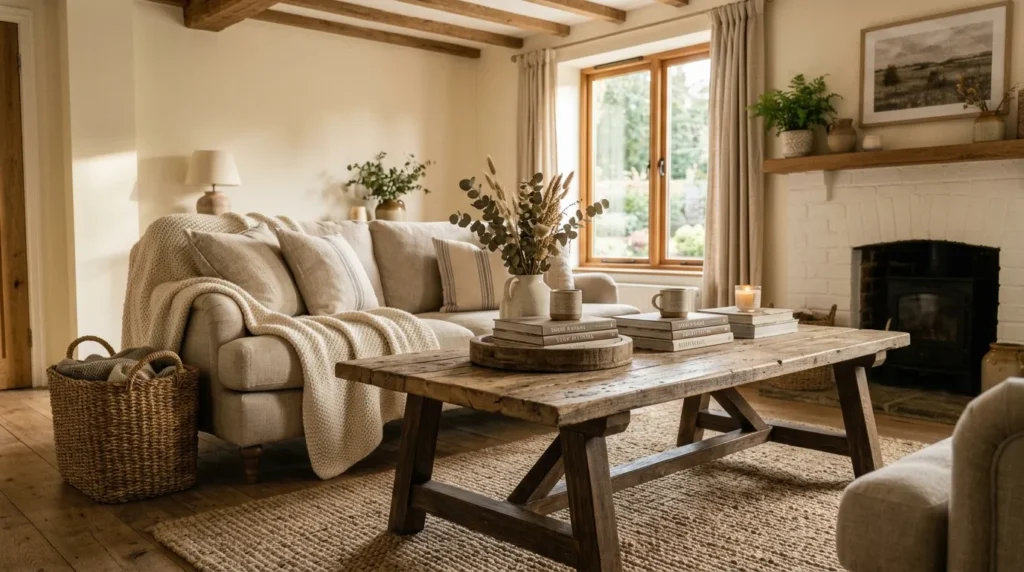
A farmhouse-style coffee table brings warmth and texture into a living room. Wide wood boards create a substantial tabletop, while a sturdy base gives the table a handcrafted appearance.
The design works particularly well with sofas upholstered in linen, cotton, leather, or neutral performance fabrics. The natural wood introduces contrast without requiring bright colors.
You can make the table look more rustic through a distressed finish, or keep the wood smooth and clean for a modern farmhouse interpretation.
One advantage of this design is its flexibility. The same basic construction can be adapted to a variety of dimensions and wood tones.
How To Style It
Use boards with visible grain and natural variation. If you want a more refined appearance, select lumber with relatively consistent color and fewer knots.
A trestle-style base can reinforce the farmhouse aesthetic while providing plenty of stability.
Finish the wood with a stain that complements your flooring and other furniture. Avoid making every wood surface in the room exactly the same color; some variation can make the space feel more layered.
Add a woven basket underneath for blankets or magazines.
On top, use a wooden tray with a ceramic vase, candleholder, or small stack of books. Keep enough open space for everyday use.
3. Crate Storage Table
Quick Benefits
- Adds built-in storage
- Uses inexpensive materials
- Great for casual rooms
- Keeps blankets and books accessible
- Creates a distinctive DIY appearance
Why It Works
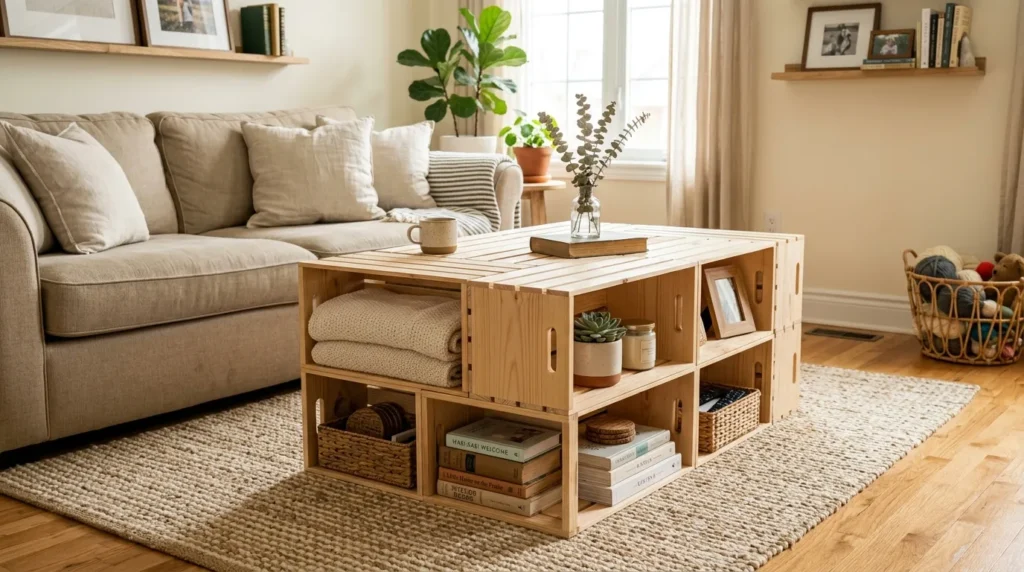
Storage can make a coffee table much more useful, especially in a busy family room. Wooden crates can be incorporated into the base to create open compartments for books, blankets, games, or baskets.
The open storage also gives the table a lighter visual quality than a completely solid base. Items can be stored within reach without requiring drawers.
This project is especially appealing if you like the look of casual, practical furniture. The crates provide texture and architectural interest while the tabletop gives the piece a finished appearance.
Because crates vary in quality and construction, choose sturdy pieces intended for furniture use or reinforce them appropriately.
How To Style It
Arrange the crates so the openings face outward and are easily accessible.
Secure the components properly rather than simply stacking loose crates. A stable base is essential for a coffee table that will be used regularly.
Add a separate tabletop that extends slightly beyond the crate structure. This creates a finished silhouette and gives you a comfortable surface for drinks.
Paint the entire structure for a cohesive appearance, or leave the wood natural and finish it with a protective coating.
Use baskets inside the compartments if you want a tidier appearance. Alternatively, leave a few compartments open for books and decorative objects.
4. Hairpin Leg Table
Quick Benefits
- Creates an airy appearance
- Uses minimal visual materials
- Fits modern and industrial interiors
- Easy to customize with different tops
- Works well in smaller rooms
Why It Works
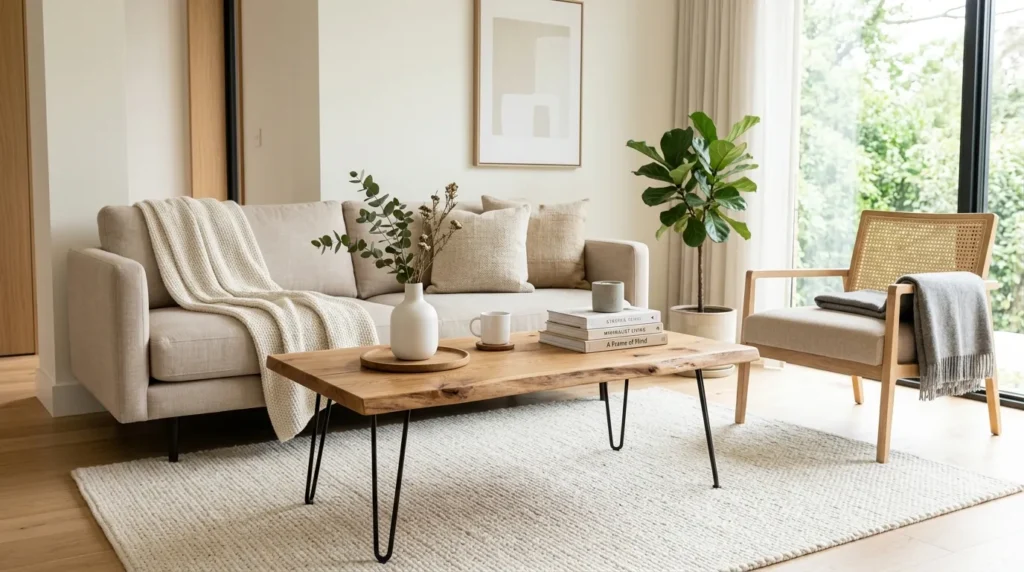
Hairpin legs are popular in DIY furniture because they create a strong contrast between a substantial wood surface and a lightweight metal base.
The open space beneath the table allows more of the floor to remain visible, which can help a small living room feel less crowded. This makes the design particularly useful when you want a functional coffee table without a heavy visual footprint.
The simple structure also gives you plenty of freedom with the tabletop. You can use hardwood, reclaimed wood, a butcher-block surface, or another suitable furniture-grade material.
How To Style It
Choose a tabletop thickness that looks proportional to the metal legs. A very thin top may look visually weak, while an excessively thick one can overwhelm the delicate base.
Position the legs evenly and use appropriate fasteners for the material.
For a modern look, finish the wood in a natural or medium tone. For an industrial style, a darker stain can create more contrast.
Keep the decor simple. A black metal tray, neutral books, and a ceramic object can echo the materials without making the table feel overly themed.
This design also pairs nicely with low-profile sofas and minimalist living rooms.
5. Reclaimed Wood Table
Quick Benefits
- Gives old materials new life
- Creates natural character
- Every table can look unique
- Works with rustic interiors
- Adds texture to neutral rooms
Why It Works
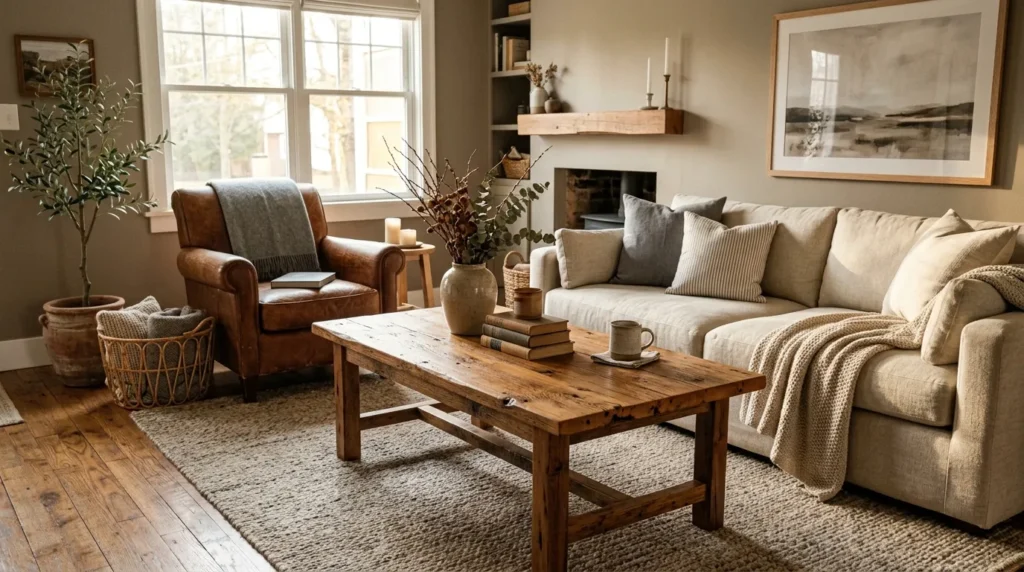
Reclaimed wood can bring a sense of history into a living room. Scratches, knots, variations in color, and visible grain can make the table feel like a piece of furniture with a story rather than a brand-new object.
It is also useful when you want to create a rustic or collected interior. The imperfect surface can contrast beautifully with a clean-lined sofa or modern rug.
However, reclaimed lumber needs careful preparation. Old wood may contain nails, staples, splinters, dirt, or coatings that are not appropriate for indoor use. Know the source of the material and prepare it properly before bringing it into your home.
How To Style It
Inspect every board carefully before construction. Remove old hardware and check for damage or structural weakness.
Sand rough surfaces thoroughly while retaining some of the natural character.
Use a suitable interior finish to protect the wood from spills and everyday wear.
Pair the finished table with neutral upholstery, woven textiles, leather accents, or simple metal lighting.
Avoid adding too many rustic accessories. The reclaimed wood itself provides plenty of character.
A large ceramic bowl, a stack of books, or a simple tray can complete the tabletop without competing with the material.
6. Industrial Pipe Table
Quick Benefits
- Strong industrial character
- Combines wood and metal
- Creates a sturdy appearance
- Easy to customize
- Works well in loft-style spaces
Why It Works
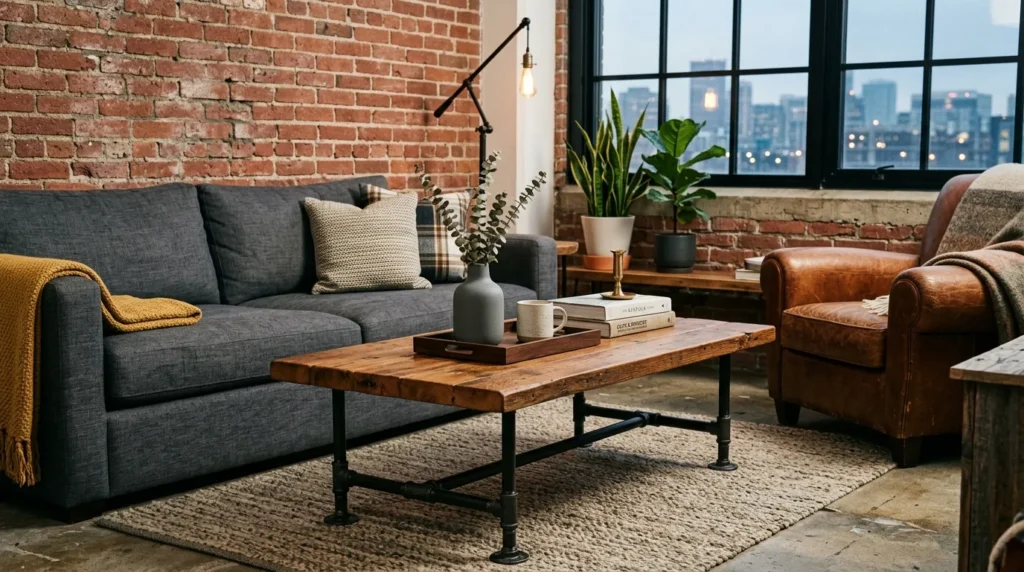
Wood and metal are a natural combination for industrial-inspired furniture. The warmth of the wood balances the harder appearance of metal pipe, creating a coffee table with both texture and structure.
This style works particularly well in rooms with exposed brick, concrete, leather furniture, black metal lighting, or other industrial details. However, it can also work in a more traditional space when used sparingly.
The pipe structure can be designed in several ways, including simple legs, connected supports, or a more substantial rectangular base.
How To Style It
Use properly rated components and make sure every connection is secure.
Clean and prepare metal parts according to the manufacturer’s instructions. Some finishes may need additional protection depending on the intended use.
Choose a tabletop with enough thickness to balance the visual weight of the metal.
Warm medium wood tones can make the table feel more approachable, while dark-stained wood creates a stronger industrial effect.
Pair the table with a neutral area rug and upholstered seating to soften the harder materials.
Add a leather storage basket or woven accessory nearby for another layer of texture.
7. Lift-Top Table
Quick Benefits
- Creates a convenient work surface
- Adds hidden storage
- Useful for small homes
- Supports casual meals
- Combines furniture and function
Why It Works
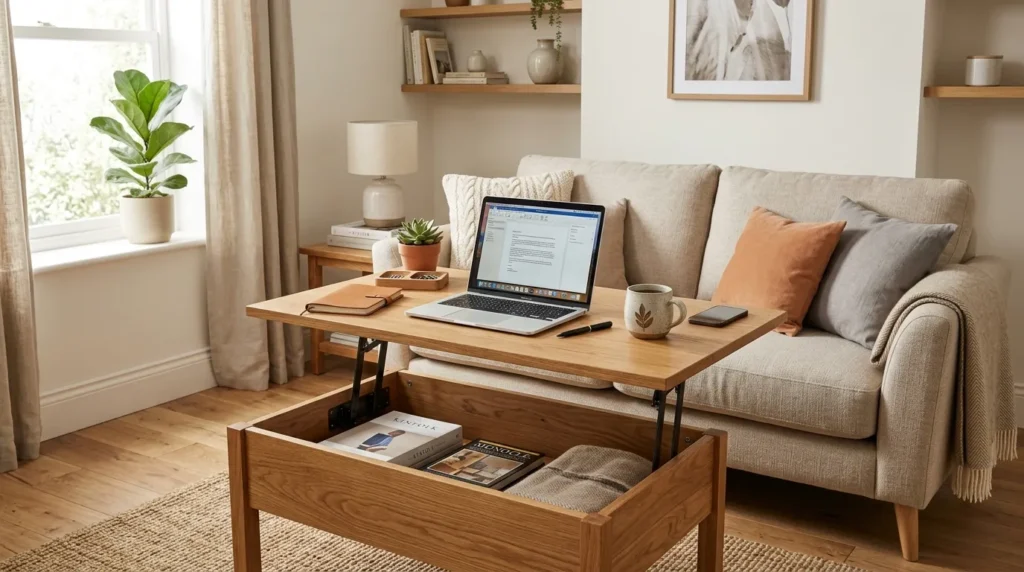
A lift-top coffee table can be especially valuable in rooms where one piece of furniture needs to perform several jobs. The tabletop can rise to create a more comfortable surface for working, eating, writing, or using a laptop.
The enclosed compartment underneath can also provide hidden storage.
This is a more involved project than a basic coffee table because the lifting hardware must be installed correctly and the structure needs to remain stable when the top is raised.
The result, however, can be highly practical.
How To Style It
Choose sturdy lift-top hardware designed for furniture use and follow the manufacturer’s installation instructions carefully.
Keep the tabletop weight within the hardware’s recommended capacity.
Design the interior compartment around the items you actually want to store. Board games, blankets, books, remote controls, and small electronics can all have dedicated places.
Use a clean rectangular design if you want the table to blend into a modern living room.
When the top is closed, style it like an ordinary coffee table with a tray or small decorative grouping.
8. Pallet Coffee Table
Quick Benefits
- Budget-friendly concept
- Casual and rustic
- Uses readily adaptable materials
- Easy to personalize
- Works well in relaxed spaces
Why It Works
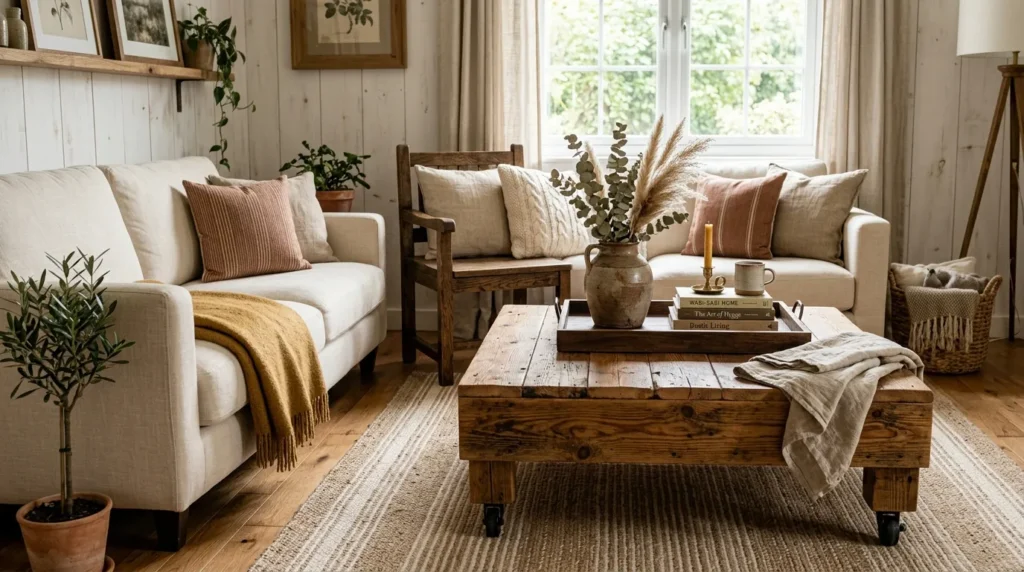
Pallet furniture has long been popular among DIY enthusiasts because the basic structure provides a starting point for many projects. A suitable pallet can become a low coffee table with relatively little modification.
However, not every pallet is appropriate for indoor furniture. Pallets can be exposed to chemicals, moisture, spills, pests, or other contaminants depending on their previous use.
For an indoor coffee table, source clean, suitable pallets and identify their markings and history where possible. If the material’s history is uncertain, using new pallet-style lumber may be a better option.
How To Style It
Sand the wood thoroughly and remove any protruding nails or rough edges.
Add casters if you want the table to move easily, making sure they are appropriately rated and securely attached.
A glass or finished wood top can create a smoother surface and give the project a more polished appearance.
Paint the pallet white, gray, or another color for a farmhouse-inspired look, or keep the wood natural for a rustic style.
Add a large tray to create a stable surface for drinks and decorative objects.
9. Round Pedestal Table
Quick Benefits
- Softens a rectangular room
- Reduces sharp corners
- Works well in compact spaces
- Creates a sculptural focal point
- Makes circulation easier
Why It Works
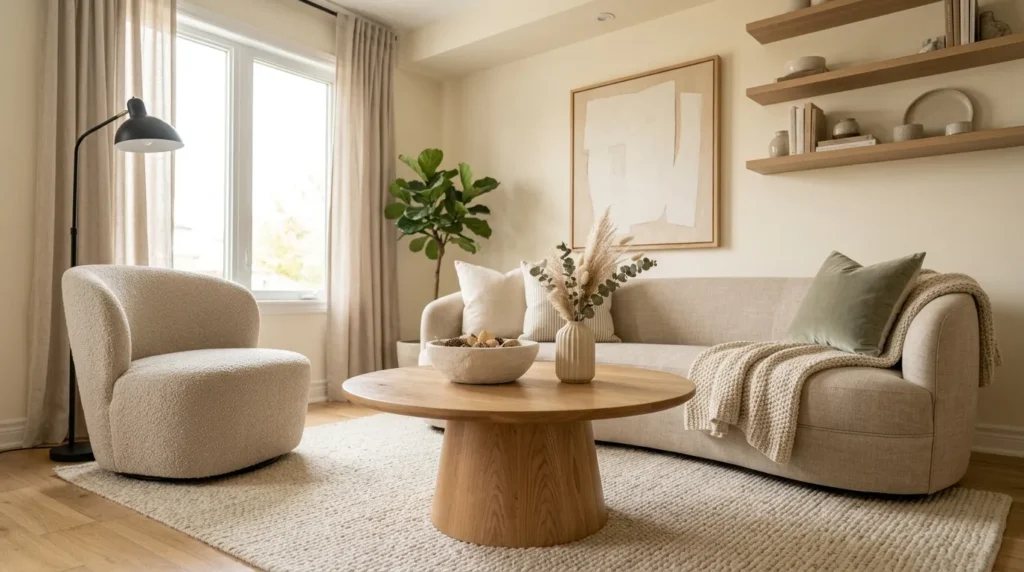
Round coffee tables can make a living room feel softer and more approachable. Without four corners, they can also make circulation around seating easier, which can be useful in rooms where space is limited.
A pedestal base provides a clean silhouette and avoids the visual clutter of four separate legs.
The design requires accurate cutting and stable construction, particularly if you are creating a round top or pedestal yourself.
The finished table can suit a range of styles depending on the materials and finish.
How To Style It
Choose a tabletop diameter based on the size of your seating arrangement. Leave comfortable walking space around the table.
Use a natural wood finish for a Scandinavian or organic appearance.
Paint the base while keeping the top natural if you want more contrast.
A round tray can echo the shape of the table and keep smaller objects organized.
Avoid placing too many angular accessories on the surface. A rounded ceramic bowl, low vase, and a few books can reinforce the softer shape.
10. Nested Storage Table
Quick Benefits
- Provides flexible surface space
- Works well in smaller rooms
- Can be separated when needed
- Creates visual interest
- Offers a practical entertaining solution
Why It Works
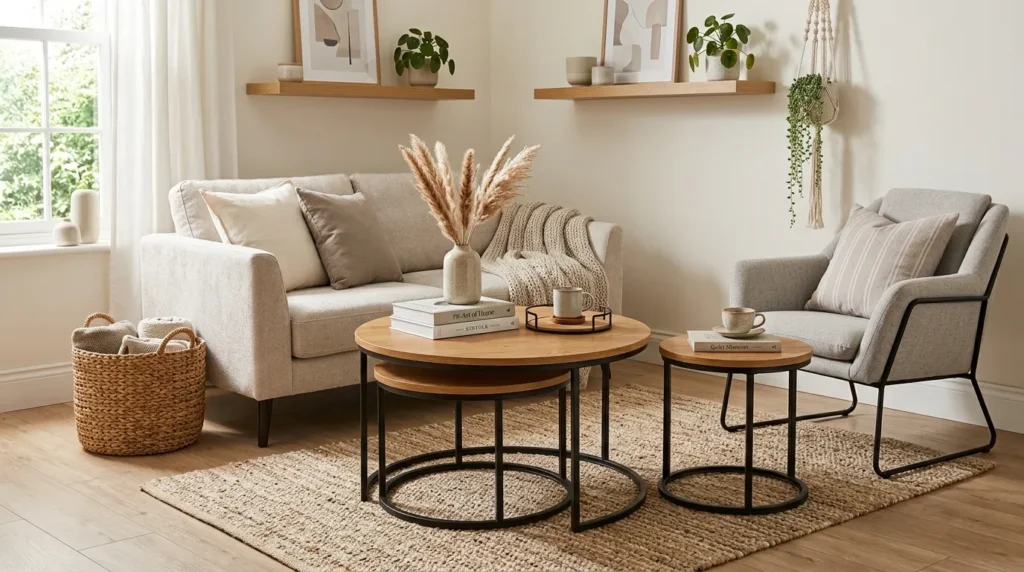
A nested coffee table consists of two or more smaller tables designed to fit underneath or beside the main table. This gives you flexibility when entertaining because the smaller pieces can be pulled out and used as individual side tables.
The design is particularly helpful in compact living rooms where a large permanent coffee table could restrict movement.
It also creates a layered look. Different heights and overlapping surfaces add dimension without requiring a large amount of furniture.
How To Style It
Keep the main table relatively simple and allow the smaller tables to provide additional visual interest.
Use complementary finishes rather than making every surface identical. For example, a natural wood top can pair with a painted or metal base.
When the smaller tables are nested, style only the main surface. This keeps the arrangement clean.
When entertaining, move the smaller tables near chairs or sofas so guests have convenient surfaces for drinks.
Choose rounded edges if the tables will be frequently moved around a busy family room.
Choosing the Right DIY Coffee Table Design
Before buying lumber or cutting anything, consider how the coffee table will function in your room.
Measure the space first. A table that looks perfect in a large showroom may overwhelm a compact living room.
Consider sofa height. The coffee table should be comfortable to reach from your primary seating.
Think about circulation. Leave enough room for people to walk between the sofa, table, chairs, and other furniture.
Choose materials based on use. A family with children or pets may benefit from a durable, forgiving finish rather than a delicate surface.
Consider storage needs. Open shelves, crates, drawers, or a lift-top mechanism can make a coffee table much more useful.
Match the design to your skill level. A simple four-leg table is a better first project than a complicated lift-top table if you have limited woodworking experience.
Best Wood for DIY Coffee Tables
Different wood species can create very different results.
Pine: Affordable and easy to work with, making it popular for beginner projects.
Oak: Durable and attractive, with pronounced grain.
Maple: Hard and relatively subtle in appearance.
Walnut: Rich and sophisticated, though usually more expensive.
Poplar: Easy to work with and suitable for painted furniture.
Reclaimed wood: Adds character but requires careful inspection and preparation.
The best option depends on your budget, tools, desired finish, and how much wear the table will receive.
For a painted coffee table, a suitable paint-grade wood can make more financial sense than premium hardwood. For a natural finish, spending more on attractive lumber may be worthwhile because the grain becomes part of the design.
DIY Coffee Table Finishing Tips
A good finish can make a basic DIY table look much more polished.
Start by sanding the surface thoroughly. Remove dust before applying any stain, paint, or protective coating.
If you want a natural wood appearance, consider a clear protective finish that is appropriate for furniture and compatible with the wood species.
For stained furniture, test the color on scrap wood first. Different woods absorb stain differently.
If painting, use a primer appropriate for the surface and finish with a durable furniture-grade coating.
Pay special attention to the tabletop because it will experience the most contact. Coffee, water, food, books, and everyday objects can quickly reveal a weak finish.
Allow every coat to cure according to the product instructions before using the table.
Common DIY Coffee Table Mistakes
One of the most common mistakes is building before measuring the room. Always establish the desired dimensions first.
Another problem is ignoring the relationship between the table and sofa. A coffee table that is too high or too low can feel awkward to use.
Weak joints are another concern. Decorative appearance does not matter if the table wobbles. Use appropriate construction methods and hardware for the materials.
Skipping sanding can also affect the final result. Rough edges are uncomfortable and can make even an attractive design look unfinished.
Finally, do not rush the finish. Applying another coat before the previous one has properly dried can create uneven results.
A little extra preparation often makes the difference between a project that looks homemade and one that looks intentionally handcrafted.
FAQ
Is it cheaper to build your own coffee table?
It can be, particularly if you choose affordable lumber and a simple design. However, the final cost also includes hardware, finish, tools, and materials. DIY becomes especially valuable when you want a custom size or storage feature that would cost more as a finished piece.
What is the easiest DIY coffee table to build?
A simple rectangular tabletop with four legs is generally one of the easiest designs. A hairpin-leg table can also be relatively straightforward because the metal legs are purchased ready to attach. Both options allow beginners to focus on accurate measuring, sanding, finishing, and secure assembly.
What is the best wood for a homemade coffee table?
Pine, oak, maple, walnut, poplar, and properly prepared reclaimed wood can all work. Pine is budget-friendly and beginner-friendly, while oak offers durability and attractive grain. Walnut creates a more premium appearance. Your choice should depend on budget, tools, finish, and intended use.
How thick should a DIY coffee table top be?
There is no single thickness that works for every design. The tabletop should be strong enough for its span and proportional to the base. Very thin tops can look delicate, while extremely thick tops may appear heavy. Follow the structural requirements of your specific design and hardware.
Can I make a coffee table from pallets?
Yes, but choose pallet material carefully. Pallets can have unknown histories and may have been exposed to chemicals, moisture, or contaminants. For indoor furniture, use clean, suitable pallets with known markings or consider new lumber designed to resemble pallet construction.
How do I make a DIY coffee table look expensive?
Focus on proportions, smooth surfaces, sturdy construction, and a quality finish. Carefully aligned boards, clean edges, well-positioned hardware, and a consistent finish can make a simple design look much more refined. Avoid adding unnecessary decorative details.
What can I put on a DIY coffee table?
A shallow tray, a small stack of books, a ceramic bowl, a vase, candles, or a small plant can work well. Keep some open surface available for everyday use. A simple arrangement usually looks more polished than covering the entire tabletop.
Conclusion
Building your own coffee table gives you something that a standard store-bought piece cannot always provide: complete control over the size, materials, finish, storage, and style.
A simple wood table can bring warmth into a neutral living room, while hairpin legs can create a lighter modern appearance. Reclaimed boards add character, crates introduce practical storage, and a lift-top design can turn the coffee table into a useful workspace.
The most important part is choosing a project that matches both your room and your woodworking experience. Start with accurate measurements, select appropriate materials, and prioritize stability before decorative details. Take your time sanding and finishing the piece, because those small steps can have a major impact on the final appearance.
You also do not have to build the most complicated design to create something beautiful. A well-proportioned tabletop with sturdy legs can become a timeless piece that works with changing decor for years.
Choose one idea that fits your space, adapt the dimensions to your living room, and let the materials provide much of the character. A thoughtfully built coffee table can become more than a weekend project—it can become one of the pieces that makes your living room feel distinctly yours.
Related Articles
- 10 DIY Living Room Decor Projects for Beginners
- 10 Small Living Room Ideas with Smart Furniture Layouts
- 10 DIY Wood Projects for Beautiful Home Decor
- 10 Farmhouse Living Room Ideas for a Cozy Home
- 10 Budget-Friendly Living Room Makeover Ideas