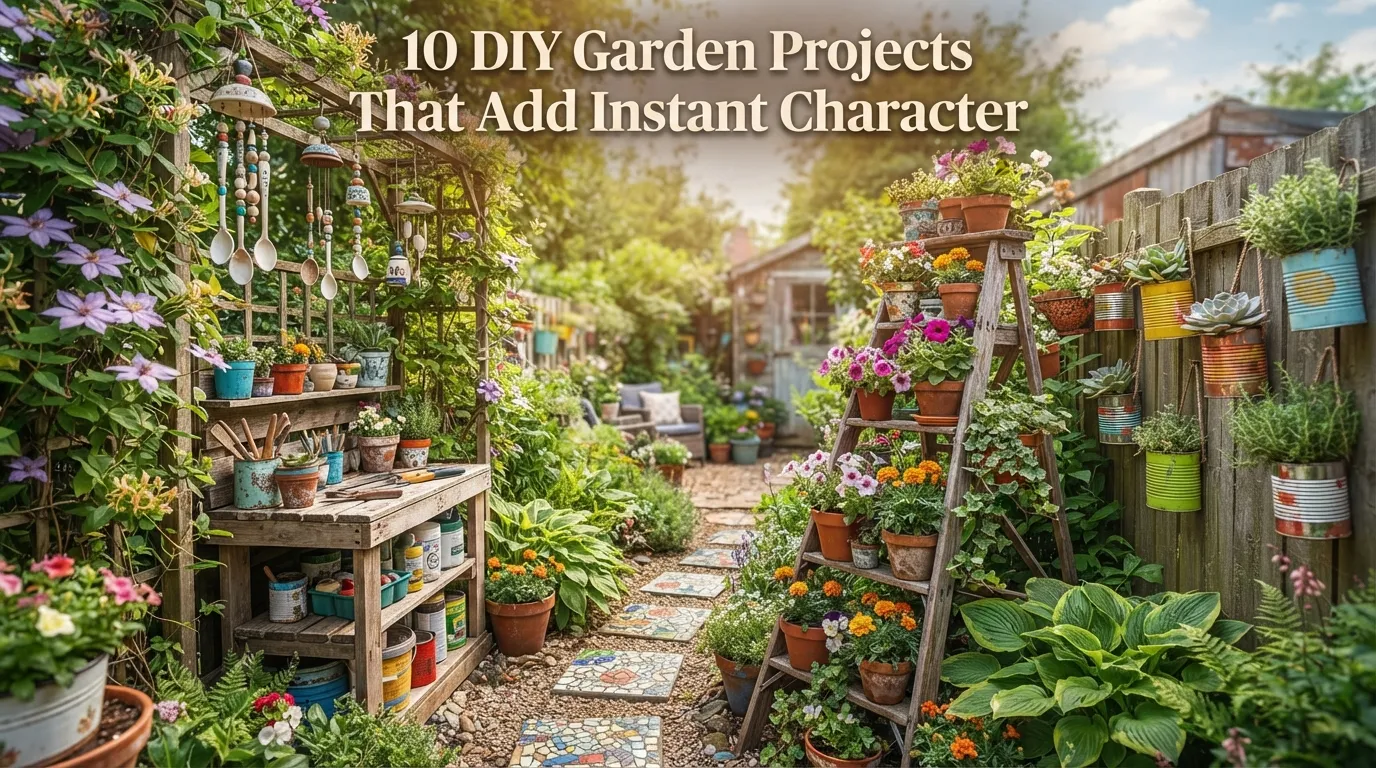
10 DIY Garden Projects That Add Instant Character
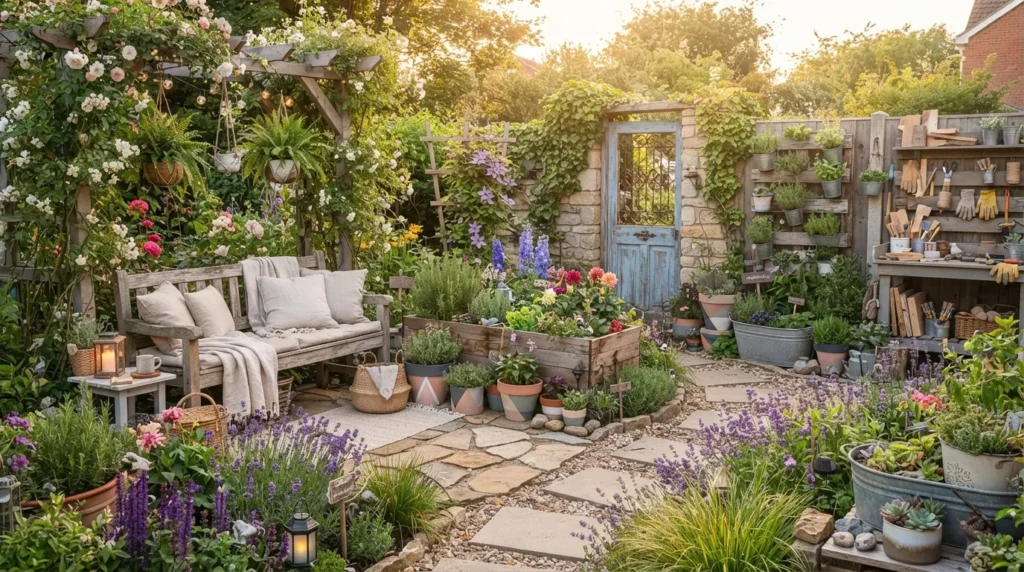
A garden doesn’t need an expensive makeover to feel special. Sometimes the smallest handmade details have the biggest effect: a painted planter tucked beside a path, a simple trellis covered with vines, or an old wooden box turned into a charming herb garden.
DIY garden projects are especially useful when you want an outdoor space that feels personal rather than copied from a catalog. You can choose materials, colors, and finishes that fit your home while giving ordinary corners a little more personality.
I’ve noticed that the most successful garden projects usually combine decoration with function. A planter adds color while giving plants a home. A trellis creates height while supporting climbing plants. A garden path improves movement while becoming part of the landscape design.
Another advantage is that many projects can be completed gradually. You don’t have to transform the entire yard in one weekend. Start with one overlooked corner, add a handmade feature, and see how it changes the way the space feels.
The ideas below range from simple weekend projects to slightly more involved builds. Some use reclaimed or inexpensive materials, while others focus on easy ways to customize existing garden elements.
Whether you have a spacious backyard, a compact suburban garden, a rental-friendly outdoor space, or a small patio surrounded by containers, these projects can help create a garden with more warmth, texture, and personality.
Before beginning any project, choose materials appropriate for outdoor exposure and check local requirements for structures, electrical work, or permanent installations.
Table of Contents
1. Painted Garden Planters
Refresh ordinary containers with a personal color palette and finish.
2. Rustic Garden Trellis
Add vertical interest while giving climbing plants room to grow.
3. DIY Stepping Path
Create a practical garden walkway with personality and texture.
4. Wooden Herb Box
Turn a simple wooden box into a useful kitchen garden.
5. Upcycled Garden Signs
Add handmade labels and playful personality to planting areas.
6. Hanging Plant Display
Use vertical space to create an eye-catching garden feature.
7. DIY Birdhouse Cluster
Bring architectural charm to the garden with decorative birdhouses.
8. Reclaimed Garden Bench
Create a simple seating area from sturdy outdoor materials.
9. Handmade Plant Supports
Give climbing and flowering plants attractive structural support.
10. Decorative Garden Edging
Define beds and pathways with a clean handcrafted border.
1. Painted Garden Planters
Quick Benefits
- Refreshes inexpensive containers
- Adds coordinated color
- Personalizes the garden
- Works on patios and balconies
- Creates quick visual impact
Why It Works
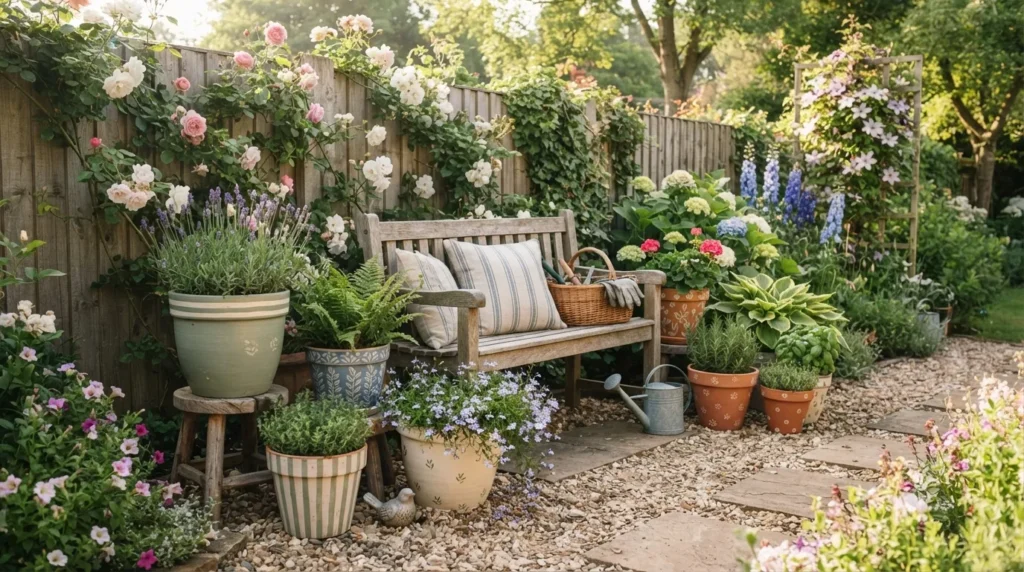
Planters are some of the easiest garden elements to customize. Instead of replacing perfectly usable pots, give them a new finish that complements the surrounding landscape.
A consistent planter color can make a collection of different containers look intentional. You can also use contrasting shades to highlight a specific seating area, garden entrance, or flower bed.
The project is particularly useful when your garden feels functional but lacks personality. A few painted containers can introduce color and visual rhythm without changing the plants themselves.
How To Style It
Start with clean, dry containers. Remove loose dirt and residue before painting.
Choose an exterior-rated paint appropriate for the planter’s material. Terracotta, wood, metal, and some plastics may require different preparation.
For a timeless look, try cream, sage green, muted blue, warm white, or earthy terracotta tones.
You can keep the design simple with one color or add stripes, geometric details, numbers, or small botanical motifs.
Group two or three finished planters together at different heights for more visual interest.
2. Rustic Garden Trellis
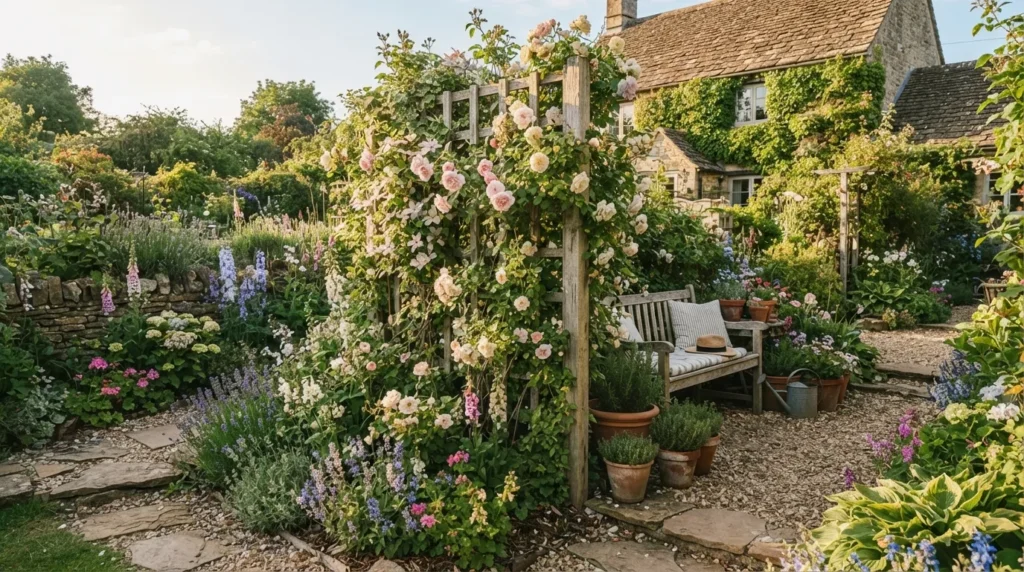
Quick Benefits
- Adds vertical structure
- Supports climbing plants
- Makes blank walls more interesting
- Creates garden height
- Can define an outdoor area
Why It Works
A garden can sometimes feel visually flat when most plants grow close to the ground. A trellis introduces another layer by encouraging plants to grow upward.
It also adds structure during seasons when fewer plants are flowering.
A handmade trellis can be especially charming because it doesn’t have to look perfectly manufactured. Simple wood strips, garden stakes, or other appropriate outdoor materials can create a relaxed architectural feature.
How To Style It
Choose a location where climbing plants can receive suitable light.
Create a simple rectangular or grid-style frame using exterior-rated wood or another appropriate material.
Secure the structure properly so it can handle the weight of mature plants and exposure to wind.
Use the trellis for suitable climbing plants such as clematis, climbing roses, jasmine, or edible vines according to your climate and growing conditions.
Leave enough space around the plant so air can circulate and maintenance remains manageable.
3. DIY Stepping Path
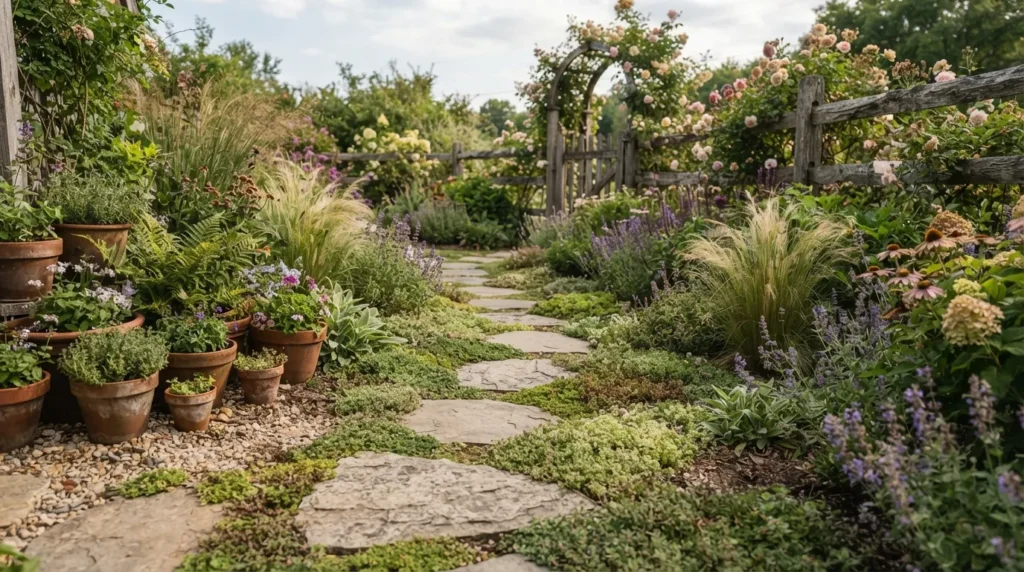
Quick Benefits
- Defines movement through the garden
- Protects planting areas
- Adds visual structure
- Creates a finished appearance
- Can be customized to the landscape
Why It Works
A path does more than help you walk from one part of the garden to another. It can guide the eye and give the landscape a stronger sense of organization.
A simple stepping-stone path can also turn an ordinary lawn or planting bed into a more intentional garden composition.
The project doesn’t need to be elaborate. A series of appropriately sized stones surrounded by gravel, mulch, groundcover, or lawn can create a charming route.
How To Style It
Plan the path based on how people naturally move through the garden.
Place stepping stones at comfortable walking intervals and check their positioning before permanently setting them.
Choose materials that complement your home and landscape. Natural stone, concrete pavers, brick, or other suitable outdoor materials can work.
Keep the path relatively simple if the surrounding garden already contains many colors and textures.
Use low-growing plants or gravel around the stones to soften the edges.
4. Wooden Herb Box
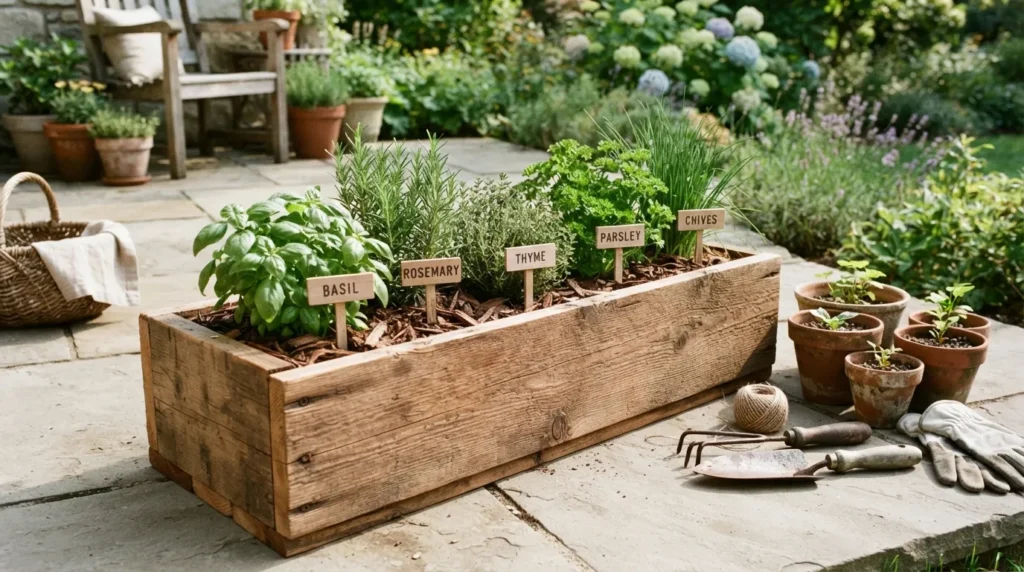
Quick Benefits
- Provides fresh herbs
- Adds rustic charm
- Fits small spaces
- Makes plants easy to access
- Can reuse suitable wood
Why It Works
An herb box combines practical gardening with decorative character. It can sit near a kitchen entrance, patio, deck, or outdoor dining area where herbs are convenient to reach.
The compact format also works well for gardeners who don’t have enough space for a traditional vegetable bed.
Wood gives the project a warm, handmade quality that fits naturally into many outdoor styles.
How To Style It
Build or repurpose a sturdy wooden box using materials suitable for outdoor use.
Provide adequate drainage so excess water can escape.
Fill it with quality potting mix appropriate for container herbs.
Group herbs with similar growing requirements together. Basil, parsley, thyme, rosemary, chives, and mint can all be useful choices, but check the conditions each plant prefers.
Add a simple painted label to each section for a finished DIY look.
5. Upcycled Garden Signs
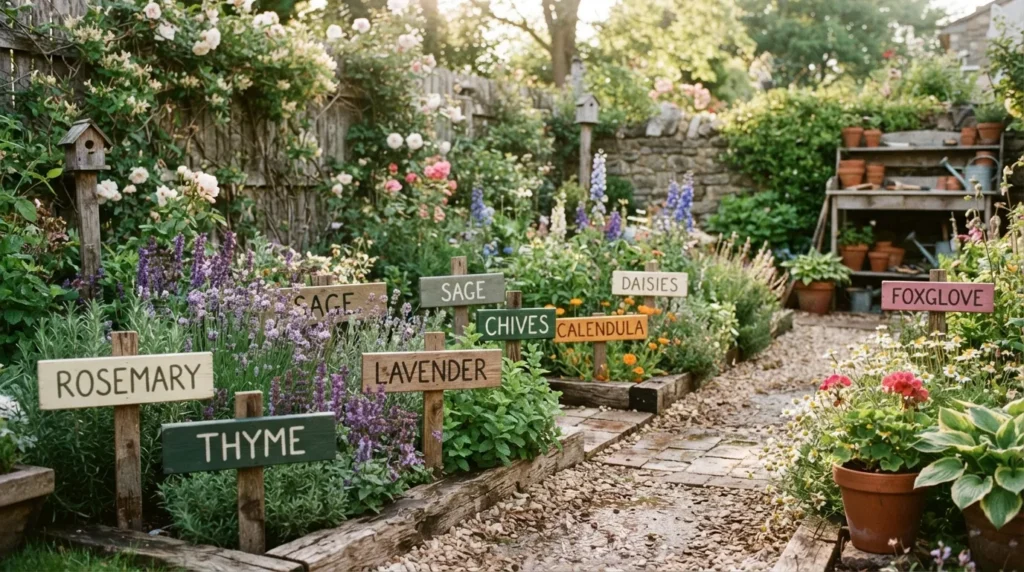
Quick Benefits
- Adds personality
- Uses leftover materials
- Helps identify plants
- Creates a handmade feel
- Works throughout the garden
Why It Works
Garden signs can make an outdoor space feel more personal without requiring much money or construction.
Old wood, reclaimed boards, smooth stones, or suitable leftover materials can become charming labels or decorative markers.
The key is keeping the signs visually connected. A collection of completely different materials and fonts can feel messy, while repeated colors or shapes create consistency.
How To Style It
Cut or prepare small pieces of suitable outdoor material.
Paint them in a restrained palette such as cream, dark green, black, or natural wood.
Use simple lettering for herb, vegetable, or flower labels.
For a more decorative approach, add small botanical illustrations or simple symbols.
Place signs where they are visible but don’t interfere with watering, mowing, or plant growth.
If using reclaimed materials, make sure they are safe for the intended garden application and free from harmful coatings or residues.
6. Hanging Plant Display
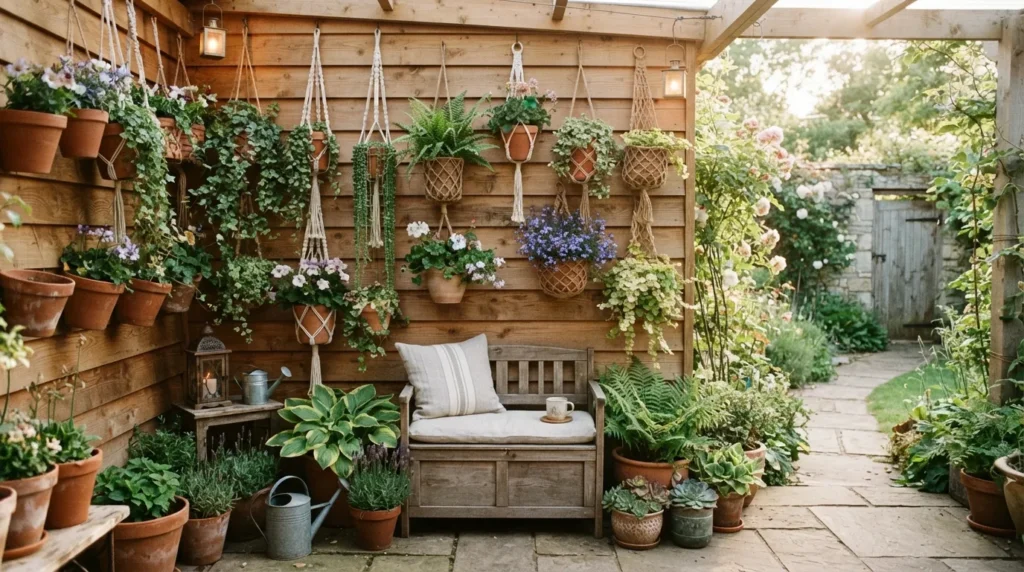
Quick Benefits
- Uses vertical space
- Adds height to patios
- Creates a layered appearance
- Works with small gardens
- Keeps some plants off the ground
Why It Works
Vertical gardening is a useful solution when floor space is limited. Hanging containers can turn a blank wall, porch corner, pergola, or sturdy overhead structure into a green focal point.
The variation in height also adds movement to the garden.
Instead of arranging every plant at ground level, a hanging display creates several visual layers that can make a small outdoor space feel more developed.
How To Style It
Choose lightweight containers appropriate for hanging applications.
Use secure hardware designed for the weight of the container, soil, water, and mature plant.
Group containers in odd numbers or vary their heights for a more natural arrangement.
Trailing plants can create beautiful movement around the edges.
Keep the arrangement accessible enough for watering and maintenance. Avoid placing heavy containers where they could fall onto people or property.
7. DIY Birdhouse Cluster
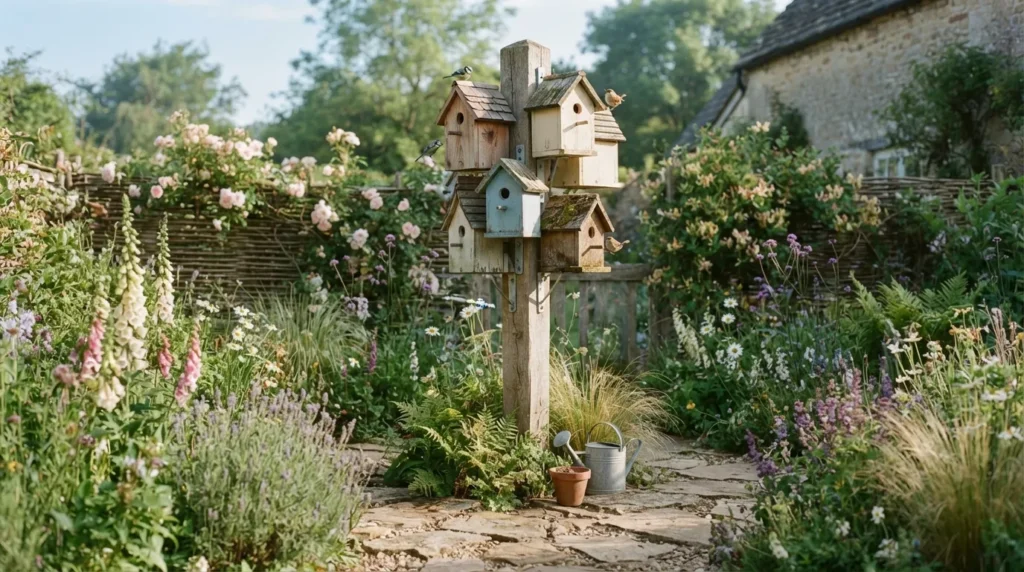
Quick Benefits
- Adds architectural interest
- Creates a playful focal point
- Can support suitable garden wildlife
- Makes unused vertical space useful
- Offers a customizable project
Why It Works
Small structures can add character to a garden even when the landscape itself is simple. A collection of birdhouses can create a charming focal point while adding visual height.
If you want the project to serve a wildlife purpose, design and place birdhouses according to the needs of the species you hope to attract rather than treating them only as decoration.
Different entrance sizes and placement conditions can affect which birds use a box.
How To Style It
Build or purchase suitable birdhouse components using untreated, weather-appropriate materials.
Keep decorative paint and finishes away from areas where birds may come into direct contact with them, and follow reliable wildlife guidance when building functional nest boxes.
Mount houses securely on a suitable post, tree, or structure.
For a decorative cluster, vary the shapes slightly while maintaining a consistent color palette.
Add nearby native plants that provide habitat, shelter, or food appropriate to your region.
8. Reclaimed Garden Bench
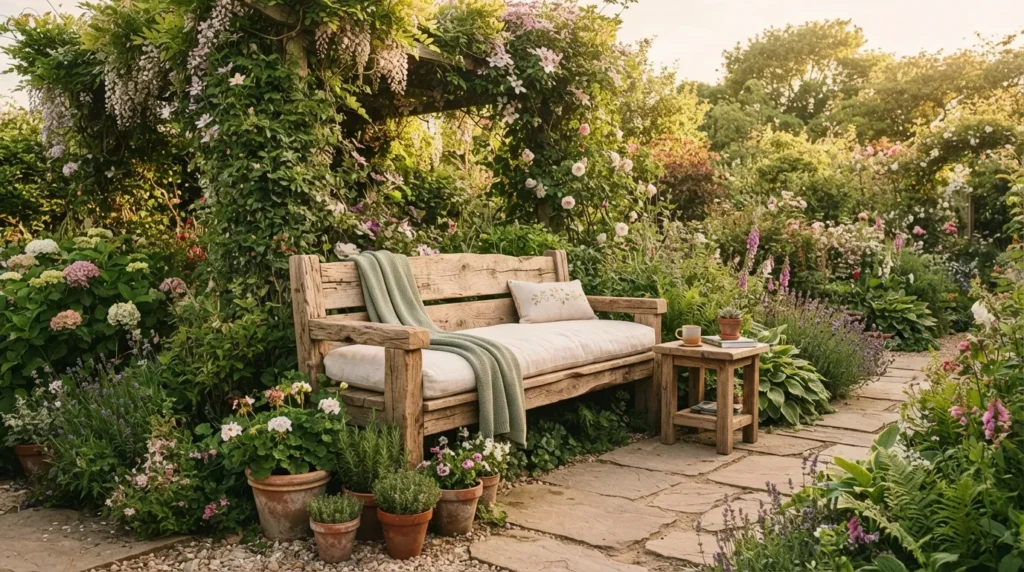
Quick Benefits
- Adds useful seating
- Creates a garden destination
- Introduces natural texture
- Can reuse sturdy materials
- Works as a focal point
Why It Works
A garden becomes more enjoyable when there is somewhere comfortable to stop and take it in.
A simple bench can transform an empty corner into a destination. Instead of viewing the garden only while walking through it, you create a place to sit, read, have coffee, or enjoy the surrounding plants.
Using suitable reclaimed materials can give the bench character while keeping the design relatively simple.
How To Style It
Use structurally sound materials that can withstand outdoor conditions.
Sand rough wood thoroughly and choose an exterior-rated finish suitable for the material.
Position the bench where it provides a pleasant view without blocking pathways.
Place plants behind or beside the bench rather than directly in front of it.
Add a removable outdoor cushion for comfort if appropriate, and store textiles during severe weather.
9. Handmade Plant Supports
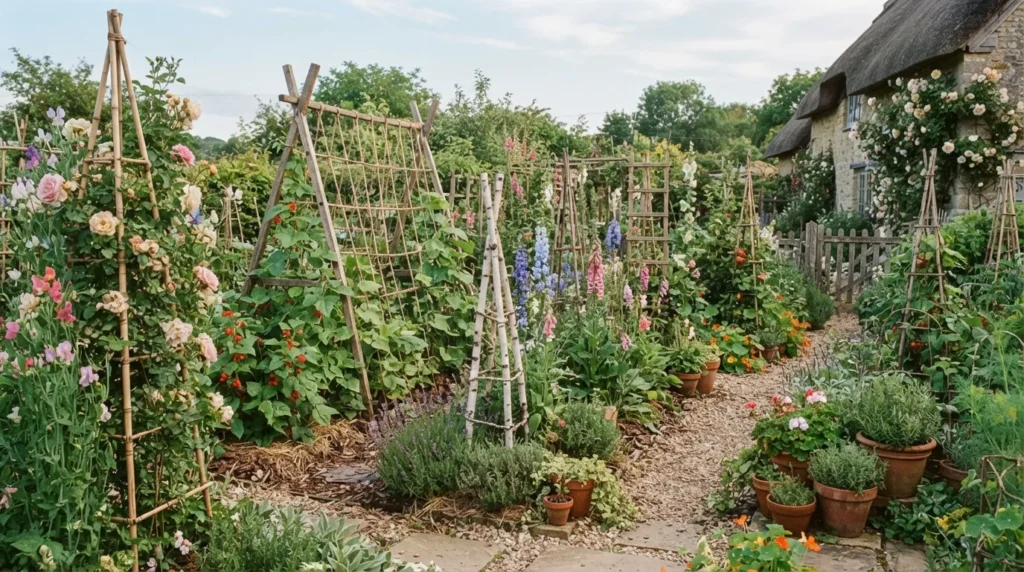
Quick Benefits
- Helps plants grow upright
- Adds vertical interest
- Supports flowering plants
- Can become decorative
- Creates structure throughout the season
Why It Works
Plant supports don’t have to look purely functional. When designed thoughtfully, they become part of the garden’s visual structure.
Simple stakes, arches, obelisks, and teepees can guide climbing plants while creating strong vertical lines.
This is especially useful in cottage, vegetable, and informal gardens where plants naturally spill and climb.
How To Style It
Build supports from suitable wood, bamboo, metal, or other weather-resistant materials.
Match the support style to the plant. A small herb may need only a simple stake, while a vigorous climber requires a much stronger structure.
Place supports early in the growing season so plants can be guided as they develop.
Repeat similar support shapes throughout a planting bed for cohesion.
Allow enough room for mature growth and inspect supports regularly for stability.
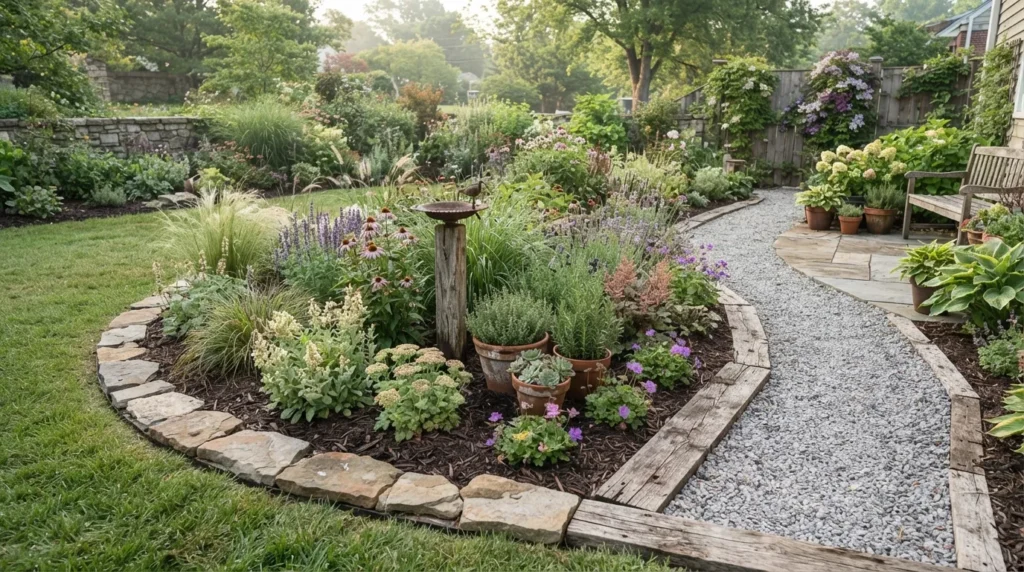
10. Decorative Garden Edging
Quick Benefits
- Defines planting beds
- Separates lawn from garden areas
- Creates visual structure
- Makes paths look finished
- Reduces messy-looking borders
Why It Works
Garden edging is one of those details that can make a landscape look significantly more intentional.
A defined border separates different materials and creates a clean transition between lawn, mulch, gravel, soil, and planting areas.
The edging doesn’t need to be elaborate. A simple line of brick, stone, timber, or suitable garden edging can provide enough definition.
How To Style It
Choose an edging material that relates to the home’s exterior or other landscape materials.
For a natural garden, irregular stone can create a relaxed transition.
Brick works well with traditional and cottage-inspired landscapes.
Wood can add warmth around vegetable beds or informal planting areas.
Keep the lines consistent with the garden’s overall shape. Curved beds can feel softer and more organic, while straight lines create a cleaner modern appearance.
What DIY Garden Project Adds the Most Character?
Projects that combine function and visual interest usually create the strongest impact. A handmade trellis, customized planter, garden bench, herb box, or decorative edging can change the appearance of a garden while also improving how the space is used.
How To Make DIY Garden Projects Look More Expensive
A polished result usually comes from consistency rather than expensive materials. Choose a small palette of colors and repeat similar materials throughout the garden.
Natural wood, black metal, terracotta, stone, cream, and muted green are particularly versatile combinations.
Avoid adding too many unrelated decorative elements. One beautifully finished project can have more impact than several unfinished or mismatched pieces.
Pay attention to proportions, too. A tiny garden can become visually crowded when large structures are introduced, while a spacious backyard may require larger elements to feel balanced.
Finally, take time with the finishing details. Smooth rough edges, use suitable outdoor finishes, conceal hardware where practical, and keep the surrounding area tidy.
Related Articles
- 10 Backyard Landscape Design Ideas with Beautiful Greenery
- 10 Small Garden Ideas for Beautiful Outdoor Spaces
- 10 Vegetable Garden Ideas for Beginners
- 10 Front Porch Planter Ideas for Curb Appeal
- 10 DIY Fire Pit Ideas for Backyard Gatherings
Frequently Asked Questions
What are the easiest DIY garden projects for beginners?
Painted planters, garden signs, simple herb boxes, and basic plant supports are good starting points. They require fewer construction skills than larger structures and can often be completed with common tools. Start with a project that matches your available time, tools, and outdoor space.
How can I make my garden look more interesting?
Add variation in height, texture, and structure. Trellises, raised planters, pathways, benches, edging, and vertical plant displays can create visual layers. Combining plants with handmade garden features can also make the landscape feel more personal.
What materials work best for outdoor DIY projects?
The best material depends on the project and local weather. Exterior-rated wood, suitable metal, stone, concrete, and weather-resistant composites can all be useful. Materials should be selected based on moisture, sunlight, temperature changes, and the intended lifespan of the project.
Can I use reclaimed wood in the garden?
Suitable reclaimed wood can be used for decorative projects, but inspect it carefully. Avoid wood with unknown chemical treatments, peeling finishes, or contamination, especially around edible plants. Use appropriate exterior protection and make sure the material is structurally sound.
How do I make a small garden feel more interesting without overcrowding it?
Use vertical features rather than adding more objects to the ground. A trellis, hanging planter, wall planter, or narrow plant stand can introduce height while preserving floor space. Repeating one or two materials also creates cohesion without requiring many decorations.
How long do DIY garden projects take?
The time varies considerably. Painting planters or making signs can take a few hours, while building a bench, trellis, or garden path may require several sessions. Plan for drying, curing, planting, and weather-related delays when necessary.
How do I protect DIY garden projects from weather?
Choose materials designed for outdoor use and apply appropriate exterior finishes where needed. Keep wooden elements off constantly wet ground when practical, inspect structures periodically, and repair damaged finishes promptly. Proper drainage also helps many outdoor projects last longer.
Conclusion
The best DIY garden projects don’t simply add decoration. They give the outdoor space a sense of personality while making it more useful and enjoyable.
A painted planter can brighten a forgotten corner. A trellis can turn an empty wall into a living feature. A small herb box can bring useful greenery closer to the kitchen, while a garden bench can create a destination where you actually want to spend time.
You don’t need to complete all ten projects. Choose one that solves a problem or improves an area that currently feels unfinished.
If your garden lacks height, try a trellis or handmade plant support. If the planting beds look undefined, add edging. If you want more character around a patio, create a collection of customized planters.
Use a consistent material and color palette so the projects feel connected. Natural wood, stone, terracotta, muted greens, and soft neutrals can create a relaxed foundation that works across many garden styles.
Most importantly, build for your actual space. Consider sunlight, drainage, weather exposure, mature plant size, structural stability, and maintenance before starting.
A garden becomes memorable through details. A few thoughtfully made features can give even a simple outdoor space the warm, collected character that makes you want to linger there.