

10 Modern Bedroom Ideas with Elegant Wood Accents
A modern bedroom can feel polished and peaceful without becoming overly minimal. One of the easiest ways to create that balance is by bringing in natural wood. The warmth of wood grain softens crisp furniture lines, neutral walls, and contemporary finishes while giving the bedroom a sense of depth and character.
The key is choosing wood accents that complement the room instead of making everything look like a matching furniture set. A walnut nightstand can add richness beside a cream upholstered bed. Light oak paneling can bring warmth to a simple bedroom without overwhelming it. Even smaller details, such as a wood-framed mirror or floating shelf, can make a noticeable difference.
In my experience, wood works especially well in bedrooms because it naturally supports a restful atmosphere. Unlike overly decorative finishes, visible grain adds interest without demanding attention. It can also work across a wide range of color palettes, from warm whites and beige to charcoal, sage, muted blue, and soft earthy tones.
The ideas below focus on practical ways to combine contemporary bedroom design with wood accents. You’ll find options for different room sizes, furniture arrangements, color palettes, lighting styles, and decorating preferences. Some approaches make wood the star of the room, while others use it more subtly as a finishing layer.
Whether you are updating a primary bedroom, guest room, apartment bedroom, or smaller sleeping space, the goal is to create a room that feels sophisticated enough to look thoughtfully designed and comfortable enough for everyday rest.
Table of Contents
1. Wood Panel Headboard
Create a warm focal point with architectural wood behind the bed.
2. Walnut Furniture Layers
Use rich walnut tones to add depth and sophistication.
3. Light Oak Styling
Keep the room bright with pale wood and soft neutral finishes.
4. Wood Slat Details
Add contemporary architectural texture with narrow vertical wood slats.
5. Natural Wood Nightstands
Bring warmth to the bedside through simple, functional furniture.
6. Wood Framed Mirrors
Combine practical reflection with a warm decorative accent.
7. Warm Wood Lighting
Use wood and soft illumination to create an inviting nighttime atmosphere.
8. Wood and Neutral Textures
Pair natural grain with layered bedding and tactile fabrics.
9. Dark Wood Contrast
Create a dramatic modern bedroom with deeper wood tones.
10. Minimal Wood Accents
Use a few carefully selected pieces for a refined, uncluttered look.
1. Wood Panel Headboard
Quick Benefits
- Creates an immediate focal point
- Adds architectural character
- Warms neutral bedrooms
- Reduces the need for excessive wall decor
- Works with many modern furniture styles
Why It Works
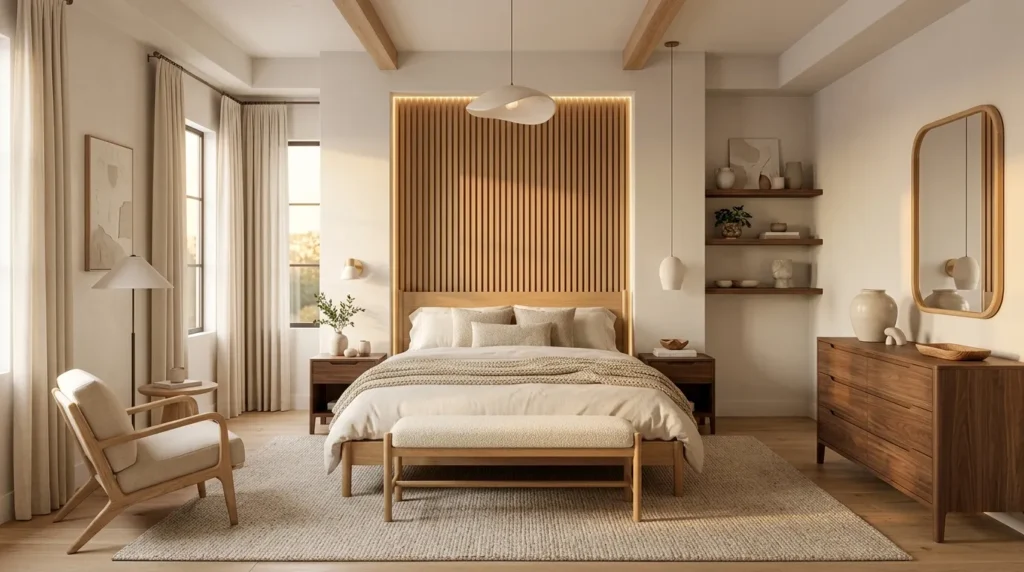
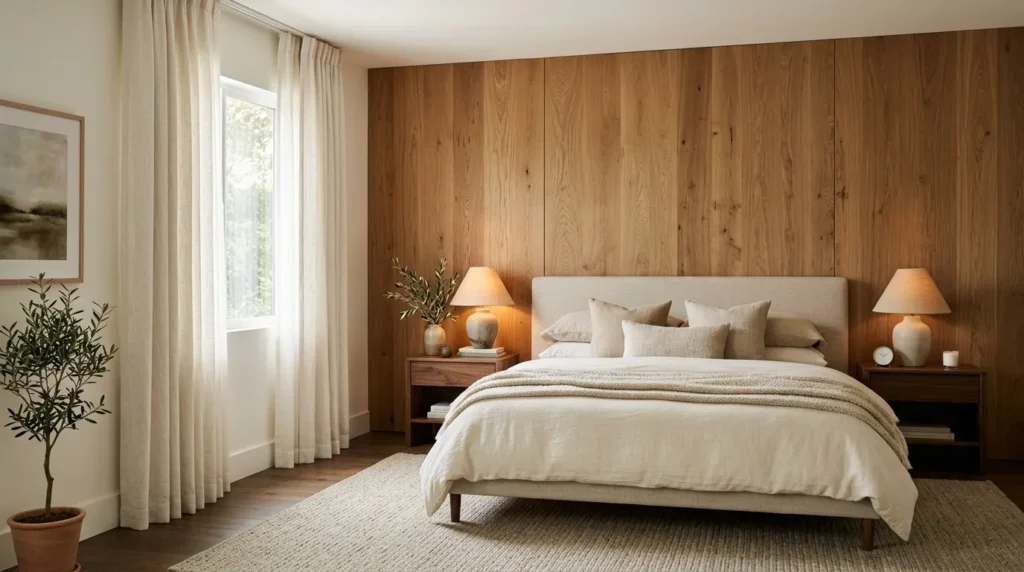
A wood panel headboard gives a modern bedroom an architectural feature without relying on elaborate decoration. Instead of treating the wall behind the bed as an afterthought, wood turns it into a defining part of the room.
Vertical or horizontal panels can create different visual effects. Vertical boards emphasize ceiling height, while horizontal arrangements can make the wall appear wider. A continuous wood surface behind the bed can also make separate bedside pieces feel like part of one cohesive design.
The natural variation in wood grain provides enough visual interest to stand on its own. This is especially useful in bedrooms where the rest of the palette is intentionally quiet.
How To Style It
Choose the wood tone according to the room’s existing finishes. Light oak works beautifully with white, cream, beige, and soft gray. Walnut creates a richer appearance with ivory bedding, charcoal accents, or muted green.
For a particularly polished look, extend the wood paneling slightly wider than the bed. Add simple nightstands on either side and use understated wall-mounted or pendant lighting.
Keep bedding relatively calm when the wood wall has strong grain. Linen, cotton, and textured neutral fabrics help the wood remain the focal point without making the room feel busy.
2. Walnut Furniture Layers
Quick Benefits
- Adds richness and depth
- Creates a sophisticated appearance
- Complements neutral bedding
- Works well with modern silhouettes
- Adds warmth without bright colors
Why It Works
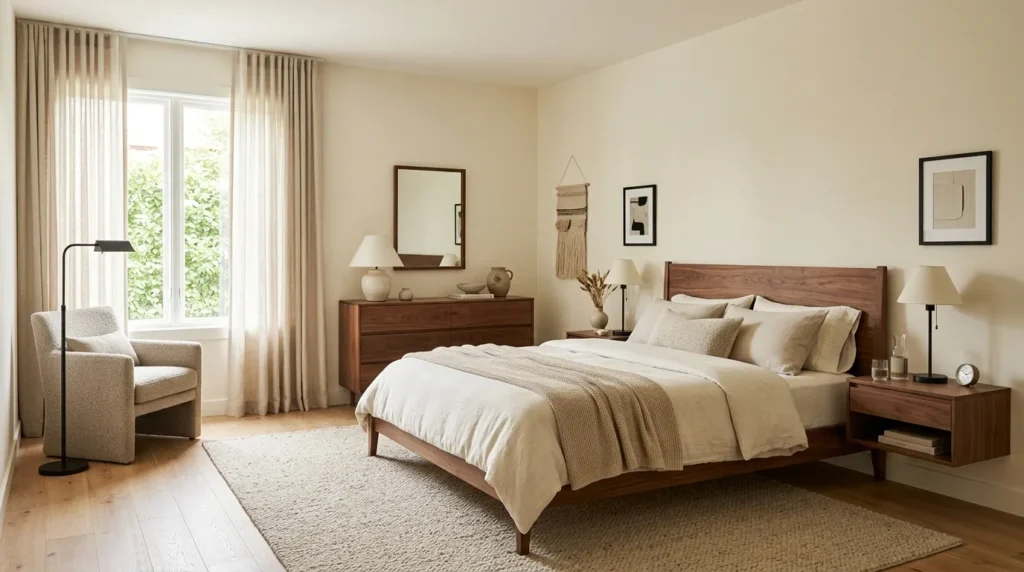
Walnut has a naturally deep, warm character that can make a contemporary bedroom feel more established and refined. Its darker tone creates contrast against lighter walls and bedding while its visible grain keeps the finish from appearing flat.
The trick is using walnut as a visual anchor rather than covering every surface in the same dark wood. A walnut bed frame, dresser, or pair of nightstands can provide enough weight to balance pale textiles and walls.
This approach works particularly well in rooms with large windows because daylight highlights the variations in the grain and prevents darker furniture from feeling overly heavy.
How To Style It
Start with one substantial walnut piece, such as a bed frame or dresser. Then repeat the tone in one or two smaller details. A picture frame, bench, lamp base, or decorative bowl can create continuity.
Pair walnut with cream bedding, warm white walls, muted beige curtains, and brushed metal accents. Black details can also work when used sparingly.
For a softer bedroom, add natural textiles such as linen or cotton. A textured rug beneath the bed can further separate the darker furniture from the floor and make the overall arrangement feel layered.
Avoid trying to match every wood item perfectly. Slight variations can make the room feel more collected and natural.
3. Light Oak Styling
Quick Benefits
- Keeps modern bedrooms feeling bright
- Makes smaller spaces feel visually lighter
- Creates a relaxed Scandinavian-inspired mood
- Works with warm neutral palettes
- Pairs easily with soft textiles
Why It Works
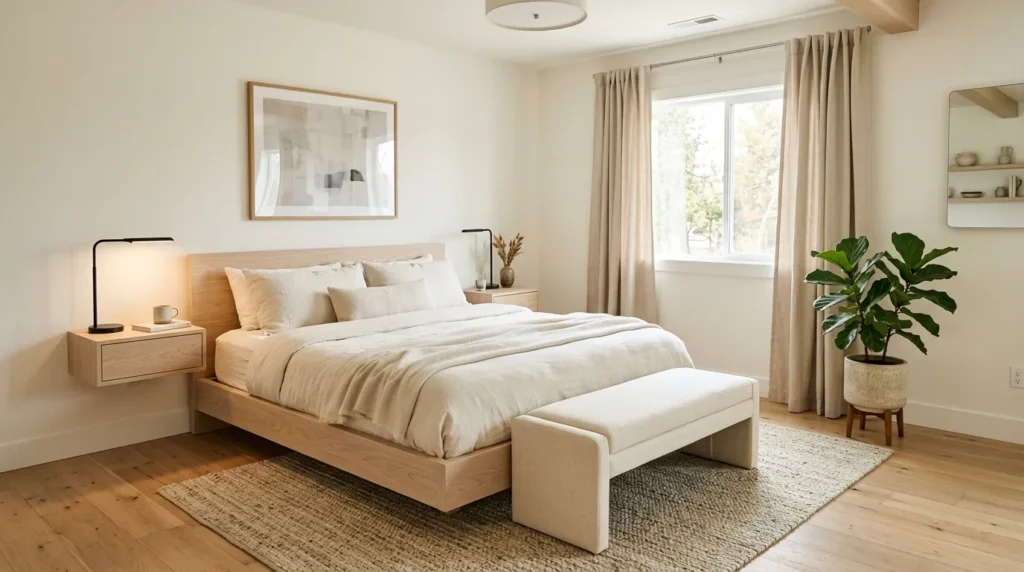
Light oak is an excellent choice when you want the warmth of wood without making the room feel visually heavy. Its pale grain reflects natural light and works beautifully with soft whites, creams, beige, and muted earth tones.
This is particularly helpful in smaller bedrooms. Dark furniture can sometimes dominate a compact room, while light wood maintains a sense of openness.
Light oak also bridges the gap between modern minimalism and cozy decorating. Its natural variation adds character without requiring elaborate accessories.
How To Style It
Consider a light oak bed frame, floating nightstands, dresser, or bench at the foot of the bed. Keep the surrounding palette simple with ivory bedding and warm neutral walls.
Add softness through linen curtains, a woven rug, and layered blankets. Small touches of greenery can complement the natural character of the wood.
For a contemporary finish, combine light oak with black or charcoal accents. A slim black reading lamp or dark framed artwork creates contrast without overpowering the pale wood.
If the floor is already wood, choose furniture with a slightly different tone rather than trying to create a perfect match. The variation can help each layer remain visible.
4. Wood Slat Details
Quick Benefits
- Adds architectural texture
- Creates a contemporary focal point
- Emphasizes ceiling height
- Works beautifully behind the bed
- Adds dimension without complicated decor
Why It Works
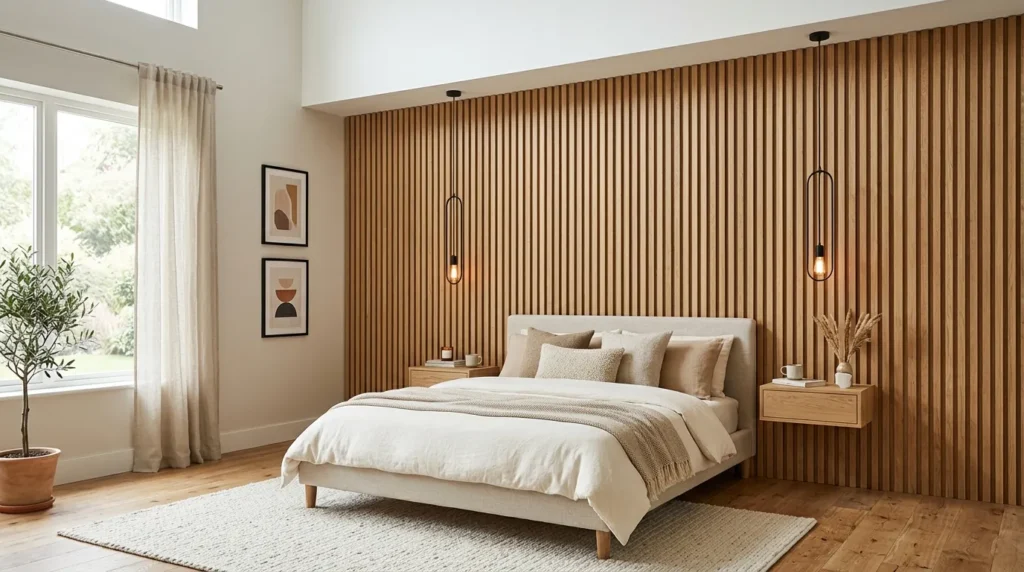
Wood slats create a strong modern look because they combine repetition, texture, and natural material in one feature. The narrow vertical lines add rhythm to the wall while maintaining a clean appearance.
A slatted wall can also influence how the room feels proportionally. Vertical lines draw the eye upward, making them especially useful in bedrooms with standard or lower ceilings.
The feature does not have to cover an entire wall. A partial installation behind the bed can provide enough visual interest while keeping the rest of the room simple.
How To Style It
Use slats in a warm oak, medium wood, or walnut tone depending on your color palette. Keep the spacing consistent for a crisp contemporary appearance.
Place the bed directly in front of the feature and choose a simple upholstered or low-profile frame. Wall-mounted reading lights can work particularly well because they keep the bedside area visually clean.
Pair the wood with soft bedding in cream, taupe, beige, or muted gray. Avoid adding too many competing patterns.
For renters or temporary updates, consider a removable wood-look treatment or a smaller decorative slat panel rather than a permanent wall installation.
5. Natural Wood Nightstands
Quick Benefits
- Adds warmth at eye level
- Provides practical bedside storage
- Works in bedrooms of many sizes
- Creates symmetry without excessive decoration
- Complements upholstered beds
Why It Works
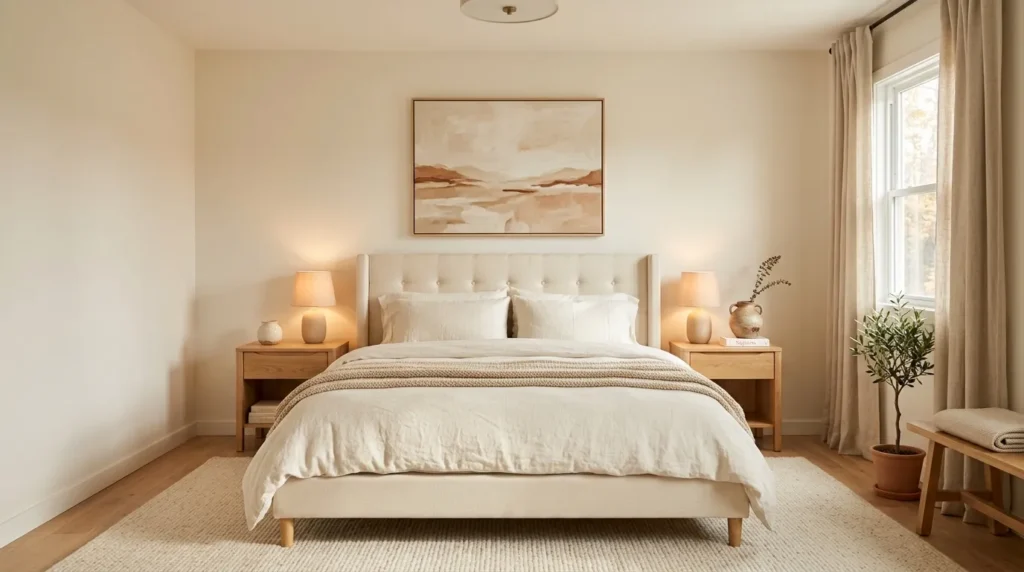
Nightstands are small compared with a bed or dresser, but they have a strong visual presence because they sit directly beside the main focal point. Natural wood nightstands can introduce warmth exactly where a modern bedroom often needs it.
They are also an easy way to incorporate wood without committing to a large architectural feature. If you are renting or gradually decorating, this approach provides flexibility.
A simple wood nightstand with one or two drawers can look more refined than an oversized piece filled with decorative details. The natural grain becomes part of the design while the storage remains useful.
How To Style It
Choose nightstands that are approximately level with the mattress or slightly lower. Proportion matters more than having a specific style.
Place a compact lamp, small ceramic vessel, or framed photograph on top. Keep enough surface area available for everyday items such as a book or glass of water.
If your bed is upholstered, a wood nightstand creates a pleasant material contrast. For a wood bed, consider a different wood tone or a painted nightstand to prevent the room from becoming visually repetitive.
Use matching nightstands when you want symmetry. Different pieces can also work when their height and visual weight are similar.
6. Wood Framed Mirrors
Quick Benefits
- Adds warmth without bulky furniture
- Makes the room feel brighter
- Provides useful full-length or decorative reflection
- Creates an organic accent
- Works well in compact bedrooms
Why It Works
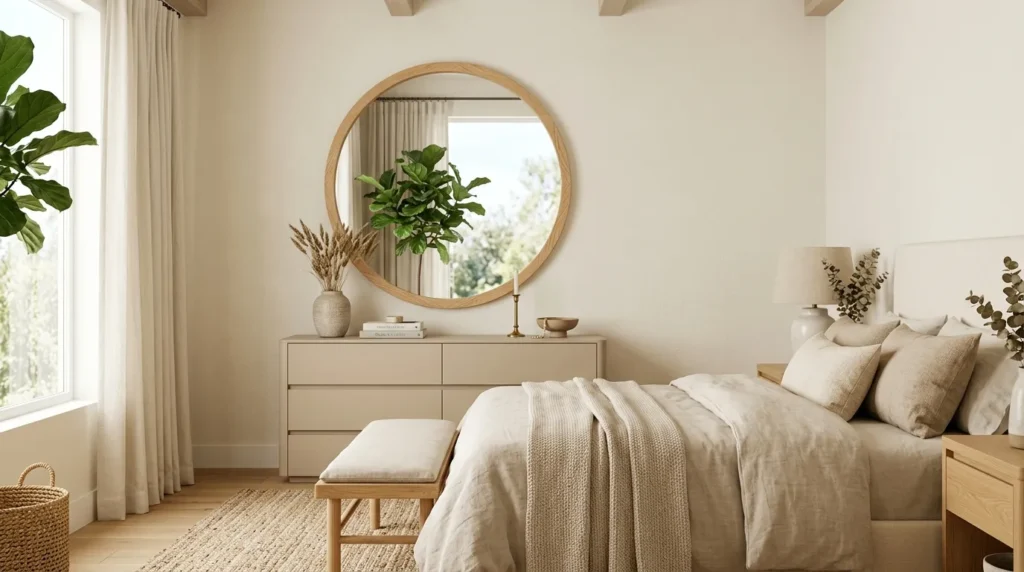
A mirror is practical, but its frame can become an important design feature. A wood-framed mirror introduces natural texture while helping reflect daylight around the room.
In smaller bedrooms, this can be particularly useful. A strategically placed mirror can visually extend the space and make the room feel more open.
Rounded wood mirrors can also soften a room filled with rectangular furniture. This small contrast can make a modern bedroom feel less rigid.
How To Style It
Choose a large round mirror above a dresser for a softer composition, or use a tall rectangular mirror near a wardrobe or dressing area.
Light oak works well with bright neutral rooms, while walnut and darker woods create a more dramatic effect. Keep the surrounding decor simple so the mirror retains its visual clarity.
Position the mirror where it can reflect natural light, an attractive architectural feature, or greenery rather than a cluttered corner.
If the bedroom already contains several wood elements, choose a frame with a slightly different profile to create variation without introducing another unrelated material.
7. Warm Wood Lighting
Quick Benefits
- Creates a relaxing evening atmosphere
- Adds warmth near the bed
- Combines function with decoration
- Softens contemporary furniture
- Works with neutral color palettes
Why It Works
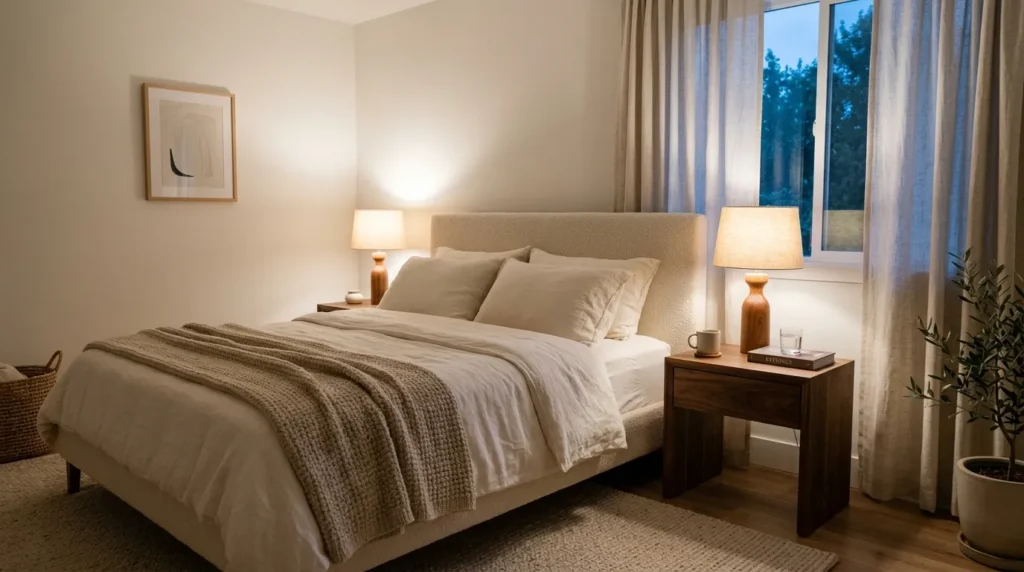
Bedroom lighting has a major influence on how the space feels after sunset. Wood-based lamps and fixtures introduce another layer of natural texture while warm illumination makes the room feel calmer.
A wood lamp base beside the bed can echo a dresser or headboard without creating a perfectly matched furniture set. Pendant lights with wood details can also reduce visual clutter on nightstands.
The combination of wood and warm light is particularly effective because both elements contribute warmth in different ways.
How To Style It
Use bedside lamps with wood bases, woven shades, or subtle wood detailing. For a cleaner modern look, consider wall-mounted sconces or pendant fixtures suspended beside the bed.
Choose bulbs that create comfortable evening illumination rather than harsh, cool light. Multiple light sources provide more control than relying entirely on a central ceiling fixture.
Keep the fixture proportionate to the nightstand and bed. Oversized lighting can become a dramatic feature, while smaller lamps work better in compact bedrooms.
Repeat the wood tone somewhere else in the room so the lighting feels connected to the overall design.
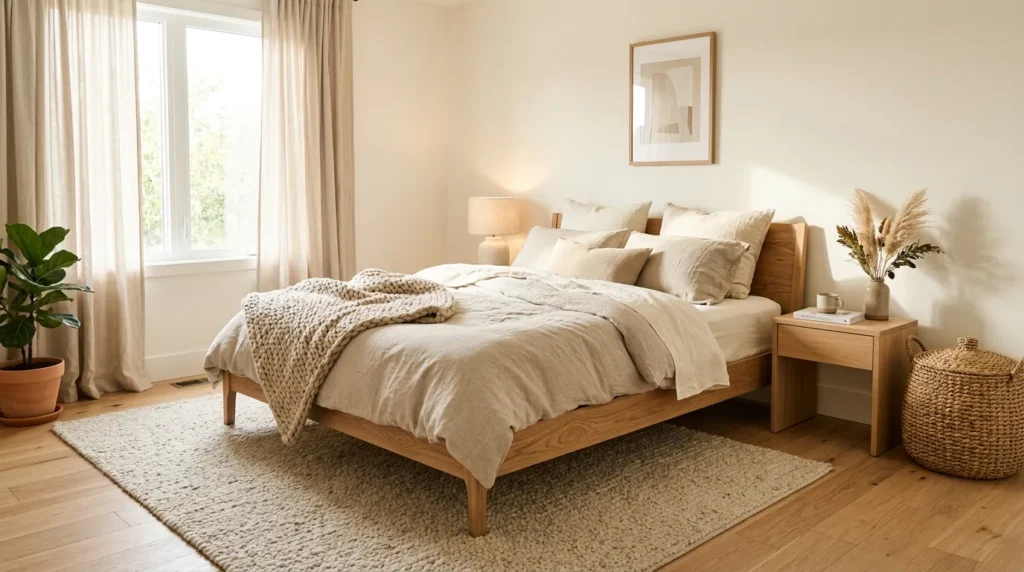
8. Wood and Neutral Textures
Quick Benefits
- Creates a soft, layered atmosphere
- Prevents wood from feeling too hard
- Makes neutral bedrooms more interesting
- Supports a calm color palette
- Works across different decorating styles
Why It Works
Wood is naturally tactile, but a bedroom needs softness as well. Combining wood with linen, cotton, wool, boucle, woven fibers, and plush textiles creates a balanced sensory experience.
The contrast between hard and soft materials is one of the easiest ways to make modern interiors feel comfortable. A clean-lined oak bed can look completely different when surrounded by rumpled linen bedding, a thick rug, and a soft throw.
This approach also allows you to keep the color palette restrained while still creating visual depth. Texture becomes the source of interest instead of excessive pattern.
How To Style It
Start with a warm wood bed or nightstands and build outward with neutral fabrics. Layer a fitted sheet, duvet, quilt, and throw in slightly different shades of cream, beige, oatmeal, or taupe.
Place a textured rug beneath the bed and add woven baskets for practical storage. Linen curtains can soften the windows while maintaining the natural theme.
Keep patterns minimal if the wood grain is prominent. Instead, vary the surface finishes: smooth ceramic beside rough woven fibers, crisp cotton beside relaxed linen, and natural wood beside soft upholstery.
The result should feel layered rather than decorated.
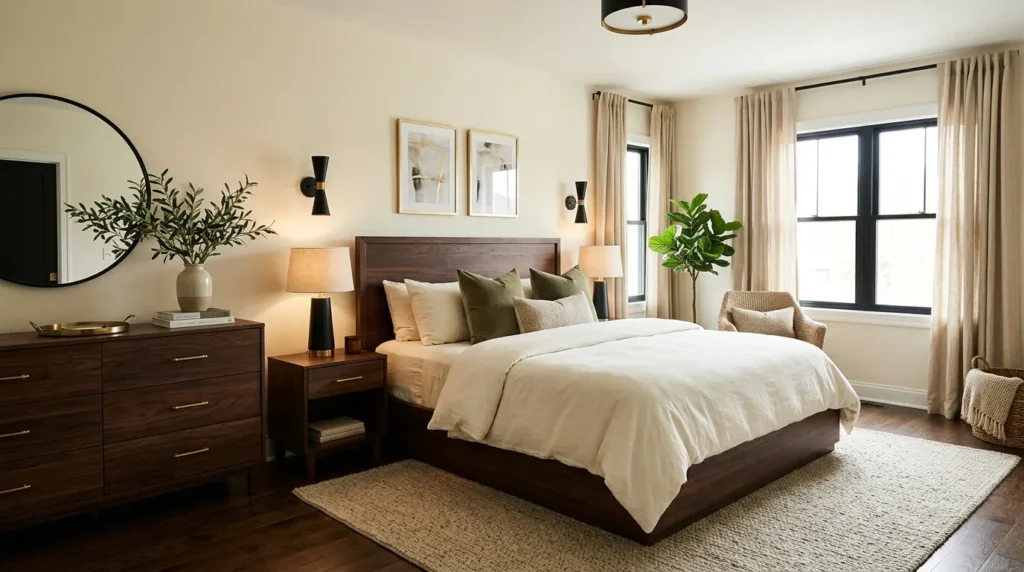
9. Dark Wood Contrast
Quick Benefits
- Creates a dramatic focal point
- Adds sophistication
- Provides strong contrast against light textiles
- Works with modern architectural details
- Makes neutral colors feel richer
Why It Works
Dark wood can give a modern bedroom a completely different personality. Walnut, espresso, and other deeper finishes create visual weight and contrast, particularly when paired with pale bedding and warm walls.
The key is balance. Too much dark furniture can make a smaller bedroom feel heavy, but a few substantial dark wood elements can create an elegant and grounded appearance.
Dark wood also works well with contemporary black accents because the two materials reinforce each other without looking identical.
How To Style It
Use dark wood on one major piece, such as a bed, dresser, or accent wall. Keep bedding light with shades of ivory, cream, or warm beige.
Add a textured rug to soften the contrast between the furniture and floor. Brass or muted bronze hardware can introduce another warm layer.
If the room has limited natural light, keep the surrounding walls and textiles lighter. Use layered lamps rather than relying only on ceiling lighting.
For a sophisticated palette, combine dark walnut with cream, muted olive, soft black, and natural linen. The result feels modern without appearing stark.
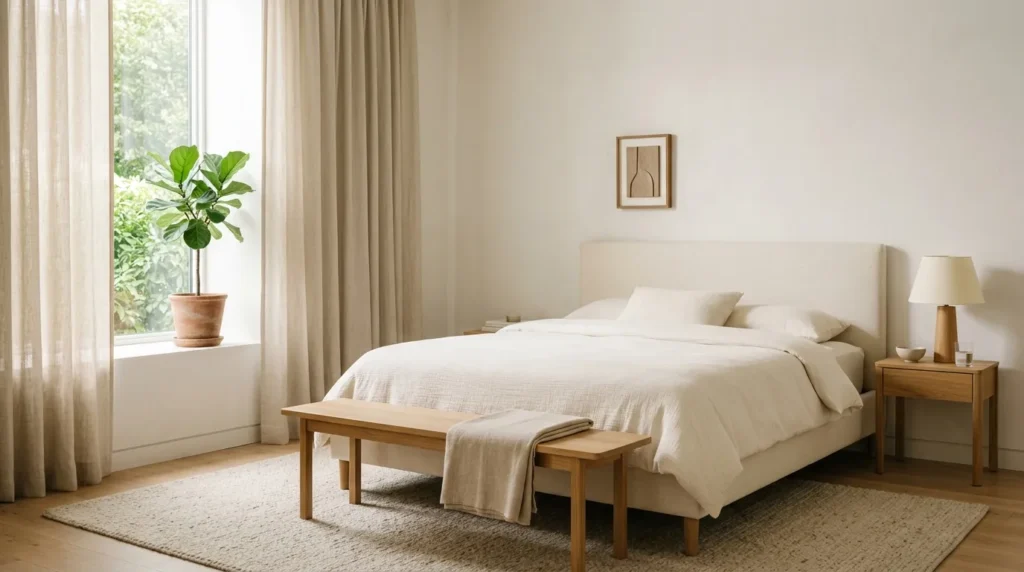
10. Minimal Wood Accents
Quick Benefits
- Keeps the room uncluttered
- Adds warmth with minimal effort
- Works especially well in small bedrooms
- Allows architectural features to stand out
- Creates a refined modern appearance
Why It Works
Not every modern bedroom needs a dramatic wood wall or full collection of wood furniture. Sometimes the most elegant solution is using wood selectively.
A single wood bench, framed artwork, floating shelf, bedside table, or sculptural stool can introduce enough warmth to keep the room from feeling sterile.
This approach is especially useful when the bedroom already has strong architectural details or existing furniture that cannot be replaced. Small wood accents can connect those pieces and create a more cohesive appearance.
How To Style It
Choose one primary wood accent and repeat its tone once or twice elsewhere. For example, pair an oak bench with a small oak frame and wooden lamp base.
Keep surfaces relatively clear. Modern design benefits from negative space, especially in a bedroom where calm is more important than visual abundance.
Use soft textiles to balance the harder material. A neutral upholstered bed, layered bedding, curtains, and a textured rug can provide enough comfort while the wood remains a subtle visual anchor.
If the room is small, prioritize functional wood pieces such as a stool, nightstand, or floating shelf so the material adds both beauty and usefulness.
How to Make a Modern Bedroom Feel Warmer
Natural wood, warm neutral colors, layered bedding, textured rugs, linen curtains, and soft lighting can make a modern bedroom feel warmer. The easiest approach is to combine clean furniture lines with organic materials and tactile fabrics.
What Wood Looks Best in a Modern Bedroom?
Light oak, walnut, ash, and medium natural wood tones work particularly well in modern bedrooms. The best choice depends on the room’s lighting, flooring, wall color, and existing furniture. Choose a tone that complements the overall palette instead of trying to match every wood surface exactly.
Related Articles
- 10 Modern Bedroom Ideas for a Calm and Stylish Retreat
- 10 Cozy Bedroom Ideas with Warm Neutral Colors
- 10 Small Bedroom Ideas with Smart Space-Saving Design
- 10 Modern Living Room Ideas with Natural Wood Accents
- 10 Bedroom Accent Wall Ideas for a Designer-Inspired Look
Frequently Asked Questions
How do you decorate a modern bedroom with wood?
Start with one substantial wood element, such as a bed frame, headboard, dresser, or accent wall. Add smaller coordinating pieces through nightstands, frames, lighting, or decorative objects. Balance the wood with soft bedding, neutral colors, and textured fabrics.
What colors go well with wood in a bedroom?
Cream, warm white, beige, taupe, sage, muted blue, charcoal, and earthy brown all work well with natural wood. Light woods pair beautifully with pale neutrals, while darker walnut tones create a sophisticated contrast with ivory and cream.
Can you mix different wood tones in a bedroom?
Yes. Mixing wood tones can make a bedroom feel more natural and collected. Keep the number of dominant tones limited and repeat each important tone at least once. Similar undertones usually create the most cohesive result.
Is wood good for a small bedroom?
Wood can work beautifully in a small bedroom when the pieces are appropriately scaled. Light wood can keep the space visually bright, while floating shelves and compact nightstands can add warmth without taking up much floor area.
How do you make a wood bedroom look modern?
Choose furniture with clean silhouettes, simple hardware, and restrained detailing. Pair wood with neutral textiles, uncluttered surfaces, contemporary lighting, and a limited color palette. Modernity comes more from proportion and simplicity than from using a specific wood species.
How do you balance dark wood furniture?
Pair dark wood with lighter walls, bedding, rugs, and curtains. Introduce plenty of natural or layered lighting and use lighter textured materials to keep the room from feeling visually heavy.
What type of bedding works best with wood furniture?
Natural-looking fabrics such as linen, cotton, and textured quilts complement wood particularly well. Cream, ivory, beige, oatmeal, and muted earth tones create a calm backdrop that allows the grain and warmth of the wood to stand out.
Conclusion
Wood has a natural ability to make a modern bedroom feel warmer, more grounded, and more personal. Whether you choose a dramatic wood-paneled headboard or a simple bedside table, the material adds character without requiring a room full of decoration.
Start with the scale of your bedroom and the furniture you already have. Light oak can help maintain an airy feeling in smaller spaces, while walnut can create richness and contrast in a larger room. From there, balance the wood with soft bedding, textured rugs, linen curtains, and comfortable lighting.
The most successful rooms rarely use wood in exactly the same way everywhere. Instead, the material appears in a few intentional places and connects naturally with the rest of the palette. A wood nightstand can echo a picture frame. A walnut dresser can relate to a lamp base. A slatted feature wall can provide the architectural detail that makes simple bedding look complete.
If your bedroom currently feels too stark, start with one warm wood element and build gradually. If it already contains several wood pieces, focus on editing rather than adding more. A calm, modern bedroom often comes from knowing what to leave out as much as knowing what to include.
With thoughtful proportions, soft textures, and carefully chosen natural finishes, modern bedroom design can feel elegant while remaining comfortable enough for everyday living.