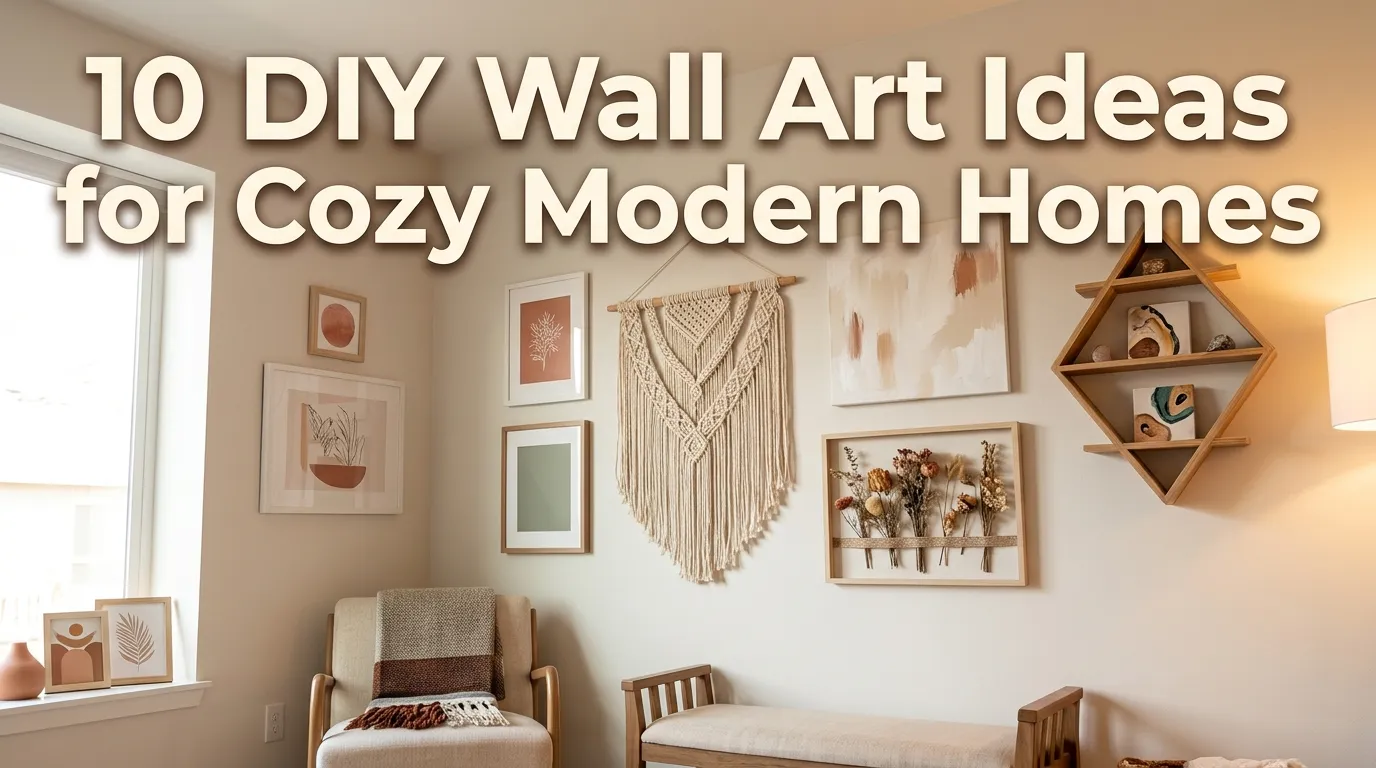
10 DIY Wall Art Ideas for Cozy Modern Homes
A blank wall can make an otherwise comfortable home feel unfinished. The good news is that creating a beautiful focal point doesn’t always require expensive artwork or a complicated weekend project. With a few accessible materials, thoughtful colors, and simple techniques, you can make wall art that feels personal while still fitting naturally into a modern home.
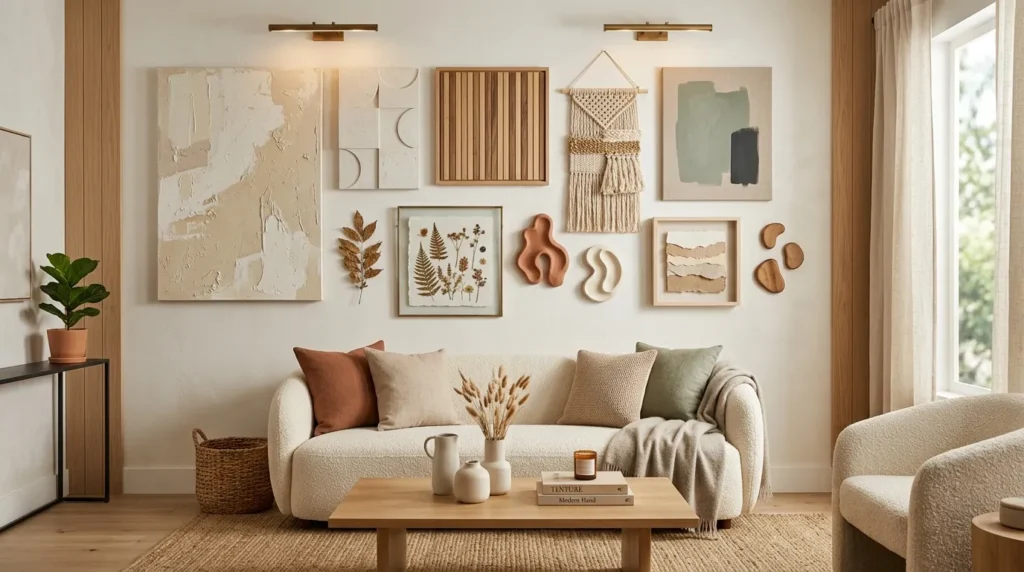
DIY wall art works especially well in cozy interiors because handmade pieces introduce texture and character. A painted canvas can bring a subtle color into a neutral living room. A woven wall hanging can soften clean furniture lines. Even simple wood pieces can create warmth against a plain white wall.
The key is to make the project look intentional. Modern interiors usually benefit from restrained colors, clean shapes, natural materials, and plenty of visual breathing room. That doesn’t mean every DIY project has to look minimalist. It simply means the finished piece works best when it connects with the room around it.
In my experience, the easiest way to get that cohesive look is to start with the room rather than the craft project. Look at the colors already present in your sofa, rug, curtains, flooring, and accessories. Then choose materials and finishes that repeat one or two of those tones.
The projects below range from beginner-friendly painted designs to textured, dimensional pieces. Most can be customized for different wall sizes, color palettes, and decorating styles.
Whether you’re refreshing a living room, bedroom, entryway, dining area, or home office, these ideas can turn an empty wall into something that feels warm, creative, and distinctly yours.
Table of Contents
1. Abstract Canvas Painting
Create simple organic shapes for a relaxed modern focal point.
2. Textured Plaster Art
Add subtle dimension with a sculptural handmade surface.
3. Wood Slat Artwork
Use natural wood to bring warmth and architectural texture.
4. Woven Wall Hanging
Introduce softness with yarn, rope, and natural fibers.
5. Botanical Pressed Art
Display preserved leaves and flowers in an understated arrangement.
6. Minimal Line Art
Create an elegant statement with simple continuous shapes.
7. Fabric Framed Artwork
Turn beautiful textiles into soft, oversized wall decor.
8. Geometric Wood Panels
Build a dimensional feature from simple geometric forms.
9. Painted Arch Artwork
Use curved shapes to create a modern architectural effect.
10. DIY Picture Grid
Combine personal photographs into a clean, cohesive display.
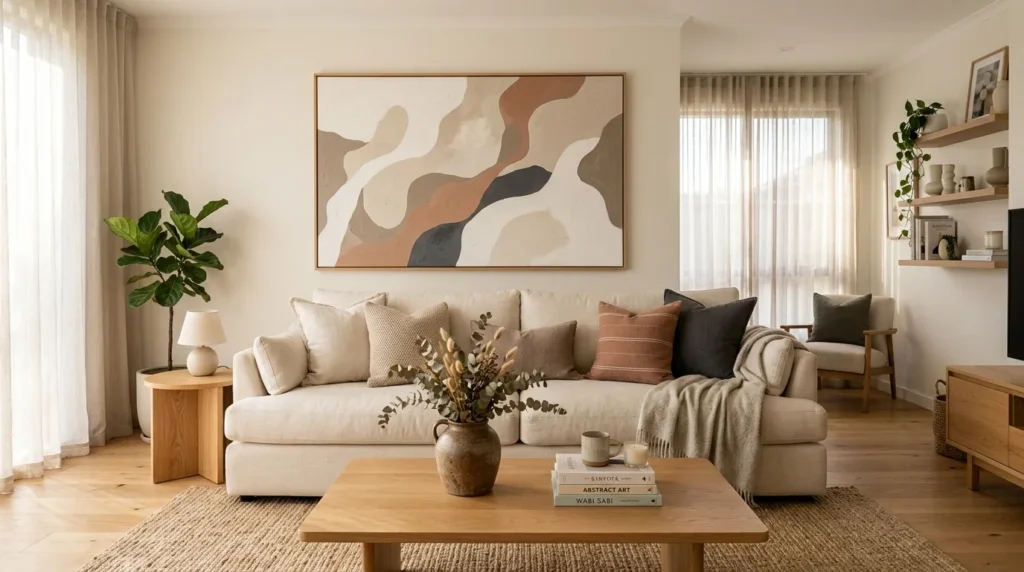
1. Abstract Canvas Painting
Quick Benefits
- Beginner-friendly project
- Easy to customize
- Works with neutral interiors
- Creates a large focal point
- Can be made to suit any wall size
Why It Works
Abstract art is particularly forgiving for DIY projects because the design doesn’t depend on perfect realism. Organic shapes, broad brushstrokes, and subtle color variations can create a sophisticated appearance without requiring advanced painting skills.
For a cozy modern home, neutral abstract artwork can add interest without introducing a completely new color scheme. Think warm white, beige, taupe, clay, muted olive, soft charcoal, or dusty blue.
The most successful homemade abstract pieces often use restraint. Instead of covering the entire canvas with multiple competing colors, choose a small palette and allow portions of the background to remain visible.
How To Style It
Start with a stretched canvas in a size appropriate for your wall. Large artwork often looks especially effective above a sofa, console, or bed.
Choose two to four colors that already appear in the room. Apply the lightest color as the base, then build organic shapes using a wide brush, palette knife, or sponge.
Don’t worry about making every shape symmetrical. Slight imperfections can make handmade artwork feel more authentic.
For a contemporary finish, use a thin natural wood frame around the finished canvas. Hang it above furniture with enough breathing room so the artwork feels connected to the overall composition rather than floating independently.
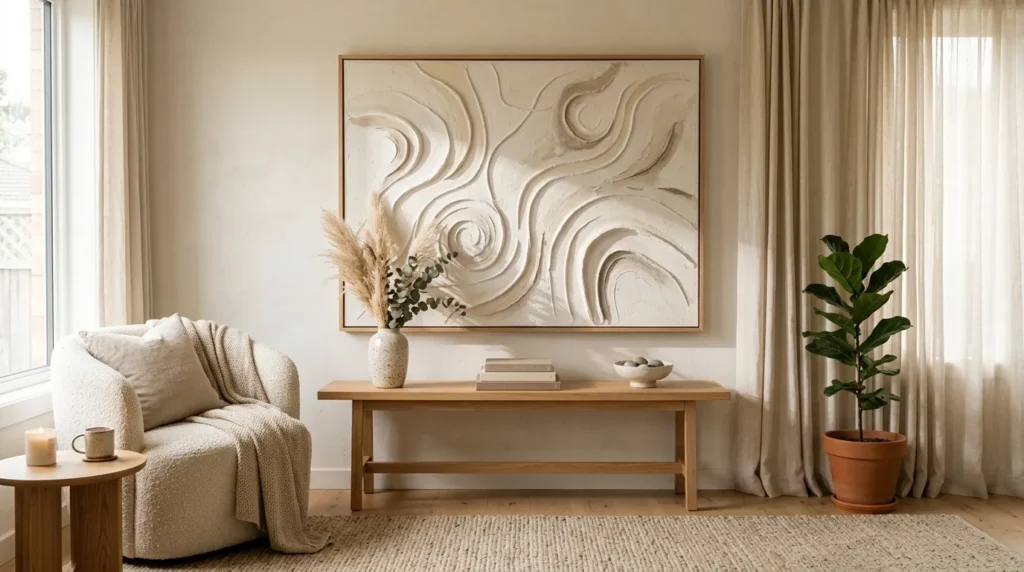
2. Textured Plaster Art
Quick Benefits
- Adds three-dimensional texture
- Creates a designer-inspired appearance
- Works with neutral palettes
- Requires relatively few materials
- Makes a strong statement on blank walls
Why It Works
Texture can make neutral rooms feel much richer. A textured plaster-style artwork introduces shadows and dimension without relying on bright colors or complicated imagery.
The beauty of this project is its simplicity. A monochromatic surface can still have plenty of visual interest because light moves across the raised areas throughout the day.
This style works particularly well in modern living rooms, bedrooms, entryways, and home offices where clean lines benefit from a tactile contrast.
How To Style It
Use a stretched canvas or sturdy art board as the base. Apply a suitable texture medium in sweeping curves, arches, waves, or abstract forms.
A palette knife creates more defined ridges, while a flexible scraper can produce broader surfaces.
Choose a warm white, cream, beige, or soft taupe finish for a subtle look. You can also introduce a small amount of pigment for a deeper earthy tone.
Allow the material to dry completely according to its instructions before moving or hanging the piece. Once finished, place it where natural or directional light can emphasize the texture.
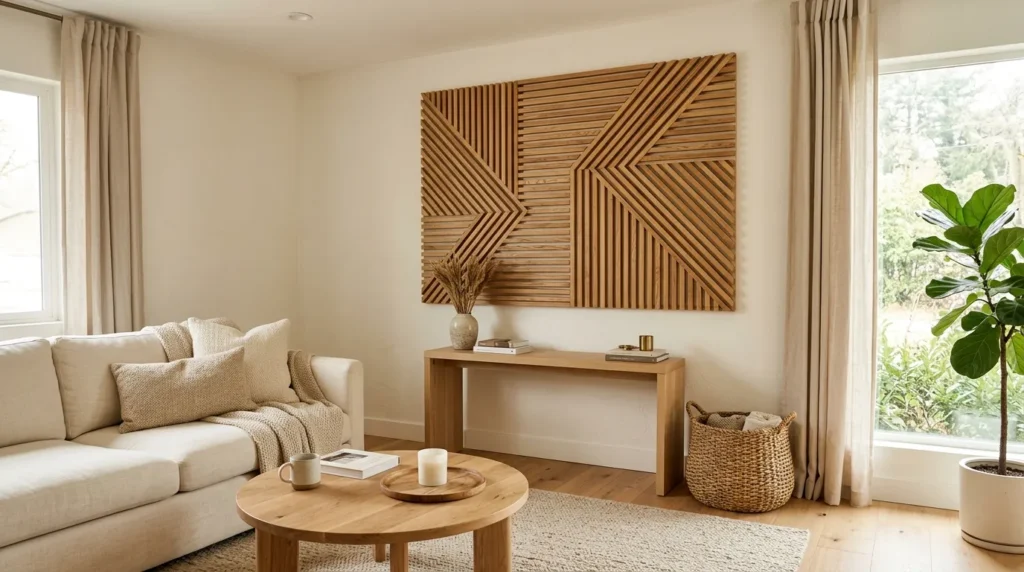
3. Wood Slat Artwork
Quick Benefits
- Introduces natural warmth
- Adds architectural texture
- Works with modern furniture
- Can be customized to different sizes
- Creates a substantial wall feature
Why It Works
Wood has an immediate visual warmth that works beautifully against white, cream, gray, and other neutral walls. A simple collection of wood strips can become surprisingly sophisticated when arranged into a balanced composition.
Unlike traditional framed artwork, a wood wall piece adds both color and texture. The grain becomes part of the design.
This approach is especially useful in modern homes where furniture tends to have simple silhouettes. The wall art provides an organic layer without making the room feel cluttered.
How To Style It
Use lightweight wood strips or prepared craft boards. Sand the edges and choose whether to leave the wood natural, stain it, or paint portions of it.
Arrange the pieces vertically, horizontally, or in a subtle staggered pattern. Keep the spacing consistent if you want a more contemporary appearance.
Natural oak, maple, pine, and walnut can each create a different effect. Choose a tone that relates to existing furniture or flooring.
Mount the finished piece securely, particularly if it is large or constructed from several heavier boards.
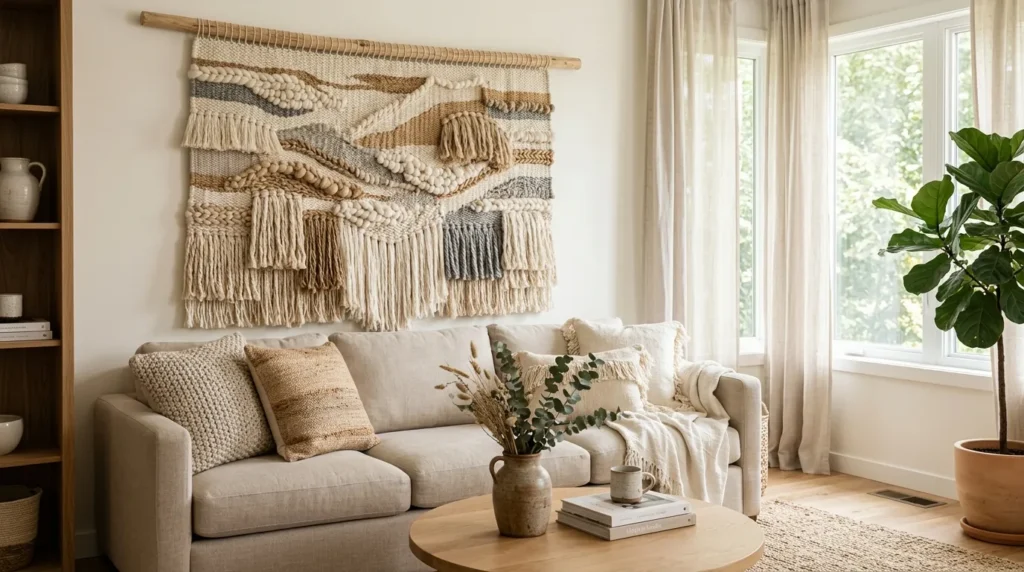
4. Woven Wall Hanging
Quick Benefits
- Adds softness and texture
- Creates a cozy handmade feeling
- Works well with neutral interiors
- Uses affordable materials
- Softens sharp modern furniture lines
Why It Works
Woven wall art introduces a tactile element that painted artwork cannot provide. The fibers create small variations in color, thickness, and shadow, making the piece interesting even when the palette is extremely simple.
This is particularly useful in modern homes where smooth walls, glass, metal, and streamlined furniture can sometimes feel visually cold.
Natural cotton cord, wool, yarn, jute, and other suitable fibers can create different levels of softness and texture.
How To Style It
Choose a wooden dowel or branch as the top support and build the design using knots, braids, loops, or simple weaving techniques.
For a modern look, use cream, oatmeal, tan, and warm beige fibers. For more contrast, add muted terracotta, olive, charcoal, or dusty blue.
Vary the lengths of the hanging fibers to create a gentle curved or stepped silhouette.
Hang a large piece above a console or sofa, or create a smaller arrangement beside a mirror or artwork.
5. Botanical Pressed Art
Quick Benefits
- Brings natural elements indoors
- Creates delicate visual interest
- Works with minimalist interiors
- Can preserve meaningful plants
- Easy to customize
Why It Works
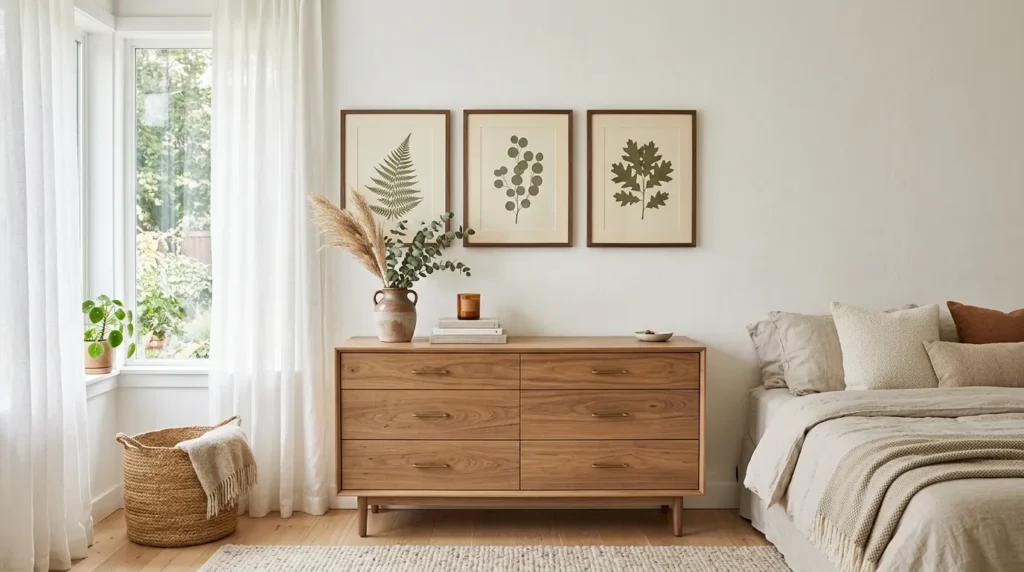
Botanical artwork brings organic shapes and natural color into modern rooms. Pressed leaves and flowers are particularly effective because they create delicate compositions without requiring bold patterns.
The project can also have sentimental value. A leaf from a garden, a favorite flower, or foliage collected during a meaningful occasion can become part of the artwork.
For a contemporary home, simplicity tends to work best. One botanical specimen in a large frame can look more sophisticated than a crowded collection.
How To Style It
Press fully dried plant material between absorbent paper using an appropriate pressing method, then allow it to dry thoroughly before framing.
Use a large neutral mat and a simple wood or black frame. White or cream backgrounds help the botanical shape remain the focal point.
For a gallery arrangement, repeat the same frame style across several pieces. Use different plant silhouettes to create variation.
Avoid placing delicate botanical artwork in areas exposed to excessive direct sunlight or moisture, as these conditions can affect the materials over time.
6. Minimal Line Art
Quick Benefits
- Extremely simple to create
- Looks sophisticated in neutral spaces
- Requires few materials
- Works well in small rooms
- Easy to coordinate with existing decor
Why It Works
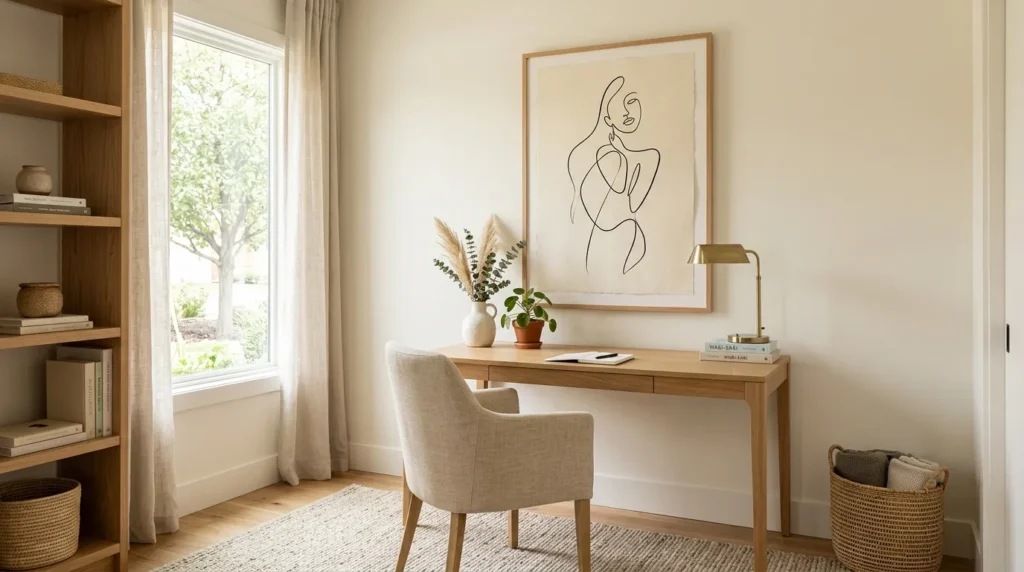
Simple line art has a clean visual quality that fits naturally into modern interiors. A continuous line can suggest a face, body, flower, vase, or abstract shape with only a few strokes.
The simplicity is what makes this project useful. It can fill a wall without adding significant visual weight.
Line art also works beautifully with other materials. A thin black frame can connect with lighting or hardware, while a natural wood frame can soften the contrast.
How To Style It
Choose heavy paper or art board and create a simple design using black ink, charcoal, or a dark paint marker.
If drawing freehand feels intimidating, practice the design on scrap paper first. Keep the final composition simple rather than attempting to fill every area.
Frame the finished piece with a generous white or cream mat.
For a larger wall, create three related pieces rather than enlarging one drawing beyond its comfortable proportions. Repeating the same line style keeps the collection cohesive.
7. Fabric Framed Artwork
Quick Benefits
- Adds softness to hard surfaces
- Makes use of beautiful leftover fabric
- Creates large-scale artwork affordably
- Offers endless color possibilities
- Works especially well in bedrooms
Why It Works
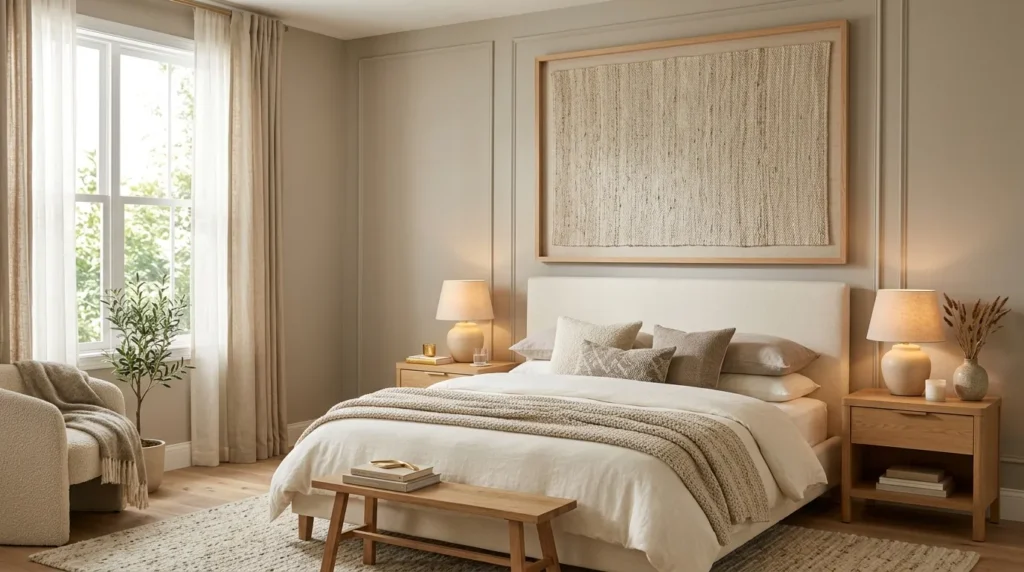
Fabric can become surprisingly effective wall art. Linen, cotton, woven textiles, vintage fabric, and patterned materials all have visual qualities that translate beautifully into large framed pieces.
Unlike paper artwork, fabric introduces subtle texture that changes with the light.
This idea is particularly useful if you already have a textile that connects with the room’s color palette. A leftover piece of upholstery fabric or decorative textile can become a custom artwork rather than sitting unused.
How To Style It
Choose a fabric with enough visual interest to stand alone. For a modern home, subtle stripes, abstract patterns, botanical motifs, or woven textures work well.
Stretch the fabric evenly over a lightweight backing board and secure it neatly on the reverse side.
Place it inside a simple frame with enough depth to accommodate the material.
For a cozy bedroom, linen in cream, oatmeal, or muted earthy tones can create a soft focal point above a dresser or bed.
8. Geometric Wood Panels
Quick Benefits
- Adds dimensional interest
- Combines modern shapes with natural material
- Can become a large statement piece
- Easy to customize
- Works well with contemporary furniture
Why It Works
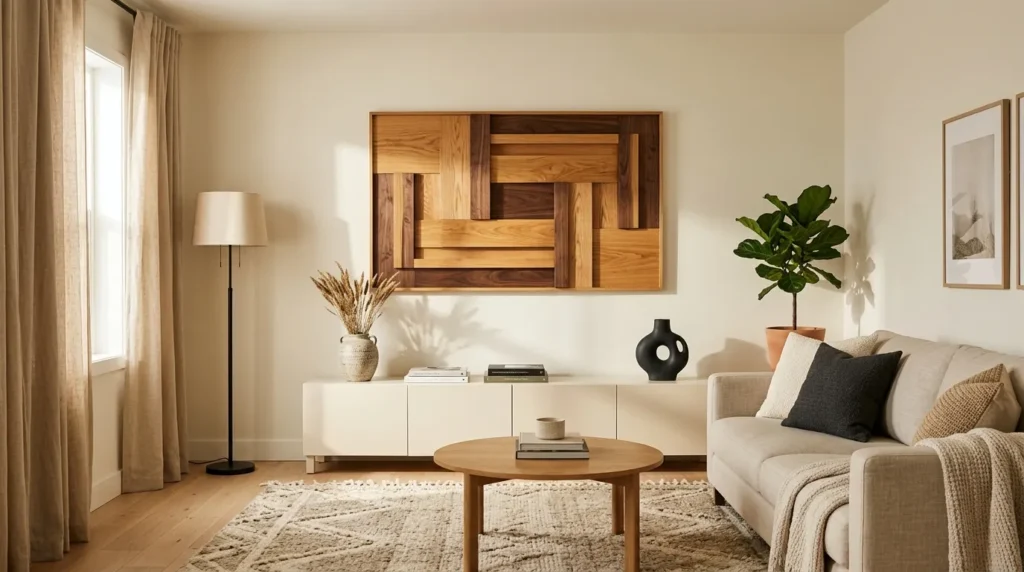
Geometric wood artwork combines the warmth of natural material with the precision of modern design. Squares, rectangles, arches, triangles, and overlapping strips can create a sophisticated pattern without requiring complicated tools.
The dimensional construction also produces shadows, which give the artwork more depth than a flat print.
This approach can work particularly well above a console table or on a large living room wall where smaller artwork might feel undersized.
How To Style It
Start with a simple geometric composition. Arrange small wood pieces on a flat surface before attaching anything so you can experiment with spacing.
Leave some wood natural and finish other pieces with a subtle stain if you want tonal variation.
For a softer appearance, use rounded shapes and warm wood. For a sharper contemporary look, use crisp rectangles and contrasting tones.
Keep the surrounding wall decor minimal. A dimensional artwork piece already has plenty of visual information.
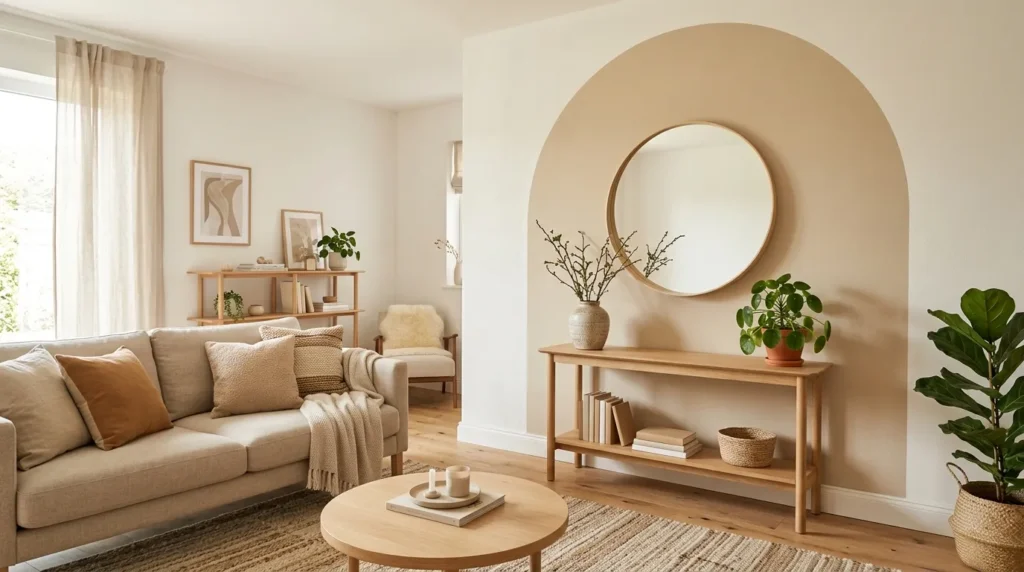
9. Painted Arch Artwork
Quick Benefits
- Creates an architectural effect
- Uses simple shapes
- Works in neutral rooms
- Can visually frame furniture
- Requires inexpensive materials
Why It Works
Arches add softness to modern interiors because their curved shape contrasts with the straight lines of sofas, tables, cabinets, and shelving.
A painted arch can function almost like a miniature architectural feature. It can frame artwork, a mirror, a small shelf, or even a reading nook.
This is particularly helpful when you want the appearance of a feature wall without installing permanent architectural materials.
How To Style It
Choose a paint color that is slightly deeper than the surrounding wall for a subtle effect. Warm beige, clay, muted terracotta, olive, dusty rose, or soft caramel can all work beautifully.
Use painter’s tape and a measured guide to create the sides, then use a carefully marked curved template for the top.
Let the shape frame an existing piece of furniture. A console table placed directly beneath the arch can make the wall feel intentionally designed.
Keep accessories simple so the curved shape remains visible.
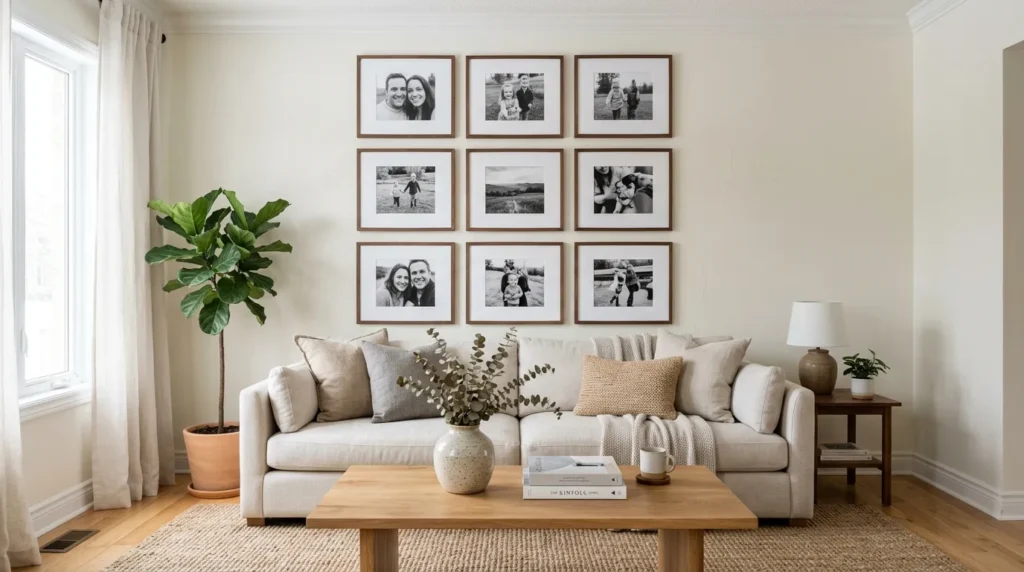
10. DIY Picture Grid
Quick Benefits
- Personalizes the home
- Creates a clean modern arrangement
- Works well with family photographs
- Easy to expand over time
- Creates strong visual consistency
Why It Works
Personal photographs can sometimes look disconnected when displayed in different frames and sizes throughout a room. A structured grid solves that problem by giving them a consistent visual system.
The repeated shape creates order, while the photographs provide personality.
This idea works particularly well in hallways, staircases, home offices, bedrooms, and living rooms where several smaller images can fill a larger wall.
How To Style It
Select photographs with a shared visual quality. Black-and-white images create a particularly cohesive modern look, while warm color photographs can add more personality.
Use identical frames and mats for every photograph. Measure the wall carefully before hanging and maintain consistent spacing between each frame.
For a more relaxed version, use the same frame color but slightly different sizes.
Before attaching anything to the wall, lay the entire arrangement on the floor and measure the overall dimensions. This makes it easier to achieve a balanced grid.
How Can You Make DIY Wall Art Look Expensive?
Use a restrained color palette, choose appropriately sized artwork, keep the composition simple, and finish the piece carefully. Natural wood frames, generous mats, consistent spacing, textured materials, and colors already present in the room can make handmade artwork feel intentional and sophisticated.
Related Articles
- 10 Modern Living Room Ideas with Cozy Designer Style
- 10 Bedroom Wall Decor Ideas That Feel Warm and Stylish
- 10 DIY Coffee Tables for Modern Living Rooms
- 10 Modern Home Decor Ideas with Warm Natural Textures
- 10 Cozy Living Room Ideas for a Stylish Home
Frequently Asked Questions
What is the easiest DIY wall art for beginners?
Abstract canvas painting and minimal line art are among the easiest options because they require relatively few materials and don’t depend on complicated construction. Start with a small color palette and simple shapes. Practicing the composition on paper before working on the final piece can make the process more comfortable.
How do I choose colors for DIY wall art?
Look at colors already present in your room. Pull one or two shades from the rug, sofa, curtains, bedding, or accessories, then add a neutral background. This creates a connection between the artwork and the rest of the space without requiring an exact color match.
What DIY wall art works best above a sofa?
Large-scale artwork usually works better than several tiny pieces above a sofa. An oversized canvas, wood panel, textured artwork, or a carefully planned gallery arrangement can provide enough visual weight to balance the furniture.
Can DIY wall art look modern?
Absolutely. Modern DIY art often relies on simple shapes, restrained colors, natural materials, clean frames, and intentional spacing. Textured plaster, abstract canvas art, geometric wood pieces, line drawings, and neutral textile art can all fit naturally into a modern home.
How do I make a large wall look less empty?
Use artwork with enough scale to relate to the wall and furniture. One oversized piece can often create more impact than many small decorations. You can also combine artwork with shelves, lighting, or a console table to create a layered composition.
What materials are best for cozy DIY wall art?
Natural wood, linen, cotton, wool, canvas, plaster-style texture mediums, paper, and preserved botanical materials all work well. These materials introduce tactile qualities that can make modern rooms feel warmer and more inviting.
How should DIY artwork be displayed?
Consider the furniture beneath it and the overall proportions of the wall. Artwork usually looks more connected when it has a clear relationship with the furniture below. Leave intentional breathing room around the piece and avoid overcrowding nearby walls.
Conclusion
DIY wall art gives you an opportunity to decorate your home with pieces that feel personal instead of mass-produced. The best projects don’t have to be complicated. A simple canvas, a few pieces of natural wood, a woven textile, or a carefully arranged collection of photographs can completely change the character of an empty wall.
Start by looking at the room itself. Notice the colors, textures, materials, and shapes already present. If your furniture is sleek and minimal, a textured or organic artwork can soften it. If your room already has plenty of texture, a simple abstract print may create better balance.
Scale matters, too. A small piece can disappear above a large sofa, while a substantial artwork can give a blank wall a clear focal point. Measure the space before starting so your finished project has a deliberate relationship with the furniture.
Don’t worry about making handmade artwork perfectly flawless. Small variations can be part of its charm. The goal is a piece that feels considered and works naturally with your home.
Choose one project that fits your skill level and the space you’re decorating. With a limited palette, thoughtful materials, and careful placement, a simple DIY project can become a warm focal point that makes your modern home feel more personal.