
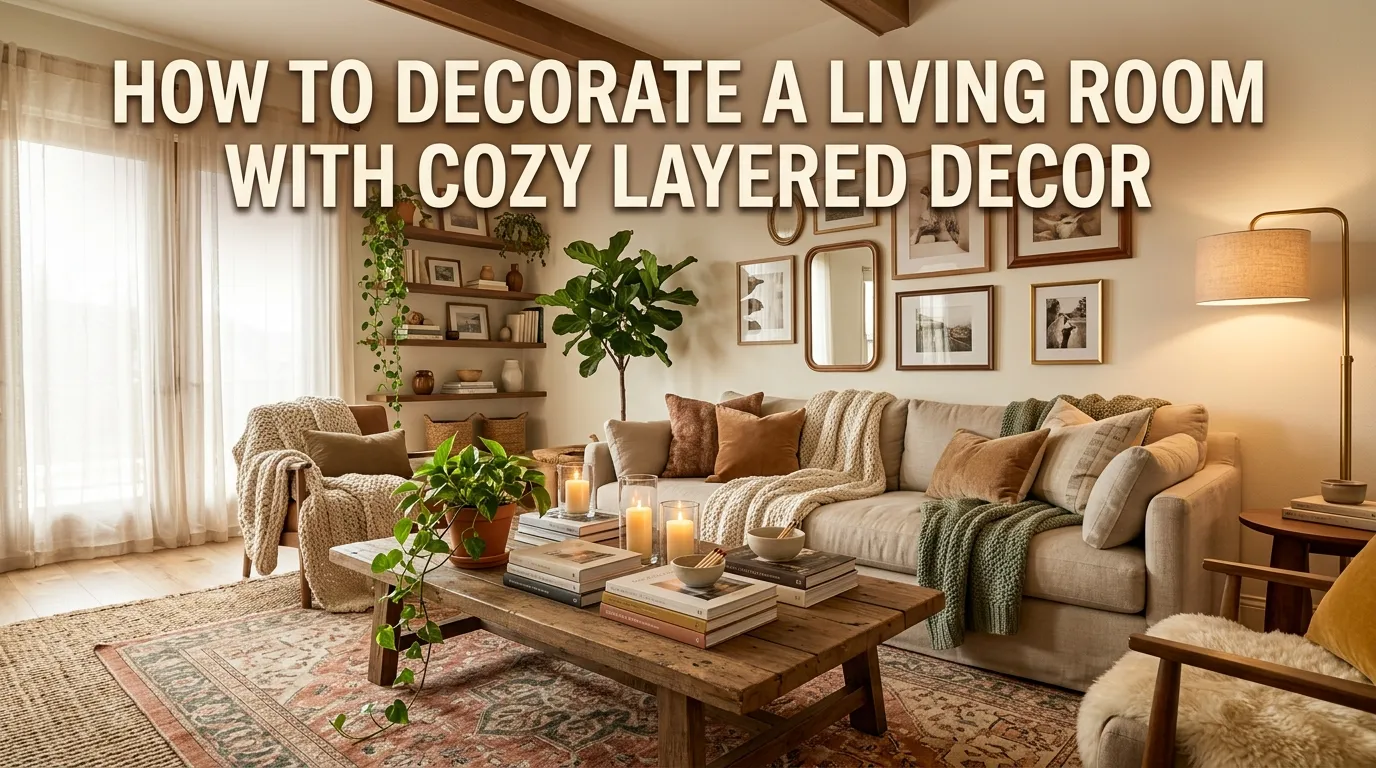
How to Decorate a Living Room with Cozy Layered Decor
A cozy living room rarely comes from one perfect piece of furniture. The rooms that feel the most inviting usually have several layers working together: soft textiles, warm lighting, natural materials, comfortable seating, thoughtful accessories, and a color palette that feels easy to live with.
Layered decor is especially useful because it allows a living room to feel finished without looking overly decorated. Instead of buying a matching furniture set and filling every empty surface, you build the room gradually. A rug establishes the foundation, curtains soften the windows, pillows and throws add comfort, and smaller objects provide personality.
If your living room currently feels a little flat, bare, or disconnected, layering can make a noticeable difference without requiring a complete makeover. You can often work with furniture you already own and introduce warmth through smaller, more affordable changes.
One thing I always suggest is to think about the room from the floor upward. Start with the larger visual elements before adding small accessories. This prevents the space from becoming cluttered and makes every layer feel intentional.
The best cozy interiors also have contrast. Too many soft beige fabrics can feel monotonous, while too many patterns can become visually tiring. Mixing smooth and rough textures, light and dark tones, natural materials, and different fabric weights creates depth.
You also want the room to remain functional. A beautiful living room still needs comfortable walking paths, useful surfaces, adequate lighting, and furniture arranged for conversation and everyday life.
Below, you’ll find ten practical ways to create a layered living room that feels warm, comfortable, and visually interesting throughout the year.
Table of Contents
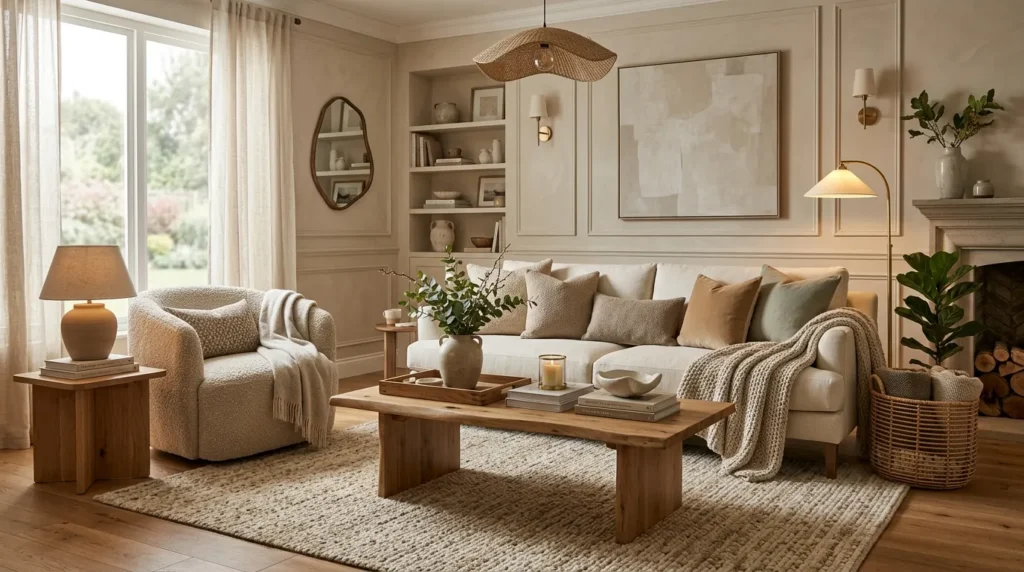
1. Ground With Rugs
Start with a well-chosen area rug that visually connects the main furniture pieces.
2. Mix Soft Textures
Combine different fabrics and materials to make the room feel comfortable and dimensional.
3. Layer Throw Pillows
Use pillows in complementary colors, patterns, and sizes to make seating feel more inviting.
4. Add Warm Lighting
Create atmosphere with multiple sources of soft, warm illumination.
5. Frame With Curtains
Use window treatments to soften hard architectural lines and add height.
6. Bring In Natural Materials
Introduce wood, woven fibers, stone, and organic finishes for warmth and texture.
7. Style Coffee Tables
Create useful but attractive tabletop arrangements with trays, books, and decorative objects.
8. Create Wall Layers
Combine artwork, mirrors, shelves, and architectural details to give walls more depth.
9. Use Cozy Corners
Turn overlooked areas into comfortable reading, relaxing, or conversation spaces.
10. Finish With Greenery
Use plants and natural branches to add life, color, and a final decorative layer.
1. Ground With Rugs
Quick Benefits
- Defines the seating area
- Adds softness underfoot
- Connects furniture visually
- Introduces color and pattern
- Makes the room feel more finished
Why It Works
A rug is often the foundation of a layered living room. Without one, furniture can appear scattered across the floor, particularly in a large open-plan room. A well-sized area rug visually gathers the sofa, chairs, and coffee table into one cohesive arrangement.
Texture also matters. A thick wool rug can instantly make a room feel warmer, while a low-pile patterned rug provides a more polished foundation. Even neutral rugs can add depth when they contain subtle variations in tone.
One common mistake is choosing a rug that is too small. A tiny rug floating underneath the coffee table can actually make the seating arrangement feel disconnected.
The goal is not simply to cover the floor. The rug should establish the visual boundary of the living area.
How To Style It
Whenever possible, choose a rug large enough for at least the front legs of the main seating pieces to sit on it. In larger rooms, you may be able to place the entire sofa and chairs on the rug.
For a calm room, choose cream, beige, taupe, soft gray, or muted earthy tones.
If the furniture is mostly solid-colored, a patterned rug can add visual interest. Look for patterns with colors already present in the room.
Layering two rugs can also work. For example, place a smaller patterned rug over a larger natural-fiber rug for added texture.
Make sure the rug is appropriate for the amount of traffic the room receives. A family room may require a more durable material than a formal sitting room.
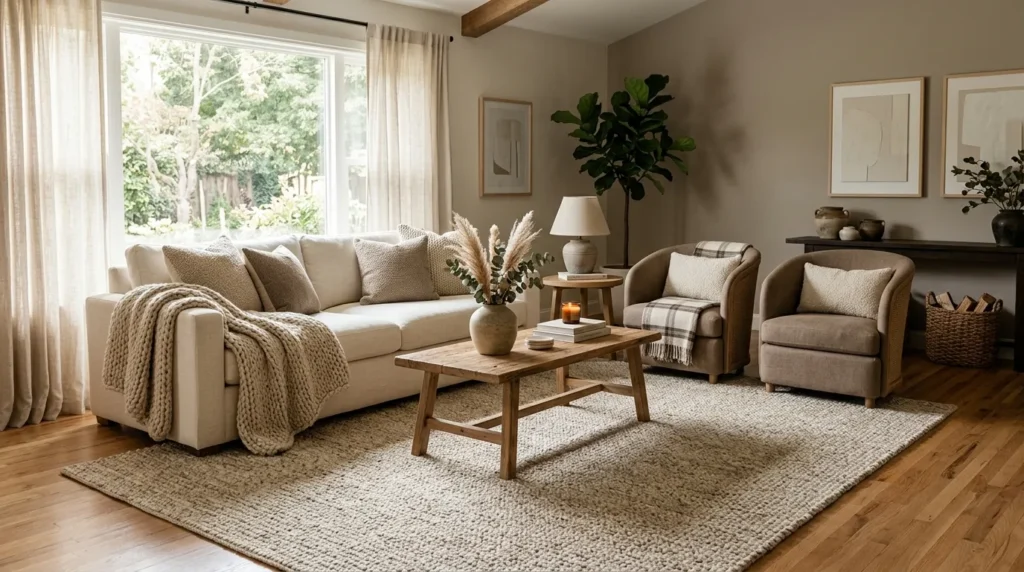
2. Mix Soft Textures
Quick Benefits
- Creates visual depth
- Makes furniture feel more inviting
- Prevents neutral rooms from looking flat
- Adds tactile interest
- Works in every decorating style
Why It Works
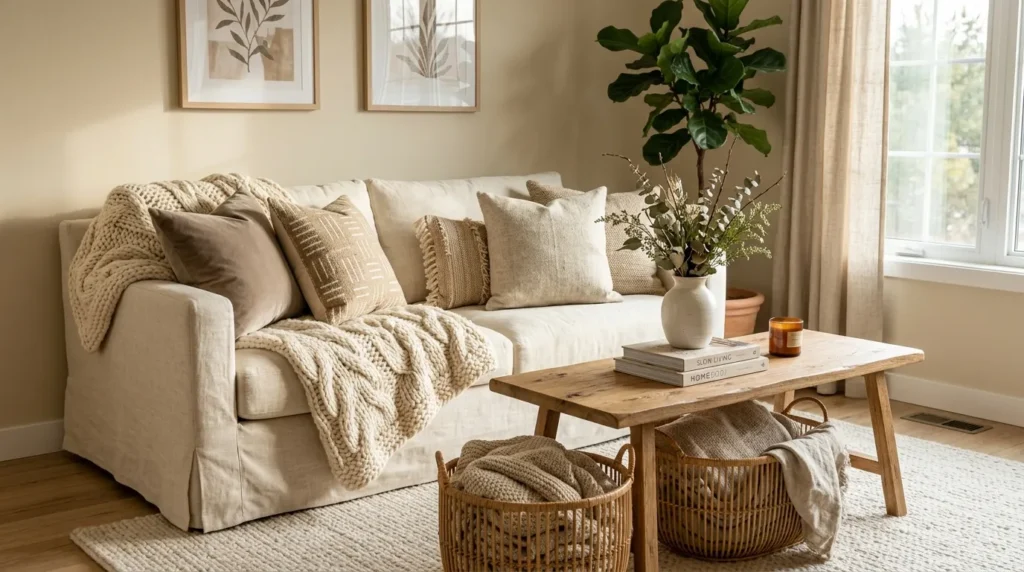
Texture is one of the easiest ways to make a living room feel cozy without relying on lots of color.
Imagine a linen sofa paired with a chunky knit throw, velvet pillow, woven basket, wool rug, and smooth wooden table. The colors may all be neutral, but the different surfaces make the room feel rich and layered.
This is particularly helpful when you prefer a neutral color palette. Instead of adding many colors, you can create variety through materials.
The trick is to avoid repeating the same texture everywhere. A room filled entirely with plush fabrics can feel heavy, while a room dominated by smooth surfaces can feel cold.
Contrast creates the most convincing effect.
How To Style It
Start with your largest materials. Consider the sofa upholstery, rug, curtains, flooring, and major furniture pieces.
Then add contrasting textures through smaller elements.
Try:
- Linen cushions
- Knitted throws
- Woven baskets
- Wool rugs
- Bouclé accent chairs
- Wood accessories
- Ceramic vessels
- Glass lamps
- Leather details
You do not need all of these. Three or four contrasting textures may be enough.
For a warm neutral living room, combine cream upholstery with natural oak, woven fibers, soft wool, and aged ceramic.
Keep the overall color palette coordinated so the textures create interest without creating visual chaos.
3. Layer Throw Pillows
Quick Benefits
- Makes sofas more comfortable
- Adds color and pattern
- Easy to change seasonally
- Creates a relaxed appearance
- Allows inexpensive decorating updates
Why It Works
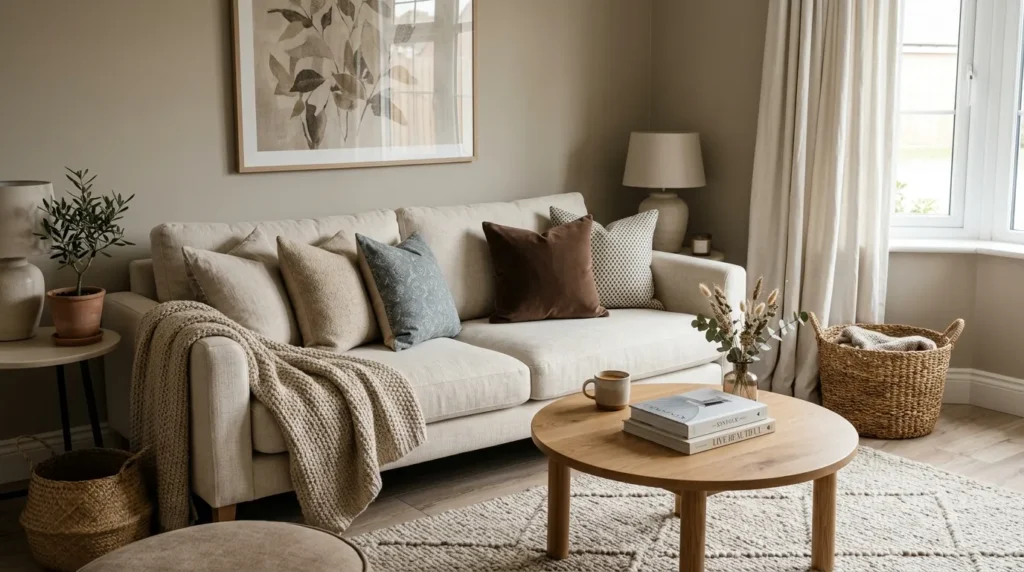
Throw pillows are one of the easiest ways to introduce another decorative layer. They can connect colors from the rug, artwork, curtains, and surrounding furniture while making the sofa look more inviting.
The key is variety without randomness.
Using five pillows in five unrelated colors can make a sofa look chaotic. Instead, choose a small color family and vary the patterns, textures, and sizes.
For example, a cream sofa might feature pillows in oatmeal, muted brown, dusty blue, and warm beige. The colors are different enough to create interest but related enough to feel intentional.
How To Style It
Begin with larger pillows toward the back. Add medium-sized pillows in front, followed by one smaller accent pillow if desired.
Mix patterns carefully. A good combination might include one subtle geometric, one small-scale pattern, and one solid textured pillow.
Use different fabric weights to create depth. Linen, velvet, cotton, wool, and woven fabrics can all work together.
Do not cover every inch of the sofa. Leave enough seating space for people to sit comfortably.
For seasonal changes, replace just one or two pillows rather than changing the entire collection. Warm rust, olive, or caramel can work beautifully in fall, while lighter linen and soft blue can create a fresher summer appearance.
4. Add Warm Lighting
Quick Benefits
- Creates a relaxing atmosphere
- Adds visual layers after dark
- Highlights decor
- Makes corners feel intentional
- Improves everyday functionality
Why It Works
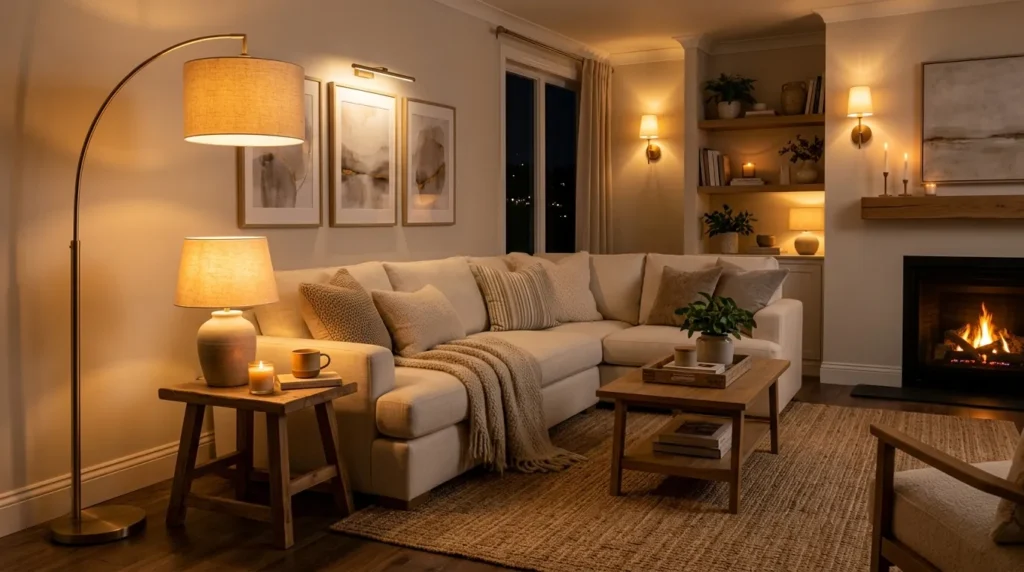
A cozy room needs more than one ceiling light. Multiple light sources create depth and allow you to change the atmosphere depending on the time of day.
A floor lamp beside a sofa, table lamp on a console, and small accent lamp on a shelf can create several pools of warm light.
This is especially important in layered interiors because lighting reveals texture. A woven basket, textured throw, ceramic vase, or velvet pillow looks different under warm evening illumination than under a bright overhead fixture.
Think of lighting as part of the decor rather than simply a functional necessity.
How To Style It
Aim for several light sources distributed throughout the room.
A floor lamp can provide reading light beside a sofa or chair.
A table lamp can illuminate a console, side table, or cabinet.
Wall sconces can frame artwork or provide soft ambient light.
Small accent lights can highlight bookshelves or architectural features.
Choose warm-toned bulbs appropriate for residential interiors and use dimmers where possible.
Avoid positioning every light at the same height. A combination of floor-level, table-level, and higher lighting creates more visual depth.
5. Frame With Curtains
Quick Benefits
- Softens windows
- Adds height
- Creates visual warmth
- Improves privacy
- Introduces another textile layer
Why It Works
Window treatments can have a surprisingly large effect on how cozy a living room feels.
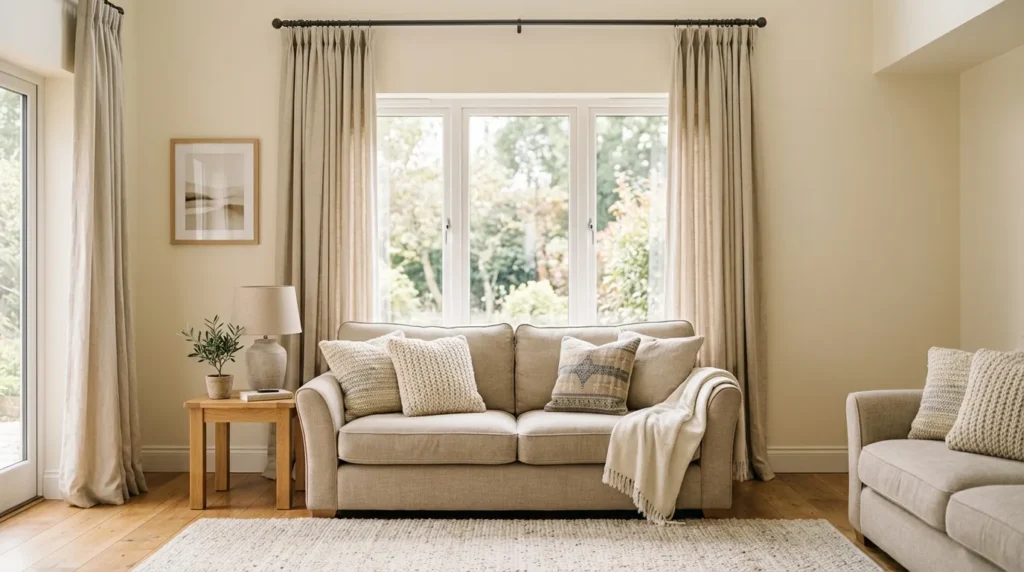
Bare windows create clean lines, but curtains add softness and movement. They also provide another opportunity to connect the room’s color palette.
Curtains can make ceilings appear taller when mounted appropriately above the window frame. They also create a sense of continuity across the wall.
Linen and linen-look fabrics are particularly useful for relaxed interiors because they allow some natural light through while adding texture.
How To Style It
For a taller appearance, mount the curtain rod higher than the window frame when the room’s architecture allows it.
Choose curtains that extend far enough to frame the window without appearing too short.
Neutral curtains are versatile and allow other layers to change seasonally.
For a warmer room, consider oatmeal, warm white, beige, or soft taupe.
If the rest of the room is very neutral, a subtle stripe or small-scale pattern can introduce interest.
Layering sheer curtains with heavier panels can provide flexibility for privacy, sunlight, and evening atmosphere.
6. Bring In Natural Materials
Quick Benefits
- Adds warmth
- Introduces organic texture
- Works with neutral palettes
- Makes modern rooms feel softer
- Creates visual contrast
Why It Works
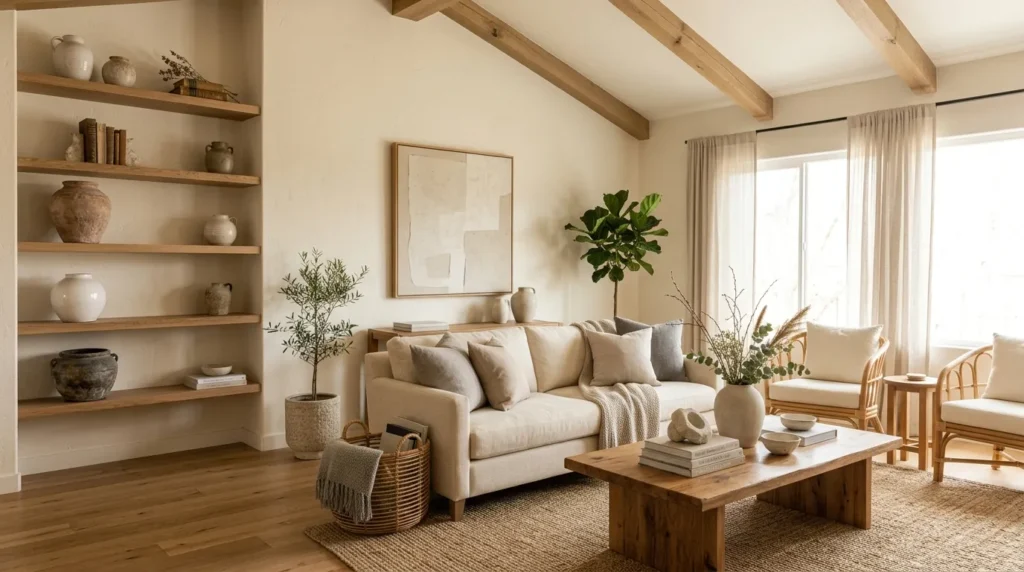
Natural materials help keep layered interiors from feeling overly coordinated. Wood, rattan, jute, stone, linen, and ceramics each bring different visual qualities.
Wood is particularly effective because its grain creates movement while its warm undertones balance cool fabrics and paint colors.
Woven materials add another type of texture. A rattan basket or jute ottoman can make a polished living room feel more relaxed.
Stone and ceramic pieces introduce harder surfaces, which are useful when the room contains many soft fabrics.
How To Style It
Start with one larger natural material. This could be a wood coffee table, oak sideboard, or woven accent chair.
Then repeat smaller natural elements around the room.
A wooden tray can connect to a timber coffee table. A woven basket can echo the texture of a rattan chair. Ceramic accessories can complement a stone fireplace.
Avoid creating a room where every item is made from natural material. The most interesting spaces balance wood and woven textures with glass, metal, painted surfaces, and fabrics.
This contrast keeps the room feeling layered rather than themed.
7. Style Coffee Tables
Quick Benefits
- Adds personality
- Creates a central focal point
- Keeps everyday objects organized
- Provides another decorative layer
- Easy to update
Why It Works
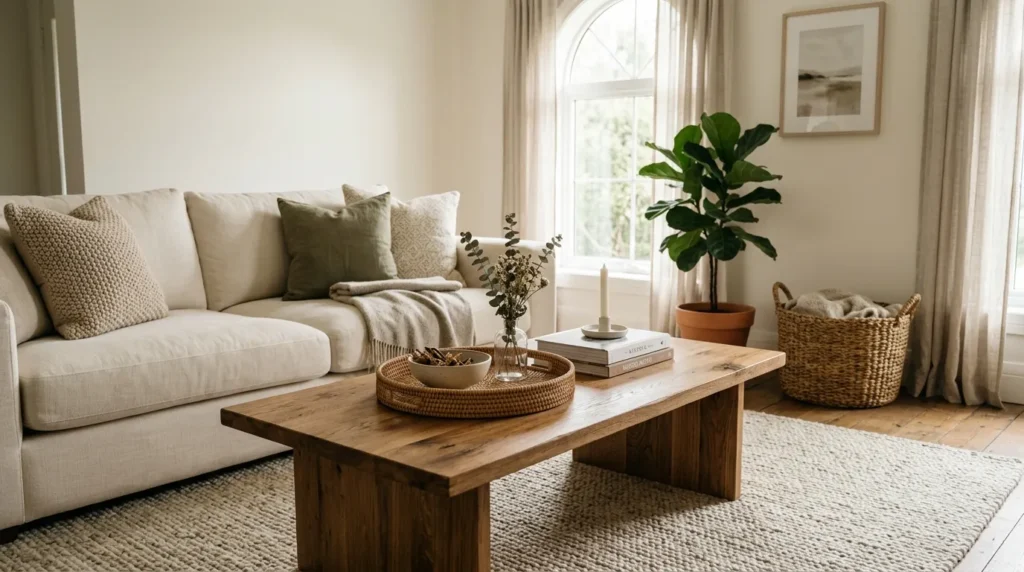
The coffee table occupies an important visual position in a living room. A completely empty surface can feel unfinished, while a table covered with objects becomes difficult to use.
The best approach is a functional arrangement that leaves plenty of breathing room.
A tray can group smaller items together. Books provide height and visual interest. A bowl or vase adds shape. A candle or small decorative object introduces another texture.
How To Style It
Start with a tray if the table is large enough. Use it to contain smaller pieces such as a candle, remote controls, or a small decorative bowl.
Add two or three books beneath a ceramic object or vase.
Vary heights. A completely flat arrangement can look dull, while too many tall objects can block conversation.
Use odd-number groupings when they feel natural, such as three objects placed together with different shapes.
Most importantly, leave usable space. Your coffee table should still accommodate a mug, plate, book, or laptop.
A cozy living room is meant to be lived in.
8. Create Wall Layers
Quick Benefits
- Prevents blank walls from feeling cold
- Adds personality
- Creates visual height
- Makes the room feel collected
- Offers opportunities for meaningful decor
Why It Works
Walls are often the largest unused surfaces in a living room. Leaving them completely bare can make an otherwise layered space feel unfinished.
You do not need to fill every wall. Instead, create a few intentional focal points.
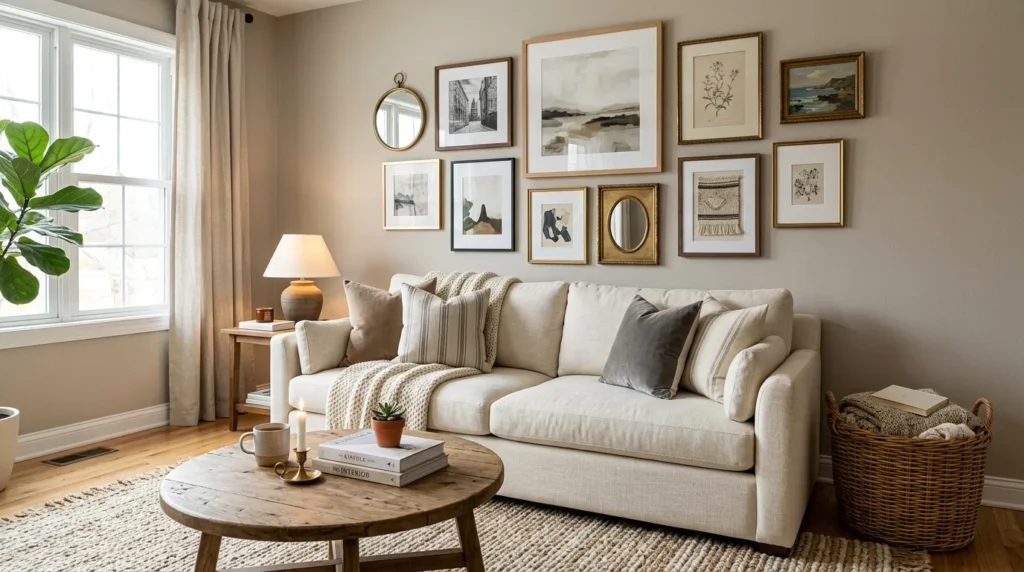
A large piece of artwork can anchor the sofa wall. A mirror can reflect light and create a sense of openness. Floating shelves can provide space for books, ceramics, photographs, and small plants.
The most successful gallery walls also have variation. Different frame sizes and artwork scales create a more collected appearance.
How To Style It
Start with the largest wall and decide whether it needs one dominant feature or a grouping.
Above a sofa, choose artwork that is appropriately scaled to the furniture. A tiny print can look disconnected.
For a more layered arrangement, combine framed artwork with a mirror, small wall object, or floating shelf.
Keep colors connected to the room’s existing palette.
If using shelves, avoid filling every inch. Leave some empty space between objects so the arrangement can breathe.
Personal photographs, vintage finds, travel artwork, and handmade pieces can make the room feel more authentic.
9. Use Cozy Corners
Quick Benefits
- Makes unused areas functional
- Adds another seating option
- Creates intimate spaces
- Makes large rooms feel balanced
- Encourages relaxation
Why It Works
A cozy living room should have places for different activities, not just one main seating arrangement.
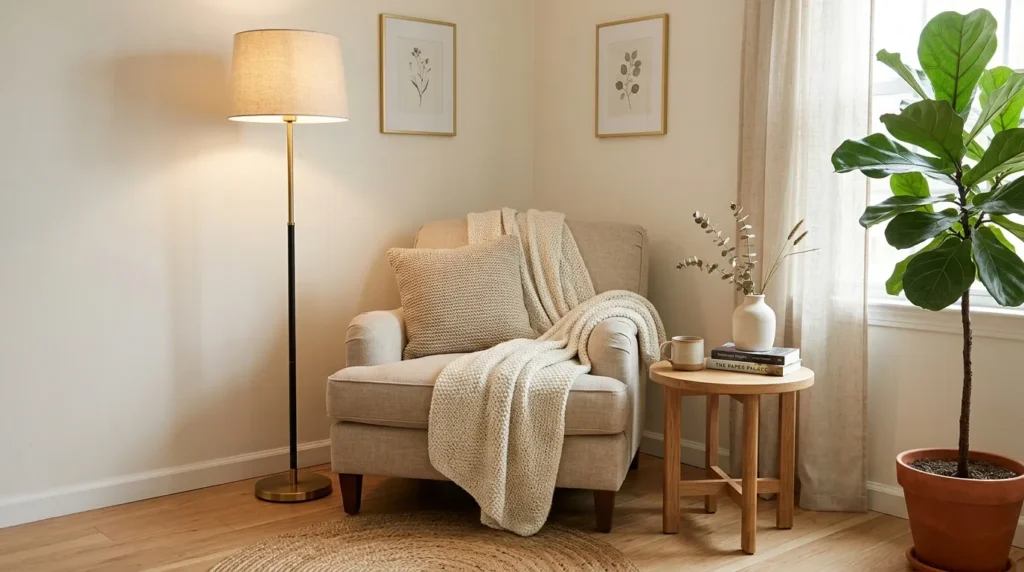
An empty corner can become a reading nook with an armchair, floor lamp, small side table, and soft throw. A larger unused area can become a conversation spot with two chairs.
These secondary zones make the room feel more thoughtfully designed and encourage people to actually use the space.
They also help break up large rooms where placing all furniture around one coffee table would leave awkward empty areas.
How To Style It
Choose furniture according to the available footprint.
For a small corner, use a compact chair and slim side table.
For a larger area, try two accent chairs positioned toward each other.
Add a floor lamp for function and warmth.
A small rug can help visually define the corner if it is separate from the main seating area.
Finish with one or two soft elements, such as a throw blanket and textured cushion.
Do not overload the corner. The goal is a comfortable retreat rather than another crowded display.
10. Finish With Greenery
Quick Benefits
- Adds natural color
- Brings life into neutral rooms
- Softens hard furniture
- Provides visual height
- Completes layered styling
Why It Works
Plants are an easy finishing layer because they introduce organic shapes that contrast with furniture’s straight lines.
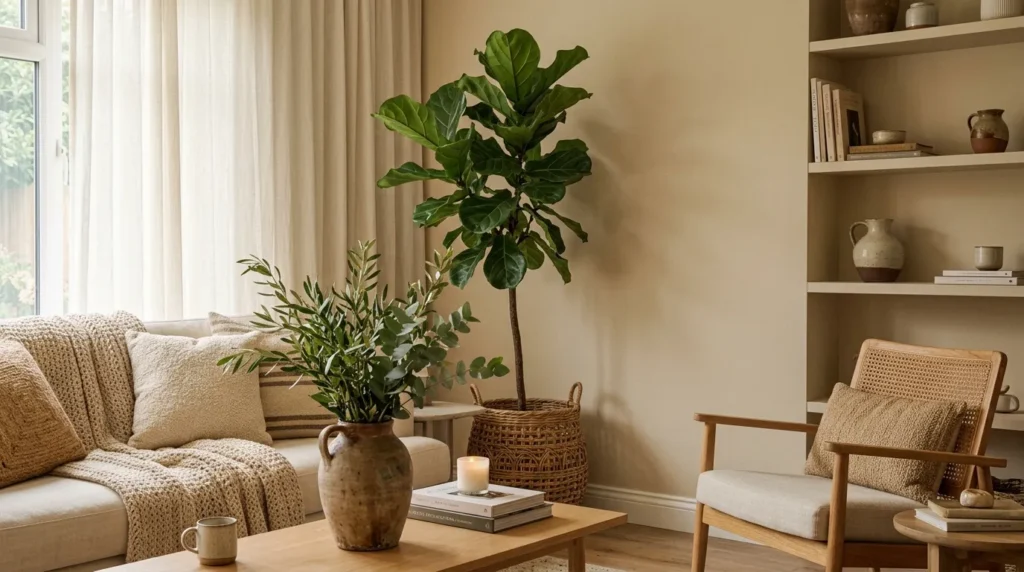
A tall plant can fill an empty corner, while a smaller plant can add life to a shelf or side table. Branches in a simple vase can provide a similar effect if you prefer a lower-maintenance option.
Greenery also works across almost every decorating style. It can make a modern living room feel softer, add freshness to a farmhouse space, or complement an earthy organic interior.
How To Style It
Choose plants based on the actual light conditions in your living room rather than selecting them purely for appearance.
Use a tall plant beside a sofa, cabinet, or empty corner to create vertical interest.
Place smaller plants on shelves, side tables, or window ledges.
Choose planters that complement the room’s existing materials. Terracotta adds warmth, while woven baskets create softness and ceramic planters offer a cleaner appearance.
Avoid placing too many plants together unless you intentionally want an indoor-jungle effect.
One large plant and two or three smaller touches can be enough to finish the room.
How to Layer a Living Room Without Making It Cluttered
Layered decor and clutter are not the same thing.
The difference usually comes down to editing. Every item in the room does not need to be displayed at the same time.
Start with the largest pieces: sofa, chairs, rug, coffee table, curtains, and lighting. Then add medium-scale elements such as pillows, throws, artwork, baskets, and plants.
Only after those layers are working should you introduce small decorative objects.
A useful rule is to create visual breathing room. Empty sections of a coffee table, shelf, wall, or floor help the displayed pieces stand out.
Another effective strategy is to repeat colors rather than objects. If your rug contains a muted blue tone, repeat that color in one pillow and a small artwork rather than adding several blue accessories.
The room will feel coordinated without looking like everything was purchased as a set.
How to Layer Neutral Living Room Decor
Neutral rooms are particularly suited to layered styling because texture becomes more important than bright color.
Start with several related neutrals rather than one exact shade.
For example:
- Warm white
- Cream
- Oatmeal
- Beige
- Taupe
- Light brown
Then introduce contrast through wood, black metal, natural greenery, or a muted accent color.
Vary the textures. Combine linen with wool, smooth ceramics with woven baskets, and polished wood with soft upholstery.
This creates a room that feels visually rich even when the color palette remains restrained.
Seasonal Layering Without Redecorating Everything
You do not need to change your entire living room four times a year.
Keep the major pieces relatively timeless and change smaller layers.
In spring and summer, use lightweight linen pillows, lighter throws, fresh greenery, and soft natural colors.
For fall, introduce rust, caramel, olive, warm brown, and chunky textures.
During winter, add heavier throws, velvet cushions, wool textures, candles, and warmer lighting.
Because the foundation remains the same, seasonal updates can be relatively simple and affordable.
FAQ
What is layered decor in a living room?
Layered decor means combining furniture, textiles, lighting, artwork, natural materials, accessories, and greenery to create depth and visual interest. Instead of relying on one decorative style or focal point, the room uses several complementary elements. The key is balance: layers should make the space feel comfortable and complete without making it difficult to use.
How do you make a living room feel cozy?
Start with a comfortable seating arrangement, a properly sized rug, warm lighting, soft textiles, and natural materials. Add throw pillows, blankets, curtains, artwork, and greenery gradually. Warm colors and varied textures can also make a room feel more inviting. Keep enough open space for movement so coziness does not become clutter.
How many throw pillows should a living room sofa have?
There is no fixed number, but a medium or large sofa often looks balanced with several pillows in different sizes and textures. Use a coordinated color palette and vary patterns rather than choosing completely unrelated designs. Leave enough seating space for people to sit comfortably, especially if the sofa is used every day.
How can I make a neutral living room feel less boring?
Use texture and variation instead of adding lots of color. Combine linen, wool, wood, woven materials, ceramic, glass, and metal. Layer several shades of neutral colors such as cream, beige, taupe, and warm white. Artwork, greenery, patterned rugs, and subtle accent colors can add additional interest without abandoning the neutral palette.
What lighting makes a living room feel cozy?
Multiple warm light sources usually create a more comfortable atmosphere than relying on one overhead fixture. Try combining floor lamps, table lamps, wall sconces, and accent lighting. Place lights at different heights to create depth. Dimmable fixtures can also help you adjust the atmosphere throughout the day.
How do I decorate a cozy living room on a budget?
Start by rearranging furniture and using what you already own. Then prioritize high-impact additions such as a properly sized rug, curtains, pillows, throws, and warm lamps. Thrift stores and secondhand shops can be useful for baskets, artwork, side tables, ceramics, and vintage accessories. Changing small layers can make the room feel different without replacing major furniture.
How do I layer decor without making my living room cluttered?
Build the room from large pieces toward smaller accessories and stop when the space feels balanced. Leave open areas on tables and shelves, avoid displaying every decorative item you own, and repeat colors rather than constantly adding new ones. A few well-chosen textures and meaningful objects usually create more impact than many small decorations.
Conclusion
Creating a cozy layered living room is less about buying more decor and more about combining the right elements thoughtfully.
Start with the foundation: arrange the furniture for comfortable conversation, anchor it with a properly sized rug, and add curtains to soften the windows. From there, introduce texture through pillows, throws, baskets, wood, ceramics, and other natural materials.
Lighting deserves just as much attention. A combination of floor lamps, table lamps, and other warm sources can completely change the atmosphere once the sun goes down.
Then add personality. Artwork, books, plants, photographs, and collected objects give the room a sense of history and make it feel like a real home rather than a showroom.
If your living room feels flat right now, you do not have to redecorate everything at once. Start with one layer that is missing. Add a larger rug, bring in a floor lamp, switch up the pillows, or introduce a natural wood accent.
Build gradually and edit as you go. The goal is a room that feels warm and visually interesting while still leaving plenty of space for everyday life.
A cozy living room should invite you to sit down, stay awhile, and feel completely at home.
Related Articles
- 10 Small Living Room Ideas with Smart Furniture Layouts
- 10 Cozy Living Room Ideas for a Warm and Inviting Home
- 10 Modern Living Room Ideas with Warm Wood Accents
- 10 Living Room Wall Decor Ideas for a Stylish Home
- 10 Neutral Living Room Ideas That Never Feel Boring