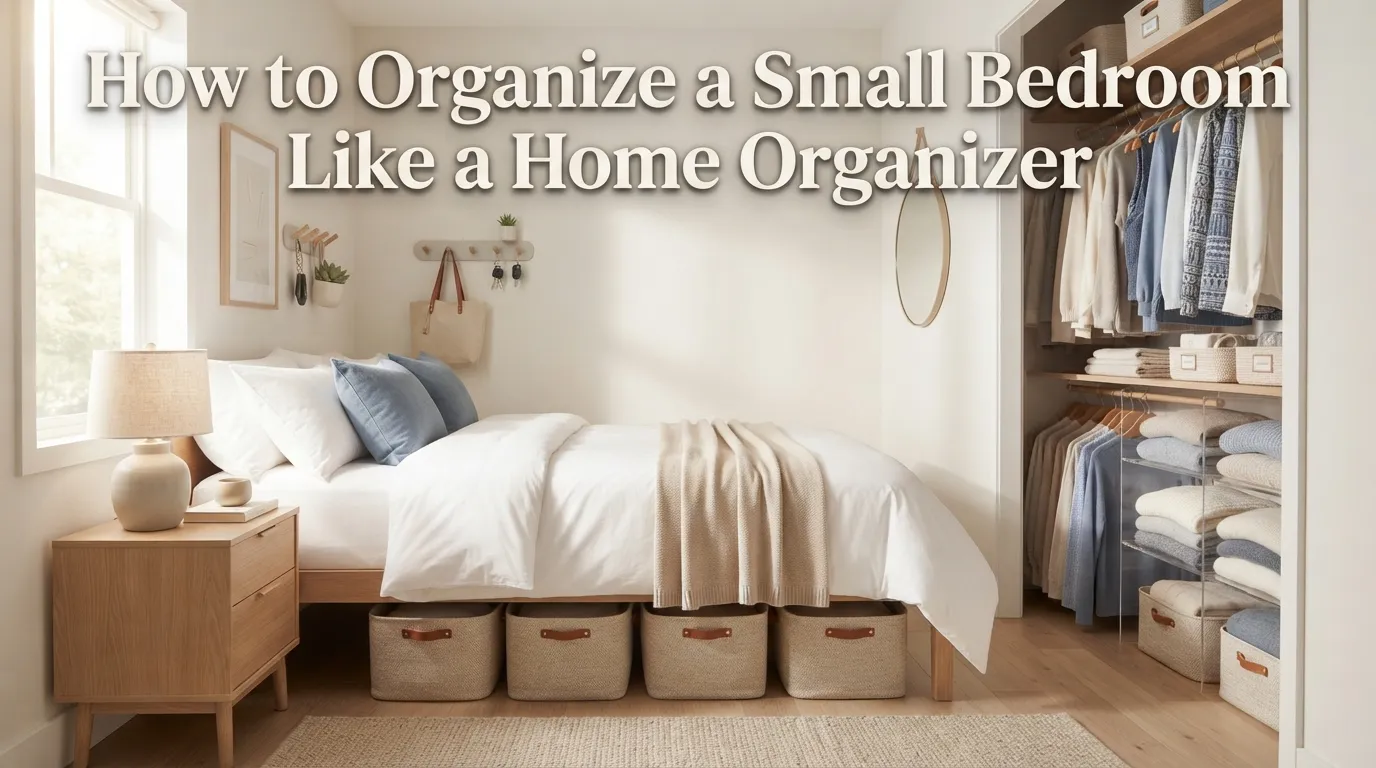
How to Organize a Small Bedroom Like a Home Organizer
A small bedroom does not have to feel cramped, chaotic, or impossible to keep tidy. The real challenge is usually not the amount of space itself, but how efficiently that space is being used.
When every drawer, shelf, and square foot has a purpose, even a compact bedroom can feel surprisingly comfortable. The key is to stop thinking about organization as simply putting things away and start thinking about where each item naturally belongs.
Professional home organizers often work from the same basic principle: make frequently used items easy to reach, give less-used belongings a defined home, and eliminate storage that creates more visual clutter than it solves.
This approach is particularly useful in bedrooms because they collect a surprising variety of things. Clothing, shoes, bedding, accessories, books, electronics, laundry, paperwork, and sentimental items can quickly compete for limited storage.
One simple trick I always suggest is to organize by frequency of use rather than by category alone. The clothes you wear every week should not occupy the hardest-to-reach corner of the closet while rarely used items take up prime space.
You also do not need to buy dozens of containers before starting. In many cases, shopping for organizers too early simply gives clutter more attractive places to hide. First decide what you actually own, what you use, and what storage spaces are available. Then choose organizers that solve specific problems.
The ideas below will help you approach a small bedroom like a professional organizer, with practical systems for clothing, closets, bedside storage, under-bed space, accessories, and everyday clutter.
Table of Contents
1. Start With Decluttering
Remove unnecessary belongings before creating new storage systems.
2. Divide By Frequency
Keep everyday essentials in the easiest places to reach.
3. Maximize Vertical Space
Use walls and tall furniture to take advantage of unused height.
4. Organize Underneath
Turn the space beneath the bed into useful hidden storage.
5. Simplify Your Closet
Create a closet system that makes clothing easier to see and access.
6. Use Door Storage
Turn unused door surfaces into practical organization zones.
7. Control Bedside Clutter
Keep nightstand essentials limited and easy to manage.
8. Contain Small Items
Use drawers, boxes, and dividers to keep accessories under control.
9. Create Laundry Systems
Give dirty clothes a convenient and consistent home.
10. Maintain The System
Use simple daily habits to keep the bedroom organized.
1. Start With Decluttering
Quick Benefits
- Creates immediate breathing room
- Reduces unnecessary storage needs
- Makes cleaning easier
- Helps identify problem areas
- Prevents organizing unused items
Why It Works
The fastest way to make a small bedroom feel more spacious is often to reduce what is occupying it.
A common organizing mistake is trying to find a storage solution for every single item before deciding whether the item deserves to stay. Even the best closet system cannot compensate for a wardrobe filled with clothing that no longer fits, gets worn, or suits your current lifestyle.
Professional organizers typically work through belongings before assigning permanent homes. This makes the later organization process much easier.
Start with obvious categories such as clothing, shoes, accessories, books, cosmetics, paperwork, and miscellaneous items. Look for things that are damaged, duplicated, forgotten, or consistently ignored.
You do not need to make dramatic decisions about sentimental belongings immediately. Begin with easy categories where the choices are obvious.
How To Style It
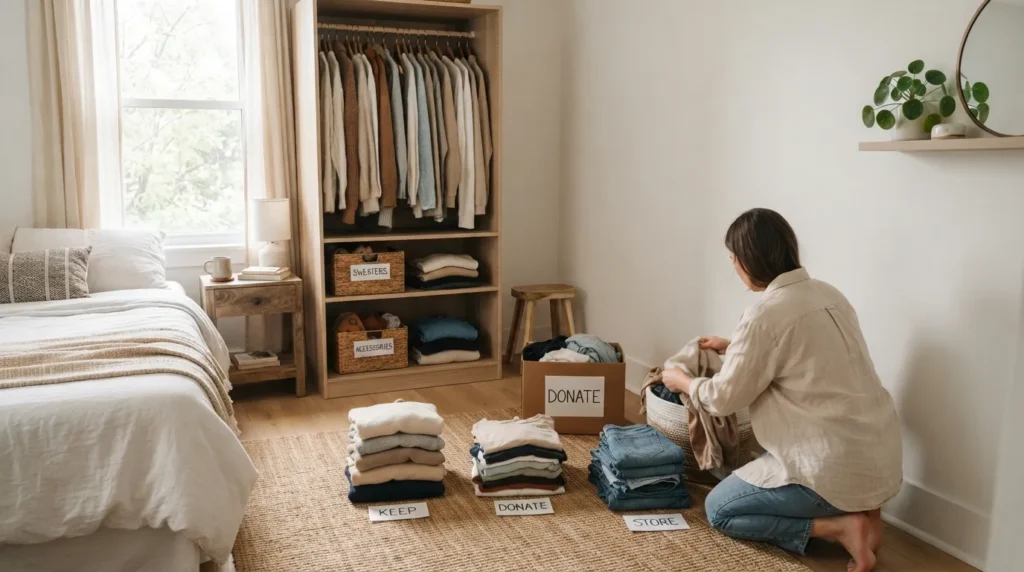
Take everything out of one small area at a time rather than emptying the entire bedroom.
For clothing, create simple groups:
- Keep
- Donate
- Repair
- Relocate
- Unsure
Try on anything you regularly avoid wearing.
For duplicates, keep the version you use most.
For decor, ask whether the item contributes to the room or simply occupies valuable surface space.
Use a donation bag or box while organizing so unwanted items leave the bedroom instead of being moved from one corner to another.
Do not buy storage products yet. Finish the decluttering process first, then assess what storage remains necessary.
2. Divide By Frequency
Quick Benefits
- Makes everyday routines easier
- Reduces searching
- Uses prime storage efficiently
- Keeps rarely used items out of the way
- Creates a logical system
Why It Works
Not everything in your bedroom deserves equal access.
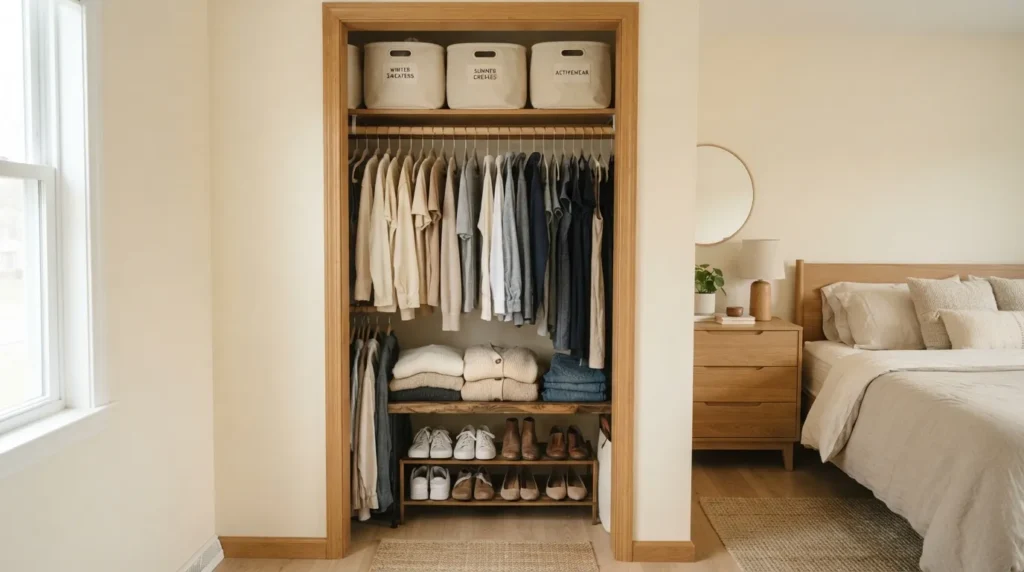
Items you use every morning should be within easy reach. Seasonal clothing, special occasion accessories, extra bedding, and rarely used belongings can occupy higher shelves, under-bed containers, or other less convenient areas.
This simple change can make a small bedroom feel much more organized because the storage system begins working around your daily habits.
Imagine having your favorite jeans buried behind clothes you wear twice a year. You technically have storage, but the system creates unnecessary work.
Organizing based on frequency of use solves that problem.
How To Style It
Keep everyday clothing between approximately waist and eye level when possible.
Place occasional clothing on higher shelves or toward the back of the closet.
Store seasonal accessories in labeled containers that can be moved when the weather changes.
Use your easiest drawers for underwear, socks, or other daily essentials.
Reserve difficult-to-reach spaces for things you rarely need.
For example:
Daily: underwear, pajamas, favorite clothing, everyday shoes.
Weekly: extra outfits, accessories, workout clothing.
Seasonal: coats, heavy blankets, cold-weather accessories.
Rarely used: sentimental items, special occasion pieces, archived documents.
This creates a storage hierarchy that makes sense every time you open the closet.
3. Maximize Vertical Space
Quick Benefits
- Uses overlooked wall area
- Frees floor space
- Creates additional storage
- Makes small rooms more efficient
- Reduces surface clutter
Why It Works
When floor space is limited, look upward.
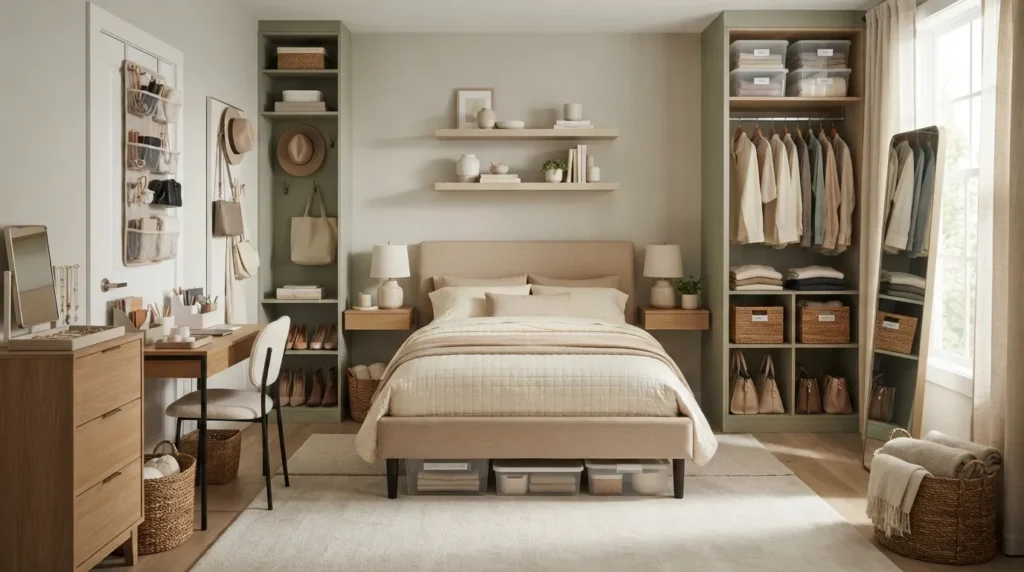
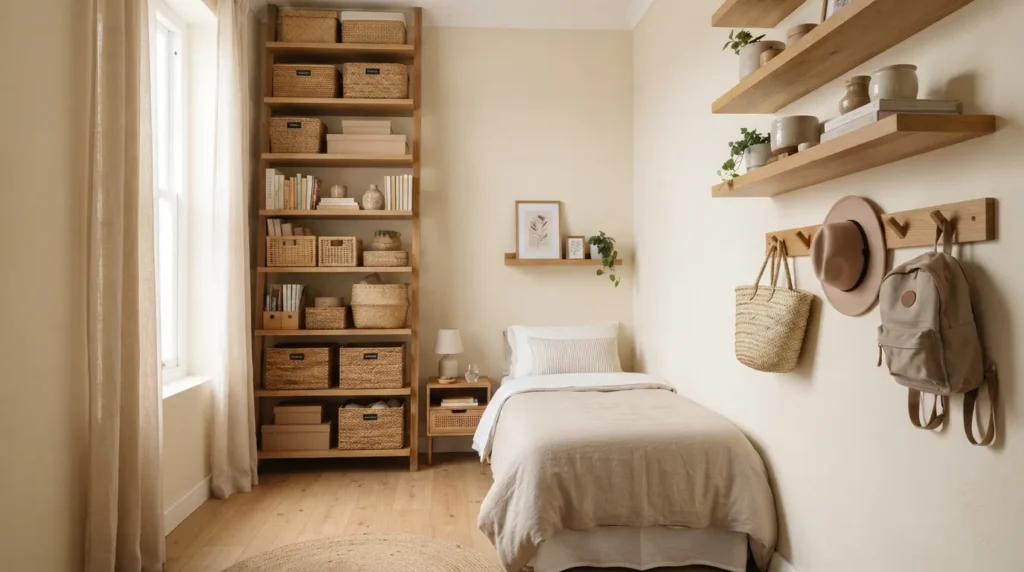
Many small bedrooms have unused vertical space above dressers, beside closets, behind doors, or along otherwise empty walls. Tall shelving, wall-mounted hooks, floating shelves, and narrow cabinets can use this space without significantly reducing floor area.
The goal is not to fill every inch of wall. Too many open shelves can actually make a small bedroom look busier.
Instead, use vertical storage for specific categories.
One thing that works especially well is placing frequently used items within easy reach and less-used belongings higher up.
How To Style It
Install floating shelves for books, small baskets, framed photos, or carefully selected decorative objects.
Use wall-mounted hooks for hats, bags, robes, or frequently worn accessories.
A tall, narrow bookcase can provide substantial storage while taking up less floor width than a wide cabinet.
Consider a wardrobe or shelving unit that reaches toward the ceiling if the room allows it.
Keep the uppermost shelves for seasonal or rarely used items.
Use matching or coordinated storage boxes on high shelves to create a cleaner appearance.
If you rent, removable hooks and freestanding shelving can provide similar benefits without permanent installation.
4. Organize Underneath
Quick Benefits
- Creates hidden storage
- Uses otherwise wasted space
- Keeps seasonal items contained
- Frees closet shelves
- Works especially well in small bedrooms
Why It Works
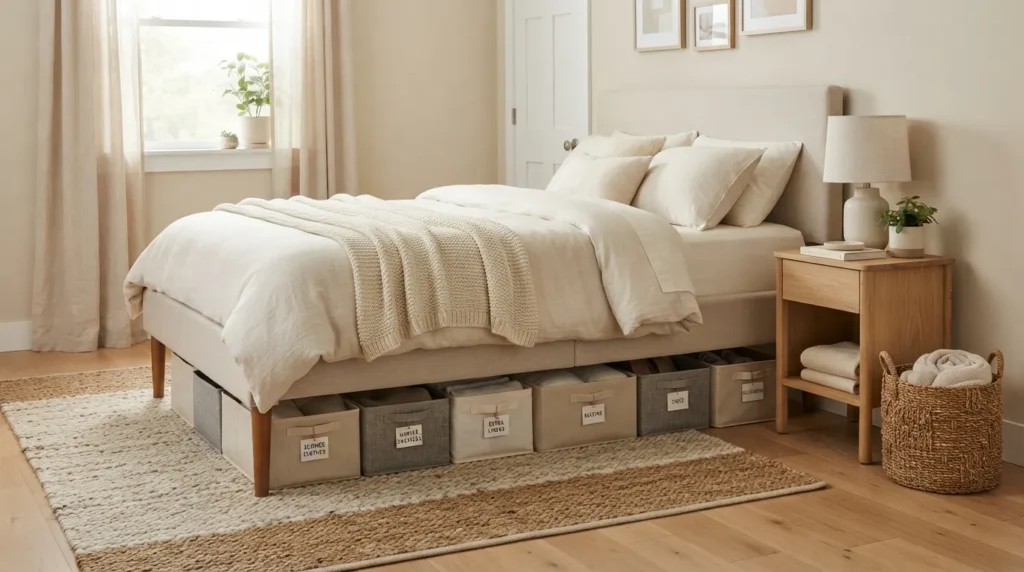
The area beneath the bed is one of the most useful storage zones in a compact bedroom.
It is naturally hidden from view and does not require additional floor space. The mistake is allowing this area to become a random collection of boxes and forgotten belongings.
Instead, treat under-bed storage as a specific category.
It works particularly well for items that are used occasionally rather than every day.
How To Style It
Use low-profile containers that can slide easily beneath the bed.
Choose containers with lids if you are storing clothing, linens, or items that need protection from dust.
Good under-bed categories include:
- Seasonal clothing
- Extra bedding
- Shoes
- Luggage
- Sentimental items
- Holiday accessories
Label each container clearly.
Avoid filling the entire space with loose bags and mismatched boxes. A consistent container system makes the area much easier to maintain.
If your bed has no usable clearance, consider a bed frame with built-in drawers or carefully selected risers that are appropriate for the frame.
Do not store heavy objects where they could damage the floor or become difficult to retrieve.
5. Simplify Your Closet
Quick Benefits
- Makes clothing easier to find
- Improves visibility
- Reduces overstuffing
- Creates more usable capacity
- Makes getting dressed faster
Why It Works
A small closet often feels too small because it is difficult to see what is inside.
When clothes are tightly packed together, you forget what you own and end up wearing the same few items. Improving visibility can be more useful than simply adding more storage.
Organize the closet according to how you get dressed.
You might group clothing by type, season, or occasion. The best system is the one you can maintain without constant effort.
How To Style It
Begin by removing clothing that no longer belongs in your active wardrobe.
Then organize remaining pieces by category:
- Tops
- Pants
- Dresses
- Skirts
- Jackets
- Workwear
- Casual clothing
Within categories, you can organize by color if that helps you find things quickly.
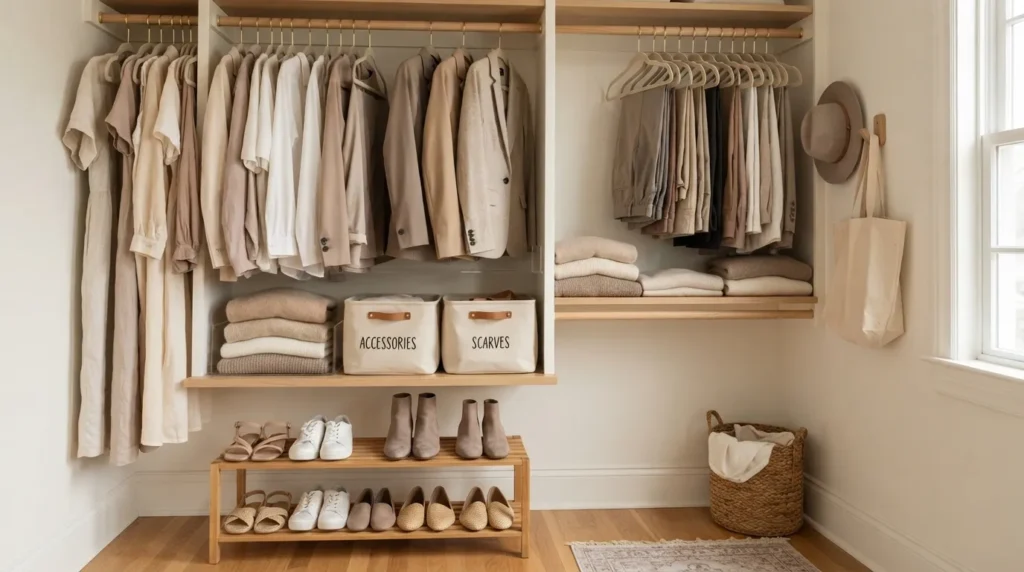
Use slim, consistent hangers to maximize hanging space.
Fold sweaters rather than hanging them if the material may stretch.
Use shelf dividers for folded clothing and small baskets for accessories.
If the closet contains a high shelf, use labeled bins for seasonal clothing.
Avoid filling every available inch. Leaving a little breathing room makes the closet easier to use and encourages you to maintain the system.
6. Use Door Storage
Quick Benefits
- Adds storage without using floor space
- Keeps accessories accessible
- Uses overlooked space
- Works well for renters
- Helps organize small items
Why It Works
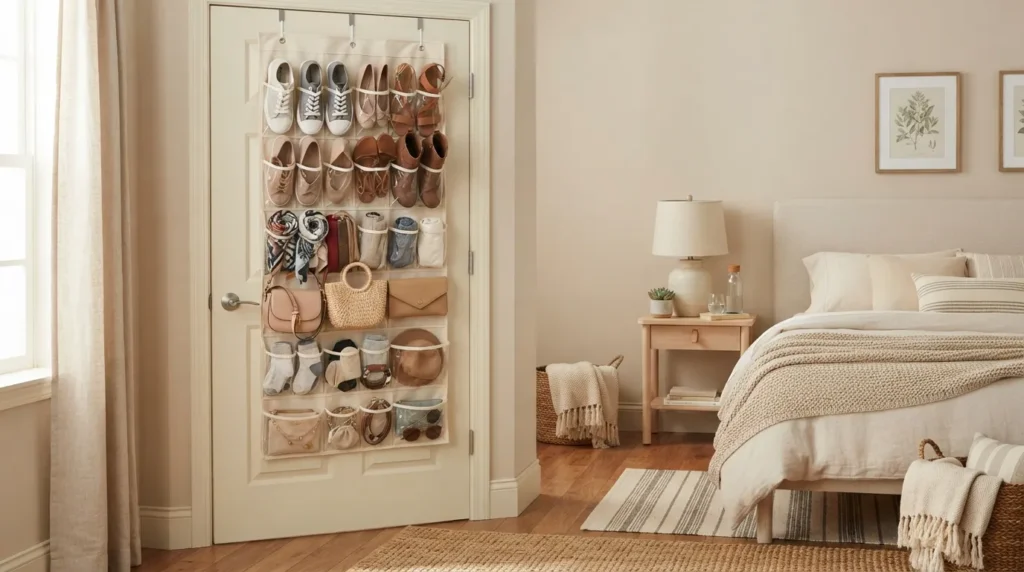
The back of a bedroom or closet door can become valuable storage space.
Because doors are already part of the room, using them for organization does not require sacrificing much floor area.
Over-the-door organizers can hold shoes, accessories, hair tools, scarves, small bags, or other lightweight belongings.
This can be especially useful when drawers and shelves are limited.
How To Style It
Choose the organizer based on the items you actually need to store.
A pocket organizer works well for small accessories.
Hooks can hold robes, hats, scarves, and bags.
A narrow shoe organizer can keep footwear visible without taking up closet floor space.
Do not overload the door. Too much weight can make it difficult to open and close properly.
For renters, look for removable solutions where appropriate and follow weight recommendations carefully.
Keep the most frequently used items at comfortable eye or hand level.
The goal is to make the door a useful extension of your existing storage rather than another clutter zone.
7. Control Bedside Clutter
Quick Benefits
- Keeps the sleeping area calm
- Reduces visual clutter
- Makes essentials easy to find
- Simplifies cleaning
- Creates a more relaxing atmosphere
Why It Works
A crowded nightstand can make an otherwise organized bedroom feel messy.
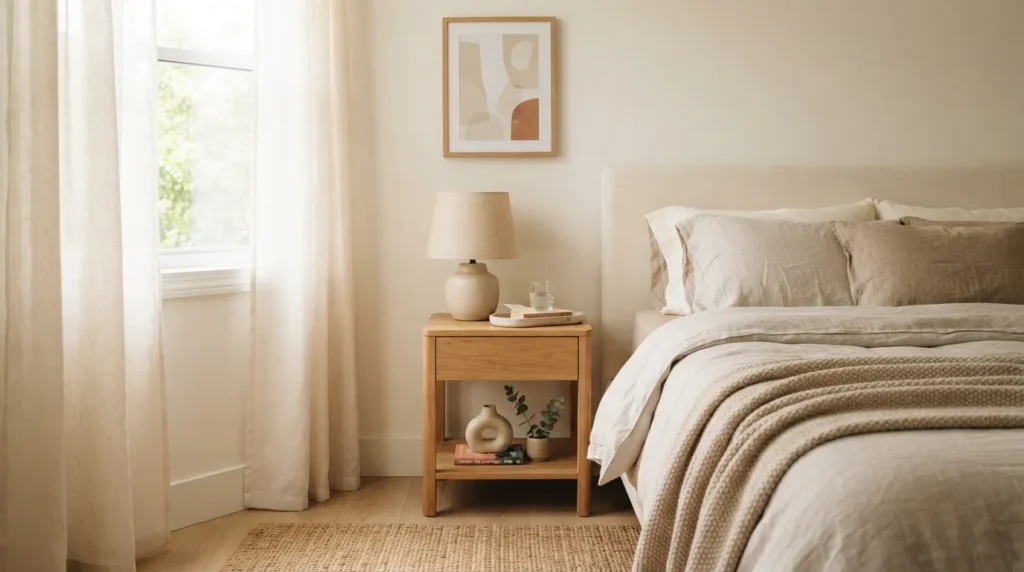
Most people only need a small number of things beside the bed: a lamp, phone, book, water, glasses, or perhaps medication and other personal essentials.
Everything else can usually find another home.
The nightstand is also one of the first surfaces you see when you wake up and one of the last you see before sleeping. Keeping it simple can make the entire room feel calmer.
How To Style It
Start by removing everything from the nightstand.
Return only items you genuinely use at bedtime or first thing in the morning.
Use a small tray to contain glasses, jewelry, or other tiny items.
Choose a lamp that provides enough light without overwhelming the surface.
If your nightstand has a drawer, use a small divider to keep charging cables, reading glasses, or other small essentials organized.
Consider a nightstand with drawers or a cabinet if storage is limited elsewhere.
Keep decorative objects minimal. One small vase or framed photo may be enough.
8. Contain Small Items
Quick Benefits
- Prevents drawer chaos
- Makes accessories visible
- Creates defined homes
- Simplifies everyday routines
- Reduces lost items
Why It Works
Small objects are often responsible for the biggest organizing problems.
Jewelry, socks, hair accessories, chargers, belts, sunglasses, and other little belongings can quickly turn drawers into cluttered piles.
The solution is containment.
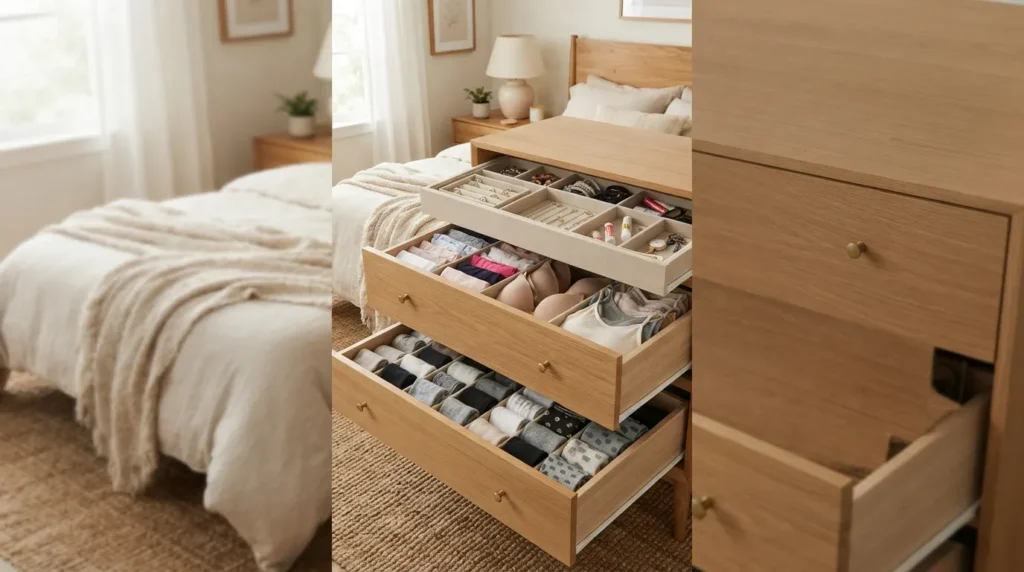
Instead of letting small items move freely through a drawer, divide the space into sections that correspond to categories.
This makes it easier to put things away because every item has an obvious destination.
How To Style It
Use drawer dividers for underwear, socks, accessories, and other small clothing.
Small boxes can work as inexpensive dividers when properly sized.
Use shallow containers for jewelry and hair accessories.
Store belts and scarves in dedicated sections rather than allowing them to become tangled.
For electronics, keep chargers and cables together in a small pouch or container.
Label boxes when they contain items that are not used frequently.
Do not use oversized containers for tiny categories. A container should fit the items closely enough to prevent them from becoming mixed together.
9. Create Laundry Systems
Quick Benefits
- Prevents clothing piles
- Makes laundry easier
- Keeps floors clear
- Creates a repeatable routine
- Reduces bedroom clutter
Why It Works
Laundry becomes clutter when there is no convenient place for dirty clothes.
If the hamper is too far away, too small, or difficult to access, clothes naturally end up on the floor or chair.
The best laundry system is convenient enough that using it becomes automatic.
This is a perfect example of organizing around behavior rather than forcing yourself to follow an inconvenient system.
How To Style It
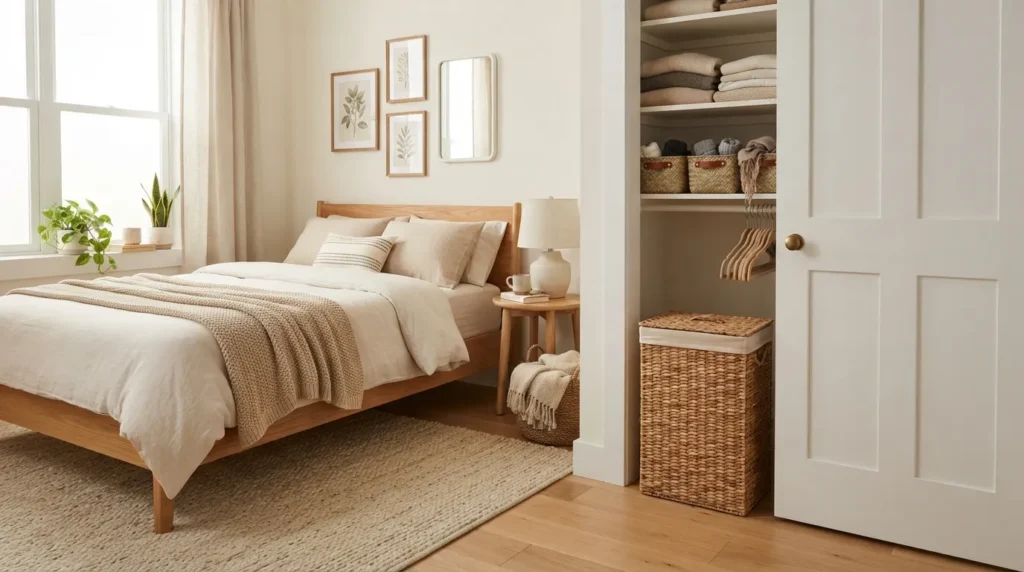
Place the hamper where clothes naturally come off.
If space is extremely limited, choose a slim vertical hamper or a collapsible option.
For larger bedrooms, a divided hamper can separate colors or fabric types.
Avoid keeping a laundry basket directly beside the bed if it becomes a visual distraction.
If you prefer to sort laundry on laundry day, one large hamper may be enough.
For shared bedrooms, clearly designated laundry containers can help prevent clothing from spreading across the room.
Most importantly, establish a predictable laundry routine so the hamper does not become permanent storage.
10. Maintain The System
Quick Benefits
- Prevents clutter from returning
- Requires less daily effort
- Keeps storage functional
- Makes cleaning easier
- Supports long-term organization
Why It Works
An organized bedroom is not created by one major cleaning session. It stays organized because the system is simple enough to maintain.
This is where many organizing projects fail. A complicated system may look impressive on day one but become frustrating after a few weeks.
The best system is one that matches your habits.
If you regularly drop clothes on a chair, determine why. Perhaps the closet is difficult to access or the chair is functioning as a temporary dressing area.
If mail always lands on the dresser, create a small paper-management zone elsewhere.
If shoes collect by the door, move the shoe storage closer to the entrance.
How To Style It
Create a short daily reset.
Spend five minutes returning clothing, clearing the nightstand, putting shoes away, and removing obvious trash.
Once a week, quickly review surfaces and floors.
Every few months, reassess seasonal clothing and storage.
Use a simple rule: when something comes into the bedroom, decide where it will live before it becomes clutter.
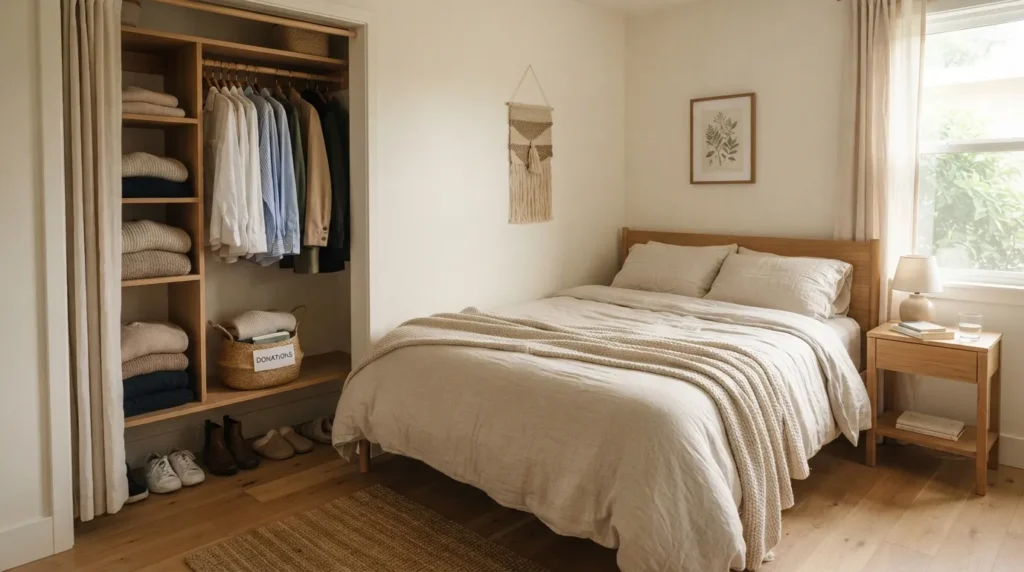
You can also keep a small donation bag in the closet. When something no longer works for you, place it directly inside rather than returning it to active storage.
Small maintenance habits are much easier than repeatedly starting over.
How a Home Organizer Approaches a Small Bedroom
A professional organizing mindset is less about making everything look perfect and more about making the room easy to use.
Start by identifying the problem.
Is clothing taking over the chair? Is the closet too crowded? Are surfaces covered with small items? Is there nowhere for laundry? Does the room feel visually cluttered even after cleaning?
Once you identify the problem, choose a storage solution specifically for it.
Avoid buying organizers simply because they look attractive. A container only helps when it solves an actual storage problem.
Think about visibility, accessibility, capacity, and maintenance.
If you use something every day, it should be easy to reach.
If you rarely use something, it can occupy less convenient storage.
If something is difficult to put away, reconsider its location.
If a storage system constantly becomes messy, the system probably needs adjustment.
This approach turns organization into a practical process rather than a one-time makeover.
Small Bedroom Storage Zones to Create
A compact bedroom becomes easier to manage when each area has a specific purpose.
Consider creating these zones:
Sleep zone: Bedside table, lamp, books, and nighttime essentials.
Clothing zone: Closet, dresser, folded clothing, and everyday accessories.
Getting-ready zone: Jewelry, grooming products, mirrors, and frequently used accessories.
Laundry zone: Hamper and laundry supplies.
Shoe zone: Everyday and occasional footwear.
Seasonal zone: Under-bed containers or high closet shelves.
Personal zone: Photos, keepsakes, books, and meaningful belongings.
You do not need a separate piece of furniture for every zone. One drawer or shelf can serve multiple purposes when categories are clearly defined.
Common Small Bedroom Organization Mistakes
Buying storage before decluttering: More containers do not solve excess belongings.
Using every available surface: Empty space is useful and helps a bedroom feel calmer.
Keeping everyday items in hard-to-reach places: Prime storage should go to the things you use most.
Overstuffing drawers: Drawers work better when contents can be easily seen and removed.
Ignoring vertical space: Walls and tall furniture can provide significant storage.
Creating complicated systems: If a system takes too many steps, it is unlikely to last.
Using the bedroom as general storage: Keep unrelated household items elsewhere whenever possible.
Forgetting maintenance: Even the best organization system needs occasional resets.
FAQ
How do I organize a very small bedroom?
Start by removing items you no longer use, then assign specific homes to the belongings you keep. Prioritize vertical storage, under-bed containers, closet organization, and furniture with built-in storage. Keep frequently used items easy to reach and move seasonal or rarely used belongings into less accessible areas.
What should I get rid of in a small bedroom?
Start with clothing that no longer fits, damaged items you do not plan to repair, duplicates, unused accessories, and belongings that have no purpose in the bedroom. Avoid forcing yourself to make difficult sentimental decisions immediately. Begin with obvious clutter and work gradually toward more personal categories.
How can I maximize storage in a small bedroom?
Use the full height of the room with tall shelving, make use of the space beneath the bed, add appropriate door storage, optimize closet shelves, and choose furniture with drawers or compartments. The goal is to use vertical and hidden areas without making the room feel visually crowded.
How do professional organizers organize small closets?
They typically begin by reducing unnecessary belongings, then group remaining items by category and frequency of use. Everyday clothing receives the easiest-to-reach storage, while seasonal and occasional items move higher or farther back. Consistent hangers, shelf dividers, bins, and clearly defined categories can improve visibility.
How do I organize clothes without a dresser?
Use closet shelves, hanging organizers, fabric storage cubes, under-bed containers, and suitable wardrobe systems. Fold clothing vertically when appropriate so individual pieces are easier to see. A narrow shelving unit can also provide substantial folded storage without requiring a wide dresser.
Where should I store seasonal clothes?
Good options include labeled under-bed containers, high closet shelves, wardrobe storage boxes, or another dry storage area outside the active clothing zone. Keep seasonal belongings together so they can be rotated efficiently when the weather changes.
How do I keep a small bedroom organized?
Create simple systems that match your daily habits. Put dirty clothes directly into a hamper, return clothing after wearing it, clear the nightstand regularly, and keep frequently used items in easy-to-reach locations. A five-minute daily reset can prevent small amounts of clutter from becoming a major organizing project.
Conclusion
Organizing a small bedroom like a home organizer is not about fitting more possessions into less space. It is about making thoughtful decisions about what belongs in the room and where each item should live.
Start with decluttering. Removing things you no longer use immediately reduces pressure on your storage. Then organize what remains according to frequency of use, keeping everyday essentials within easy reach and seasonal belongings in less accessible areas.
Make the most of overlooked spaces. The walls, back of the door, area beneath the bed, and upper sections of the closet can all provide useful storage when handled thoughtfully.
Most importantly, keep your systems simple. A small bedroom does not need a complicated collection of bins, labels, and containers. It needs storage that works with your routines.
If your room feels overwhelming right now, start with one zone. Clear the nightstand, edit one drawer, organize one shelf, or sort the clothes on one section of the closet.
Small improvements quickly add up.
The ultimate goal is a bedroom where you can find what you need, put things away without effort, and move through your daily routine without constantly fighting clutter. When organization becomes easy to maintain, even a very small bedroom can feel calm, functional, and comfortable.
Related Articles
- 10 Small Bedroom Ideas That Make the Space Feel Bigger
- 10 Bedroom Storage Ideas for Small Spaces
- 10 Closet Organization Ideas for a More Functional Bedroom
- 10 Minimal Bedroom Ideas for a Calm and Clutter-Free Space
- 10 Under-Bed Storage Ideas to Maximize Small Bedrooms