Why Does a Pool Heater Keep Shutting Off on High-Limit Temperature Switches?
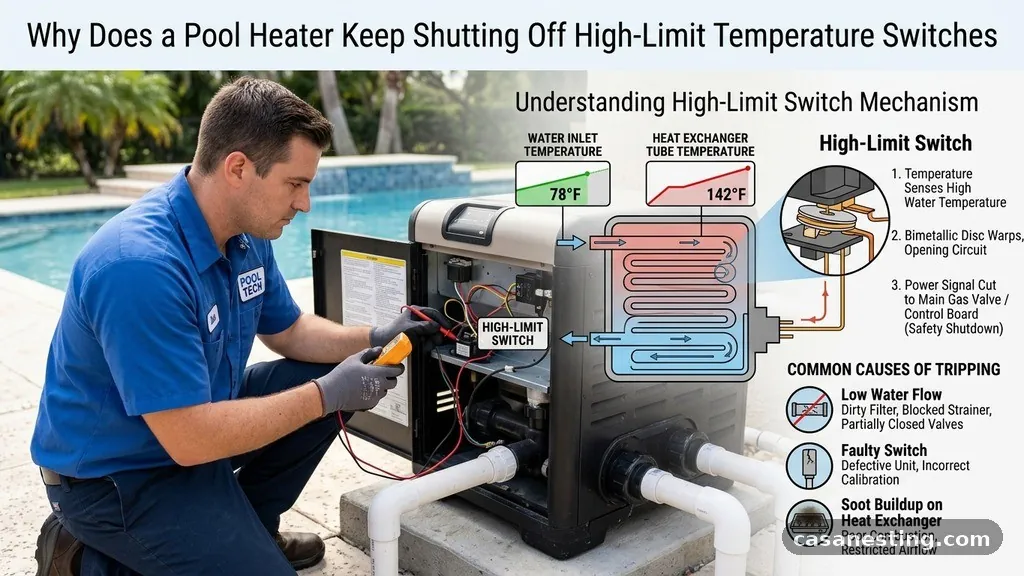
When you notice a pool heater keep shutting off on high-limit temperature switches, it is almost always a sign that the system is protecting itself from a dangerous overheat condition. This safety mechanism is triggered when the water temperature inside the unit’s heat exchanger exceeds a factory-set threshold, typically between 135°F and 150°F.
If your equipment cycles on and off rapidly, the core issue is usually restricted water flow rather than an actual failure of the heating element itself. Addressing this promptly prevents internal damage to headers, gaskets, and plastic components that cannot withstand excessive heat.
The primary reason for this constant cycling is a lack of sufficient water volume passing through the heat exchanger. When water cannot move fast enough to absorb the heat generated by the burner or electric element, the internal temperature spikes instantly. The high-limit switch senses this spike and cuts power to the heater to prevent a meltdown.
You should investigate your plumbing system, filter pressure, and pump performance to restore proper circulation. If the flow remains inadequate, the heater will continue to trip the switch as a vital safety precaution.
Understanding the High-Limit Switch Mechanism
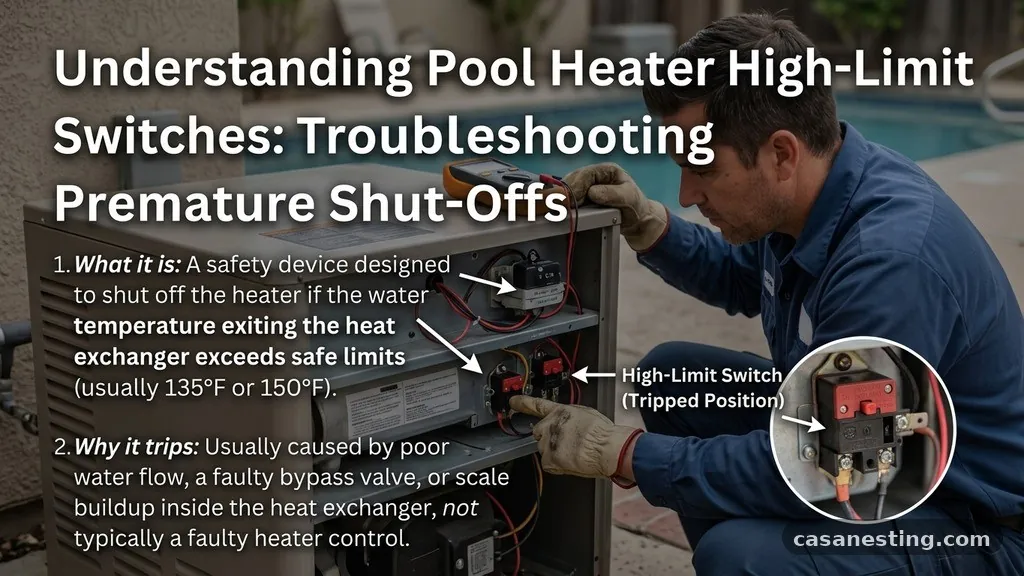
The high-limit switch acts as the final line of defense for your pool heating equipment. It is a simple bimetallic device that physically breaks the electrical circuit when it detects temperatures beyond safe operating limits.
Unlike a standard thermostat that regulates the water temperature based on your settings, the high-limit switch is strictly a safety device. It does not care if the pool is cold; it only cares that the internal metal components of the heater are not currently glowing or melting.
When this switch trips, it often requires a manual reset or, in some modern digital systems, a power cycle of the control board. If you find the unit constantly entering this state, the switch is doing exactly what it was designed to do.
It is stopping the heater before the thermal energy causes structural failure of the heat exchanger or the manifold. Ignoring this symptom by bypassing the switch is extremely dangerous and can lead to fire or catastrophic equipment rupture.
The Role of Water Flow and Pump Performance
Inadequate water flow is the most frequent culprit behind a heater that refuses to stay on. Your pool pump must move a specific number of gallons per minute to ensure the heat exchanger stays cool while the burners are firing.
If the pump is aging, the impeller might be worn down, or the motor might be struggling to reach its rated RPM. Even a small drop in flow velocity can cause the water inside the heat exchanger to become superheated.
Check your pump for signs of distress, such as unusual noises, overheating, or leaks at the shaft seal. If the pump is not pulling enough water from the pool, the heater will detect a “low flow” condition or trigger the high-limit switch immediately after ignition.
You can verify this by checking the pressure gauge on your filter tank. A pressure reading that is significantly lower than your baseline suggests a blockage on the suction side, such as a clogged skimmer basket or a damaged pump lid gasket.
Impact of Filter Maintenance and Pressure
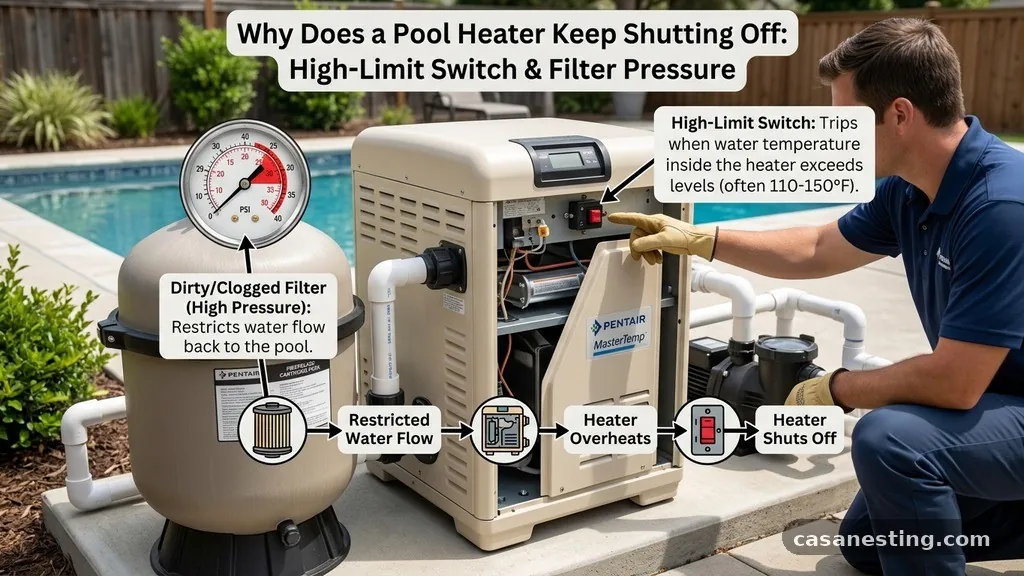
A dirty pool filter is a common cause of flow restriction that leads to high-limit trips. As debris builds up in the filter media, the internal resistance to water flow increases significantly.
This backpressure forces the pump to work harder while moving less water through the plumbing lines. If the filter pressure gauge shows a reading 8 to 10 PSI higher than the clean starting pressure, it is time for a thorough cleaning or backwashing.
Proper filter maintenance ensures that the water circulation remains consistent throughout the entire heating cycle. When the filter is clogged, the water sits in the heat exchanger for too long, absorbing more heat than it can dissipate.
This thermal buildup eventually triggers the safety switch, shutting the system down. Regularly monitoring your filter pressure is one of the easiest ways to prevent these recurring shutdowns and extend the life of your heating equipment.
Identifying Obstructions in Plumbing Lines
Sometimes the restriction isn’t in the filter or the pump, but somewhere within the plumbing run itself. Check for partially closed valves that might have been bumped or misadjusted during routine maintenance.
Even a valve that is slightly restricted can prevent the necessary volume of water from reaching the heater. Ensure that all diverter valves, especially those controlling spa versus pool modes, are fully open and locked into the correct position.
You should also inspect the pool heater’s internal bypass valve if your model is equipped with one. This valve is designed to regulate the amount of water entering the heat exchanger.
If the bypass is stuck, broken, or improperly adjusted, it may be diverting too much water away from the heater core. Clearing debris from the intake pipes and ensuring no internal plumbing blockages exist will help stabilize the water flow and stop the intermittent shutdowns.
Evaluating the Pressure Switch and Flow Sensors
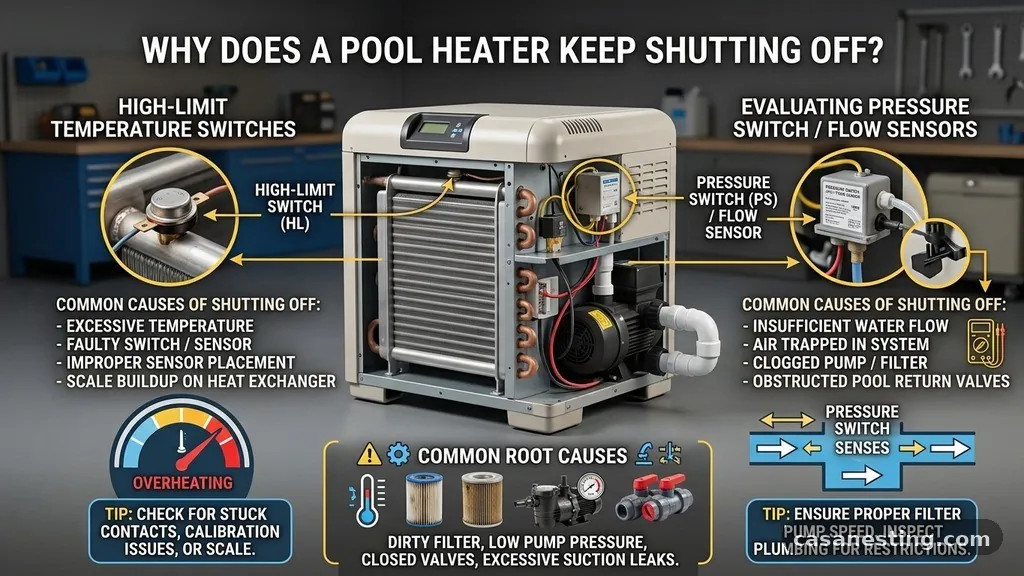
The pressure switch is a separate component from the high-limit switch, but they work in tandem to keep the heater safe. A pressure switch detects if the pump is actually pushing water through the unit before the gas valve opens.
If this switch is faulty or out of calibration, it might allow the heater to fire when there is no water flow, leading to an immediate high-limit trip. You can test a pressure switch by ensuring it clicks when the pump starts and releases when the pump stops.
If the pressure switch is failing to sense the flow correctly, you might need to adjust its sensitivity or replace it entirely. Some heaters use flow sensors instead of pressure switches, which are more precise but also more prone to debris interference.
If you see signs of corrosion or calcium buildup around these sensor ports, clean them gently to ensure they are reading the water velocity accurately. Accurate sensor readings prevent the heater from firing under unsafe conditions.
The Danger of Calcium Build-up in Heat Exchangers
Over time, minerals in the pool water, particularly calcium, can form scale inside the heat exchanger tubes. This buildup acts as an insulator, preventing the water from effectively absorbing heat from the metal walls.
As the heat exchanger wall gets hotter and hotter, the high-limit switch trips to protect the integrity of the unit. This is a common issue in areas with “hard water” or pools with high pH and alkalinity levels.
To check for this, you may need to inspect the heat exchanger headers or have a technician perform a chemical flush. If you see signs of white, chalky deposits, your water chemistry is likely contributing to the problem.
You can learn more about managing water chemistry standards through resources like the CDC Healthy Swimming guidelines. Maintaining balanced pH and alkalinity is essential to preventing scale that eventually leads to heater failure.
Analyzing Gas Supply and Combustion Issues
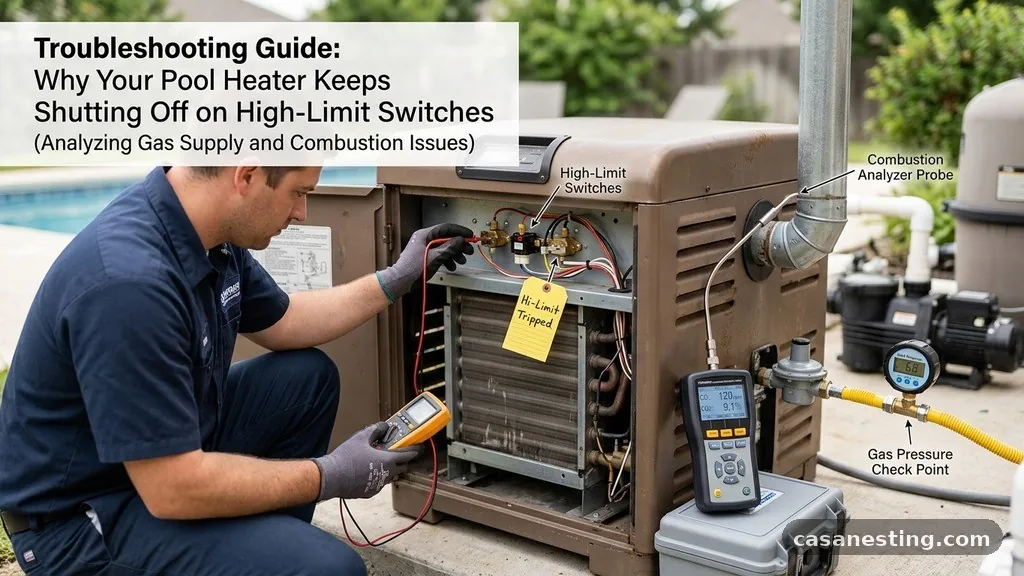
If your heater is gas-powered, an improper fuel-to-air ratio can cause the unit to run much hotter than designed. A faulty gas valve or an obstructed air intake can cause the burners to produce an inefficient, overly hot flame.
This excess heat radiates directly into the heat exchanger, causing the water temperature to skyrocket faster than the flow can handle. If the flames look yellow or orange rather than a crisp blue, your combustion system is likely compromised.
You should also check the venting system to ensure exhaust gases are escaping the unit properly. If the exhaust is trapped, the heat stays inside the cabinet, warming the internal components and the high-limit switch indirectly.
A professional technician should verify the gas pressure at the inlet and the manifold to ensure the heater is operating within the manufacturer’s specifications. Do not attempt to adjust gas valves or burners unless you have the proper training and tools.
Comparing Potential Causes of Shutdowns
When troubleshooting why your heater keeps shutting down, it helps to look at the relationship between different system failures and their symptoms. Use the table below to identify which components might be failing based on the behavior of your pool heater.
| Symptom | Likely Component | Action Required |
|---|---|---|
| Heater cuts out after 30 seconds | High-limit switch | Check water flow and filter pressure |
| Heater won’t turn on at all | Pressure switch | Check pump and valve positions |
| Heater runs but shuts down randomly | Thermostat sensor | Verify sensor calibration |
| Loud popping or banging noises | Scale buildup | Flush heat exchanger |
Common Troubleshooting Steps for Homeowners
Before calling a professional, there are several steps you can take to rule out basic issues. Start by ensuring the water level in your pool is high enough to cover the skimmer intakes, as air in the system is a major cause of flow disruption.
Verify that your pump basket is clear of leaves and debris, as even a partial blockage can starve the heater. Ensure that all valves are in the “open” position and that no bypass lines are accidentally closed.
* Check the filter pressure gauge and backwash if pressure is high.
* Inspect the pump basket for debris or air leaks.
* Verify the pool water level is at least halfway up the skimmer opening.
* Ensure the main drain is not blocked by debris.
* Test the pool chemistry for high pH or calcium levels.
* Listen for unusual pump noises that indicate a failing motor.
FAQ: Addressing Common Concerns
How do I reset the high-limit switch on my pool heater?
Most modern pool heaters reset automatically once the water temperature drops below the trip point. If your model has a manual reset button, it is usually located behind a panel on the heater cabinet. Always turn the power off before opening the cabinet to locate the switch.
What happens if I bypass the high-limit switch?
Bypassing the high-limit switch is extremely dangerous and can lead to a fire or an explosion. The switch is the primary safety device preventing the heat exchanger from melting or rupturing due to extreme temperatures. Never operate a heater with a bypassed or jumpered safety switch.
Why does my heater trip the switch only when the spa mode is on?
Spa mode often uses a smaller volume of water that circulates more rapidly. If the plumbing to the spa is restricted or if the pump is not delivering enough flow to the smaller spa loop, the heater will trip the high-limit switch because the water cannot absorb the heat quickly enough.
Can a bad thermostat cause high-limit trips?
Yes, if the thermostat is faulty and fails to turn off the burners when the pool reaches the set temperature, the water will continue to heat until it hits the high-limit threshold. If your heater stays on even when you turn the dial down, the thermostat or the control board may be stuck in the “on” position.
How often should I clean my heat exchanger?
You generally do not need to clean the heat exchanger unless you notice symptoms like frequent high-limit trips or poor heating performance. If you have very hard water, you might need a professional flush every two to three years to remove calcium deposits.
Conclusion
When you find that a pool heater keep shutting off on high-limit temperature switches, the primary takeaway is that the system is functioning correctly as a safety device. Instead of focusing on the switch itself, investigate the water circulation, filter cleanliness, and pump performance. Most of these issues stem from simple blockages or maintenance neglect rather than complex electronic failure.
By keeping your filter clean, ensuring your pump is running at full capacity, and maintaining balanced water chemistry, you can prevent these shutdowns from occurring. If you have checked the flow and the pump and the heater still trips, consult a licensed technician to inspect the heat exchanger for internal blockages or combustion issues. Maintaining a clear, steady flow is the best way to ensure your pool remains warm throughout the swimming season.