10 French Style Kitchen Ideas with Modern European Design
French-inspired kitchens have a way of feeling elegant without appearing overly formal. They combine beautiful materials, practical layouts, subtle ornamentation, and a relaxed sense of comfort. Instead of relying on a perfectly matched showroom appearance, this style often embraces character: aged-looking finishes, natural wood, stone surfaces, traditional shapes, and small details that make the kitchen feel collected over time.
The modern European interpretation takes that familiar French character and gives it a cleaner, more streamlined direction. Think warm cabinetry paired with simple hardware, limestone-inspired surfaces beside contemporary appliances, or classic pendant lights hanging over an understated island. The result feels sophisticated but still practical for everyday cooking, entertaining, and family life.
One thing that works especially well is balancing old-world details with modern proportions. A traditional range hood can look surprisingly fresh when surrounded by simple cabinetry. A farmhouse-style sink can feel contemporary when paired with sleek countertops and minimal hardware. Even a small kitchen can capture the look through carefully selected finishes rather than a complete renovation.
These ideas focus on ways to bring French character into a modern American home without making the kitchen feel themed or overly decorative. You’ll find guidance on cabinetry, countertops, lighting, islands, hardware, color palettes, natural materials, and styling details.
Whether you’re planning a full kitchen renovation or simply looking for smaller ways to introduce European-inspired charm, these ideas can help you create a space that feels warm, timeless, functional, and beautifully lived in.
Table of Contents
1. Warm Painted Cabinetry
Use soft, sophisticated cabinet colors to create a relaxed European foundation.
2. Natural Stone Surfaces
Bring organic texture into the kitchen with limestone, marble, or stone-inspired finishes.
3. Classic Range Hoods
Make the cooking area a focal point with a sculptural yet understated hood.
4. European Farmhouse Sinks
Blend traditional utility with a refined modern kitchen aesthetic.
5. Aged Brass Hardware
Add warmth and character with understated metal finishes.
6. Rustic Wood Details
Balance painted surfaces with natural wood for an inviting atmosphere.
7. Elegant Pendant Lighting
Use decorative lighting to introduce French-inspired personality.
8. Refined Kitchen Islands
Create a functional centerpiece with furniture-like proportions and materials.
9. Open Display Shelves
Add visual breathing room with carefully styled shelves and everyday pieces.
10. Soft European Styling
Complete the room with understated decor, textiles, and natural accents.
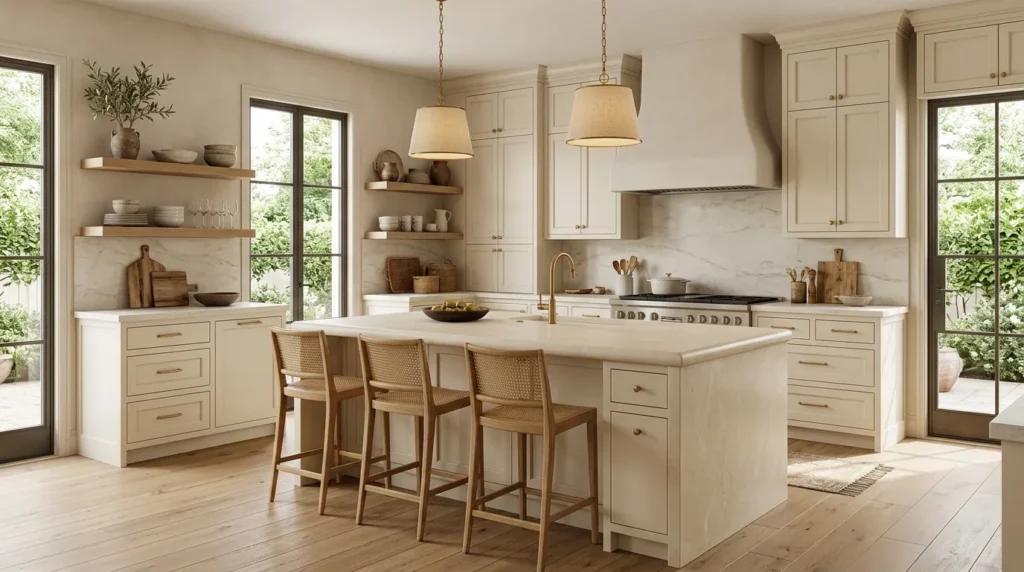
1. Warm Painted Cabinetry
Quick Benefits
- Creates an elegant foundation
- Softens modern kitchen architecture
- Works with natural materials
- Adds visual warmth without bright colors
- Complements both traditional and contemporary homes
Why It Works
Cabinet color has an enormous influence on the character of a kitchen. French-inspired interiors often favor colors that feel softened rather than intensely saturated. Cream, warm white, mushroom, muted sage, pale taupe, dusty blue, and gentle gray can create the relaxed backdrop associated with European kitchens.
The key is choosing a color with enough warmth to prevent the room from feeling stark. A cool white kitchen can look crisp and contemporary, but warmer undertones create a more inviting atmosphere.
Modern European design also benefits from restraint. Rather than combining several cabinet colors, choose one dominant shade and allow the countertops, hardware, flooring, and accessories to provide variation.
How To Style It
Choose cabinetry with simple shaker, inset, or subtly paneled doors. Avoid excessive ornamentation if you’re aiming for a contemporary European interpretation.
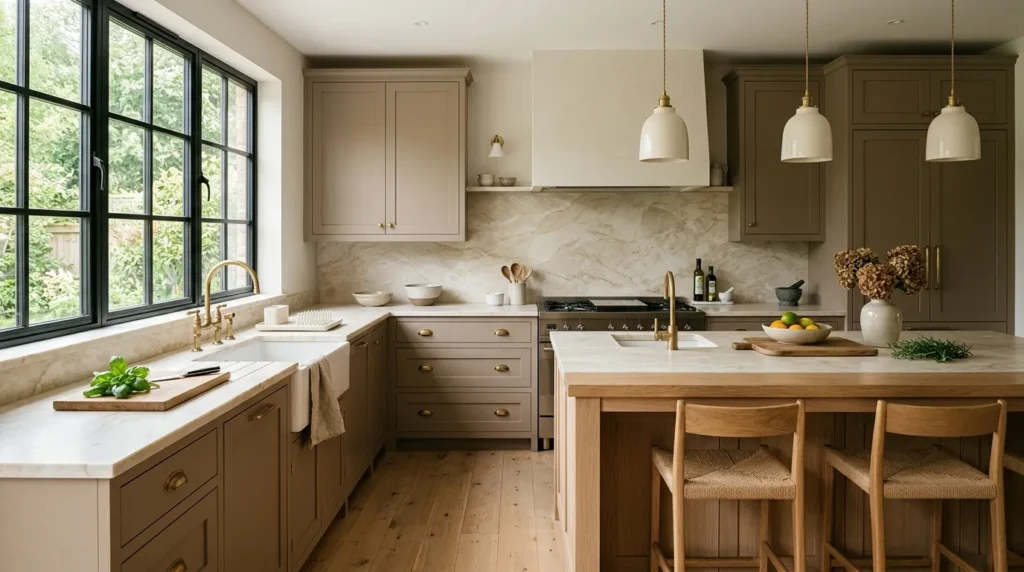
Warm ivory cabinets pair beautifully with natural stone countertops and aged brass hardware. Muted green works well with oak and limestone-inspired surfaces, while soft taupe creates a sophisticated neutral foundation.
Consider extending the cabinet color across the pantry or tall storage units for a cohesive appearance.
For contrast, use natural wood on an island or open shelving rather than introducing another strong paint color. This keeps the palette layered without becoming visually busy.
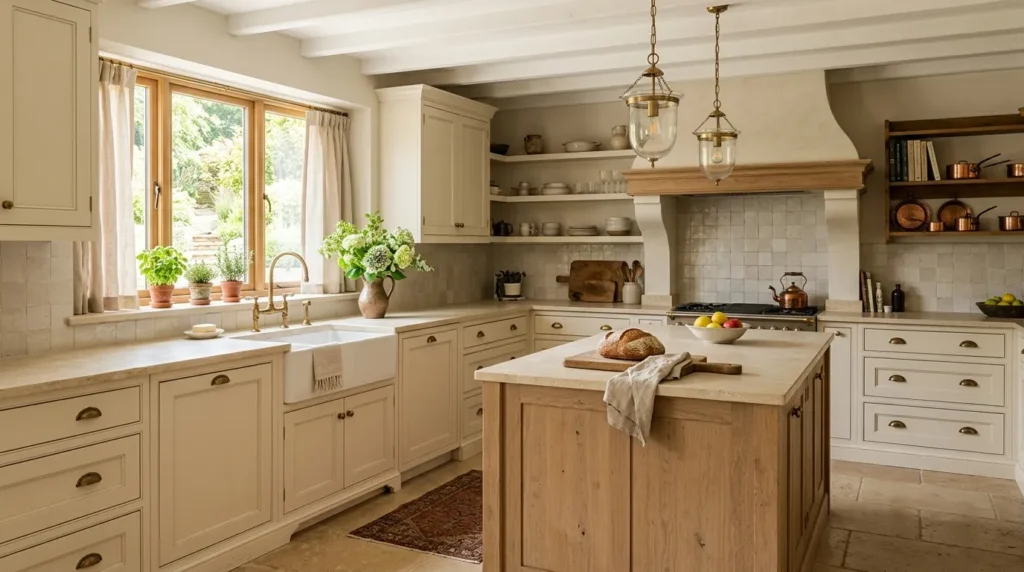
2. Natural Stone Surfaces
Quick Benefits
- Adds organic character
- Creates visual depth
- Complements painted cabinetry
- Provides a timeless foundation
- Works beautifully with European-inspired materials
Why It Works
Natural stone introduces variation that manufactured surfaces often struggle to replicate. Subtle veining, mineral movement, small imperfections, and tonal shifts give a kitchen a sense of depth and authenticity.
Marble is a classic choice, but limestone, travertine, soapstone, and other natural-looking surfaces can also create a European atmosphere. The goal is not necessarily to choose the most dramatic stone. Softer patterns often create a more relaxed and enduring appearance.
Stone also works particularly well against painted cabinets because the organic surface prevents the kitchen from feeling too uniform.
How To Style It
For a softer French-inspired look, consider creamy marble or limestone tones with gentle variation rather than extremely high-contrast veining.
Use the same stone on the island and perimeter countertops when you want a cohesive appearance. Alternatively, a wood-topped island can introduce additional warmth.
A stone backsplash can extend the material upward and create a more architectural appearance. If the stone is visually active, keep cabinet hardware and accessories relatively restrained.
If natural stone is outside your renovation budget, look for surfaces with subtle mineral variation and warm undertones rather than highly repetitive patterns.
3. Classic Range Hoods
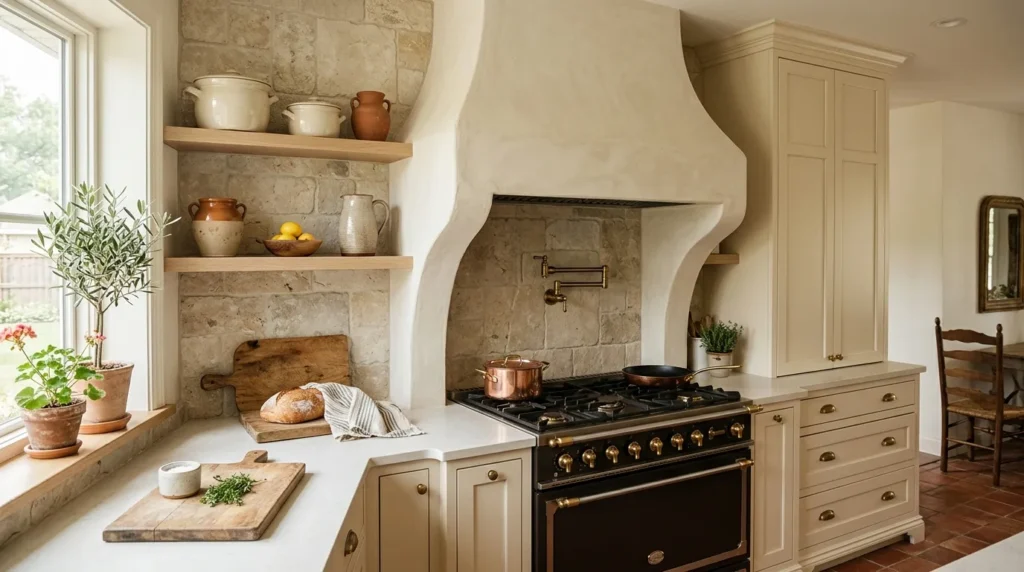
Quick Benefits
- Creates a strong kitchen focal point
- Adds architectural character
- Can soften modern appliances
- Gives the cooking zone visual importance
- Works with many cabinet styles
Why It Works
A sculptural range hood can give a kitchen the appearance of custom architecture. Traditional French kitchens often treat the cooking area as an important visual feature rather than hiding every appliance behind cabinetry.
Modern versions simplify that idea. A plaster-look hood, painted hood, or stone-inspired surround can create a focal point without excessive decoration.
The hood also provides an opportunity to connect different finishes. Its color can match the cabinets, while the surrounding backsplash or trim introduces contrast.
How To Style It
Keep the hood shape relatively simple. A softly curved silhouette or clean rectangular form can provide character without appearing ornate.
Painted hoods work particularly well with warm neutral cabinetry. For a stronger architectural effect, use a plaster-like finish or material that resembles the surrounding wall.
Frame the cooking zone with minimal open shelving, sconces, or a few carefully chosen ceramic pieces.
Avoid overcrowding the hood area. The range hood itself is the feature, so the surrounding wall benefits from visual breathing room.
4. European Farmhouse Sinks
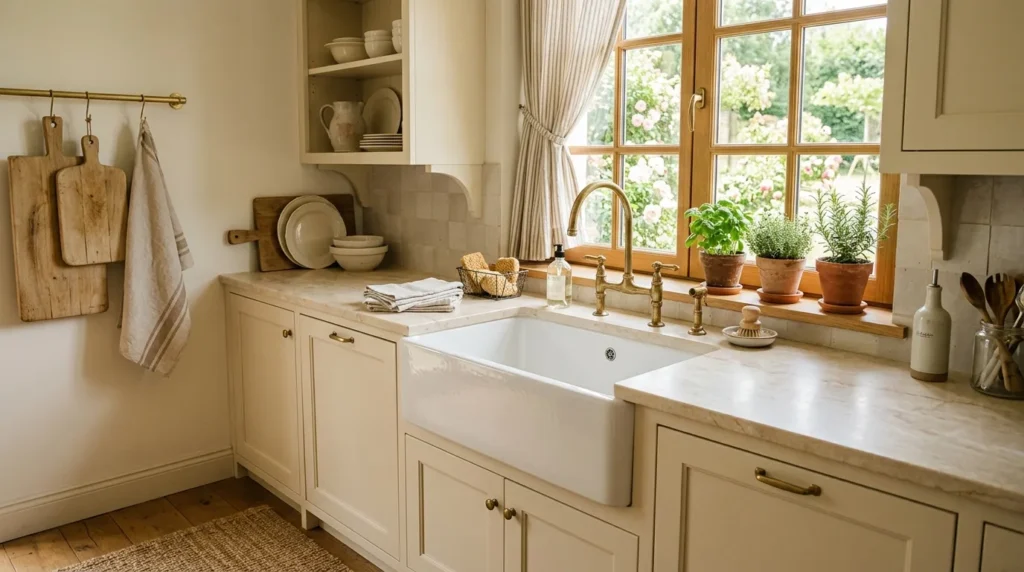
Quick Benefits
- Adds traditional character
- Provides a generous washing area
- Works with modern cabinetry
- Creates a recognizable European detail
- Complements natural stone countertops
Why It Works
A farmhouse sink instantly introduces a sense of traditional craftsmanship. The deep basin and exposed front create a strong visual line beneath the countertop while offering practical space for everyday kitchen tasks.
The modern European interpretation doesn’t require an entirely rustic kitchen. A simple apron-front sink can look sophisticated when combined with streamlined cabinets, natural stone, and contemporary appliances.
This contrast between traditional form and modern surroundings is one of the reasons the look remains so versatile.
How To Style It
Choose a sink material based on your preferred maintenance and appearance. Fireclay creates a classic white finish, while natural stone or metal can provide a more distinctive look.
Pair the sink with a simple bridge faucet or a streamlined fixture in aged brass, polished nickel, or another finish that complements the kitchen.
Keep the countertop around the sink relatively uncluttered. A ceramic soap dispenser, small cutting board, or fresh greenery can provide useful styling without creating visual noise.
If you’re renovating, consider the sink’s cabinet dimensions and installation requirements before finalizing the design.
5. Aged Brass Hardware
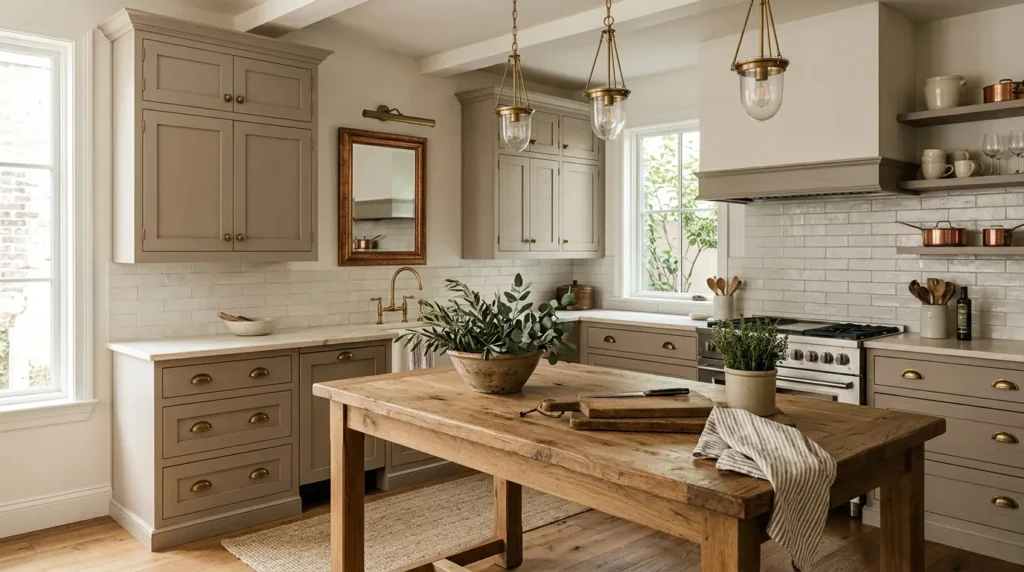
Quick Benefits
- Adds warmth to cabinetry
- Creates subtle vintage character
- Works with neutral palettes
- Complements natural stone
- Can soften contemporary finishes
Why It Works
Hardware is one of the easiest ways to influence a kitchen’s overall personality. Aged brass has a softer appearance than highly polished gold and can introduce the slightly collected quality associated with European interiors.
It works especially well with cream, taupe, sage, navy, and natural wood. The warmth of the metal also complements stone countertops with beige or gold undertones.
The modern approach is to use brass selectively. Matching every fixture and accessory in the same shiny finish can make the room feel overly coordinated.
How To Style It
Choose cabinet pulls and knobs with simple silhouettes. Cup pulls can reinforce a traditional feeling, while slim bar pulls create a more contemporary interpretation.
Repeat the finish in one or two other places, such as the faucet or pendant lights. There is no requirement for every metal element to match exactly.
If you already have stainless-steel appliances, don’t assume brass hardware cannot work. Mixed metals can look intentional when the overall palette remains restrained.
6. Rustic Wood Details
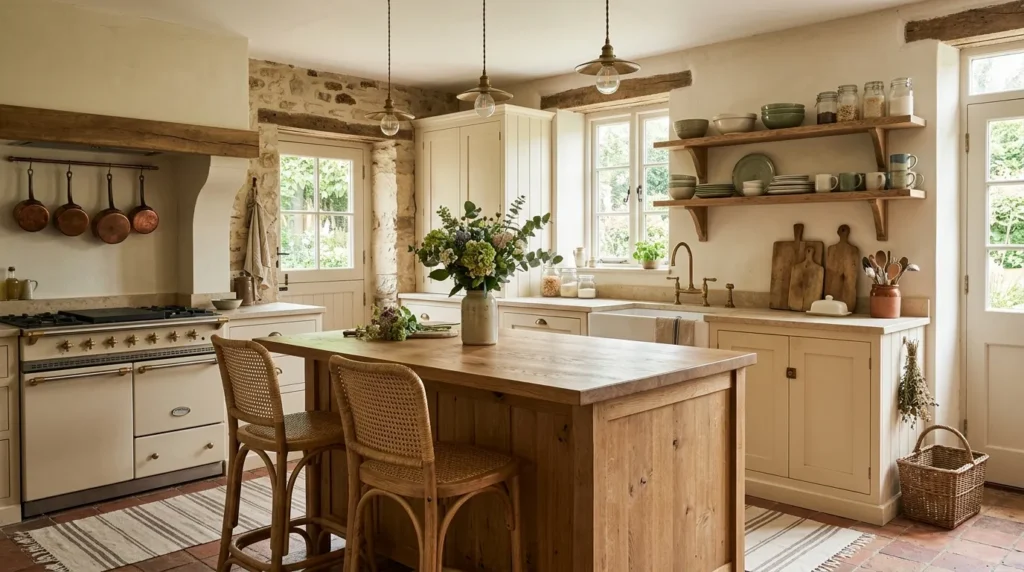
Quick Benefits
- Introduces natural warmth
- Balances painted cabinetry
- Adds organic texture
- Makes modern kitchens feel more relaxed
- Works with stone and brass
Why It Works
Natural wood prevents a French-inspired kitchen from feeling too polished. The grain, variation, and tactile quality introduce the kind of imperfection that makes European interiors feel comfortable rather than staged.
Wood can appear in many forms. An oak island, reclaimed-looking shelves, exposed beams, cutting boards, stools, or a wood dining table can all add warmth.
The important factor is restraint. Too much wood can shift the room toward a distinctly rustic style, while a few carefully chosen pieces create balance.
How To Style It
Light or medium oak works particularly well with warm painted cabinetry. Walnut creates a deeper contrast when the surrounding palette is pale.
A wood island can become the centerpiece of the kitchen, especially when paired with cream perimeter cabinets and stone countertops.
For a smaller update, add natural cutting boards, a wood stool, or open shelves.
Avoid using several unrelated wood tones unless the differences are intentional. Repeating one primary wood tone helps the room feel cohesive.
7. Elegant Pendant Lighting
Quick Benefits
- Creates a decorative focal point
- Adds warmth after sunset
- Helps define the island
- Introduces European character
- Provides another opportunity for material contrast
Why It Works
Lighting has a major effect on how kitchen materials look. A beautiful stone surface and carefully selected cabinetry can lose their impact under harsh, flat illumination.
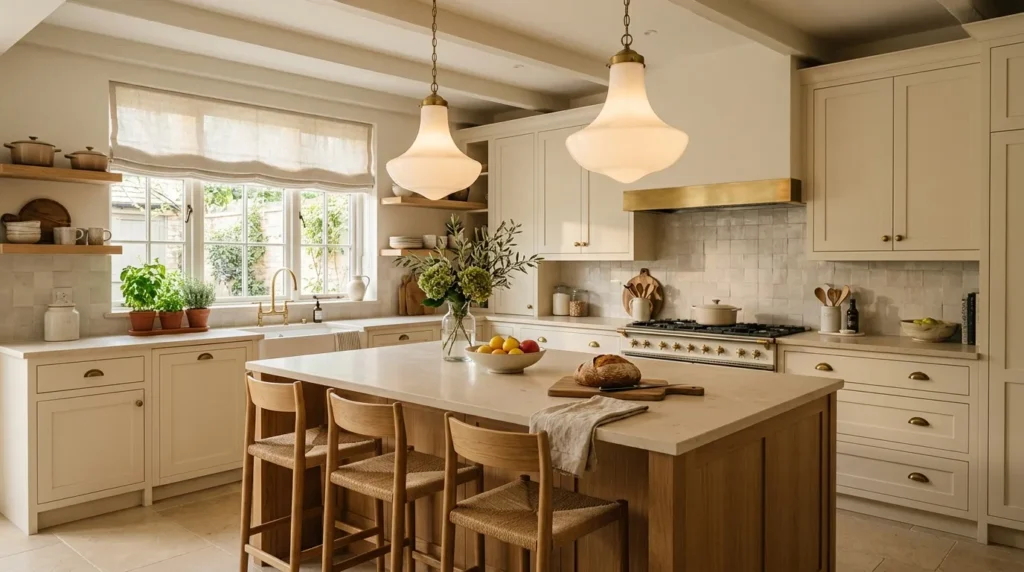
Pendant lights above an island provide both function and personality. Traditional glass, aged metal, linen, ceramic, and sculptural fixtures can all work with a French-inspired palette.
The modern European approach favors fixtures that feel distinctive but not overly ornate.
How To Style It
Choose pendants that relate to the kitchen’s proportions. A large island can accommodate two or three fixtures, while a smaller island may need only one or two.
Opal glass, aged brass, blackened metal, and ceramic are versatile choices.
If the cabinets are detailed, select simpler pendants. If the cabinetry is very restrained, a sculptural light can provide more visual interest.
Consider the color temperature and placement carefully. Warm, comfortable lighting can make cream cabinetry and natural stone appear especially inviting in the evening.
8. Refined Kitchen Islands
Quick Benefits
- Creates a central gathering point
- Adds practical preparation space
- Can introduce contrasting materials
- Gives the kitchen a furniture-like quality
- Supports entertaining and everyday use
Why It Works
A French-inspired island often feels more like a piece of furniture than a purely utilitarian cabinet block. Legs, paneled sides, wood finishes, contrasting paint, or a substantial stone top can give the island a more intentional presence.
This approach works beautifully in open-plan homes because the island becomes a visual bridge between the kitchen and surrounding living spaces.
The best island designs also consider circulation. Beauty matters, but an island that leaves enough room for doors, appliances, and people moving through the kitchen is much more useful.
How To Style It
Consider a contrasting island color if the room has one dominant cabinet finish. A muted olive island against warm ivory cabinetry can create subtle depth.
For a more natural appearance, use oak or walnut on the island and repeat that wood elsewhere.
Add comfortable stools with woven, upholstered, or natural wood seats. Keep countertop decor minimal so the island remains practical.
A small vase of branches, a wooden cutting board, or a bowl of seasonal produce can provide enough decoration without sacrificing workspace.
9. Open Display Shelves
Quick Benefits
- Breaks up rows of cabinetry
- Adds visual breathing room
- Makes everyday pieces accessible
- Provides space for personal details
- Creates a collected European appearance
Why It Works
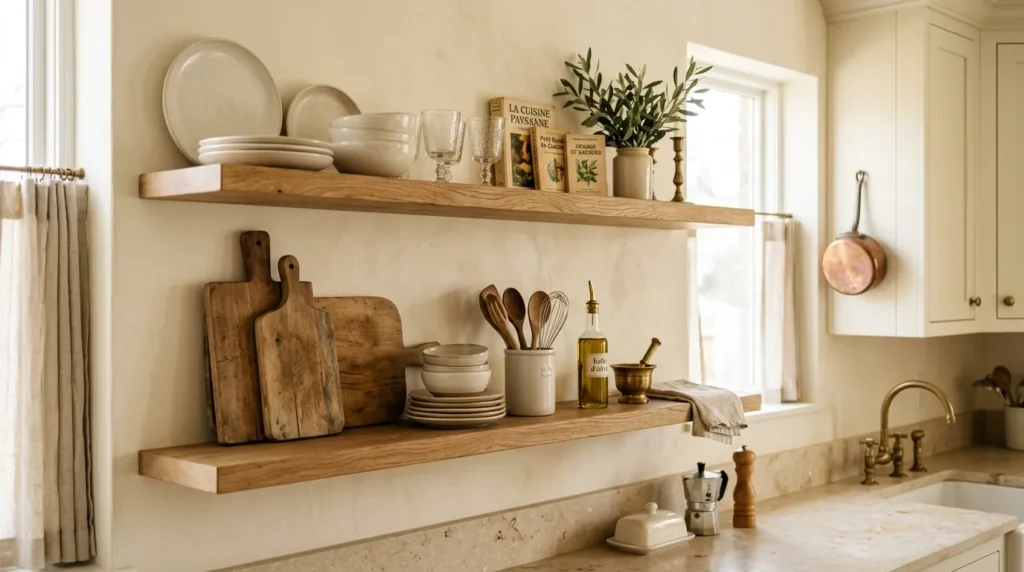
Open shelving can make a kitchen feel less enclosed by cabinetry. It creates a place to display dishes, ceramics, glassware, cookbooks, and natural elements while adding another layer of texture.
The secret is moderation. A few shelves can add personality, while too many can create a maintenance-heavy and visually crowded wall.
Open shelves are especially effective around a range hood, beside a window, or in a small section of otherwise solid cabinetry.
How To Style It
Use a combination of functional and decorative pieces. Stack a few plates, lean a cutting board against the wall, add a ceramic bowl, and finish with a small vase or plant.
Choose objects with a connected palette. Cream ceramics, natural wood, clear glass, and aged metal work naturally with a French-inspired kitchen.
Leave portions of the shelf empty. Negative space helps the display feel curated rather than packed.
Use sturdy, properly installed shelving and consider the weight of dishes and cookware before choosing brackets or mounting hardware.
10. Soft European Styling
Quick Benefits
- Adds personality without clutter
- Creates a relaxed atmosphere
- Connects kitchen materials
- Makes the room feel lived in
- Works with modern and traditional architecture
Why It Works
The final layer is often what separates a beautiful kitchen from a room that feels genuinely inviting. French-inspired styling tends to avoid excessive decoration and instead relies on a handful of useful, beautiful objects.
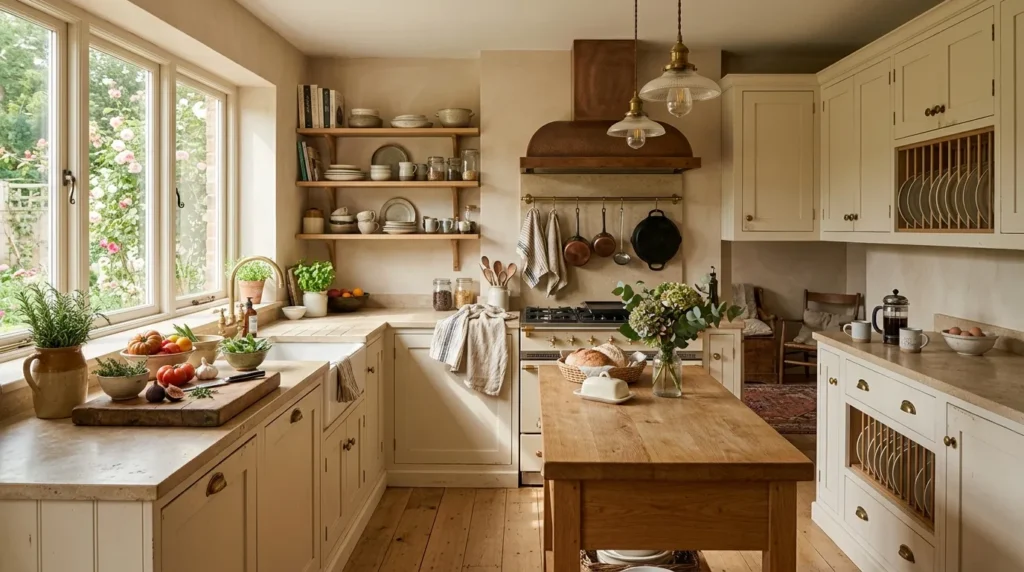
Fresh flowers, linen towels, ceramics, wooden boards, woven stools, vintage-inspired art, and seasonal produce can all add warmth.
These details also keep the kitchen from feeling too perfect. A few everyday objects on display suggest that the room is actually used, which is an important part of the relaxed European aesthetic.
How To Style It
Choose accessories that have a purpose whenever possible. A beautiful cutting board can remain on the counter. A linen towel can hang from the oven handle. Ceramic bowls can hold fruit.
Add one or two pieces of artwork if there is suitable wall space. Vintage-inspired botanical prints, still-life artwork, and understated European landscapes can work particularly well.
Keep countertops relatively open. The goal is a kitchen that feels collected and comfortable, not crowded.
Finish with natural elements such as fresh herbs, flowers, branches, or seasonal produce. These small touches can bring the entire palette together.
What Makes a Kitchen Look French and Modern?
A modern French-inspired kitchen combines classic details with streamlined proportions. Warm painted cabinets, natural stone, simple hardware, farmhouse-style sinks, sculptural range hoods, aged metals, natural wood, and elegant lighting can create the look without making the space feel overly traditional.
Related Articles
- 10 Blue Gray Kitchen Cabinet Ideas with Timeless Style
- 10 Modern Kitchen Ideas with Warm Wood Accents
- 10 Small Kitchen Ideas That Maximize Style and Storage
- 10 Kitchen Island Ideas for a Beautiful Functional Space
- 10 Farmhouse Kitchen Ideas with Modern European Charm
Frequently Asked Questions
What colors work best in a French-inspired kitchen?
Warm white, cream, soft beige, mushroom, muted sage, dusty blue, taupe, and gentle gray are popular choices for a relaxed French-inspired palette. These colors work particularly well with natural wood, stone, aged brass, and other warm materials.
How can I make a modern kitchen look more French?
Introduce a few traditional elements rather than changing everything. A farmhouse sink, aged brass hardware, natural stone, a sculptural range hood, paneled cabinetry, vintage-inspired lighting, or open shelving can add French character while keeping the overall design modern.
What countertop looks best in a French kitchen?
Natural stone with gentle variation works particularly well. Marble, limestone, soapstone, and other stone surfaces can complement warm cabinetry and natural wood. A quieter pattern usually creates a more relaxed appearance than extremely dramatic veining.
Does French kitchen design require ornate cabinets?
No. Modern French kitchens can use simple shaker or inset cabinetry with restrained detailing. The overall character comes from the combination of materials, proportions, hardware, lighting, and styling rather than ornate decoration alone.
What hardware works with French-style cabinets?
Aged brass, antique brass, bronze, polished nickel, and understated black hardware can all work. Simple knobs, cup pulls, and modest bar pulls are particularly versatile. Choose a finish that complements the cabinetry and repeats subtly elsewhere in the room.
Can French kitchen style work in a small kitchen?
Yes. A small kitchen can capture the aesthetic through warm cabinet colors, natural textures, open shelving, a compact pendant light, simple hardware, and carefully chosen accessories. Keeping the palette limited helps the space feel open rather than visually crowded.
How do you mix modern and traditional kitchen elements?
Use traditional shapes with contemporary restraint. For example, combine a farmhouse sink and paneled cabinets with streamlined appliances and simple lighting. Or pair a traditional range hood with modern countertops and minimal hardware. The contrast creates a balanced European-inspired appearance.
Conclusion
French-inspired kitchen design works because it balances beauty with everyday practicality. It doesn’t depend on creating a perfectly matched room. Instead, the style comes from thoughtful relationships between materials, colors, textures, and architectural details.
Start with the foundation. Warm painted cabinetry can establish the palette, while natural stone and wood introduce organic variation. From there, details such as aged brass hardware, a farmhouse sink, elegant lighting, or a sculptural range hood can add recognizable European character.
If you’re working with an existing kitchen, you don’t necessarily need to replace the cabinetry. Changing hardware, adding open shelving, introducing natural wood accessories, replacing lighting, or styling the counters more intentionally can shift the atmosphere considerably.
For a larger renovation, focus on proportions and materials first. A beautiful island is more useful when there is comfortable circulation around it. A striking range hood works better when the surrounding wall remains relatively calm. Open shelves are most effective when they provide visual breathing room rather than becoming another place for clutter.
The most appealing result is a kitchen that feels sophisticated but still comfortable enough for everyday life. Let natural materials show some variation, keep decorative details intentional, and allow practical objects to become part of the design.
Start with one element that immediately catches your eye—perhaps warm cabinetry, a stone surface, or an elegant light—and build the rest of the kitchen around that foundation.