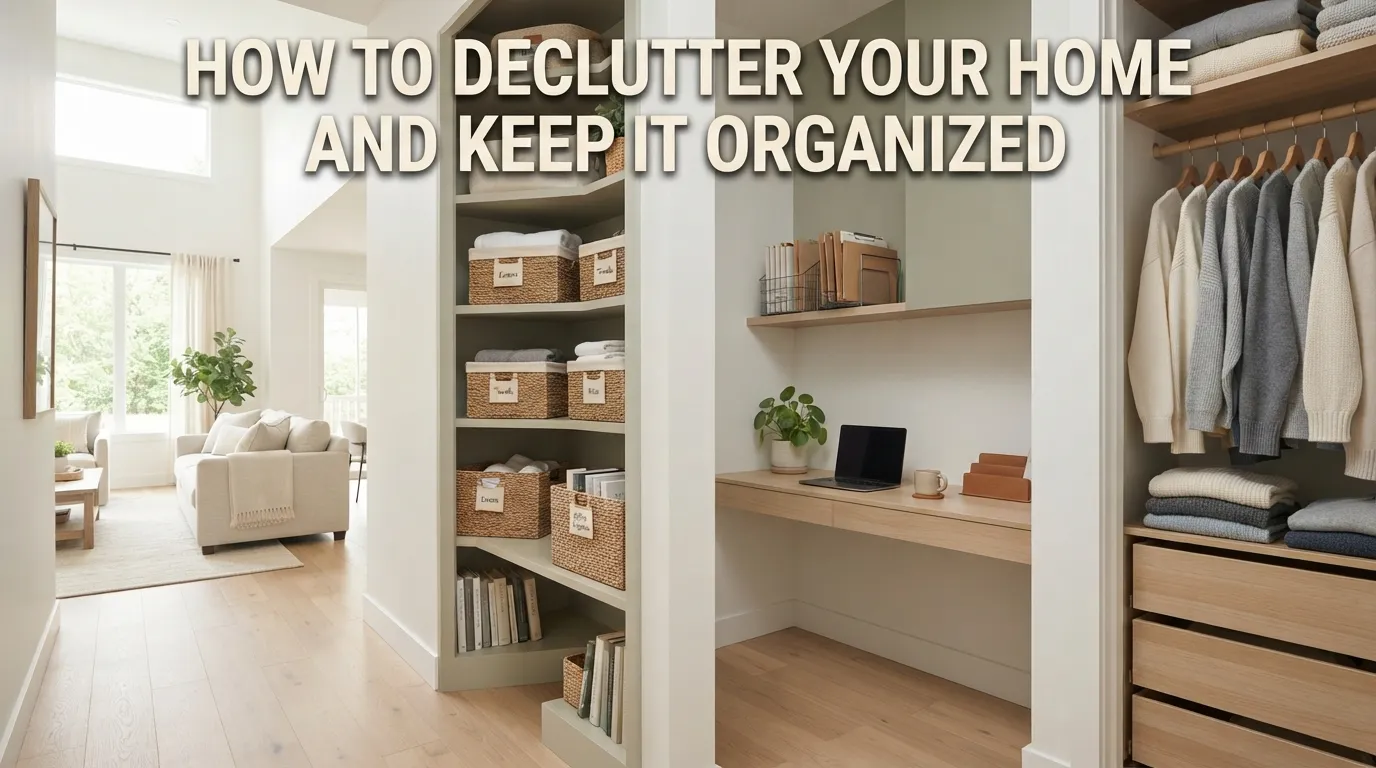
How to Declutter Your Home and Keep It Organized
A home can become cluttered without you realizing how quickly it happens. A few packages arrive, clothes pile up, kitchen drawers collect miscellaneous items, and suddenly everyday surfaces feel harder to use. The problem isn’t always a lack of storage. Often, there are simply more things in the home than the available space can comfortably handle.
Decluttering doesn’t mean creating a perfectly minimalist house where every room looks empty. A comfortable home can contain books, decorations, children’s belongings, hobbies, sentimental items, and everyday necessities. The goal is to create enough space for the things you actually use and enjoy.
I’ve noticed that the biggest difference comes from changing how you make decisions about belongings. Instead of trying to organize everything at once, work through one category or area at a time. Decide what stays, what leaves, and where the remaining items belong. Then create simple habits that prevent the same clutter from returning.
Another important step is separating decluttering from organizing. Organizers can make a crowded drawer look better temporarily, but they cannot solve the underlying problem of having too many items. Once you remove things that no longer serve a purpose, organizing becomes much easier.
This guide walks through a practical process for decluttering the whole home, from entryways and kitchens to bedrooms, bathrooms, closets, and living spaces. You’ll also find realistic ways to maintain the results without spending every weekend cleaning.
The goal isn’t perfection. It’s a home that feels easier to live in, easier to clean, and more comfortable to come back to at the end of the day.
Table of Contents
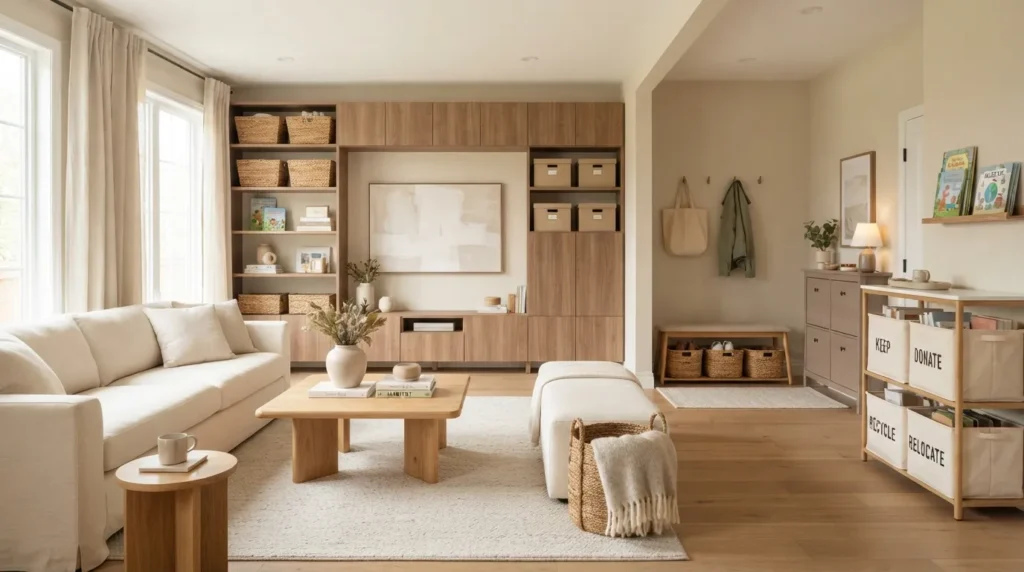
1. Start With One Area
Choose a manageable space instead of tackling the entire home at once.
2. Use Simple Sorting
Create clear categories that make decisions easier.
3. Clear Visible Surfaces
Reduce visual clutter in the areas you see every day.
4. Declutter The Kitchen
Remove unused cookware, duplicate tools, and expired items.
5. Simplify Your Closet
Keep clothing that fits your current lifestyle and routine.
6. Organize The Bathroom
Create easier access by removing products you don’t use.
7. Create A Home For Everything
Give frequently used belongings a consistent storage location.
8. Control Incoming Items
Prevent new clutter before it becomes a problem.
9. Build Daily Habits
Use small routines to maintain an organized home.
10. Reset Each Room
Create a simple routine that keeps the entire home manageable.
1. Start With One Area
Quick Benefits
- Makes decluttering feel manageable
- Creates visible progress quickly
- Reduces decision fatigue
- Helps establish momentum
- Makes organizing easier afterward
Why It Works
Trying to declutter an entire house in one afternoon can become overwhelming before you even begin. A better approach is to choose one clearly defined area.
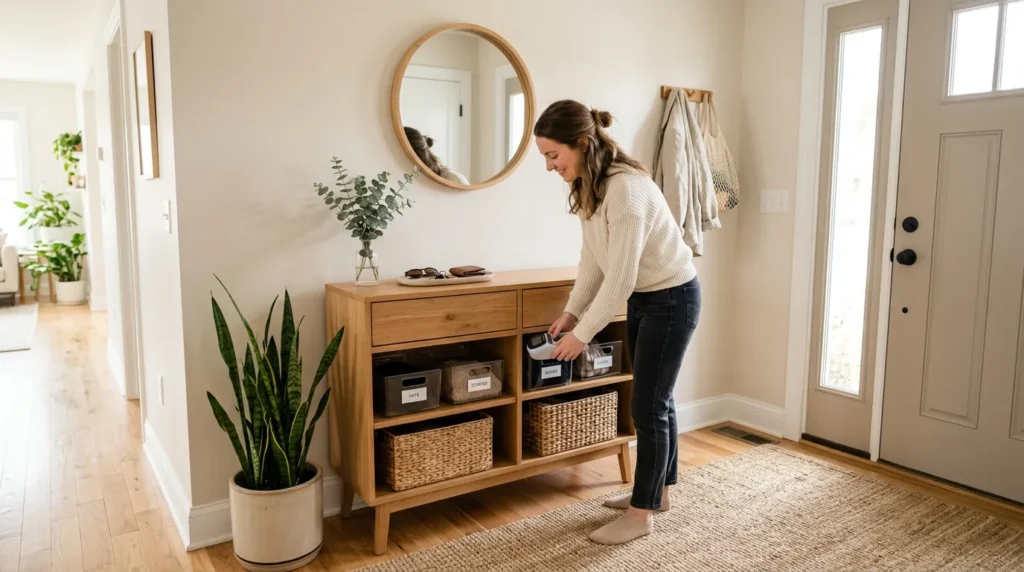
That could be a single kitchen drawer, one bathroom cabinet, the entryway, or one section of a closet. Finishing a small area gives you a visible result and helps you understand which decisions are easiest for you.
A mistake many homeowners make is moving belongings from one room to another and calling the process organized. That simply relocates the clutter.
Instead, finish the selected area before moving elsewhere. Remove everything that doesn’t belong, make decisions about what stays, and return only useful items.
How To Style It
Start with an area you use frequently. A kitchen counter, bedside table, or entryway can provide a satisfying first result.
Set aside a short block of uninterrupted time. Gather a few basic supplies such as trash bags, a donation box, cleaning cloths, and labels if needed.
Work in sections rather than pulling apart the entire room.
Once the area is finished, clean the empty surfaces before returning items. The clean space gives you a clear picture of how much storage you actually need.
2. Use Simple Sorting
Quick Benefits
- Makes decisions faster
- Prevents piles from becoming confusing
- Separates useful items from clutter
- Creates a repeatable process
- Works in every room
Why It Works
Decluttering becomes easier when every item has to make a clear decision. Instead of creating dozens of complicated categories, use a simple system.
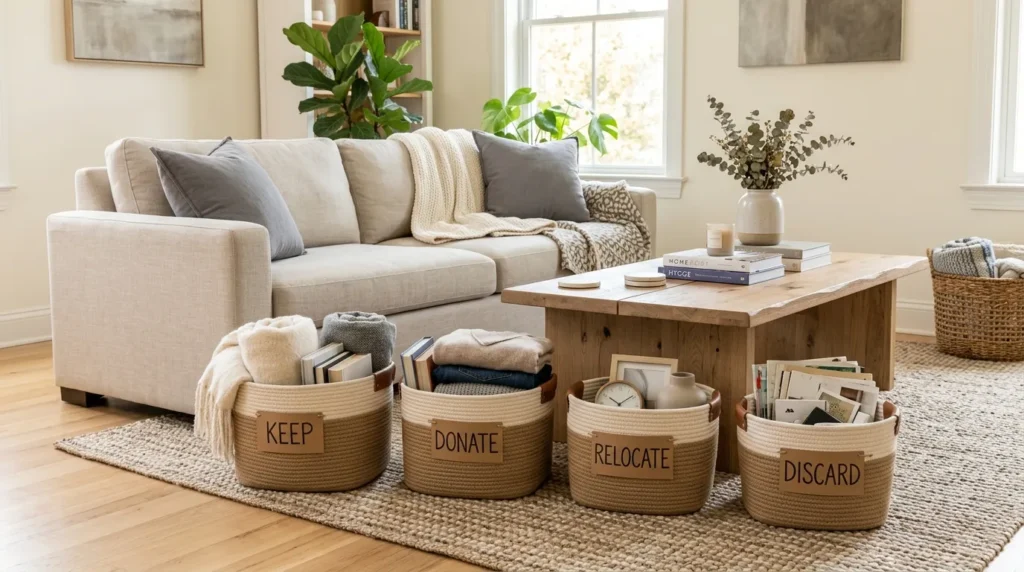
A practical approach is to create four groups: Keep, Donate, Relocate, and Discard.
Keep items that are useful, meaningful, or genuinely enjoyed. Donate items in usable condition that no longer have a place in your life. Relocate belongings that belong somewhere else. Discard things that are broken, unusable, expired, or no longer appropriate to keep.
This prevents the common habit of creating a giant “maybe” pile that simply becomes another form of clutter.
How To Style It
Place four boxes or bags near your work area and label them clearly.
Pick up each item individually and make a decision before moving to the next one.
If you aren’t sure about something, ask practical questions:
- Do I use this?
- Does it work?
- Does it fit my current life?
- Do I have another item that performs the same job?
- Would I choose to bring this into my home today?
Avoid creating a donation box that sits around for months. Once it’s full, move it out of the house promptly.
3. Clear Visible Surfaces
Quick Benefits
- Makes rooms look instantly calmer
- Makes cleaning easier
- Reduces visual distractions
- Helps rooms feel more spacious
- Creates easier daily routines
Why It Works
Visible clutter often makes a home feel messier than it actually is. Counters, coffee tables, dining tables, nightstands, and entryway surfaces naturally collect objects because they’re convenient places to put things.
Clearing these areas can create one of the fastest visual improvements in a home.
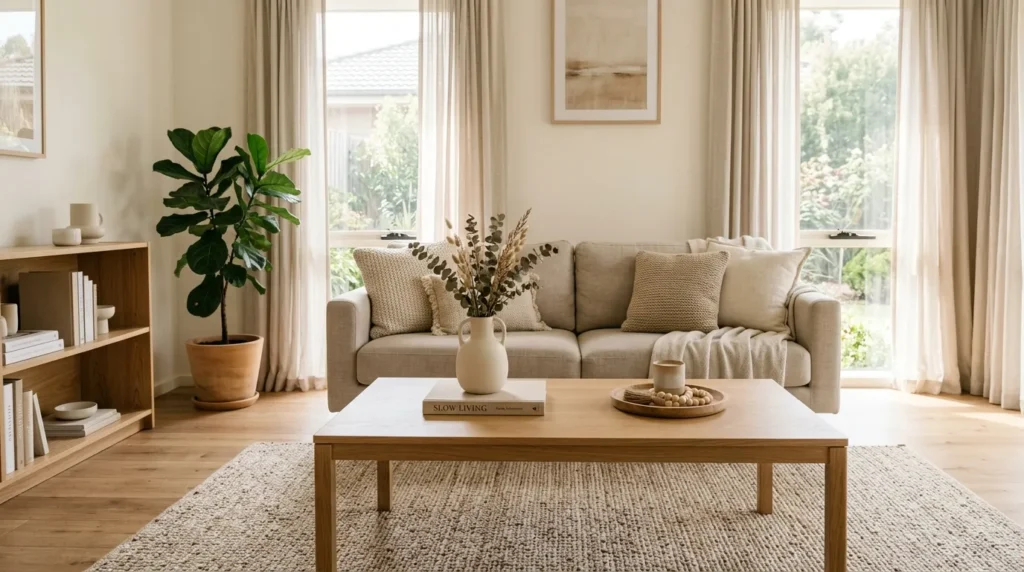
The goal isn’t to remove everything. A styled coffee table can still have a tray, a book, and a vase. A kitchen counter can hold a coffee maker. The difference is that each visible item has a reason for being there.
How To Style It
Start with the most noticeable surface in each room.
Remove everything and sort the items rather than immediately putting them back.
Clean the surface, then return only the pieces that are useful or intentionally decorative.
Use trays to group small objects together. A tray can turn several loose items into one visually organized arrangement.
Leave some empty space. Negative space makes the items you keep look more intentional.
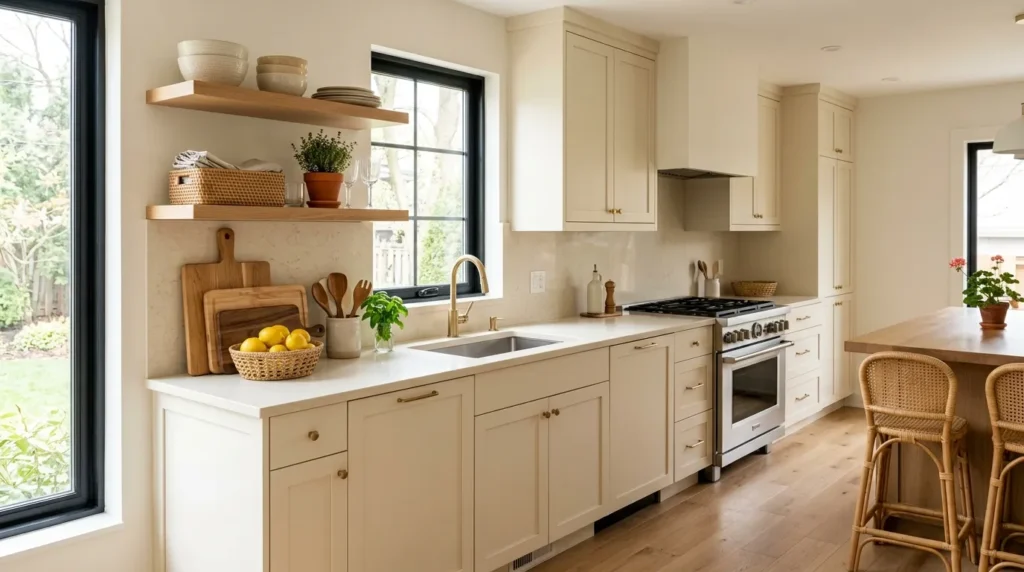
4. Declutter The Kitchen
Quick Benefits
- Creates more usable counter space
- Makes cooking easier
- Reduces duplicate items
- Improves cabinet storage
- Makes meal preparation more efficient
Why It Works
Kitchens tend to accumulate duplicates because many tools seem useful when purchased individually. Over time, drawers can fill with several spatulas, storage containers without matching lids, rarely used gadgets, and cookware that hasn’t been touched in years.
Decluttering the kitchen is less about creating a perfect aesthetic and more about improving function.
A kitchen becomes easier to use when the items you reach for regularly are accessible and the things you rarely use aren’t occupying prime storage locations.
How To Style It
Start with one category at a time rather than emptying every cabinet.
Sort cookware, utensils, food storage, mugs, dishes, and small appliances separately.
Match containers with their lids and recycle or discard damaged pieces according to your local waste guidelines.
Check expiration dates in the pantry and refrigerator.
Store everyday items where they are easiest to reach. Less frequently used serving pieces can occupy higher or less convenient cabinets.
Keep countertops relatively clear so preparation space remains available.
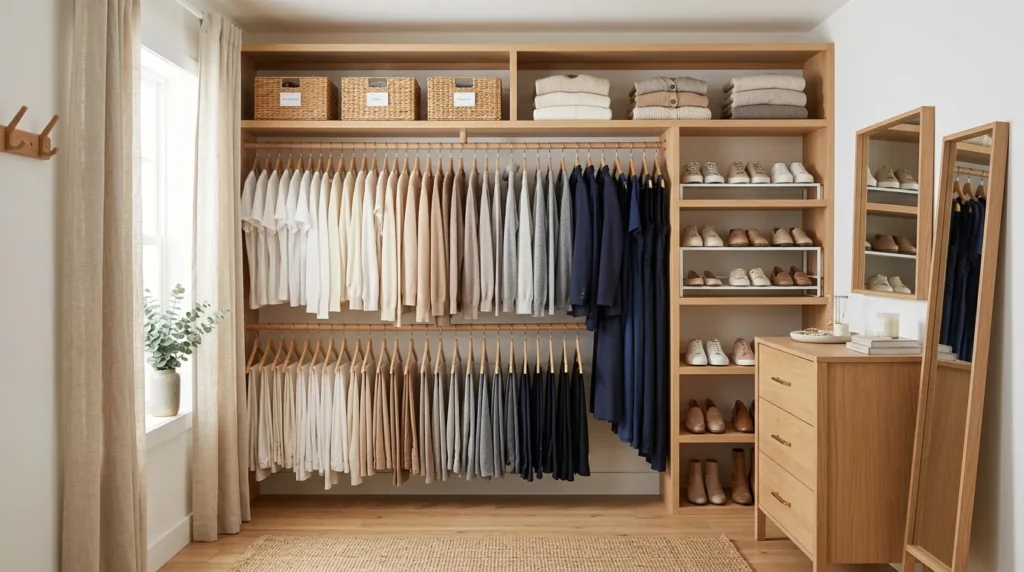
5. Simplify Your Closet
Quick Benefits
- Makes getting dressed easier
- Frees valuable storage space
- Reveals what you actually wear
- Reduces duplicate purchases
- Makes clothing organization easier
Why It Works
A crowded closet can create the strange feeling of having plenty of clothes but nothing to wear. When everything is packed tightly together, the pieces you actually enjoy wearing can become difficult to see.
Decluttering creates visibility.
The process also works best when based on your current lifestyle rather than an imagined future version of yourself. Clothing that fits your actual routines is more useful than pieces that remain untouched because they belong to a lifestyle you don’t currently live.
How To Style It
Remove clothing category by category.
Look at fit, condition, comfort, frequency of use, and whether the item works with the rest of your wardrobe.
Set aside pieces that need repair or alteration and make a realistic decision about whether you’ll actually complete the task.
Organize remaining clothes by category or use. For example, group everyday tops together, then workwear, dresses, outerwear, and seasonal items.
Keep frequently worn pieces easiest to access.
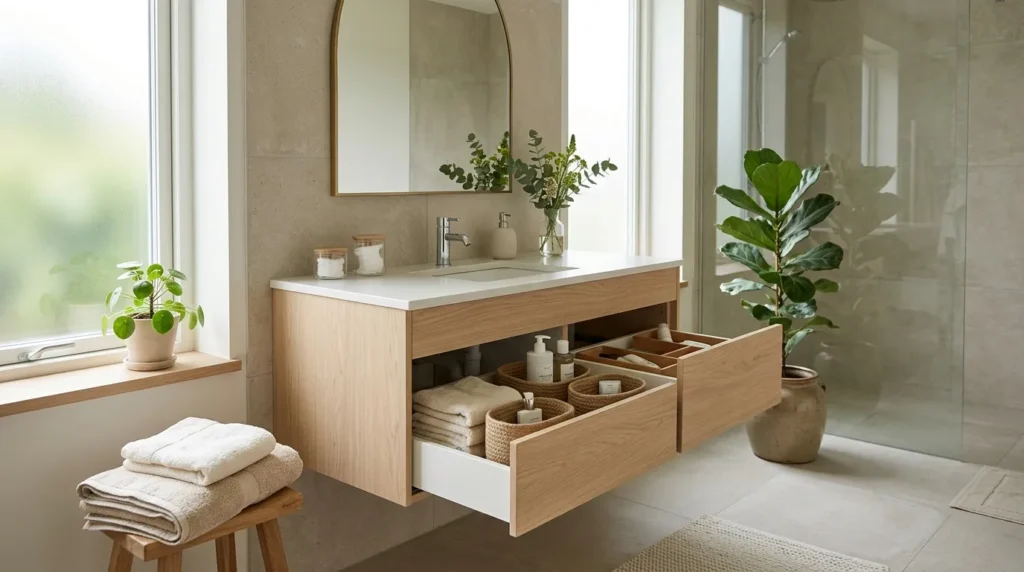
6. Organize The Bathroom
Quick Benefits
- Makes daily routines faster
- Removes expired products
- Frees cabinet space
- Makes cleaning easier
- Prevents product duplicates
Why It Works
Bathrooms can become cluttered because products often accumulate gradually. A new shampoo replaces an old one, several skincare products are purchased for experimentation, and travel-size toiletries collect in drawers.
The result can be crowded storage and products that are difficult to find.
A simplified bathroom makes daily routines more efficient because the things you use most are visible and accessible.
How To Style It
Begin with one cabinet or drawer.
Check products for expiration, damage, or changes in appearance or smell. Follow the product manufacturer’s disposal guidance for anything you’re unsure about.
Group similar products together.
Keep everyday toiletries within easy reach and less frequently used items farther back.
Use small containers or dividers where they genuinely improve access. Don’t add storage products simply because an empty drawer feels like it needs them.
Keep countertops limited to the items you use regularly.
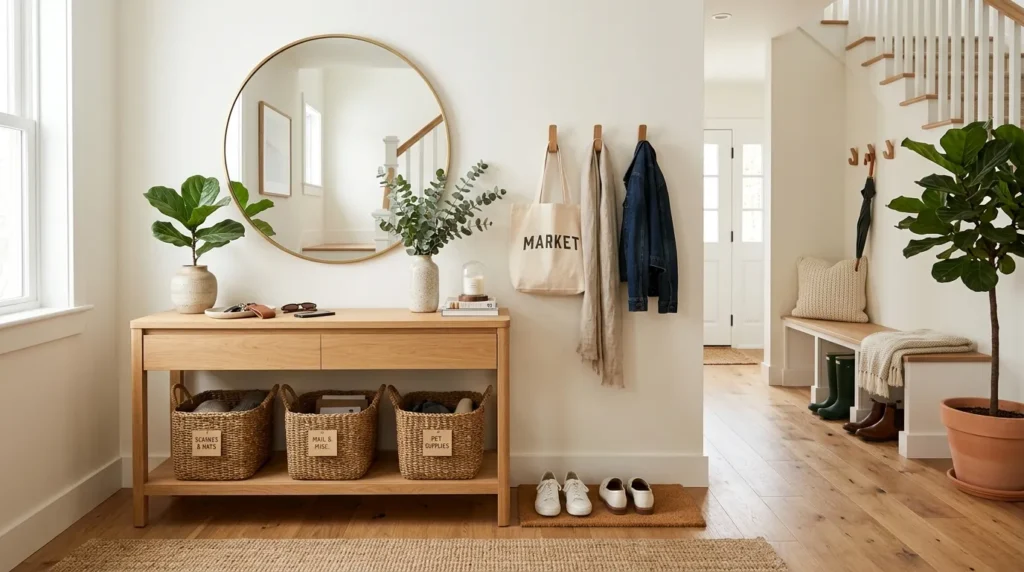
7. Create A Home For Everything
Quick Benefits
- Makes tidying easier
- Reduces misplaced belongings
- Helps the whole household stay organized
- Makes cleanup faster
- Prevents random surfaces from becoming storage
Why It Works
An organized home doesn’t require every object to be hidden. It requires belongings to have predictable destinations.
When something doesn’t have a home, it tends to move from one surface to another. Eventually, tables, chairs, countertops, and floors become temporary storage areas.
Giving frequently used items a consistent location makes putting things away much easier.
This is particularly helpful for households with multiple people because everyone can understand where things belong.
How To Style It
Assign homes based on how items are actually used.
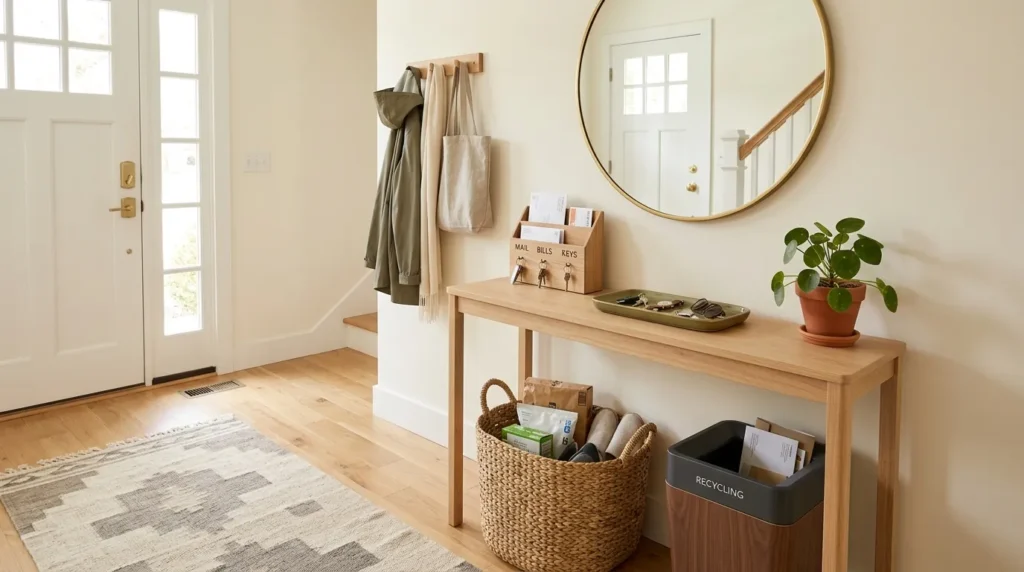
Keep keys near the entryway. Store cleaning supplies close to the rooms where they are needed. Keep everyday kitchen tools near preparation areas.
Use baskets for categories that need to be gathered quickly, such as blankets, toys, or small accessories.
Labels can be helpful in shared storage areas, especially when several people use the same shelves or cabinets.
Avoid creating storage systems that require several steps to put something away. The simpler the process, the easier it is to maintain.
8. Control Incoming Items
Quick Benefits
- Prevents clutter from rebuilding
- Reduces unnecessary purchases
- Makes existing belongings easier to manage
- Encourages intentional shopping
- Keeps storage needs predictable
Why It Works
Decluttering removes existing clutter, but controlling what enters the home helps maintain the result.
New clothing, kitchen tools, decorations, packages, paperwork, and household products can quickly fill the space you just created.
Before buying something, consider whether it solves a real problem or simply seems appealing in the moment.
This doesn’t mean avoiding purchases entirely. It means making room for new things deliberately.
How To Style It
Create a simple pause before nonessential purchases.
Ask:
- Where will this live?
- What will it replace?
- Do I already own something similar?
- Will I use it regularly?
- Is there a specific reason I’m buying it?
For clothing and decor, consider a one-in, one-out approach when storage is limited.
Create an area near the entryway for incoming packages and mail so they don’t spread across the home.
Recycle packaging promptly and process paperwork before it becomes a pile.
9. Build Daily Habits
Quick Benefits
- Keeps clutter manageable
- Reduces large cleaning sessions
- Makes organization feel routine
- Keeps frequently used areas functional
- Saves time over the long term
Why It Works
A home stays organized through small repeated actions rather than occasional heroic cleaning sessions.
Five minutes of resetting a room can prevent an hour of sorting later.
The most useful habits are the ones that fit naturally into routines you already have. Putting something away after using it, clearing the kitchen after dinner, and returning clothing to its proper place can gradually change the condition of the home.
How To Style It
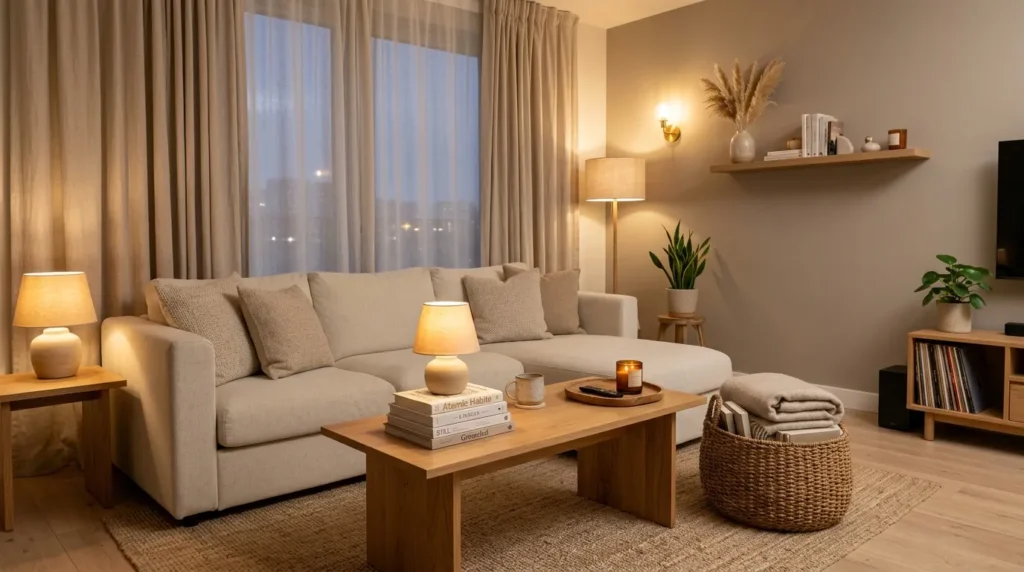
Create a short evening reset.
Walk through the main living areas and return misplaced items to their homes.
Clear kitchen surfaces, put away loose clothing, straighten cushions, and gather anything that belongs elsewhere.
You can also use transition moments. Before leaving a room, take one item with you that belongs somewhere else.
Keep the routine short enough that it feels realistic. A complicated system is harder to maintain consistently.
10. Reset Each Room
Quick Benefits
- Keeps the whole home manageable
- Creates a repeatable maintenance system
- Prevents clutter from accumulating
- Makes cleaning more efficient
- Helps organized spaces stay that way
Why It Works
Once you’ve decluttered your home, the next challenge is maintenance. Without a simple reset routine, everyday belongings eventually begin collecting again.
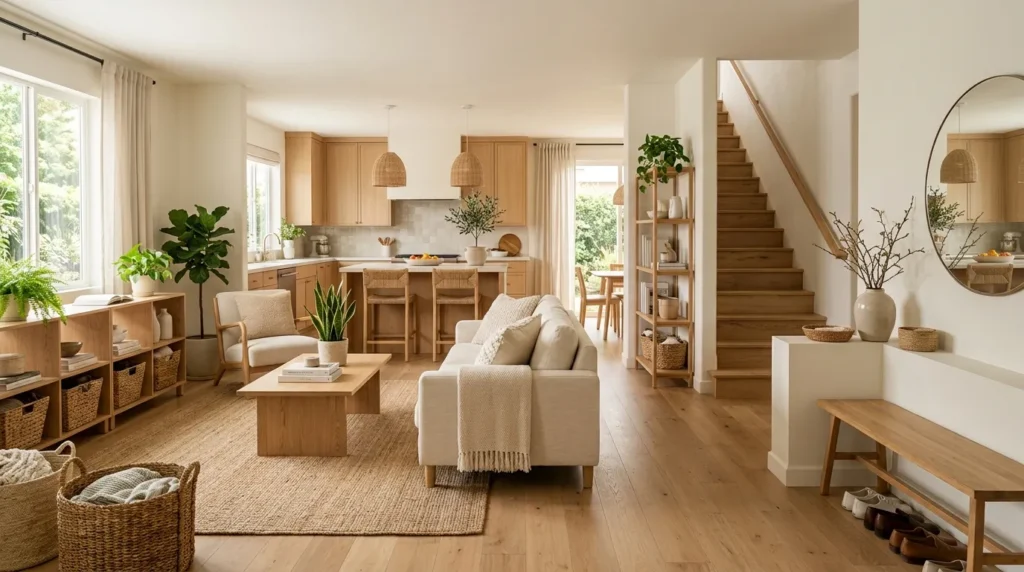
A room reset is different from deep cleaning. It focuses on returning things to their proper places, clearing visible surfaces, and preparing the room for the next day.
This creates a consistent baseline.
When every room receives a small reset regularly, clutter has less opportunity to become overwhelming.
How To Style It
Create a simple checklist for each major room.
Living room: return books, blankets, remotes, and accessories to their homes.
Kitchen: clear counters, wash dishes, and return ingredients and tools.
Bedroom: put clothing away, clear the nightstand, and make the bed.
Bathroom: return toiletries, clear the counter, and replace towels.
Entryway: organize shoes, bags, mail, and keys.
Don’t try to make every room magazine-perfect. Aim for functional, comfortable, and ready for the next day.
What Is the Best Way to Start Decluttering Your Home?
Start with one small, clearly defined area and sort belongings into keep, donate, relocate, and discard categories. Finish that area before moving to another. This approach creates visible progress without making the entire home feel like one enormous project.
A Simple Whole-Home Decluttering Checklist
Use this checklist when you want to work through the house systematically:
- Entryway: shoes, bags, mail, keys, seasonal accessories
- Living room: magazines, electronics, blankets, decor, toys
- Kitchen: duplicate tools, containers, expired food, unused appliances
- Dining area: paperwork, serving pieces, miscellaneous objects
- Bedroom: clothing, accessories, bedside items
- Closet: unworn clothing, damaged items, duplicate pieces
- Bathroom: expired products, duplicate toiletries, unused cosmetics
- Home office: paperwork, old supplies, cables, unused equipment
- Laundry room: empty containers, cleaning products, miscellaneous items
- Garage/storage: broken items, duplicates, unused equipment
Related Articles
- How to Organize a Small Bedroom Without Extra Cabinets
- How to Organize a Small Bedroom Without Spending Money
- 10 Small Living Room Ideas with Modern Comfort
- 10 DIY Storage Ideas for a More Organized Home
- How to Make a Small Bedroom Feel Bigger with Light Colors
Frequently Asked Questions
How often should you declutter your home?
There isn’t one schedule that works for every household. A useful approach is to handle small areas regularly instead of waiting until the entire home feels overwhelming. Seasonal transitions can also provide natural opportunities to review clothing, outdoor items, holiday decorations, and other belongings.
What should I declutter first?
Start with an area that creates frequent frustration or one that can be completed quickly. A junk drawer, bathroom cabinet, kitchen counter, or entryway can provide a noticeable result without requiring an entire day. Finishing a small project can make larger areas feel more manageable.
How do I declutter when everything feels important?
Separate sentimental belongings from everyday clutter. Start with practical items that are easier to evaluate, such as expired products, broken objects, duplicates, and things you no longer use. Building confidence with simple decisions can make sentimental categories easier to approach later.
How do I keep my house organized after decluttering?
Give frequently used belongings specific homes and create a short daily reset routine. Returning items after use, processing mail promptly, clearing surfaces, and limiting unnecessary purchases can help prevent clutter from rebuilding.
What should I do with things I want to donate?
Create a dedicated donation box or bag while decluttering. Once it is full, move it out of the living space and arrange an appropriate donation or reuse option. Keeping donation items in the house indefinitely can turn the donation pile into another source of clutter.
Is organizing the same as decluttering?
No. Decluttering focuses on deciding what belongs in your home. Organizing focuses on arranging the belongings you decide to keep. Organizing before removing unnecessary items can result in attractive storage systems that are still overloaded.
How can I declutter without getting overwhelmed?
Work in short sessions and choose one small area at a time. Avoid emptying multiple rooms simultaneously. A completed drawer or cabinet is more useful than several half-finished spaces. Take breaks when decision-making starts to feel exhausting.
Conclusion
A more organized home doesn’t come from finding the perfect storage product. It starts with deciding what deserves space in your home and creating simple systems for the things you choose to keep.
Begin small. A single drawer, countertop, closet section, or bathroom cabinet can be enough for one session. Use straightforward categories, make decisions item by item, and remove donations and discarded belongings from the home instead of allowing them to become another pile.
Once the excess is gone, organizing becomes much easier. Give everyday items convenient homes, keep frequently used belongings accessible, and use baskets, trays, shelves, or dividers only when they genuinely improve the way you use a space.
The final step is maintenance. A few minutes of resetting each day can prevent small messes from becoming major projects. Pay particular attention to the surfaces and rooms that collect clutter fastest in your household.
Don’t aim for a home that looks untouched. Aim for a home that works well. There can still be books on the coffee table, toys in the living room, shoes by the door, and favorite decorations on the shelves.
An organized home is simply one where the things you own have enough space to be useful, visible, and easy to put away.